

Early planting
Soil at planting depth >65°FThe first field date after soil at planting depth exceeds 65°F and frost risk is past.
Commercial field guide · Texas
Texas sweet potato transplanting is best scheduled from soil temperature and the fall cutoff, not a single statewide date. Texas A&M recommends planting after soil at planting depth exceeds 65°F and roughly 150 warm days remain before fall soil reaches 55°F.
Texas warm-season field production
Growing for a home garden? See the general sweet potato guide.
Regional crop context
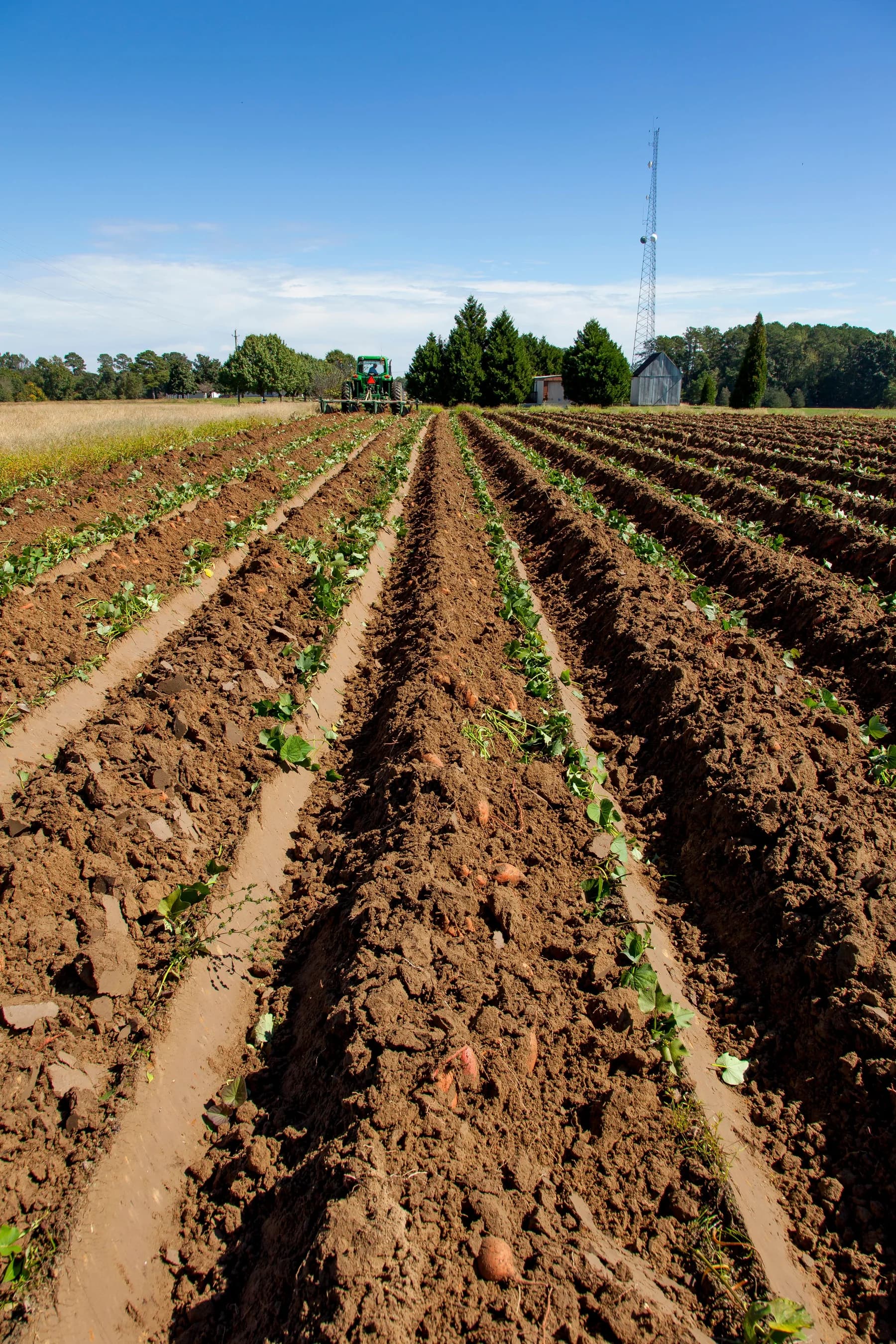
Texas A&M’s commercial crop profile documents slip production, raised beds, field spacing, irrigation and harvest. Current USDA summary data groups Texas with other states, so this page does not assign a current state acreage or rank.
The Texas A&M commercial crop profile is an older technical reference; its measured temperature gates remain the source for the regional timing rule shown here.
Step 1 of 7 · Assess
Set the date from soil temperature and expected fall cooling. Coordinate slip supply, raised-bed width, irrigation at planting and the harvest plan; planting date varies across Texas.
6 topics still to verify· planning aid only, not a suitability score
Selections stay in this browser tab and are not saved or sent anywhere.
Need a field-specific review? Run a coordinate-level farm audit for localized conditions.
Root-knot nematodes, wireworms and other soilborne pests affect marketable roots. Soil sampling, clean planting material, crop rotation and equipment sanitation are the first decisions; chemical treatment depends on current field results and product labels.
Step 2 of 7 · Plan
Texas A&M describes a soil-temperature rule that works across the state’s broad climate range. Use the local soil reading and fall cooling date to set the three planning positions.
The first field date after soil at planting depth exceeds 65°F and frost risk is past.
The commercial timing target is about 150 days before fall soil is expected to reach 55°F.
This is the final timing boundary in the Texas A&M guidance; choose variety and harvest plan before planting.
Historical regional climate
Green tiles are months whose mean soil temperature is in the 77–86°F root-development range; all other tiles are neutral and show the value. Early, main and late badges mark the 10th, median and 90th-percentile dates for reaching 18.3°C for 4 consecutive days. Bar height shows the mean.
Early soil-warming date
March 04
10th percentile
Median soil-warming date
March 19
median year
Late soil-warming date
April 09
90th percentile
Months whose historical mean soil temperature reaches the 65°F reference: April, May, June, July, August, September, October. Months in the 77–86°F root-development range: May, September. These are monthly regional averages, not planting dates or a frost check.
Open-Meteo · era5_land · 1996-01-01 to 2025-12-31 · Reference point 31.50°N, 99.00°W. Soil-temperature values are modeled at 0–7 cm model layer; the 65°F (18.3°C) transplant reference comes from a 4-inch field measurement. Use the regional calendar above with a current field reading.
Sweet potato slips establish best after frost risk has passed and the soil is at least 65°F (18.3°C) at 4 inches. That is a field measurement; the climate strip above shows regional history.
Use the regional crop duration and expected fall cutoff to choose a variety and harvest date. Confirm market grade, digging capacity and curing space before planting.
Step 3 of 7 · Prepare
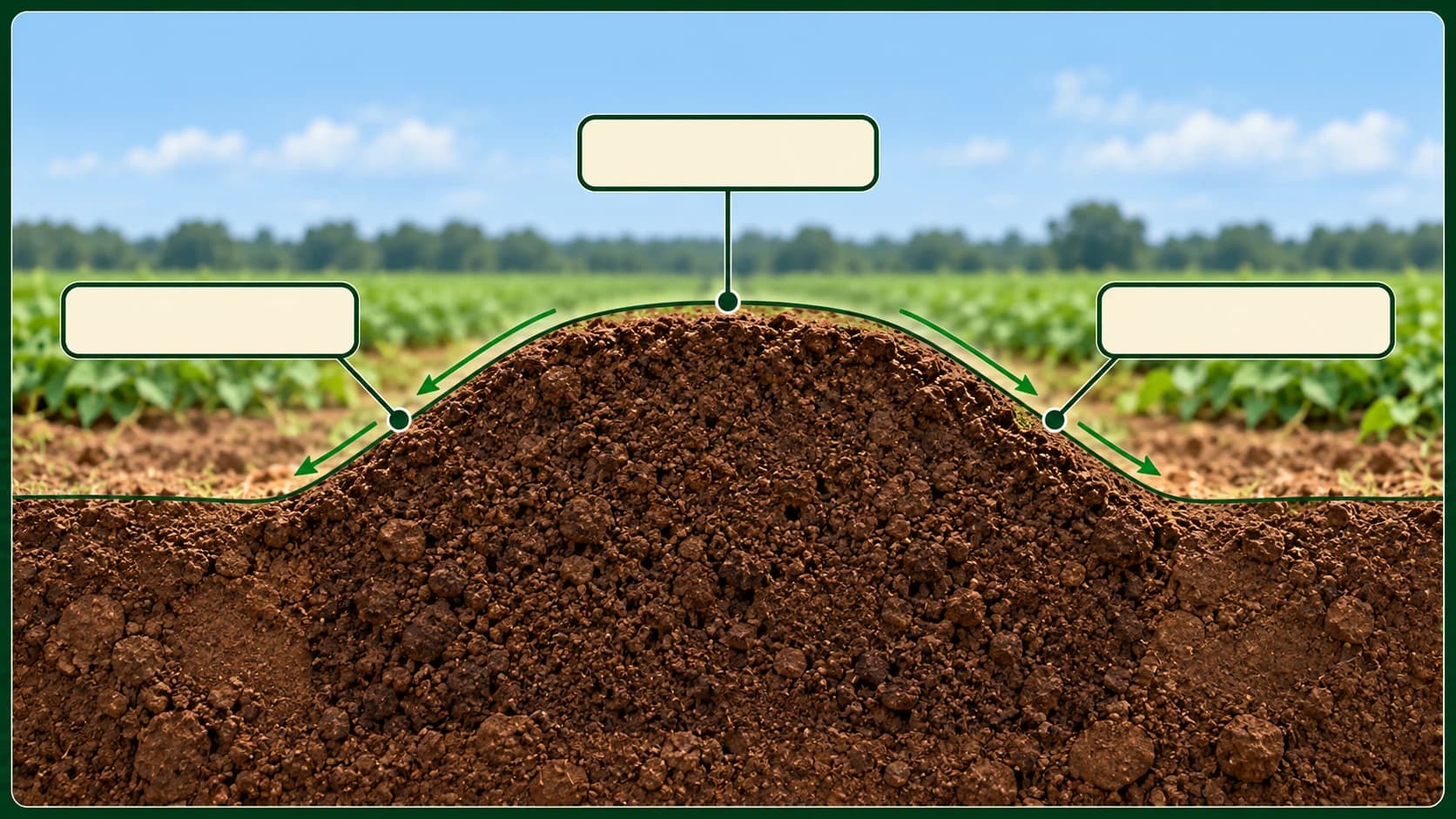
Texas A&M recommends deep sandy loam, fine sandy loam or loamy fine sand over a firm, friable subsoil. Raised beds support the warm, aerated root zone.
Keep bed height and shape consistent with soil texture, water movement and the equipment used on the farm.
Base pH and fertilizer rates on representative soil tests. Avoid excess nitrogen, which can favor vine growth over marketable storage-root sizing.
Step 4 of 7 · Establish
Sweet potatoes are established from vegetative vine cuttings called slips. Buy clean, healthy slips in the target variety and quantity, and keep them shaded and moist until planting.
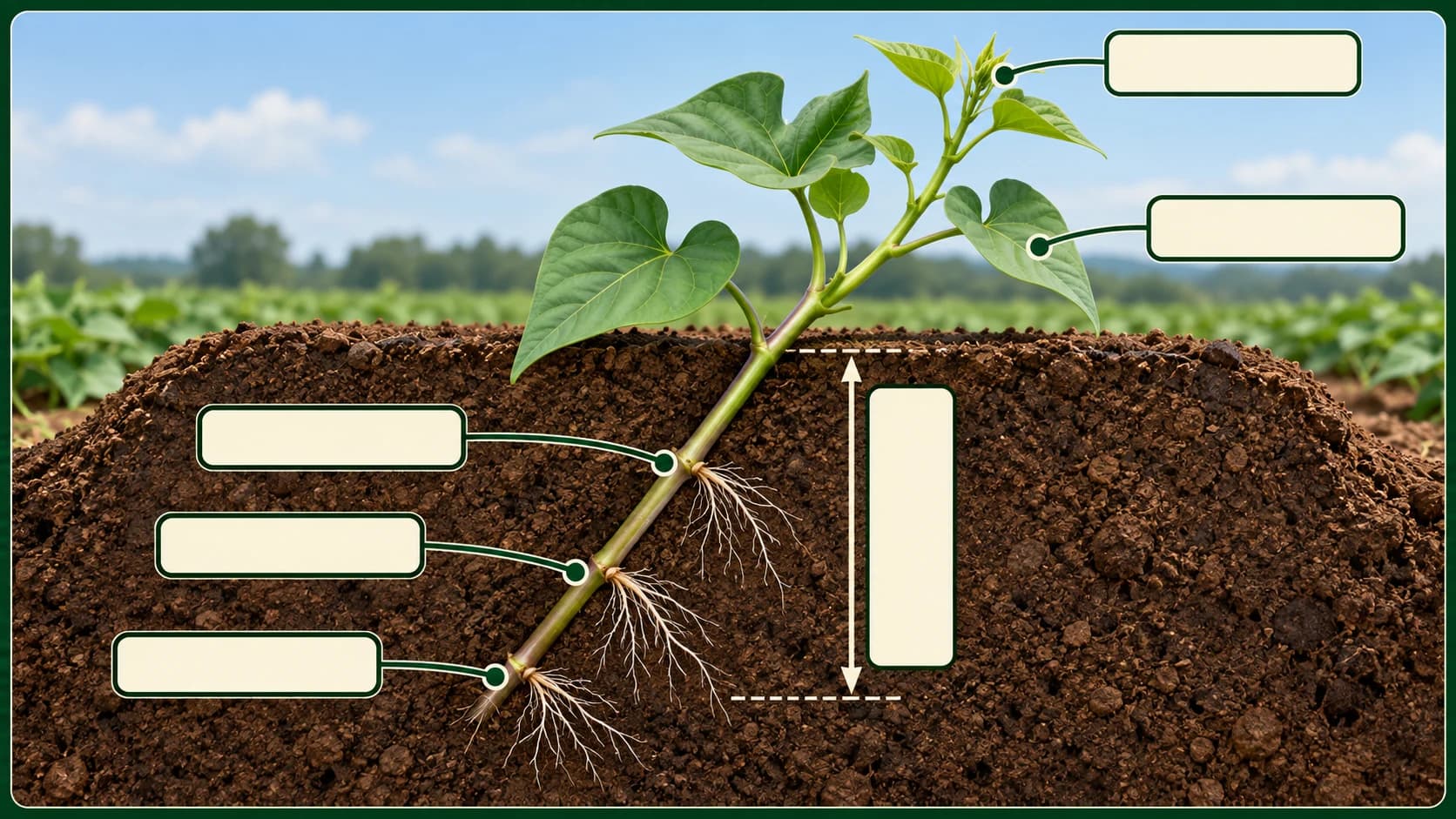
Texas A&M gives 38–42-inch raised beds and 8–14 inches between slips. The calculator uses those bounded regional ranges.
Planting calculator
Estimated slips
13,068
at 40 × 12 in
Estimate = field area ÷ row-by-slip spacing. Keep values within the published bounds, then match the starting pattern to equipment and target root grade. Headlands and replant allowance are not included.
Step 5 of 7 · Manage
The first weeks determine how evenly slips establish and how the crop competes. Protect the crop from early weed competition and scout for wireworms, flea beetles and root-knot nematodes. Use field history, clean planting material and equipment sanitation to reduce avoidable risk.
Water immediately after setting and maintain enough moisture for root establishment. Track rainfall and soil moisture; avoid keeping beds saturated.
Scout early and maintain a weed-free start through canopy closure. Choose current control methods for the farm’s production system.
Wireworms, flea beetles and root-knot nematodes can downgrade roots. Keep field history and scouting records tied to each harvest lot.
Use certified or otherwise clean slips, avoid carrying soil on slips, and clean equipment after infested fields to limit movement of nematodes and soilborne disease.
Step 6 of 7 · Harvest
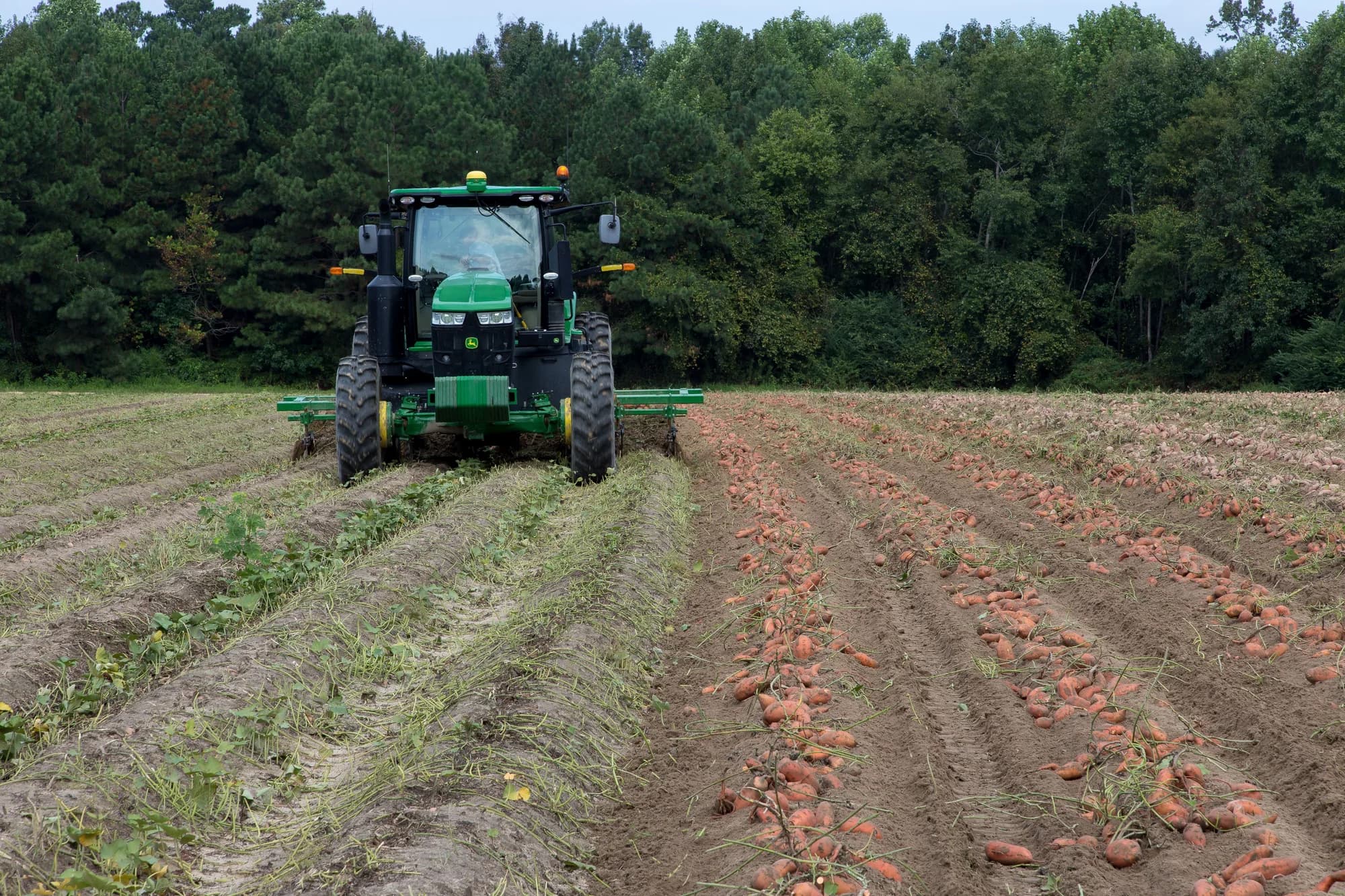
Texas A&M gives 90–150 days after planting as a harvest range. Dig at suitable root size before fall soil becomes too cool, then cure promptly.
Harvest period
Plan by variety, market size, planting date, field condition and frost risk.
Cure
Texas A&M’s crop profile gives 7–10 days with good airflow after harvest.
Store
Keep roots dry with good ventilation; avoid prolonged storage below 55°F.
Step 7 of 7 · Reference
Texas soil-temperature planting rule, 150-day fall cutoff, bed and slip spacing, 90–150-day crop duration and postharvest conditions.
Current state-level production tables; Texas is grouped in “Other States,” so no Texas-specific production value is quoted.
Crop-level soil-temperature context, bed preparation, equipment-led row spacing and the relationship between plant density and root size.
Crop-level transplant establishment, slips, frost sensitivity and raised-bed practice. Missouri calendar dates are not applied to other regions.
Photo authorship and licence information are recorded centrally. View photo credits.