Regional production overview · Netherlands

Growing sweet potatoes in Netherlands

Dutch commercial sweet-potato trials are documented in Midden-Noord-Brabant. A regional guide uses the Brabant trial area and the Dutch grower network’s 15–31 May transplant window instead of a single national climate point.

Midden-Noord-Brabant production and trial focus

Growing for a home garden? See the general sweet potato guide.

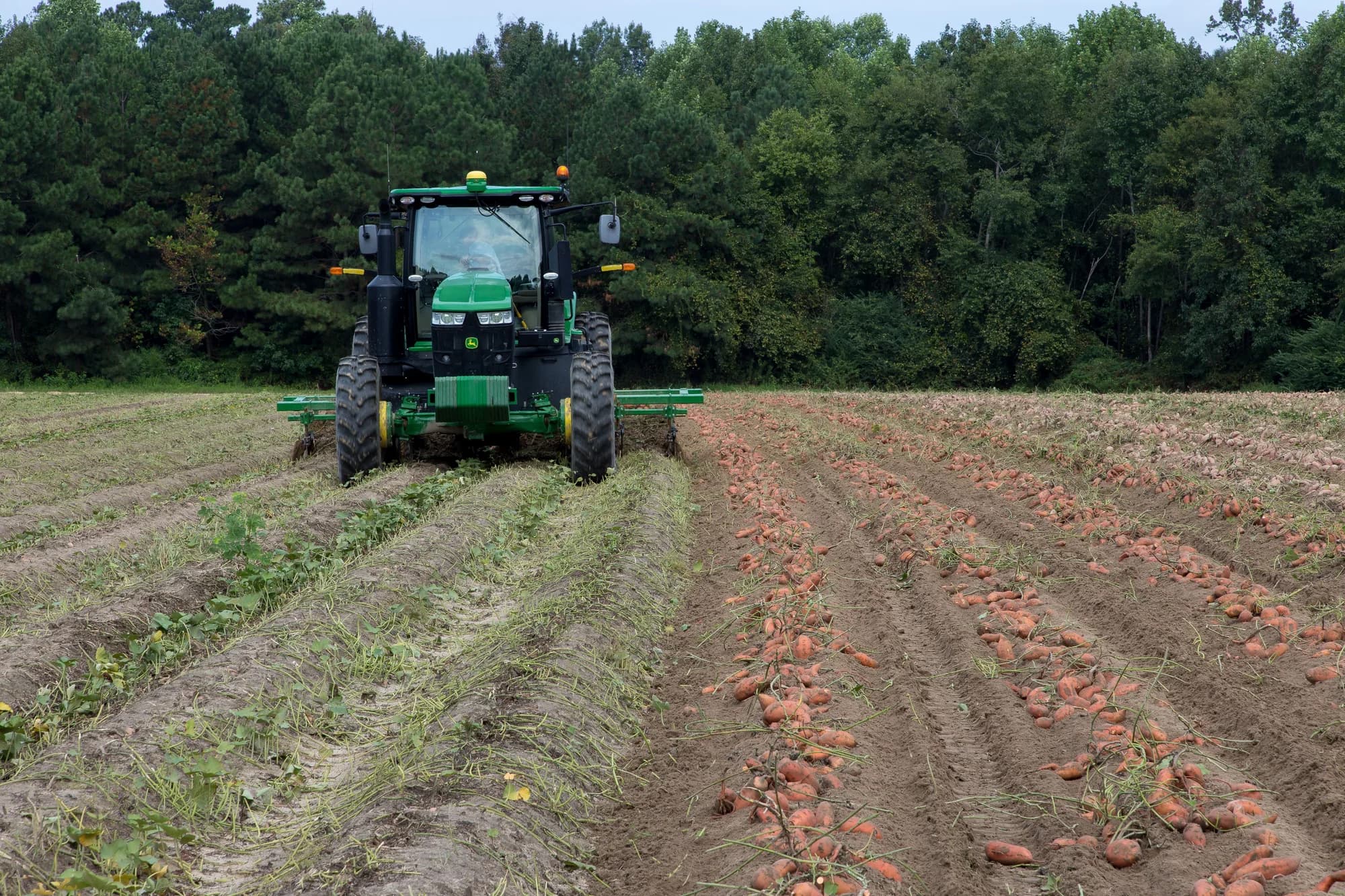
Sweet potato field rows prepared for planting

Regional crop context

Sweet potatoes in Netherlands

The EU-supported Brabant Sweet project documents commercial development and variety trials on clay and sandy soils in Midden-Noord-Brabant; the Dutch grower network describes current field practice.

The climate point represents the Brabant trial area. The 15–31 May transplant period is Dutch grower-network advice, not a date recorded for each individual project plot.

Step 1 of 7 · Assess

Check the field and production system before ordering slips

Coordinate slip delivery, ridge forming, biodegradable film, irrigation after transplanting and lifting capacity. The Dutch network is continuing to compare density and variety performance.

6 topics still to verify· planning aid only, not a suitability score

Local crop-planning checks

Walk low spots after rain. Confirm the bedder can make stable rows and that water can leave the field.

Not reviewed

Check previous sweet potato, grass or pasture history, nematode results, wireworm pressure and known disease patches.

Not reviewed

Confirm variety, slip quantity, delivery date, setter capacity, water at planting and a plan for keeping slips shaded before setting.

Not reviewed

Match variety and expected root size to the buyer’s fresh-market or processing specification, delivery timing and grading equipment.

Not reviewed

Confirm curing-room volume, airflow, pallet-bin handling and storage space before planting the acreage.

Not reviewed

Map the crop sequence and equipment-cleaning route so infested soil and plant material do not move between fields.

Not reviewed

Selections stay in this browser tab and are not saved or sent anywhere.

Need a field-specific review? Run a coordinate-level farm audit for localized conditions.

Read the field history before selecting slips

Root-knot nematodes, wireworms and other soilborne pests affect marketable roots. Soil sampling, clean planting material, crop rotation and equipment sanitation are the first decisions; chemical treatment depends on current field results and product labels.

Step 2 of 7 · Plan

Choose a transplant window in Netherlands

View the Midden-Noord-Brabant guide for its local climate profile and grower-network planting period.

Midden-Noord-Brabant · Tilburg reference

The Brabant Sweet project ran commercial development and annual variety trials in this region on clay and sandy soils.

Planting reference: 15–31 May · Dutch grower-network guidance

View local climate and growing guide
Step 3 of 7 · Prepare

Build an aerated bed and keep the crop sequence clean

Dutch commercial trials include both clay and sandy soils. Form ridges that warm and drain the slip zone; apply biodegradable black film where used in the production system.

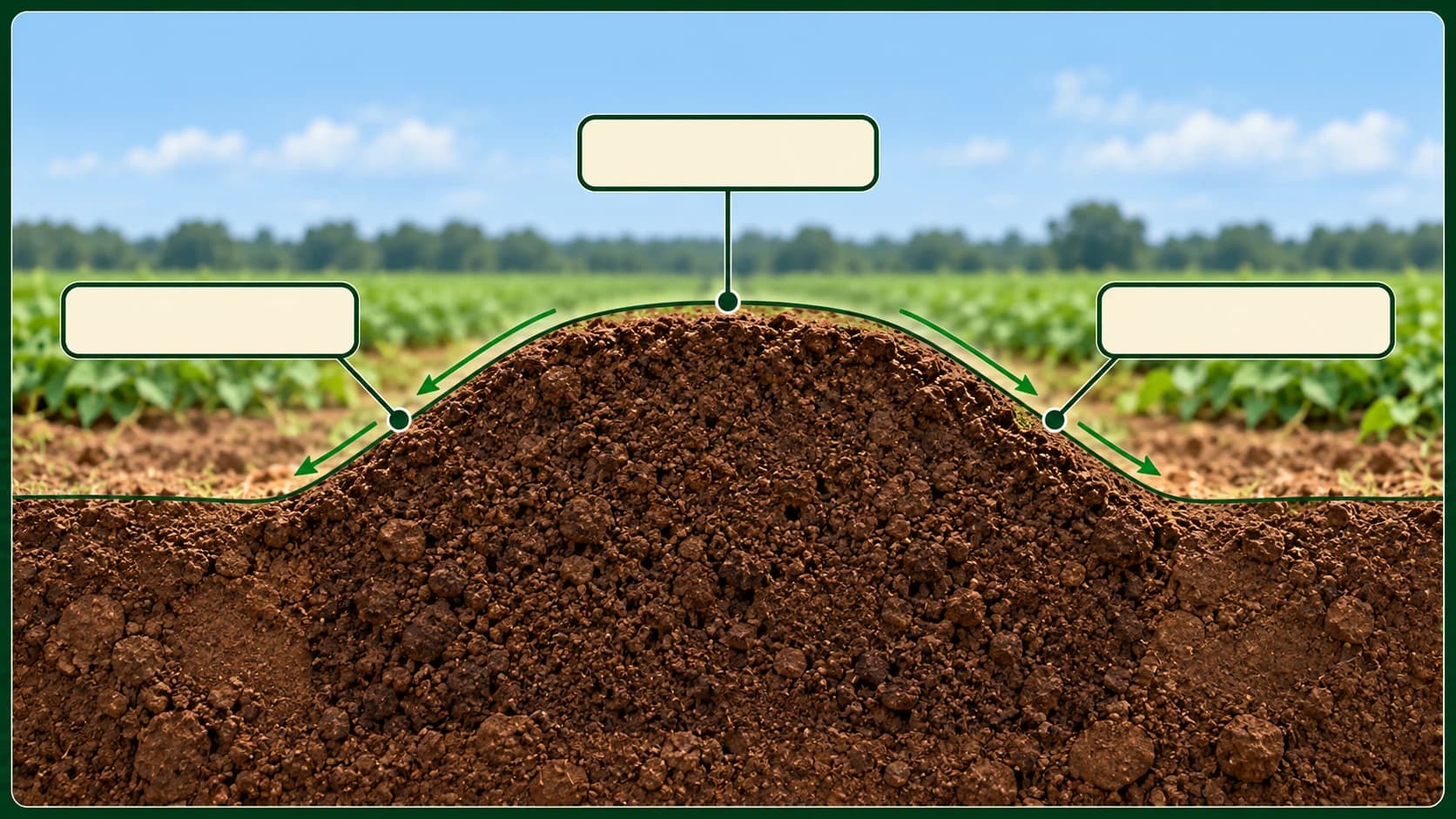
The bed does several jobs

  • Improves aeration and drainage around developing roots.
  • Warms the crop zone for a warm-season transplant.
  • Gives the setter and digger a consistent row to follow.

Keep bed height and shape consistent with soil texture, water movement and the equipment used on the farm.

Cross-section of a crowned sweet potato bed with arrows showing surface runoff moving down the shoulders.
A crowned, loose bed gives developing roots an aerated zone and can shed surface water down its shoulders. Shape the row for field soil, drainage and equipment; schematic, not to scale.

Set fertility from the field test

Base pH and fertilizer rates on representative soil tests. Avoid excess nitrogen, which can favor vine growth over marketable storage-root sizing.

Step 4 of 7 · Establish

Plant slips, not seed, and calculate the stand

Sweet potatoes are established from vegetative vine cuttings called slips. Buy clean, healthy slips in the target variety and quantity, and keep them shaded and moist until planting.

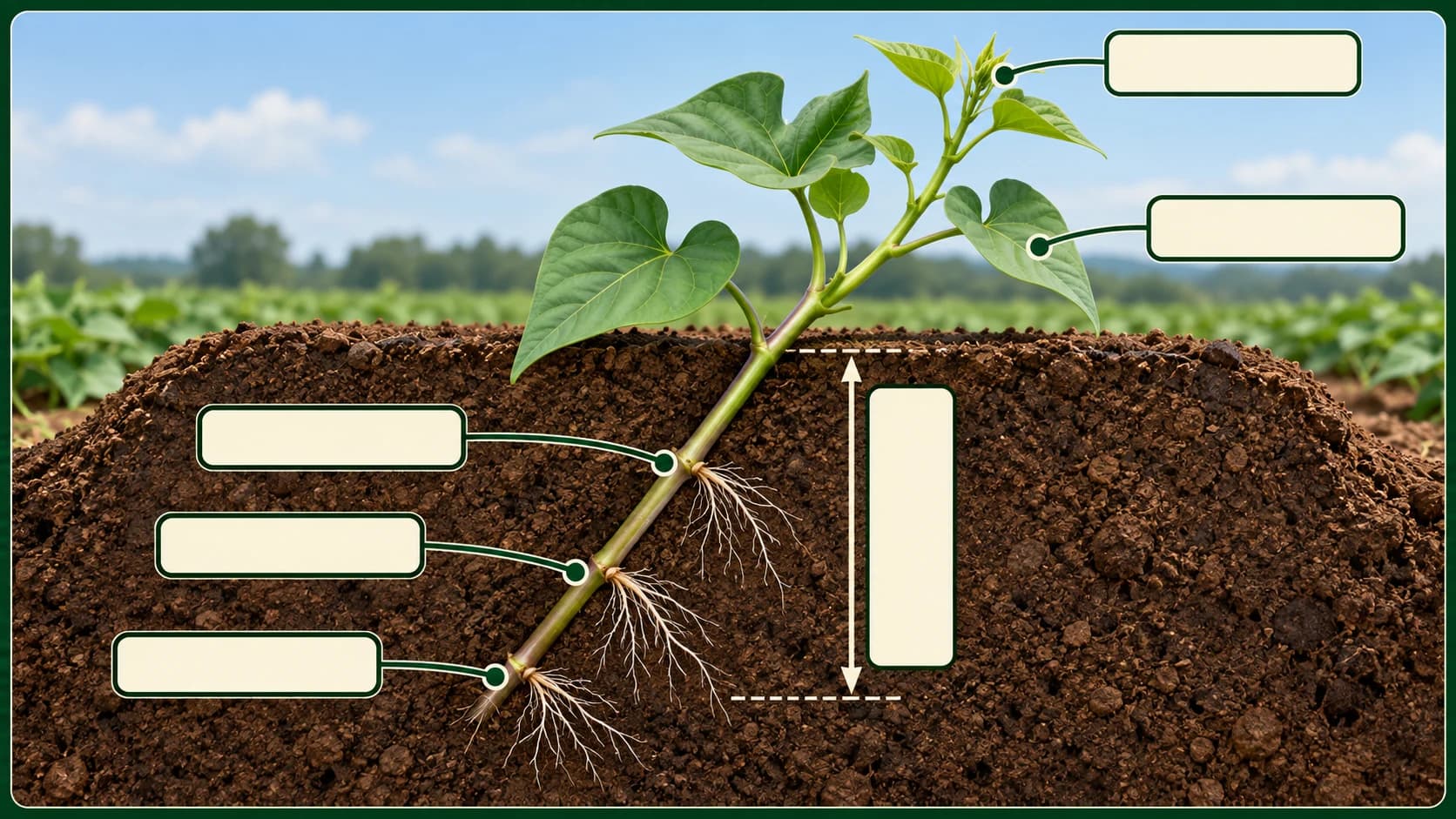
Sweet potato slip set diagonally with its shoot and leaves above the soil, at least three buried nodes, new roots and a 3–4 inch depth mark.
Set the slip so at least three nodes sit below the soil while the growing tip and leaves remain above. The 3–4 inch (7.6–10.2 cm) depth is a practical guide; node position is the key. Leaf shape varies by cultivar. Water after transplanting.

Regional starting pattern

Between rows
80–100 cm (field reference)
Within row
30 cm (common grower spacing)
Transplant depth
3–4 in (7.6–10.2 cm), with at least three nodes covered

The Dutch grower-network research calls 30 cm the common within-row spacing. Row spacing follows a published European field-trial range; set it to the bed and machinery.

Planting calculator

Estimate slips for your field

Spacing-based count

Estimated slips

37,037

at 90 × 30 cm

Estimate = field area ÷ row-by-slip spacing. Keep values within the published bounds, then match the starting pattern to equipment and target root grade. Headlands and replant allowance are not included.

Step 5 of 7 · Manage

Protect the establishment period and the root grade

The first weeks determine how evenly slips establish and how the crop competes. Protect the crop from early weed competition and scout for wireworms, flea beetles and root-knot nematodes. Use field history, clean planting material and equipment sanitation to reduce avoidable risk.

Get water onto the slip at planting

Water immediately after setting and maintain enough moisture for root establishment. Track rainfall and soil moisture; avoid keeping beds saturated.

Keep the field clean while the crop closes rows

Scout early and maintain a weed-free start through canopy closure. Choose current control methods for the farm’s production system.

Scout below the canopy as well

Wireworms, flea beetles and root-knot nematodes can downgrade roots. Keep field history and scouting records tied to each harvest lot.

Keep tools and planting stock clean

Use certified or otherwise clean slips, avoid carrying soil on slips, and clean equipment after infested fields to limit movement of nematodes and soilborne disease.

Step 6 of 7 · Harvest

Dig at the planned size, cure quickly and protect the skin

The Dutch network reports 125–145 growing days. Schedule lifting from the transplant date and selected cultivar, then cure roots promptly.

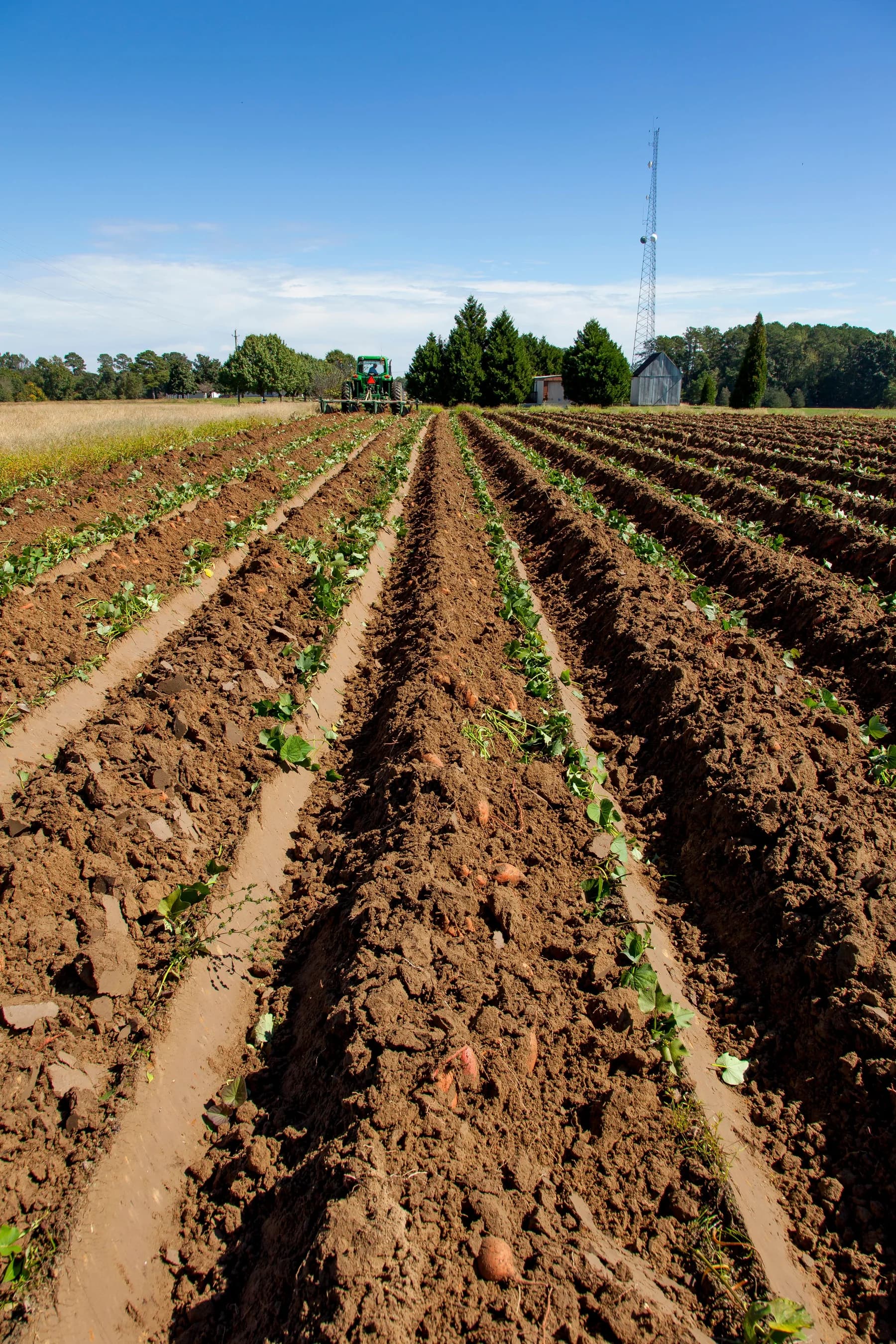
A tractor lifting sweet potatoes during field harvest
At harvest, protect the skin and move roots promptly to curing; equipment and handling systems vary by region.

Harvest period

125–145 days after transplant

Plan by variety, market size, planting date, field condition and frost risk.

Cure

80–85°F · 85–90% RH

A crop-level curing reference is 7–10 days with airflow; use the facility and buyer protocol for the harvested lot.

Store

55–60°F · about 85% RH

Maintain stable temperature, humidity and ventilation after curing.

Step 7 of 7 · Reference

Evidence behind the Netherlands guide

View references (7)
  1. 1. Zoete Bataat Network — TeeltUndated; accessed 28 September 2026

    Dutch transplant dates, frost avoidance, growing duration, warm ridge, film and irrigation practices.

  2. 2. Zoete Bataat Network — OnderzoekResearch summary accessed 28 September 2026

    Dutch commercial research on cultivars, in-row plant distance, density, soil type and storage.

  3. 3. EU CAP Network — Brabant SweetProject period 2021–2024

    Regional commercial trials, cultivar testing on clay and sand, mechanization and production scale-up.

  4. 4. Szarvas et al. — The effect of plant density on the yield of sweet potatoPublished 23 May 2019; three field seasons in southeast Hungary

    European field trial comparing 80 × 20, 80 × 30, 100 × 20 and 100 × 30 cm row-by-plant spacing. Used as a crop-level spacing reference, not a local calendar.

  5. Crop-level soil-temperature context, bed preparation, equipment-led row spacing and the relationship between plant density and root size.

  6. 6. University of Missouri Extension — Growing Sweet PotatoesReviewed March 2026; originally published September 2017

    Crop-level transplant establishment, slips, frost sensitivity and raised-bed practice. Missouri calendar dates are not applied to other regions.

  7. Shared crop-level reference for curing and storage conditions. Its Texas planting calendar is used only on the Texas page.

Photo authorship and licence information are recorded centrally. View photo credits.

Explore other regional guides (25)