

Growing blueberries in Virginia
Virginia’s coastal plain, central region and mountains need different blueberry types. Virginia Tech’s 2026 commercial guide matches northern highbush, southern highbush and rabbiteye to different parts of the state, then gives type-specific chill needs, planting dates, soil targets and harvest examples. Spring frost is a key risk for low-chill cultivars.
By AgriAuditor. Updated .
Scope: Commercial blueberry production across Virginia, following Virginia Tech’s type-specific regional guidance. Check the cultivar, elevation and frost exposure for your own county.
At a glance
- Tame-blueberry activity, 2022
- 470 farms and 407 acres reported, including 315 bearing acres2
- Northern and mountain areas
- Northern highbush; about 800–1,000 chill hours1
- Central and southern Virginia
- Southern highbush; about 250–900 chill hours1
- Southeast Virginia
- Rabbiteye; about 250–800 chill hours1
- Soil pH
- 4.2–5.2; test a year before planting1
- Planting windows
- Bare-root: February–March; container stock: September–November, except high elevations1
- Harvest examples
- Coastal southern highbush can begin mid-May; rabbiteye examples begin in June and continue through July1
Perennial growth and climate in Virginia
A perennial planting remains in the field for multiple years. Establishment is a long-term investment; flowering, fruit development, harvest and plant care recur as the planting matures. Follow the named cultivar and production system.
Establish a long-lived planting1
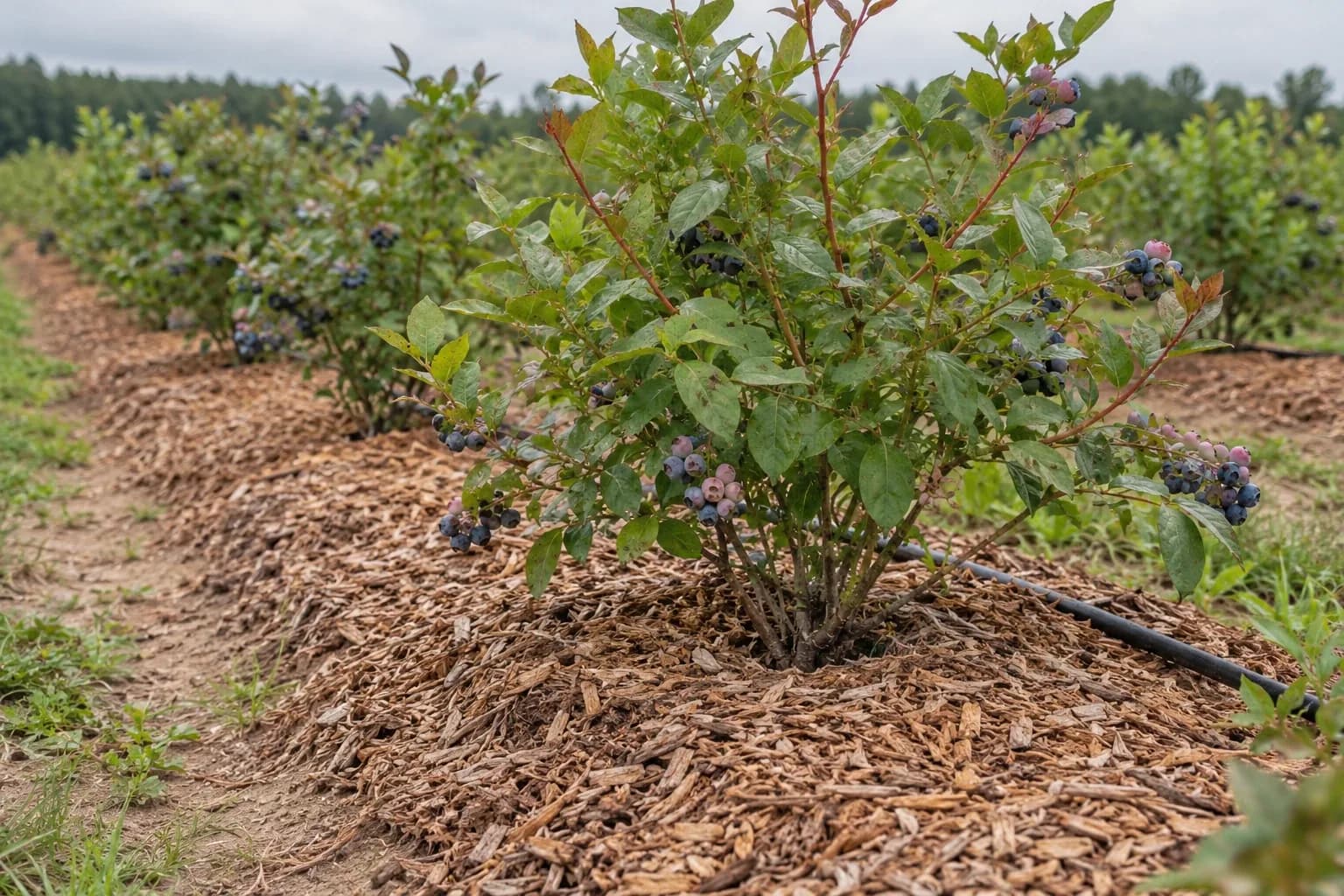
Match blueberry type to the Virginia production district, winter chill and frost exposure. Prepare acidic soil, irrigation and mulch before establishing long-lived bushes; remove young flowers to favor establishment.
Management: Dormant pruning and crop-stage care1
Prune in late winter, renew aging canes, monitor bloom and maintain water during fruit fill. Match nutrition and postharvest care to plant development and field assessment.
Harvest: Separate blueberry types and districts1
Coastal southern highbush can begin in May; northern highbush examples span June–August, and rabbiteye examples include June–July. May–August combines those distinct systems, not one universal picking season.
Historical monthly climate
Reference period: 1996-01-01 to 2025-12-31. ERA5-Land monthly mean soil temperature at 0–7 cm, air temperature and frost days at the regional reference point (37.5, -78.9). Select a month to inspect its historical conditions.
Month tiles show mean air temperature.
May historical conditions
- Mean topsoil temperature
- 18.5°C
- Mean air temperature
- 19.2°C
- Mean frost days per month
- 0.0 days
Use this monthly history to assess winter exposure, seasonal heat and water planning. It does not calculate cultivar chill hours, flowering dates, frost damage during bloom or fruit maturity. Topsoil at 0–7 cm describes shallow soil context, not the full root zone. Harvest periods follow the production evidence above.
Climate source: Open-Meteo Historical Weather APIMatch blueberry type to Virginia’s regions
- Northern highbush1,000 hours (ranges vary by type)Virginia Tech gives about 800–1,000 hours.
- Southern highbush900 hours (ranges vary by type)Virginia Tech gives about 250–900 hours, depending on cultivar.
- Rabbiteye800 hours (ranges vary by type)Virginia Tech gives about 250–800 hours, depending on cultivar.
- 1
Coastal southern highbush
Harvest can begin in mid-May.
- 2
Rabbiteye
Examples begin in early June and continue into July.
- 3
Local timing
Dates vary by cultivar, site and season.
- North and mountains
- Virginia Tech places northern highbush in northern and mountainous areas. Its cited chill requirement is about 800–1,000 hours, but select a named cultivar using the local winter and elevation.1
- Central and southern areas
- Southern highbush is aimed at central and southern Virginia, with cultivar requirements spanning about 250–900 chill hours. Low-chill selections can flower early and face spring frost in colder parts of their range.1
- Southeast
- Rabbiteye is suited to southeast Virginia in the guide, with about 250–800 chill hours by cultivar. The type is vigorous, so use the guide’s type-specific fertility advice.1
- State crop activity
- The 2022 USDA Census recorded 470 farms and 407 tame-blueberry acres in Virginia, of which 315 acres were bearing. Those figures describe reported activity, not expected yield for a new planting.2
Choose a frost-aware, well-drained site
- Air and water drainage
- Virginia Tech recommends a sloped site with clear air flow so cold air can drain away from flower buds. Blueberries are sensitive to waterlogging and root disease, so surface drainage matters.1
- Soil preparation
- Use a soil test at least a year before planting. Virginia Tech gives a pH range of 4.2–5.2 and recommends building organic matter before planting, especially where soils are low in organic matter.1
- Raised beds
- The commercial guide describes beds about 20–30 cm (8–12 in) high and 1.2–1.5 m (4–5 ft) wide. Row orientation should account for slope, drainage and erosion risk.1
Set planting dates and spacing by stock type
Between rows: Highbush: 2.4–3.0 m (8–10 ft); rabbiteye: 3.0–3.7 m (10–12 ft) · Within the row: Highbush: 1.2–1.5 m (4–5 ft); rabbiteye: about 1.8 m (6 ft)
Choose row spacing for machinery and the mature size of the type.
- Bare-root stock
- Virginia Tech recommends February–March planting for commercial bare-root plants, when soil and weather allow.1
- Container plants
- Container stock can be planted September–November, except at high elevations where winter injury is a concern. Keep roots moist during planting and water to settle soil around them.1
- Field layout
- Highbush spacing is about 1.2–1.5 m (4–5 ft) within rows and 2.4–3.0 m (8–10 ft) between rows. Rabbiteye bushes are larger, so allow about 1.8 m (6 ft) within rows and 3.0–3.7 m (10–12 ft) between rows.1
Irrigate shallow roots without saturating them
- Keep moisture steady
- Virginia Tech describes shallow roots and recommends constant but moderate moisture. Its commercial guide gives four to six gallons per mature plant per day, roughly 25 mm (1 in) per week, with higher needs during a full crop load. Soil, weather, mulch and planting density affect field totals.1
- Choose delivery for the site
- Drip or micro-emitter irrigation delivers water to the root zone. Overhead systems use more water but may help protect flowers during spring frost. Avoid overwatering, which can waterlog roots and increase disease risk.1
Build nitrogen rates gradually and monitor pH
- Nitrogen by plant age
- The commercial guide starts with 20 lb N/acre in year one, increasing by about 20 lb annually to 80–100 lb/acre by years four to six. Actual need depends on site, plant growth and type; rabbiteye needs less and can grow excessively with too much nitrogen.1
- Split applications
- Virginia Tech divides early nitrogen between the start of growth and a later application. It warns that excessive fertilizer can injure roots and that heavy rain or over-irrigation can leach nutrients.1
- Match fertilizer to soil
- Blueberries primarily use ammonium nitrogen. Ammonium sulfate can help keep pH low; when soil pH reaches 5.0 or below, the guide allows other nitrogen sources. Retest soil and check for chlorosis before adjusting nutrients.1
Manage frost and harvest by cultivar
- Early bloom risk
- Low-chill southern highbush can flower early and suffer spring-freeze losses outside suitable sites. Use local frost records and the cultivar’s flowering pattern when planning protection.1
- Harvest examples
- Virginia Tech says coastal southern highbush harvest may begin in mid-May. Its rabbiteye examples start in early June and continue into July. Dates vary by type, cultivar, location and season.1
- Fruit quality
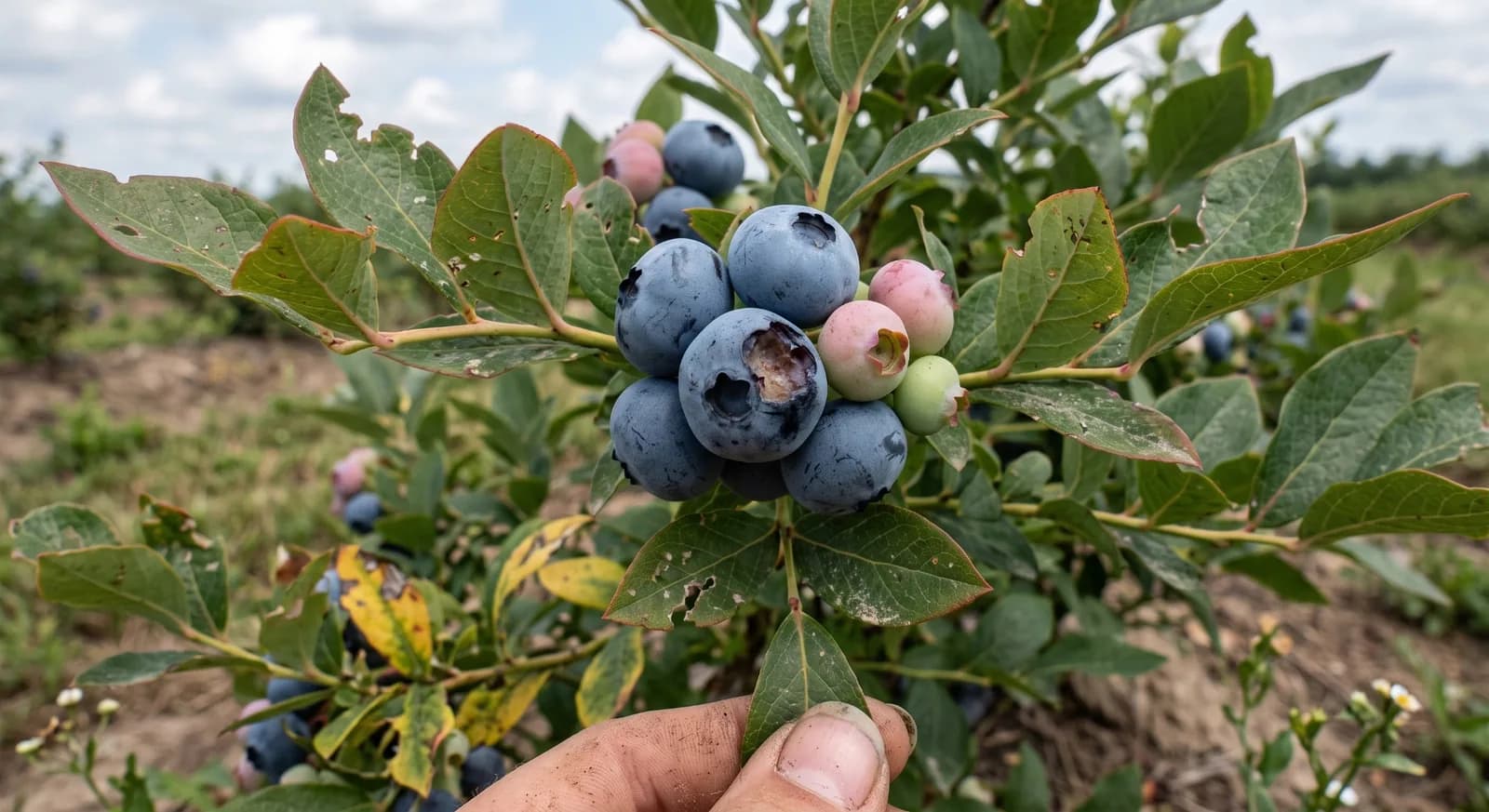
- The guide notes rain-related fruit splitting for some cultivars. Account for weather exposure and rapid cooling or packing needs in the harvest plan.1
Match the planting to labor and buyers
- Sales channel
- Virginia Tech advises weighing farm scale, nearby demand, location, labor, post-harvest quality and competition when choosing a market. A cultivar and harvest window only work if the farm can pick and move fruit on time.1
- Budget locally
- The Virginia Census records farm counts and bearing acres, but does not provide a current farm-level yield or margin. Use your own establishment, labor, irrigation and buyer prices for a project budget.2
Frequently asked questions
- Which blueberries are best for Virginia?
- Virginia Tech recommends northern highbush for northern and mountainous areas, southern highbush for central and southern Virginia, and rabbiteye for the southeast.
- How many chill hours do Virginia blueberries need?
- The guide gives about 800–1,000 hours for northern highbush, 250–900 for southern highbush and 250–800 for rabbiteye, depending on cultivar.
- What pH do Virginia blueberries need?
- Virginia Tech recommends pH 4.2–5.2 and soil testing at least a year before planting.
- How do Virginia farms establish blueberries?
- Match blueberry type to district and chill, test and prepare acidic soil, and install mulch and irrigation. Handle nursery stock appropriately and account for frost exposure while young bushes establish.
- When are blueberries harvested in Virginia?
- Coastal southern highbush examples can begin in mid-May. Rabbiteye examples start in early June and continue into July.
- How much water do Virginia blueberries need?
- The commercial guide gives four to six gallons per mature plant per day, about 1 inch per week, and up to about 2 inches per week with a full crop load. Adjust for rainfall, soil and system.
Regional blueberries guides
Sources and image credits
- 1. Virginia Tech Extension — Commercial Blueberry Farming in Virginia: A Beginner’s Guide — Published 21 July 2026. Commercial Virginia types and regions, chill hours, soil, planting, spacing, irrigation, fertility, frost, harvest and markets.
- 2. USDA NASS — 2022 Census of Agriculture, Virginia, Table 38: Berries by Acres — Published 2024; 2022 data. Virginia farm counts and acreage for tame blueberries.
Image credits
- A fruiting blueberry bush with mulch and drip irrigation.
- Blueberries need an acidic, organic root zone. Schematic illustration.
- Inspect fruit for damage as it ripens.
Figures are published averages or study assumptions for the places named, not guarantees for your field. Check current local recommendations and product labels before acting.
Some visuals in this guide are illustrations rather than photographs of a specific farm. See image credits.