

Blueberry production in Iowa
USDA counted 59 Iowa farms with tame blueberries in 2022, but suppressed acreage. This guide combines Midwest commercial production recommendations with Iowa-specific cultivar notes. It does not establish an Iowa commercial yield target, chill requirement or harvest calendar, so assess the field and buyer plan before establishing acreage.
Scope: Farm-scale Iowa guidance based on Midwest Extension production methods and Iowa cultivar notes. Midwest figures are regional benchmarks, not Iowa trial results. Confirm field decisions with current local Extension support. Updated 2026-10-03.
At a glance
- Iowa farm count
- 59 farms reported tame blueberries in 2022; acreage is suppressed1
- Commercial type
- Northern highbush is the primary commercial type in the Midwest; Iowa State also lists highbush and half-high types for Iowa2,3
- Field pH target
- 4.5–5.0 in the Midwest production guide; confirm with a soil test2
- Planting layout
- 3.0–3.7 m (10–12 ft) between rows; 0.9–1.5 m (3–5 ft) within rows2
- Population example
- About 1,450 plants per acre at 10 × 3 ft2
- Supplemental water
- 1–1.5 in (25–38 mm) per week may be needed during fruit expansion and harvest2
Perennial growth and climate in Iowa
A perennial planting remains in the field for multiple years. Establishment is a long-term investment; flowering, fruit development, harvest and plant care recur as the planting matures. Follow the named cultivar and production system.
Establish a long-lived planting2,3
Build acidic, well-drained beds, select cold-hardy cultivars and establish mulch and irrigation before committing to a commercial field. Protect young plants and plan for several years of establishment.
Management: Dormancy through fruiting and reserve recovery2
Use dormant pruning, spring growth and bloom observations, fruit-fill irrigation and postharvest plant condition to schedule field work. Actual crop stages depend on cultivar and site.
Management: Flower-bud formation: Midwest reference2
The Midwest commercial guide describes September–October flower-bud formation. Maintain healthy foliage and water supply; this regional reference does not define Iowa bloom or picking dates.
Historical monthly climate
Reference period: 1996-01-01 to 2025-12-31. ERA5-Land monthly mean soil temperature at 0–7 cm, air temperature and frost days at the regional reference point (42, -93.5). Select a month to inspect its historical conditions.
Month tiles show mean air temperature.
September historical conditions
- Mean topsoil temperature
- 20.4°C
- Mean air temperature
- 19.6°C
- Mean frost days per month
- 0.0 days
Use this monthly history to assess winter exposure, seasonal heat and water planning. It does not calculate cultivar chill hours, flowering dates, frost damage during bloom or fruit maturity. Topsoil at 0–7 cm describes shallow soil context, not the full root zone. Harvest periods follow the production evidence above.
Climate source: Open-Meteo Historical Weather APIAssess regional fit and field risk
The Midwest production guide identifies northern highbush as the region’s primary commercial type. Iowa State lists both highbush and half-high blueberries as options for Iowa. Match named cultivars to winter hardiness, bloom overlap, labor and buyer specifications before committing a field.
- Farm activity
- The 2022 USDA Census recorded 59 Iowa farms with tame blueberries, but suppressed acreage. The count confirms crop activity; it does not show farm size, production system or sales volume.1
- Cultivar options
- Iowa State lists highbush cultivars including Duke, Patriot, Bluejay, Blueray, Bluecrop, Rubel and Elliott, and half-high options including Polaris, Northblue, Northcountry, Northsky and St. Cloud. Treat the lists as local options, not a tested commercial ranking.3
- Frost exposure
- Select a site with cold-air drainage and avoid frost pockets. The Midwest guide notes that spring freezes can reduce yield as flower buds open; cultivar choice and site exposure both affect risk.2
Test the field and prepare soil early
- 1
Sample
Test pH, calcium, nutrients, texture and drainage before ordering plants.
- 2
Prepare
Plan pH correction and drainage work at least a year ahead.
- 3
Lay out
Design beds, irrigation, headlands and equipment access before planting.
- Soil pH
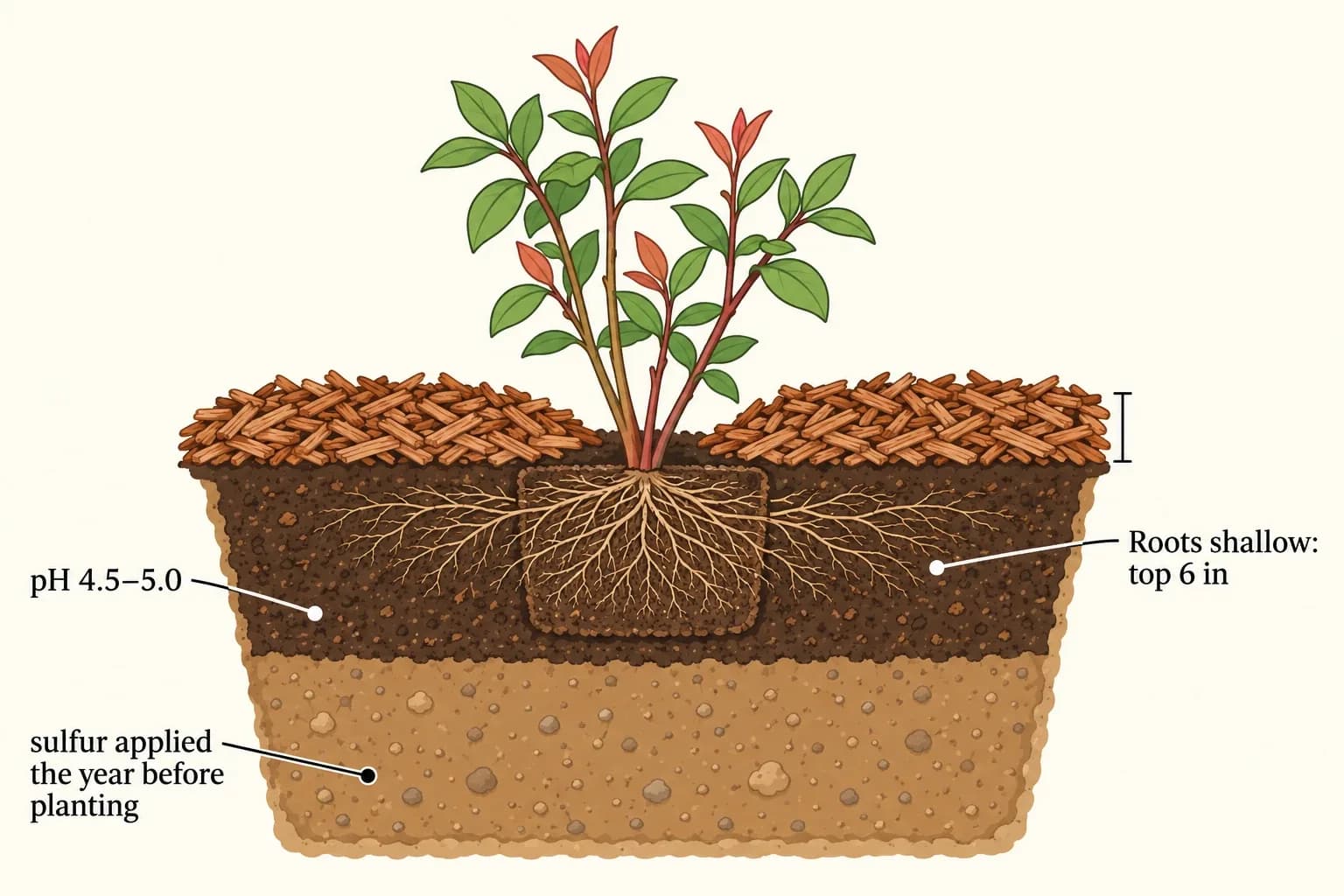
- The Midwest guide targets pH 4.5–5.0. Acidification can take months, so use a soil test and begin field preparation well before planting. Do not apply a blanket sulfur rate across different soils.2
- Drainage
- Avoid fields that pond after rain. Blueberry roots are vulnerable to prolonged saturation; the regional guide discusses raised beds or drainage work where site conditions require them.2
- Organic matter and weeds
- The guide recommends preparing organic matter and controlling persistent weeds before planting. Base nutrient additions on soil and tissue analysis, especially where wood amendments can temporarily tie up nitrogen.2
Set field spacing and planting timing
Between rows: 10–12 ft (3.0–3.7 m) · Within the row: 3–5 ft (0.9–1.5 m)
The guide reports about 1,450 plants per acre at 10 × 3 ft. Adjust for cultivar size and equipment. Regional benchmark, not an Iowa trial layout.
- Planting window
- The Midwest guide favors autumn planting into prepared beds and also allows spring planting when field conditions permit. Iowa State identifies spring as the local planting period. Avoid working wet soil and match timing to stock condition and winter exposure.2,3
- Pollination
- Iowa State recommends planting more than one compatible cultivar for fruit set. Confirm bloom overlap and choose varieties that fit your market and the site’s winter conditions.3
- Equipment access
- The regional layout range is a starting point. Set row width for the cultivar, harvest method, sprayer, mower and other equipment used in the operation.2
Manage irrigation, fertility and weeds
- Irrigation capacity
- The Midwest guide says supplemental irrigation of about 1–1.5 inches per week is often needed, especially from fruit expansion through harvest. Check rainfall and soil moisture, and size the water system before planting.2
- Nutrition
- Base fertilizer on soil and leaf tests. The regional guide warns that excess nitrogen can create dense growth and increase the time foliage stays wet; avoid late-season nitrogen applications.2
- Weed and disease pressure
- Control persistent weeds before planting and maintain the row after establishment. Good air movement, clean plant material, sanitation and suitable spacing help reduce disease pressure.2
Plan harvest, cooling and farm economics
- Harvest handling
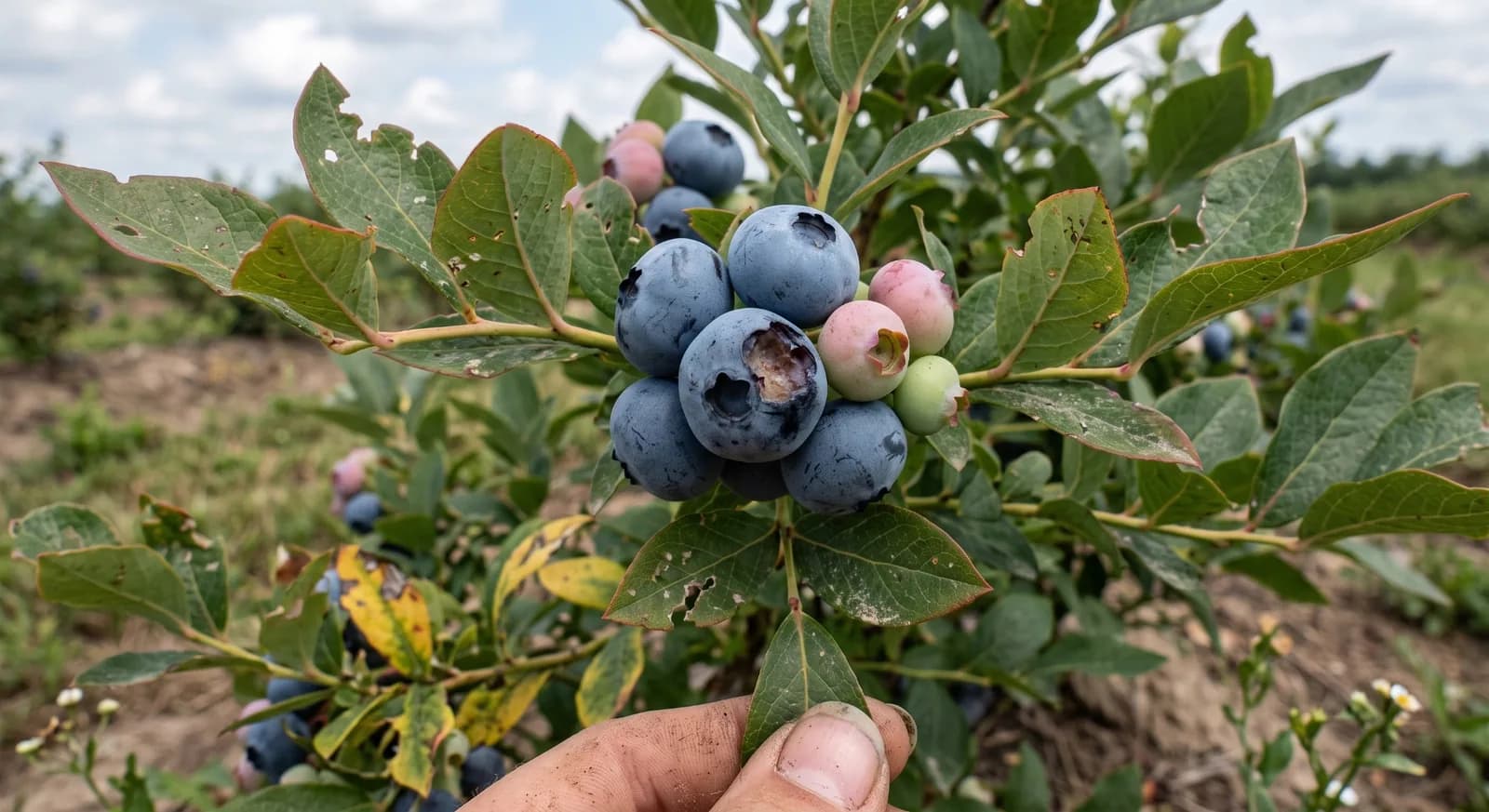
- The Midwest guide recommends frequent picking, gentle fruit handling and prompt cooling to about 0–2°C (32–35°F). Plan labor, containers and cooling capacity before the first crop.2
Frequently asked questions
- Are blueberries grown commercially in Iowa?
- Yes. The 2022 USDA Census recorded 59 Iowa farms with tame blueberries, but suppressed acreage and does not provide a state yield benchmark.
- Which blueberry types suit Iowa production?
- The Midwest guide identifies northern highbush as the region’s primary commercial type. Iowa State also lists highbush and half-high options for Iowa; confirm cultivar hardiness, bloom timing and buyer fit.
- What soil pH should an Iowa blueberry field target?
- The Midwest production guide targets pH 4.5–5.0. Test soil well before planting because acidification takes time and rates depend on soil conditions.
- How should commercial rows be spaced?
- The Midwest guide gives 10–12 ft between rows and 3–5 ft between plants. At 10 × 3 ft, it reports about 1,450 plants per acre. Adjust the layout for cultivar size and equipment.
- What yield can an Iowa blueberry farm expect?
- The reviewed sources do not provide a reliable Iowa commercial yield benchmark. The USDA Census suppresses Iowa acreage, so build forecasts from nearby farm records and buyer requirements.
Regional blueberries guides
Local dates, soil-temperature history and sources for specific regions:
Sources and image credits
- 1. USDA NASS — 2022 Census of Agriculture, Iowa, Table 38: Berries by Acres — Published 2024; 2022 data. Iowa farm counts for tame blueberries; acreage is suppressed.
- 2. University of Kentucky Cooperative Extension — ID-210 Midwest Blueberry Production Guide — Issued July 2013. Midwest commercial recommendations for cultivar selection, site preparation, planting layout, irrigation, crop management and harvest.
- 3. Iowa State University Extension — Growing Blueberries in Iowa — Revised November 2013. Blueberry types and cultivar options listed for Iowa, soil pH and local planting guidance.
Image credits
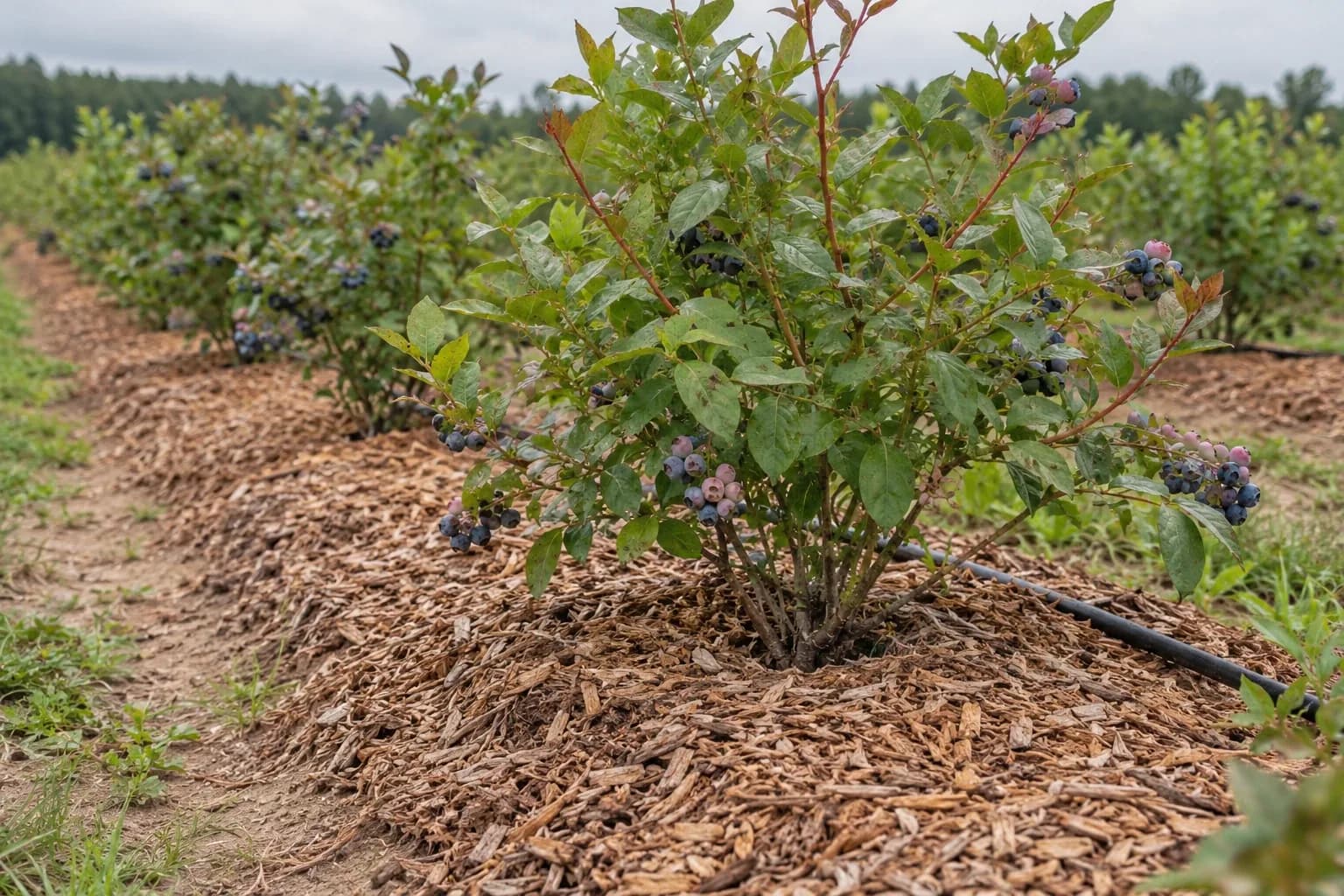
- A fruiting blueberry bush with mulch and drip irrigation.
- Blueberries need an acidic, organic root zone. Schematic illustration.
- Inspect fruit for damage as it ripens.
Figures are published averages or study assumptions for the places named, not guarantees for your field. Check current local recommendations and product labels before acting.
Some visuals in this guide are illustrations rather than photographs of a specific farm. See image credits.