

Growing corn in South Africa
South African maize is mainly a summer-rainfall crop, with planting timing shifting from the cooler east to drier western districts. Match cultivar maturity, stand, soil fertility and harvest logistics to the local rainfall pattern and the grain or feed market; the national calendar is not a single farm schedule.
By AgriAuditor. Updated .
Scope: Commercial grain maize in the summer-rainfall production system. Planting dates, plant population, yield and harvest vary by province, rainfall onset, soil, cultivar and market.
At a glance
- Harvest reference
- Most national harvest activity: late May through August2
Planting and harvest calendar for South Africa
Use the source-backed production windows to coordinate establishment, crop care and harvest. Production districts and cultivars can have different cycles; the historical climate adds context for the field plan.
Planting: South African regional planting references1,3
The Department of Agriculture planting guide describes early October to early November in cooler eastern areas, late October to mid-November centrally, and late November to mid-December in drier western areas. Rainfall onset, cultivar and local conditions still determine the field date.
Harvest: Recent national maize harvest period2,5
The 2025 Trends in the Agricultural Sector report says most maize is harvested from late May through August. FAO reported the 2026 harvest beginning in April in eastern areas; onset and finish shift by region and season.
Historical monthly climate
Reference period: 1996-01-01 to 2025-12-31. ERA5-Land monthly mean soil temperature at 0–7 cm, air temperature and frost days at the regional reference point (-29, 26). Select a month to inspect its historical conditions.
Month tiles show mean topsoil temperature.
October historical conditions
- Mean topsoil temperature
- 23.0°C
- Mean air temperature
- 19.8°C
- Mean frost days per month
- 0.0 days
These are monthly means at one reference location. They describe seasonal field conditions, not crop maturity, actual seed-zone conditions, frost forecasts or a planting recommendation. Harvest bands follow the crop-specific production sources above.
Climate source: Open-Meteo Historical Weather APIChoose the production region and market
- 1
Confirm outlet
Set white/yellow type, grade, delivery and storage needs.
- 2
Check rainfall onset
Assess moisture and local planting conditions.
- 3
Choose hybrid
Match maturity and stress tolerance to the district.
- 4
Scout through grain fill
Track stand, pests and water stress by growth stage.
- 5
Harvest by moisture
Plan machinery, drying, transport and buyer acceptance.
Set planting date, depth and stand
Between rows: 75 cm rows · Within the row: 30 cm in-row at 45,000 plants/ha
Derived from the Department guide’s older spacing table. This is a worked example, not a current or universal South African prescription. Confirm hybrid, rainfed/irrigated system and machinery. Schematic, not to scale.
- Rainfed example30,000 plants/ha
- Rainfed example45,000 plants/ha
- Higher stand example60,000 plants/ha
- Plant when soil and rainfall are ready
- A recent season began slowly after sporadic October rain and November heat; planting accelerated after more consistent rainfall by mid-December. Use this as a seasonal example and wait for field conditions that support germination and even emergence.2
Build a soil and nutrient plan
- Sample each management zone
- Use soil testing to assess acidity, nutrient supply and field variability. Plan lime and fertilizer rates for expected yield potential, prior crop and rainfed or irrigated management; avoid copying a rate from another province.1,3
- Protect water in dryland fields
- The 2024/25 season report describes how February and March rainfall during grain fill supported yield potential in many summer-rainfall areas. Keep residue and soil structure in the plan and track field water stress where rainfall is erratic.2
Scout and manage the crop through maturity
Harvest for grain quality and storage
- Plan around the local harvest season
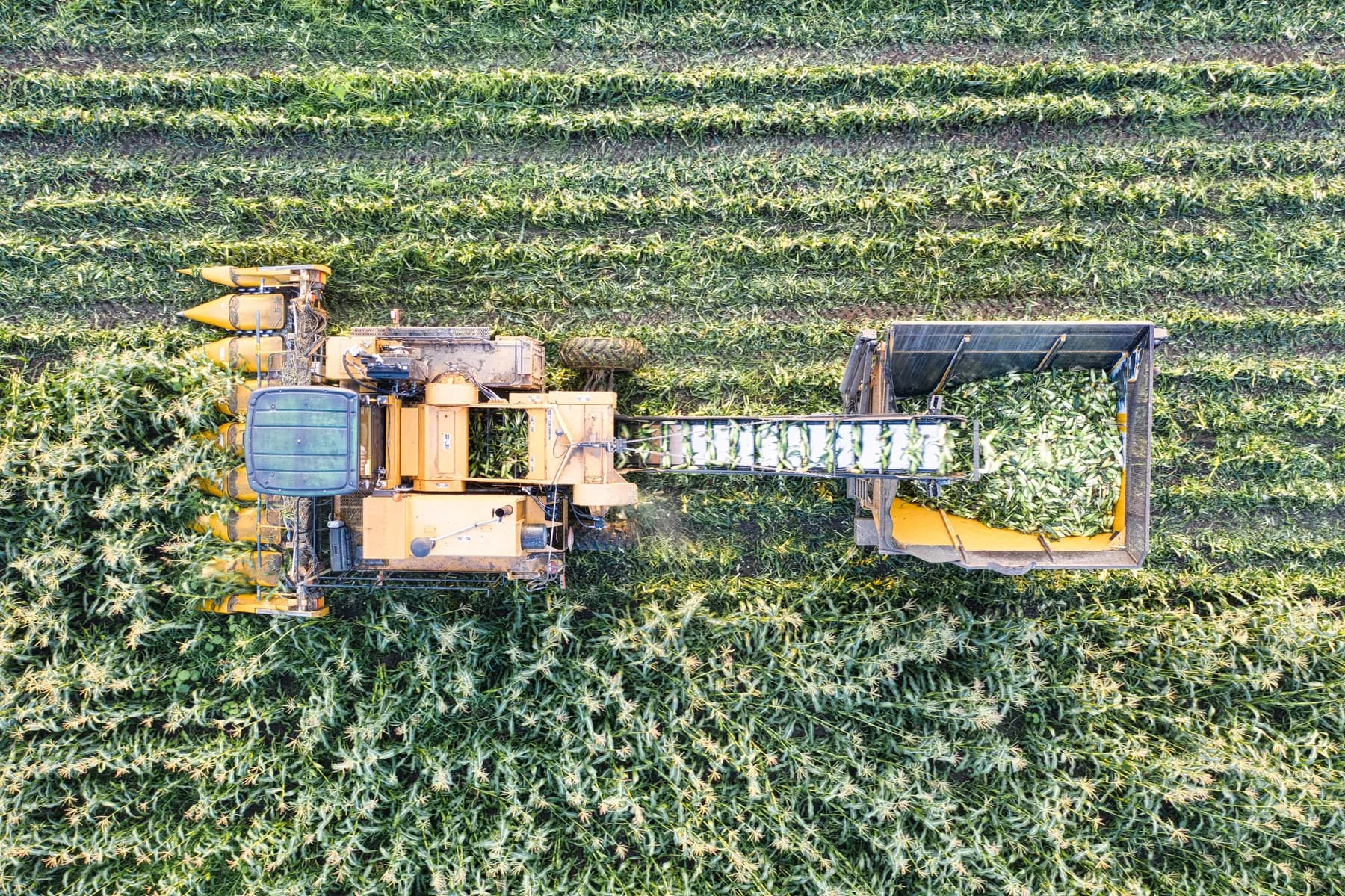
- The 2025 national report places most maize harvest from late May to the end of August, while FAO reported 2026 harvest starting in April in eastern areas. Field maturity, rain and region decide the actual harvest date.2,5
- Check grain moisture and grade
- An older ARC production guideline describes delivery at about 12.5–14% grain moisture. Verify current silo and buyer specifications before harvesting, and keep lots clean, dry and traceable.4
Frequently asked questions
- When is maize planted in South Africa?
- The national guide gives earlier planting in eastern areas, later in the central districts and late November to mid-December in drier western areas. Use rainfall onset and local extension guidance to set the field date.
- When is South African maize harvested?
- Most national harvest activity is reported from late May through August, with eastern areas sometimes starting in April. Season and province change the timing.
- How far apart should maize rows be?
- The older Department guide contains examples such as 75 cm rows, but current row width and population depend on cultivar, yield goal, water supply, machinery and market. Confirm with local technical guidance.
- Does all South African maize require irrigation?
- No. The 2025 agricultural-sector report says most maize is rainfed, though irrigated production is also present. Irrigation decisions must account for the field’s water source and crop budget.
Regional corn guides
Sources and image credits
- 1. South African Department of Agriculture — Maize production brochure — Updated November 2022. National maize production and agronomic guide; use regional planting guidance with current local recommendations.
- 2. South African Department of Agriculture — Trends in the Agricultural Sector 2025 — 2025. Recent maize production context, rainfed share, seasonal conditions and typical national harvest timing.
- 3. Department of Agriculture — Maize Production Management Guidelines — 2003. Historic regional planting windows, soil preparation, planting-depth and row-width/population tables; layout data is explicitly treated as a reference example.
- 4. Agricultural Research Council — Maize Information Guide — 2015. South African cultivar regions, production planning, soil fertility, pest and disease scouting and grain-crop management.
- 5. FAO GIEWS — South Africa country brief — Accessed 7 October 2026. Current national crop-season update; 2026 maize harvest began in April in eastern areas.
Image credits
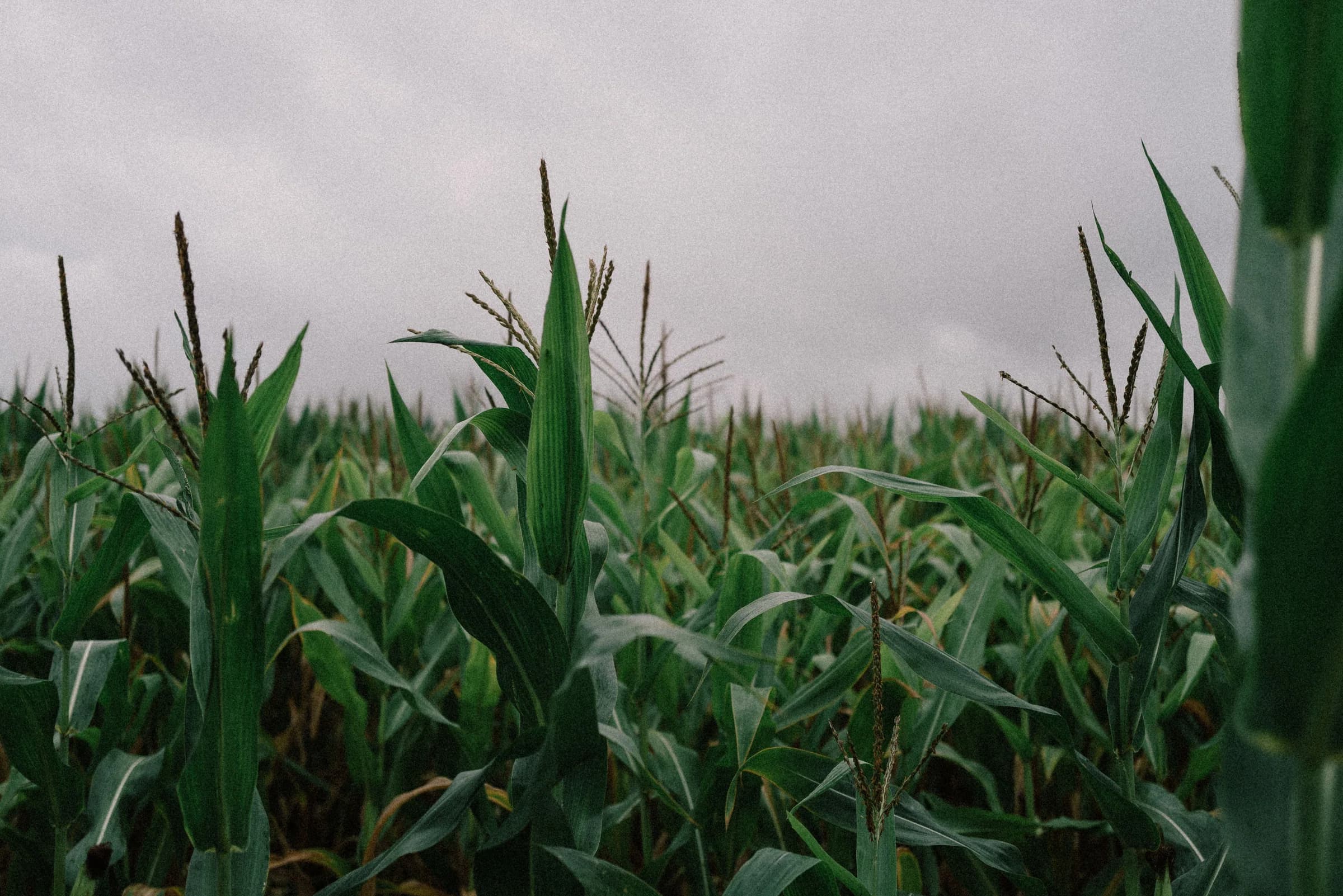
- Field corn. Photo: Lina Kivaka, via Pexels (Pexels License).
- Corn harvest from above. Photo: Tom Fisk, via Pexels (Pexels License).
Figures are published averages or study assumptions for the places named, not guarantees for your field. Check current local recommendations and product labels before acting.