

Growing corn in Mato Grosso
Mato Grosso corn is primarily a second crop planted after soybean. The key decision is whether the soybean harvest leaves enough time and stored soil water for corn to flower and fill grain before the dry season. This guide treats planting dates and trial layouts as references; the current municipal ZARC and your field history decide the actual plan.
Scope: Commercial grain corn, with emphasis on the dominant second-crop system after soybean. Municipality, soil water capacity, hybrid cycle and season change risk. Updated 2026-10-07.
At a glance
- Harvest reference
- State harvest activity starts around the second half of June in documented seasons5
Planting and harvest calendar for Mato Grosso
Use the source-backed production windows to coordinate establishment, crop care and harvest. Production districts and cultivars can have different cycles; the historical climate adds context for the field plan.
Planting: Second-crop sowing references2,4
Conab reported second-crop planting starting in late December in Mato Grosso in 2024/25. Embrapa notes that the ideal ZARC window closes by the end of February in most municipalities; look up the current risk bands for the farm municipality, soil water class and hybrid cycle.
Harvest: Observed second-crop harvest period5
Embrapa reported Mato Grosso second-crop harvest beginning in the second half of June in 2024 and gathering pace as the dry season set in. Harvest completion shifts with sowing date, region and season; this is an observed statewide reference, not a fixed annual schedule.
Historical monthly climate
Reference period: 1996-01-01 to 2025-12-31. ERA5-Land monthly mean soil temperature at 0–7 cm, air temperature and frost days at the regional reference point (-13, -56). Select a month to inspect its historical conditions.
Month tiles show mean topsoil temperature.
December historical conditions
- Mean topsoil temperature
- 26.2°C
- Mean air temperature
- 25.5°C
- Mean frost days per month
- 0.0 days
These are monthly means at one reference location. They describe seasonal field conditions, not crop maturity, actual seed-zone conditions, frost forecasts or a planting recommendation. Harvest bands follow the crop-specific production sources above.
Climate source: Open-Meteo Historical Weather APIPlan corn around the soybean harvest
- 1
Plan soybean
Choose an early enough crop sequence for the intended corn block.
- 2
Check ZARC
Use current municipal risk windows and soil water class.
- 3
Sow corn
Match hybrid maturity and field conditions to the remaining season.
- 4
Protect flowering
Monitor water supply as rainfall declines toward grain fill.
- 5
Harvest and dry
Track field maturity, grain moisture, storage and buyer specifications.
- Treat the crop as a rotation sequence
- Most Mato Grosso corn follows the summer crop, especially soybean. Choose the soybean hybrid and harvest plan with the next corn sowing in mind; a late predecessor can push corn flowering and grain fill into the dry season.2,3
- Check the current risk window
- The 2026 ZARC update uses 30-year weather records and soil available-water classes. Look up municipality, crop system, soil class and hybrid group in the current official panel instead of applying one statewide planting date.1
Set hybrid, stand and field layout together
Between rows: 45 cm row treatment · Within the row: ≈37 cm within row at 60,000 plants/ha
Within-row spacing is calculated from the trial population and row width. This is one experimental setup, not a Mato Grosso farm recommendation. Schematic, not to scale.
- Lower treatment40,000 plants/ha
- Middle treatment60,000 plants/ha
- Upper treatment80,000 plants/ha
- Match hybrid cycle to sowing date
- Later sowing shortens the reliable wet-season runway. Select a locally available hybrid with maturity and stress tolerance that suit the sowing date, target use and machinery; ask the current regional technical team for cultivar positioning.2,3
- Use trial layouts as comparisons
- A Mato Grosso field experiment at Alta Floresta tested 45 cm and 90 cm rows and populations of 40,000, 60,000 and 80,000 plants/ha. It showed responses varied with arrangement and hybrid; these treatments are experimental comparisons, not a statewide prescription.6
Manage soil water and fertility by field
- Protect the reproductive stages
- Rainfall and stored soil water can decline as the crop moves into flowering and grain fill. The Embrapa monitoring study documents how sowing delay shifts these sensitive stages toward the drier part of the season; use field observations and available soil-water information to assess each block.3,5
Scout by field and crop stage
Harvest, dry and store the grain safely
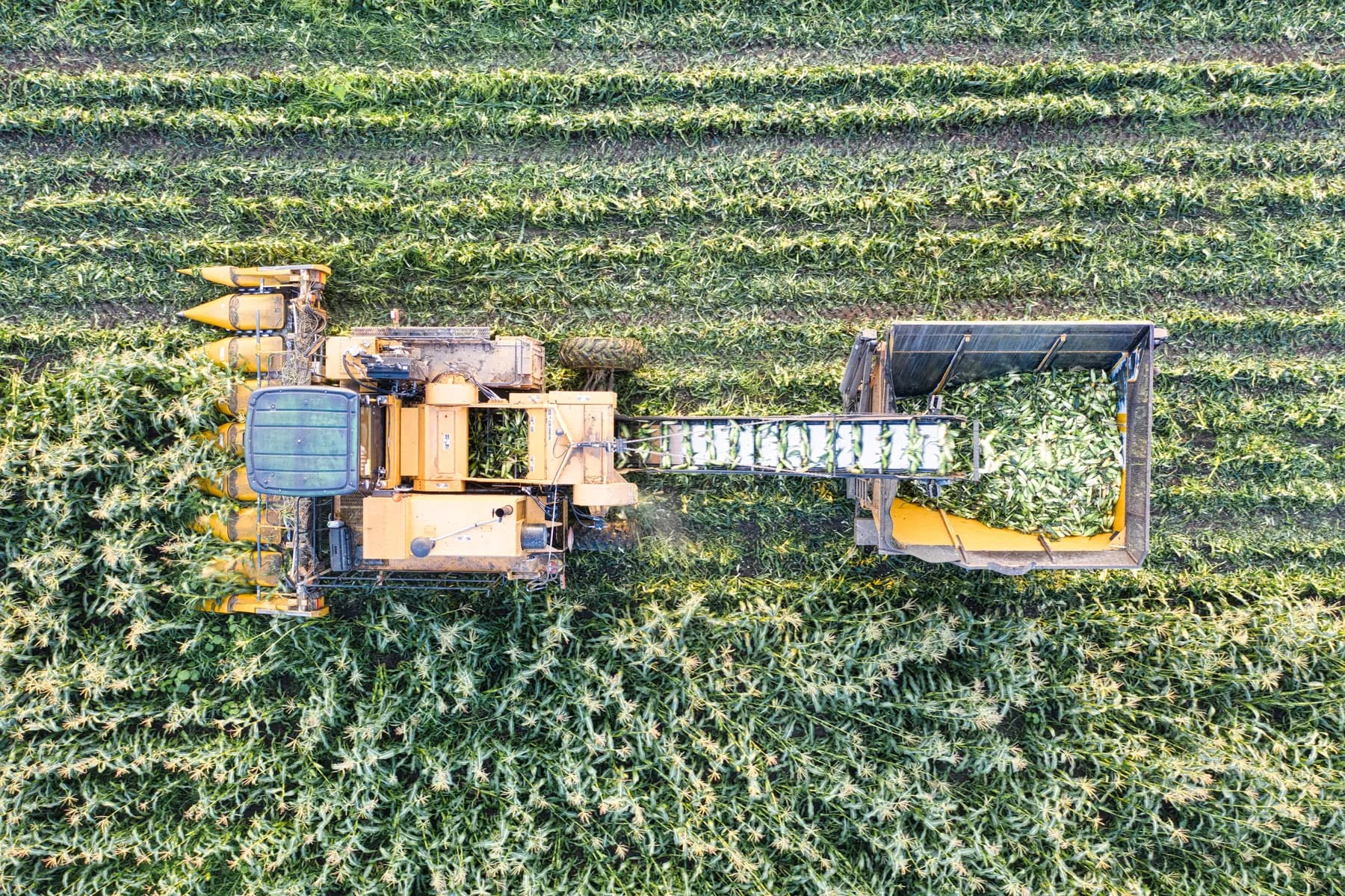
- Harvest readiness varies by block
- The second-crop harvest starts as the season dries, but sowing date, hybrid and local rainfall affect maturity. Check grain moisture and ear condition in each field before setting combine and dryer plans.5,7
- Protect quality after combining
- Clean and dry grain to the buyer and storage specification, monitor moisture and temperature in storage, and keep lots traceable to field and hybrid. The state-level calendar cannot replace a moisture reading at harvest.7
Frequently asked questions
- When is second-crop corn planted in Mato Grosso?
- Conab documented planting from late December in 2024/25, while Embrapa says the ideal ZARC window ends by late February in most municipalities. The current ZARC result varies by municipality, soil water class and hybrid group.
- Why does soybean harvest timing matter for corn?
- Second-crop corn usually follows soybean. A delayed soybean harvest can push corn into a period with less remaining rainfall, especially around flowering and grain fill.
- What corn population should I use?
- There is no one statewide number in the sources reviewed. Use hybrid guidance, field water availability, fertility, planting date and machinery; the Alta Floresta research treatments are comparisons, not prescriptions.
- When does Mato Grosso second-crop corn get harvested?
- Embrapa reported harvest activity starting in the second half of June in 2024. Completion differs by region and season, so monitor crop maturity and grain moisture.
Regional corn guides
Local dates, soil-temperature history and sources for specific regions:
Sources and image credits
- 1. Ministry of Agriculture and Livestock (MAPA) — Updated ZARC for grain corn — 11 July 2026. Current ZARC methodology, updated climate series, water-availability soil classes and municipality-specific sowing risk.
- 2. Embrapa Agrossilvipastoril — The ideal corn sowing window is closing in Mato Grosso — Accessed 7 October 2026. Reports that the ideal ZARC window closes by late February in most Mato Grosso municipalities and directs growers to the current municipal risk tool.
- 3. Embrapa Agrometeoros — Yield monitoring for second-crop corn in Mato Grosso — 2022. Second-crop predominance, soybean-to-corn sequence, sowing delays, rainfall risk and sensitivity around reproductive stages.
- 4. Conab — Brazilian grain crop monitoring, 2024/25 first estimate — October 2024. Season-specific example: 2024/25 second-crop planting expected to begin in late December, especially in Mato Grosso and Paraná.
- 5. Embrapa Agrossilvipastoril — Agrometeorological tracking of the 2023/24 second crop in Mato Grosso — 2024. Rainfall decline and the observed start of second-crop harvest in the second half of June 2024.
- 6. Embrapa Maize and Sorghum — Plant spacing and population — Accessed 7 October 2026. Explains that maize stand depends on water, soil fertility, hybrid cycle, sowing date and row spacing; broad range only.
- 7. International Journal of Maize & Sorghum — Plant arrangement and density in Alta Floresta, Mato Grosso — 2014. Research comparison of 45 and 90 cm row widths and 40,000, 60,000 and 80,000 plants/ha; not a statewide current recommendation.
- 8. Embrapa Agrossilvipastoril — Grain storage observations from Mato Grosso — 2018. Local postharvest grain storage and quality risks from field observations; storage procedures must fit current grain and buyer specifications.
Image credits
- Field corn. Photo: Lina Kivaka, via Pexels (Pexels License).
- Corn harvest from above. Photo: Tom Fisk, via Pexels (Pexels License).
Figures are published averages or study assumptions for the places named, not guarantees for your field. Check current local recommendations and product labels before acting.