

Fine-textured
Silty clay, clay loam, silty clay loam
1.5–2 in (3.81–5.08 cm)
Commercial field guide · Quebec
Grain maize is a major Quebec crop concentrated in the southern and central production regions. The local field calendar is shaped by heat-unit zone, soil trafficability and harvest maturity.
This guide covers commercial grain maize; sweet corn and forage systems need different plans.
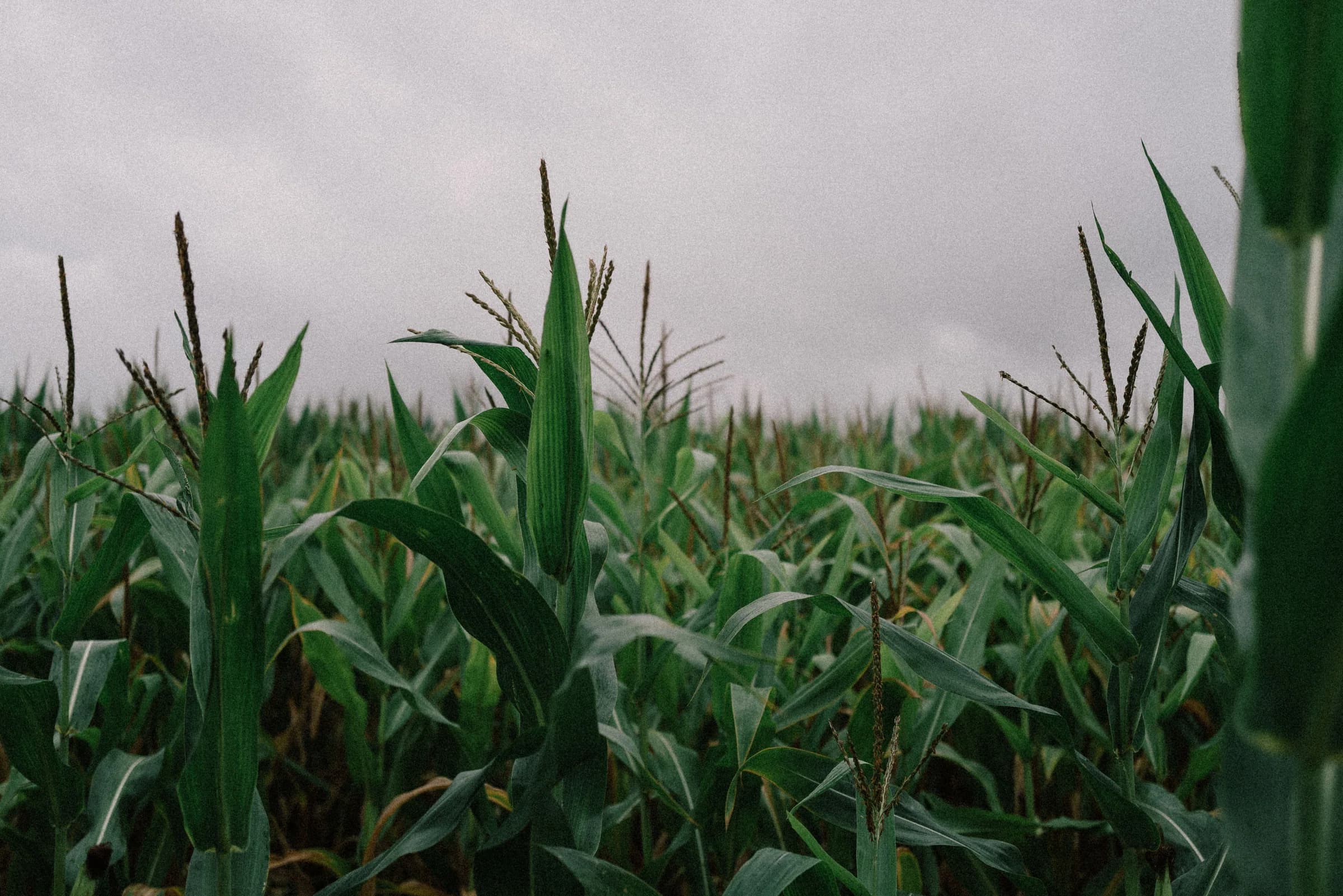
Montérégie, Centre-du-Québec, Chaudière-Appalaches, Montréal–Laval–Lanaudière, Capitale-Nationale and Mauricie account for most of the province’s grain-crop area; maize is especially concentrated in these regions.
Quebec government production statistics, RGCQ 2024 commercial hybrid trials and the 2025 crop-season report. The trial planting date and final stands are observations, not a province-wide annual prescription.
Step 1 of 7 · Assess
Use this checklist to identify field, seed, water and market constraints before committing acreage.
6 topics still to verify· planning aid only, not a suitability score
Selections stay in this browser tab and are not saved or sent anywhere.
Step 2 of 7 · Plan
Regional planting calendar
May–June · southern to cooler Quebec production areas
Use May as the central southern-region planning month, with later work into June in cooler or higher production areas. Quebec trial sites were planted May 16–26 in the favorable 2024 season; that field-trial record anchors the calendar but is not a fixed annual deadline.
Prioritize a fit seedbed and a forecast that supports uniform emergence. Quebec’s 2025 season showed how cold temperatures and frequent late-May/June rain can delay planting, extend deadlines and leave uneven stands.
Historical seed-zone climate
The month band uses the regional minimum (50°F / 10.0°C) through 40°C. The optimum shown is for fastest seedling emergence, not whole-season crop growth. Climate period: 1996-01-01 to 2025-12-31; ERA5-Land soil-temperature estimates at 0–7 cm, summarized by complete year at the configured regional reference point.
The cited calendar and temperature-supported months overlap in May–June in at least half of the complete years. Early, Main and Late mark the temperature-supported months inside the published calendar bands; other months show climate context.
Median monthly mean: 2.6°C (36.7°F) · 0/30 complete years in the thermal band · 0/30 years in the optimum band
Sources: University of Nebraska–Lincoln Extension — Soil temperature as a key factor in planting decisions · Beegum et al. — Corn seedling emergence and temperature in recent hybrids · Weaich, Bristow & Cass — High-temperature stress in preemergent maize · Open-Meteo Historical Weather API
Before planting, check field moisture, the short-range forecast, crop purpose and any insurance deadline.
Step 3 of 7 · Prepare
Measure soil temperature at the cited seed-zone depth, then check soil moisture, drainage, residue and the forecast before planting.
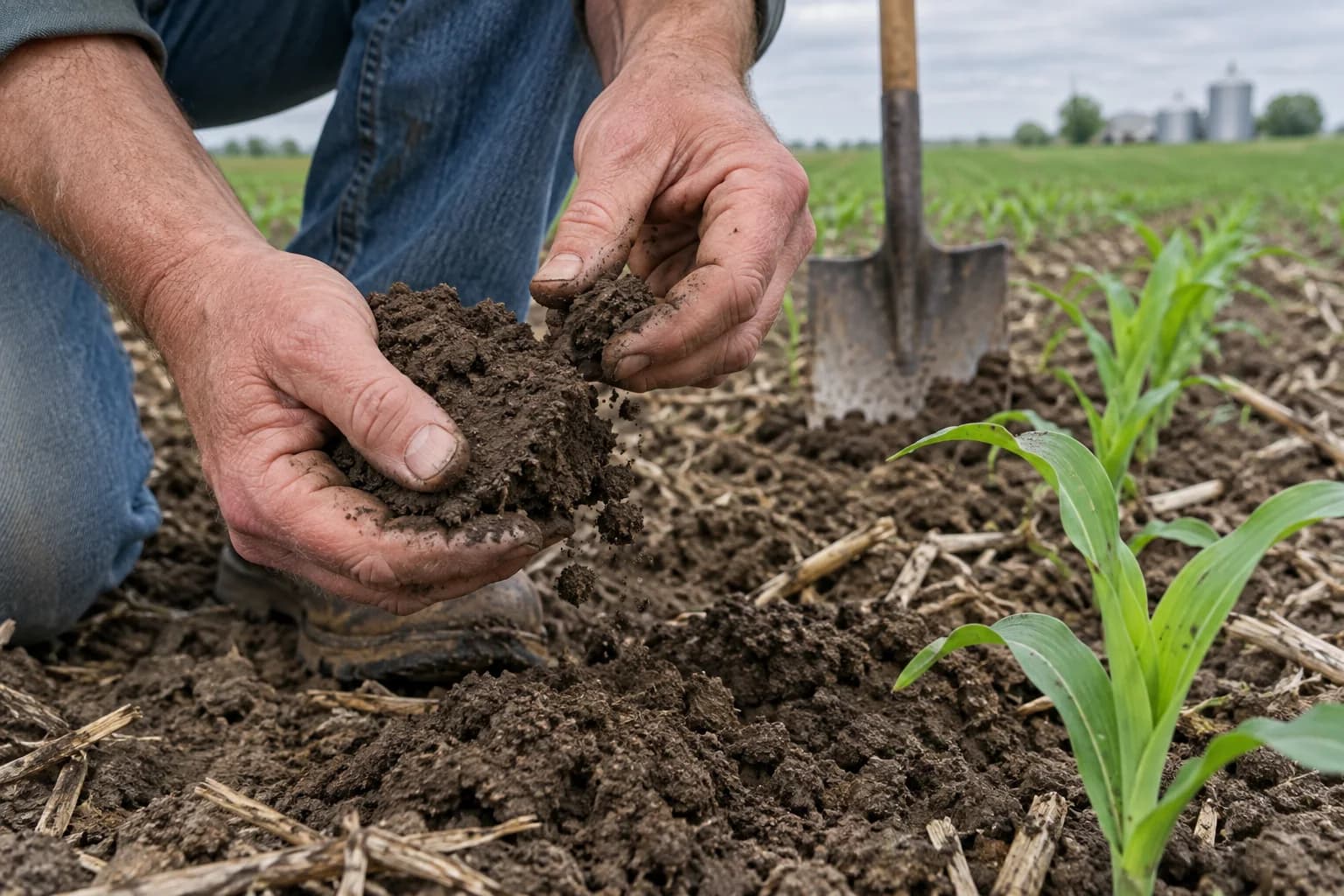
First check
A crumbly, workable seedbed
Check tilth before field traffic and keep heavy equipment off wet ground.
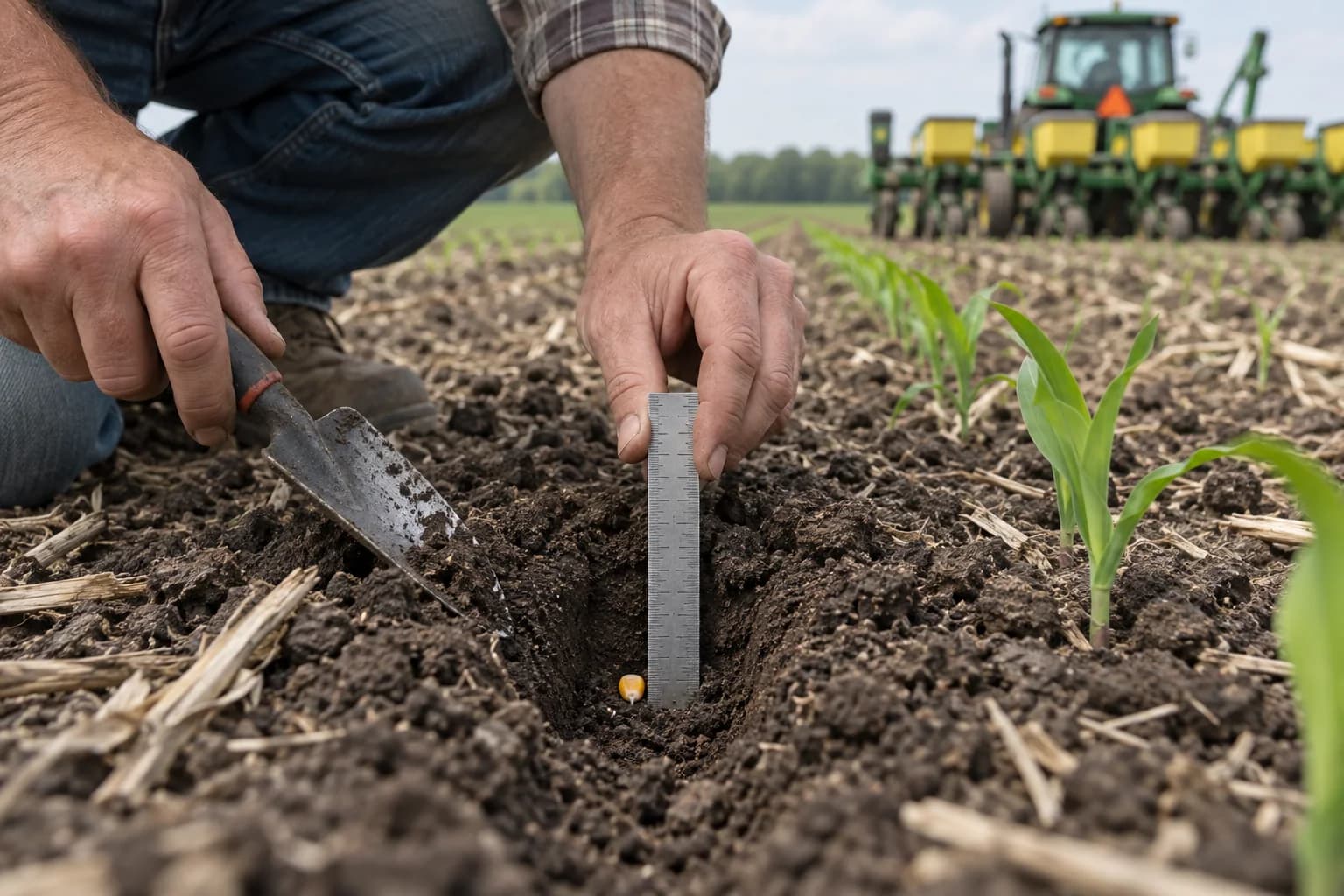
Plant into a uniform seedbed at a consistent depth. After the first pass, expose seed in several soil zones and check furrow closure and seed-to-seed spacing.
Dig behind the planter to measure seed depth and check furrow closure across the field’s soil zones.
Planting-depth reference
These widely used corn seed-depth ranges bring Extension recommendations and field trials together by soil texture.
Silty clay, clay loam, silty clay loam
1.5–2 in (3.81–5.08 cm)
Silt loam, loam, gravelly loam
1.75–2 in (4.45–5.08 cm)
Sandy loam, sand, sandy lenses
1.75–2 in (4.45–5.08 cm)
Measure from the settled soil surface to the seed. Check the row after the first planter pass.
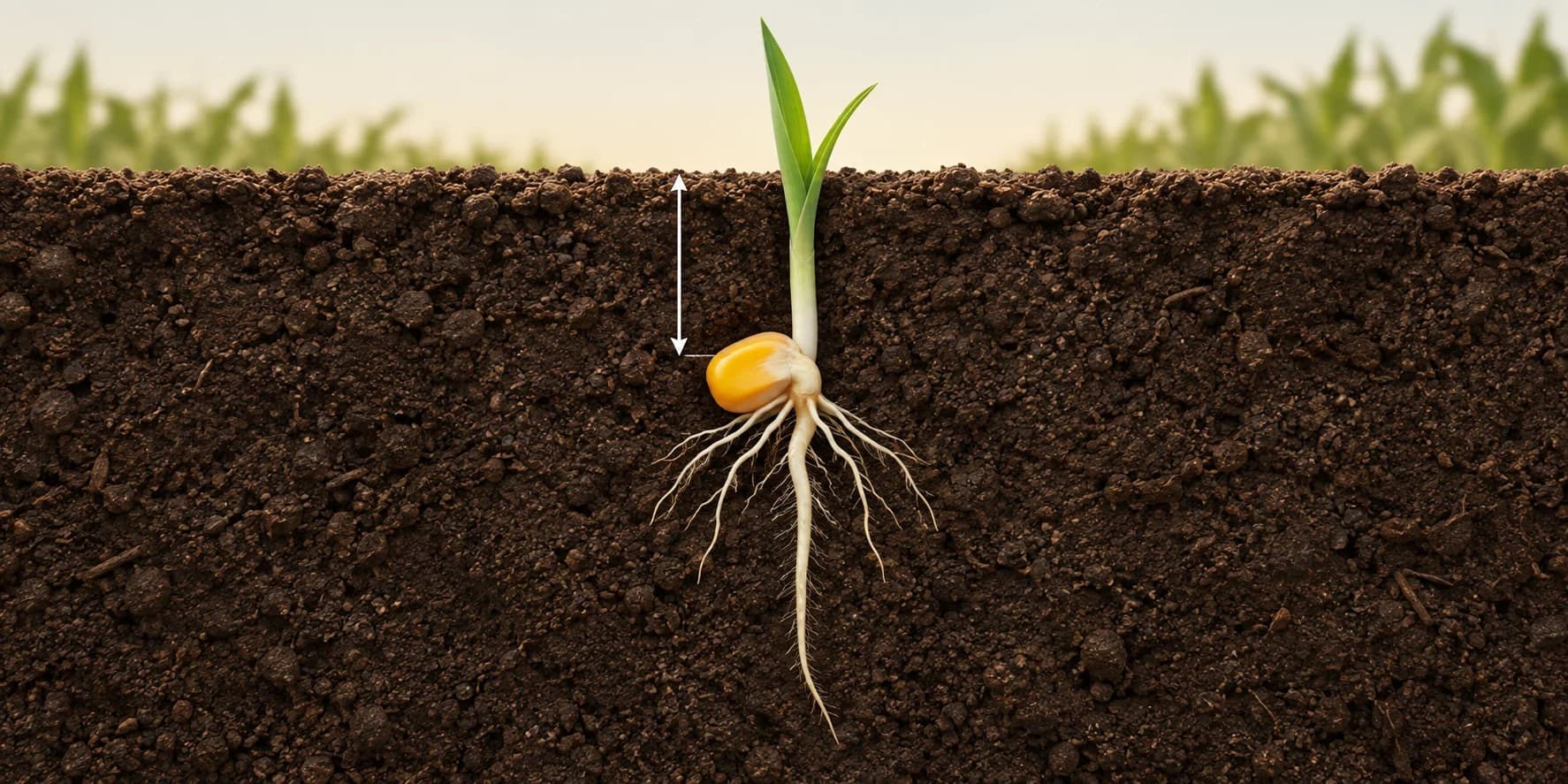 General starting range: 1.5–2 in (3.81–5.08 cm)
Step 4 of 7 · Establish
Regional commercial stand reference
Established stand
30,375–34,075 plants/ac (about 75,000–84,000 plants/ha) in 2024 grain-maize trials
Planter seed rate
Set the seed drop above the final stand target for expected field emergence; do not read trial plant counts as seed counts.
In-row spacing
About 16–18 cm between established plants in 75–76 cm rows
Regional reference: Réseau des grandes cultures du Québec — Grain maize hybrid trials 2024
A planter meters individual kernels along a continuous row, not a cluster in a planting pit. Set seed count from the target established stand and the seed lot’s germination, then check the row after the first pass.
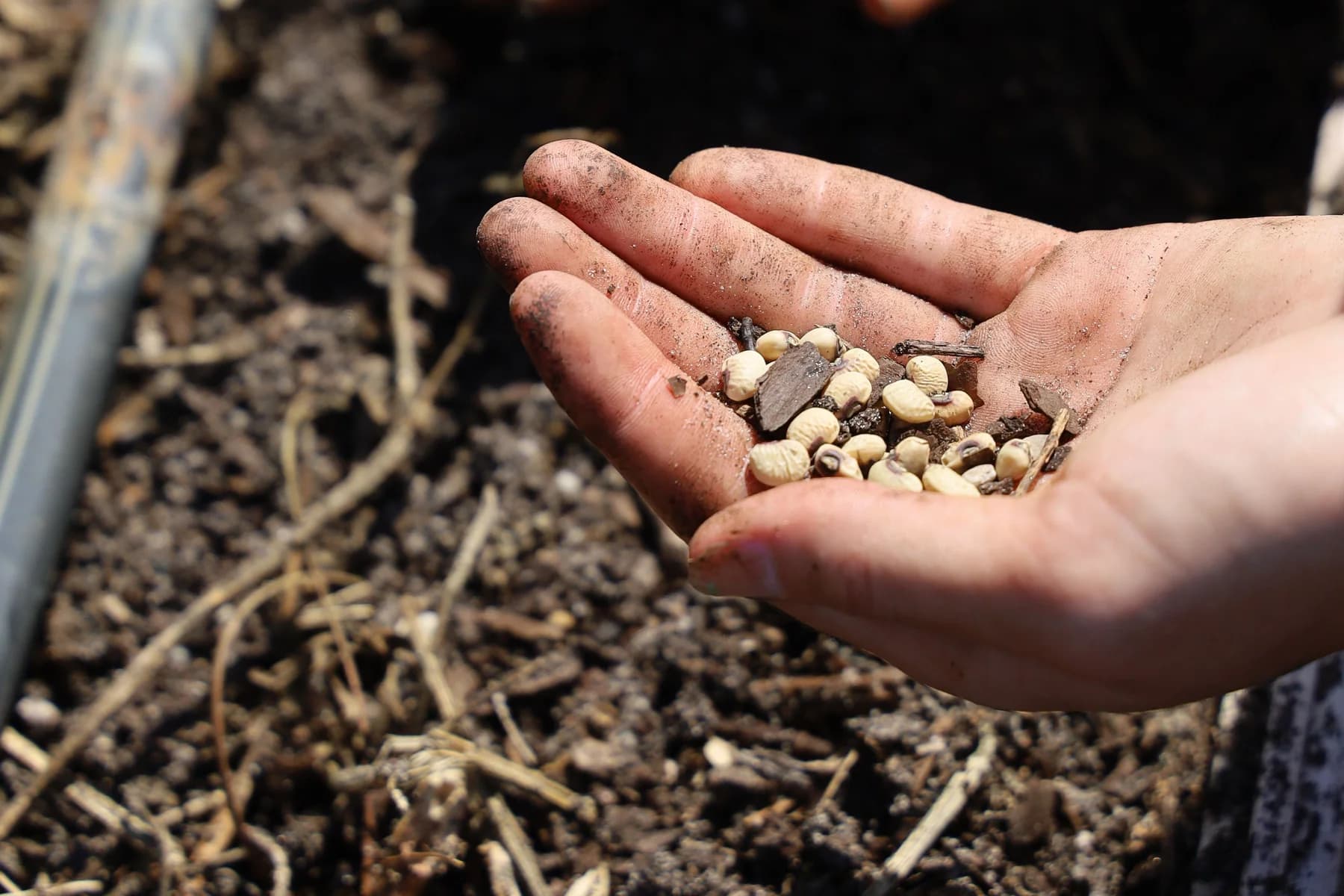
Use the intended field-corn hybrid and calibrate the planter for that seed lot. After the first pass, check seed spacing, depth and furrow closure, then adjust the planter as needed.
Set the planter by seeds per acre, then confirm singulation, seed spacing and downforce for the seed lot.
Dig seed after the first pass and again when soil, residue or tillage changes.
Measure row spacing and a known row length, count live plants, then convert the count to plants per hectare. Repeat in at least six representative field areas.
Step 5 of 7 · Manage
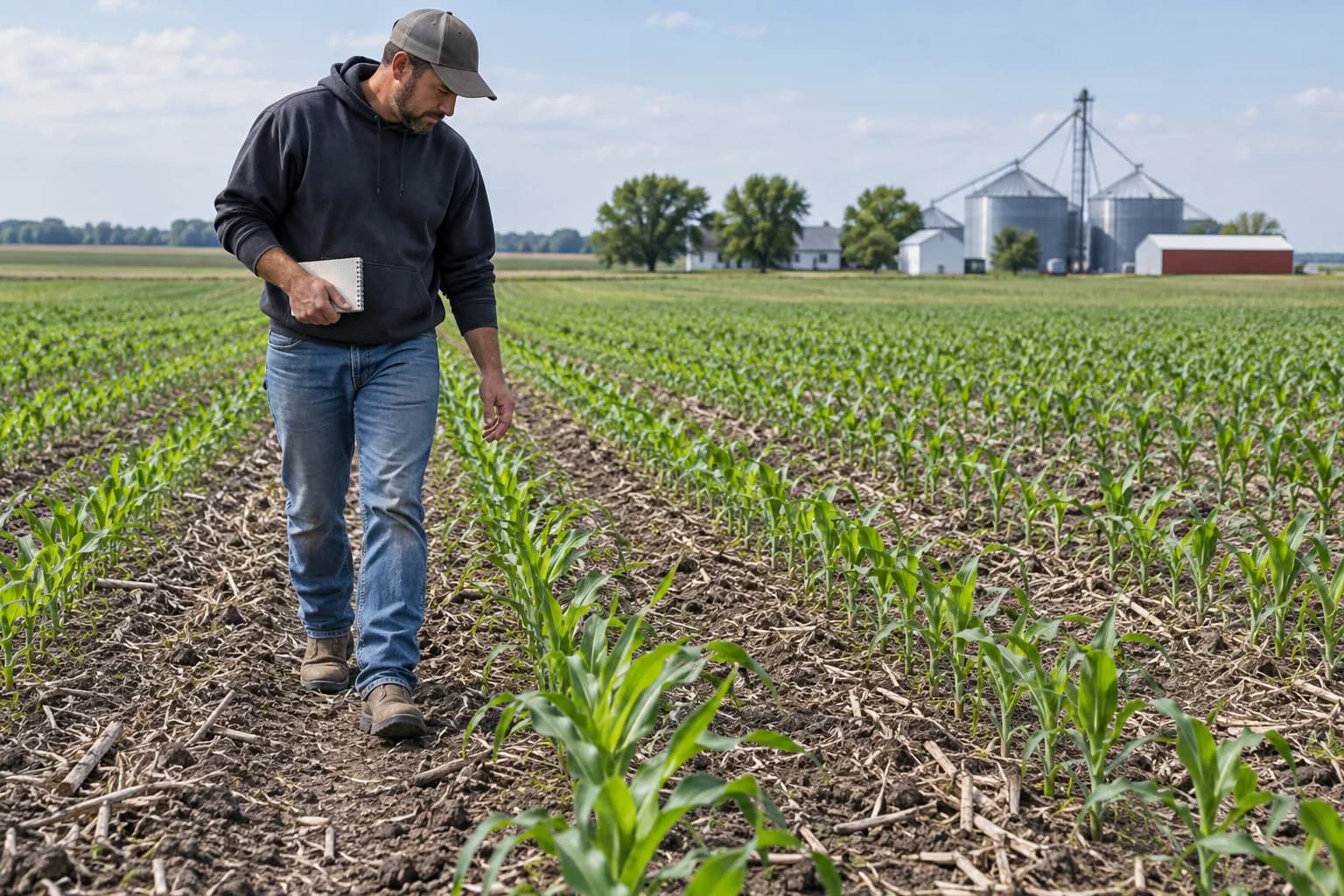
Cold, wet planting periods can delay sowing and expose emerging crops to seedling disease and soil insects. Watch for crusting and uneven emergence after heavy rain.
Use crop stage, field history and current local thresholds to guide scouting. Follow the product label for crop, use and application directions.
Check representative rows for gaps, doubles and uneven emergence. Compare plant counts with the planting record to locate stand issues.
Step 6 of 7 · Harvest
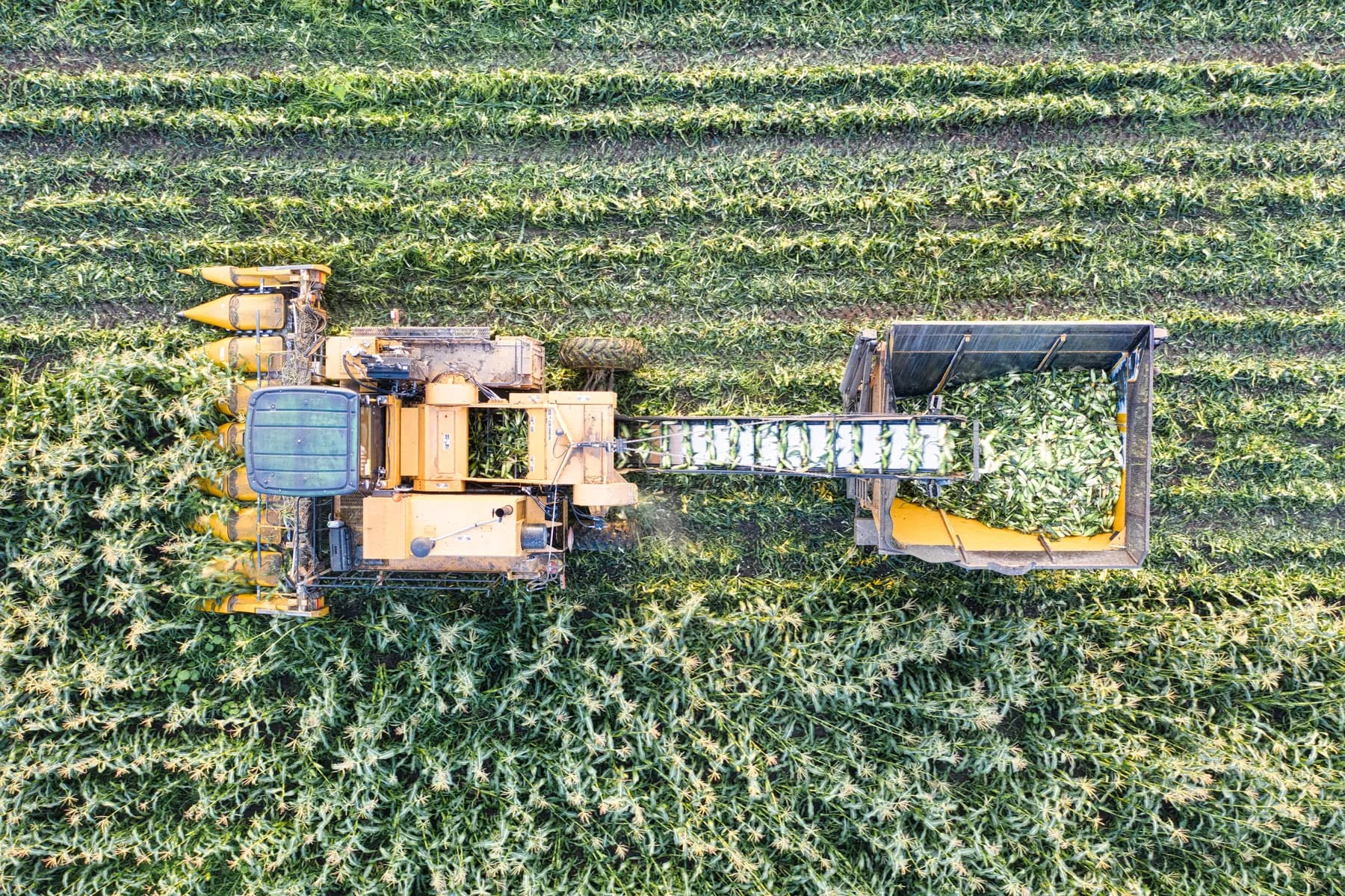
Select hybrid maturity for the production zone and monitor grain dry-down so combine, dryer and storage capacity match the harvest sequence.
Step 7 of 7 · Reference
These are the research and regional production sources used to build the decisions above. The guide brings that evidence into one field-to-harvest sequence.
Updated 24 March 2026; accessed 27 September 2026 · Grain-corn production area, leading administrative regions and market context.
December 2024 · Commercial hybrid trials; site sowings took place May 16–26 in the 2024 season and final stands ranged 30,375–34,075 plants/ac.
2025 · Documents planting delays from cold temperatures and frequent late-May/June rain, with uneven emergence in several regions.
Modified February 2026; accessed 26 September 2026 · Distinguishes seeds planted from established plants; reports 90–95% stand establishment and trial-based economic-optimum rates.
Reviewed 2021; accessed 26 September 2026 · Minnesota planting rates of 34,000–36,000 seeds per acre and common 5% stand loss.
Current page; accessed 26 September 2026 · Stand-count method for 1/1,000 acre, 30-inch row sample length, northern Corn Belt population and stand uniformity.
12 April 1996 · Explains why kernel size and shape affect seed-unit weight and planter singulation.
Archived example; accessed 26 September 2026 · Shows 80,000-kernel units with different bag weights and calculates planted mass from seed-lot tag data.
Current page; accessed 26 September 2026 · New York planting-depth guidance by soil texture and planting period.
25 July 2014 · New York field trials describing planting-depth, soil-texture, weather and crusting interactions.
17 April 2026 · Kentucky: 1.5–2 inches for most silt loams; river sand lenses may require placement as deep as 3 inches to reach moisture.
December 2022 · General corn seed-depth range and moisture-based examples.
2018 · General starting range plus soil-texture examples: up to 2.5 inches in heavy clay and 3 inches in lighter sandy soils when conditions require.
February 2025 · Field trials in sandy and clay soils; reports 1.75–2 inch results and explains moisture, temperature and heavy-rain effects.
2019 · Oklahoma Panhandle study; depth response depends on soil temperature, moisture, texture and within-field variation.
2021 · Three-year Ohio trials comparing depth responses across loam/silt-loam and silty clay loam soils.
2021 · Open-access field research in central Missouri; soil texture and warm/cool emergence conditions interacted with stand outcomes.
6 May 2025 · Supports 50°F (10°C) as a minimum corn planting-temperature threshold; threshold context, not a complete regional planting calendar.
2023 · SPAR chamber study of ten recent hybrids; estimates fastest emergence near 28.8°C soil temperature and uses a 10°C base.
1996 · Agronomy Journal study; soil temperature above 40°C stops pre-emergent shoot elongation and can damage seedlings.
Climate archive refreshed 29 September 2026 · ERA5-Land 0–7 cm soil-temperature estimates; monthly summaries use the reference period shown in the climate panel.