

Growing avocados in South Carolina
South Carolina has a longer mild season along the coast than in the Upstate, but winter freezes still occur and most avocado cultivar injury thresholds are close to freezing. The sources reviewed do not establish a commercial avocado industry or state production system. Treat a coastal planting as a measured farm trial, not a proven commercial crop, and use winter low records from the exact site.
By AgriAuditor. Updated .
Scope: Commercial avocado feasibility across South Carolina. NWS freeze normals and UC avocado cold-tolerance references support a local climate screen, not a statewide production recommendation.
At a glance
- South Carolina freeze variation
- Charleston averages first freeze 27 November and last freeze 7 March; inland sites vary1
- Coastal growing-season example
- Georgetown averages first freeze 21 November and last freeze 13 March1
- Avocado injury reference
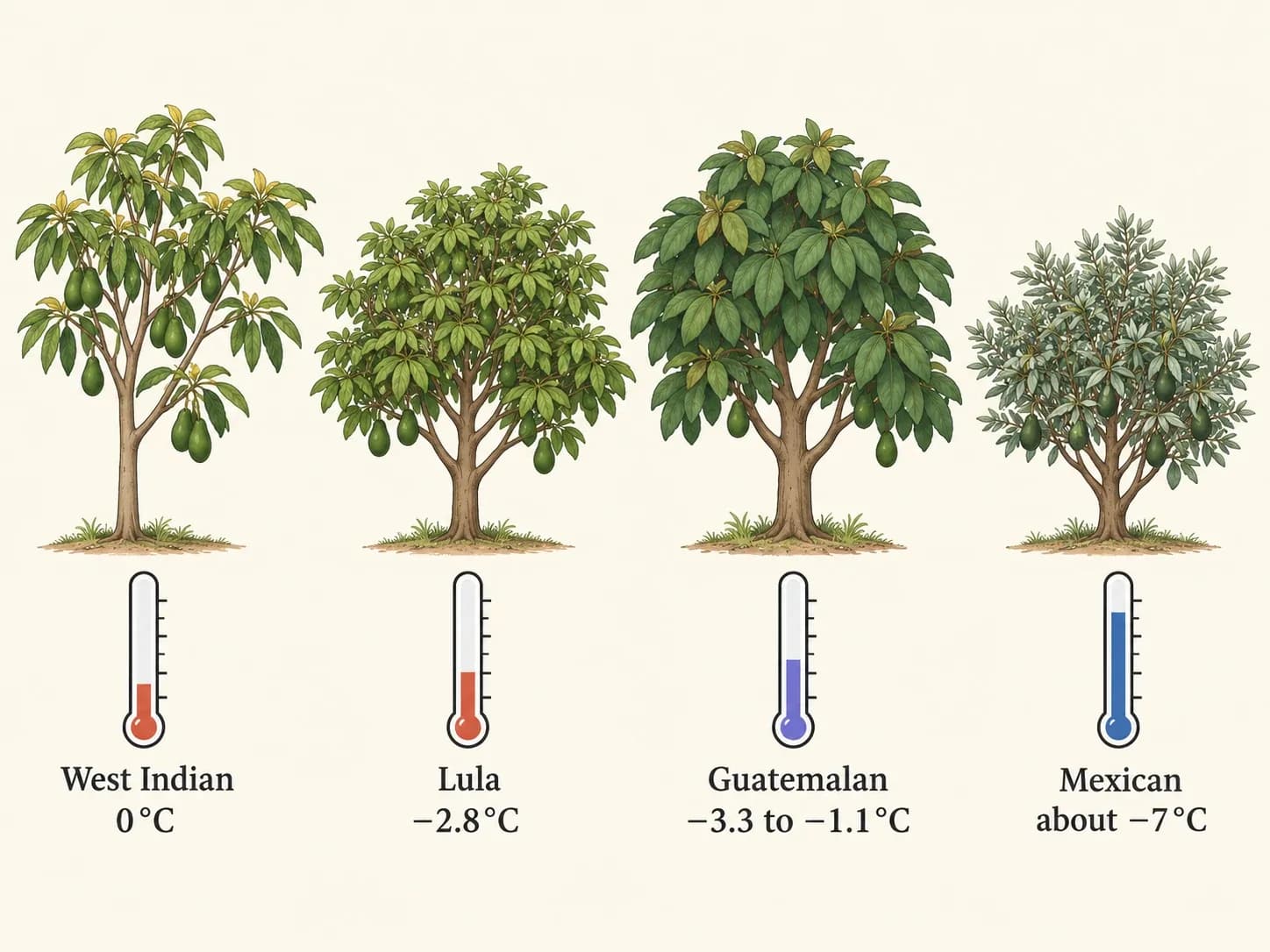
- Approximate thresholds range from 25°F for some Mexican types to 30°F for very tender cultivars2
Perennial growth and climate in South Carolina
A perennial planting remains in the field for multiple years. Establishment is a long-term investment; flowering, fruit development, harvest and plant care recur as the planting matures. Follow the named cultivar and production system.
Establish a long-lived planting1,2
South Carolina freeze dates vary by station and exposure. Compare the farm’s historical minimum temperatures with cultivar limits and verify that a protected trial can pay for itself before planting commercial acreage.
Historical monthly climate
Reference period: 1996-01-01 to 2025-12-31. ERA5-Land monthly mean soil temperature at 0–7 cm, air temperature and frost days at the regional reference point (34, -81). Select a month to inspect its historical conditions.
Month tiles show mean air temperature.
January historical conditions
- Mean topsoil temperature
- 7.9°C
- Mean air temperature
- 8.0°C
- Mean frost days per month
- 11.0 days
Use this monthly history to assess winter exposure, seasonal heat and water planning. It does not calculate cultivar chill hours, flowering dates, frost damage during bloom or fruit maturity. Topsoil at 0–7 cm describes shallow soil context, not the full root zone. The monthly history does not establish a local flowering, maturity or harvest period.
Climate source: Open-Meteo Historical Weather APIUse local freeze records, not the state average
- Mexican race25 °F
- Fuerte hybrids28 °F
- Hass and tender Guatemalan29 °F
- Very tender Guatemalan30 °F
- 1
Choose a NWS station
Use the nearest station and the field’s elevation, slope and cold-air drainage.
- 2
Match cultivar to winter lows
The approximate thresholds depend on cultivar, duration, tree age and acclimation.
- 3
Trial coastal and inland sites separately
A Charleston or Georgetown normal is not an Upstate farm climate.
- 4
Scale from measured fruiting
Require repeatable marketable fruit and a positive cost model.
- The coast is warmer, but freezes remain part of the risk
- NWS 1991–2020 normals give Charleston International Airport average first and last freeze dates of 27 November and 7 March; Georgetown averages 21 November and 13 March. Inland farms and low-lying cold pockets need their own station and field records.1
- Compare the record with avocado injury thresholds
- UC ANR lists approximate injury thresholds of 25°F for Mexican-race types, 28°F for Fuerte hybrids and 29°F for tender Hass types. These values are not guaranteed survival points and do not prove commercial adaptation in South Carolina.2
Build a cultivar trial before designing an orchard
- 1
Document microclimate
Record minimum temperatures, duration, wind and protection by block.
- 2
Compare cultivars
Track winter injury, bloom and compatible pollen overlap.
- 3
Measure fruit set and maturity
Record retained fruit, harvest date and packout over repeated years.
- 4
Calculate commercial costs
Include water, protection, labour, packing and buyer requirements.
- Protect roots and canopy
- Choose a warm, well-drained site and keep a freeze-response plan ready. Do not use California or Texas spacing as a South Carolina recommendation without local trial evidence.2,3
- Separate a coastal pilot from statewide claims
- NWS data show a clear difference between stations, and one mild winter does not show repeatable orchard performance. Keep results tied to the actual county and site.1
Make the farm decision from several seasons
Frequently asked questions
- Can you grow avocados commercially in South Carolina?
- The sources reviewed do not establish a South Carolina commercial avocado production system. A warm coastal site may justify a measured cultivar trial, but statewide commercial feasibility is not proven.
- When is the last freeze on the South Carolina coast?
- NWS 1991–2020 normals give 7 March for Charleston International Airport and 13 March for Georgetown. Local field exposure can differ.
- Which avocado cultivars handle cold best?
- Some Mexican-race types are more cold tolerant than Hass. UC ANR lists approximate injury thresholds near 25°F for Mexican types and 29°F for Hass types.
- Should I establish a South Carolina avocado orchard in spring?
- The reviewed sources do not support a commercial planting month. First screen winter risk, site drainage and cultivar performance through a multi-season farm trial.
- What would a South Carolina avocado trial need to prove?
- Measure winter survival, bloom overlap, fruit set, harvest maturity, quality, yield and protection costs for multiple seasons at the proposed site.
Regional avocado guides
Sources and image credits
- 1. National Weather Service Charleston — First and last freeze dates for South Carolina — 1991–2020 climate normals. Average freeze dates by South Carolina station; farm microclimates can differ.
- 2. UC ANR — Frost and freeze protection for avocado growers — Accessed 7 October 2026. Approximate injury thresholds by avocado type; not a South Carolina trial.
- 3. Clemson Extension — Understanding chill hours for fruit and nut trees in South Carolina — Published 12 January 2026. South Carolina temperature variability and the need to evaluate location-specific winter and spring conditions.
Image credits
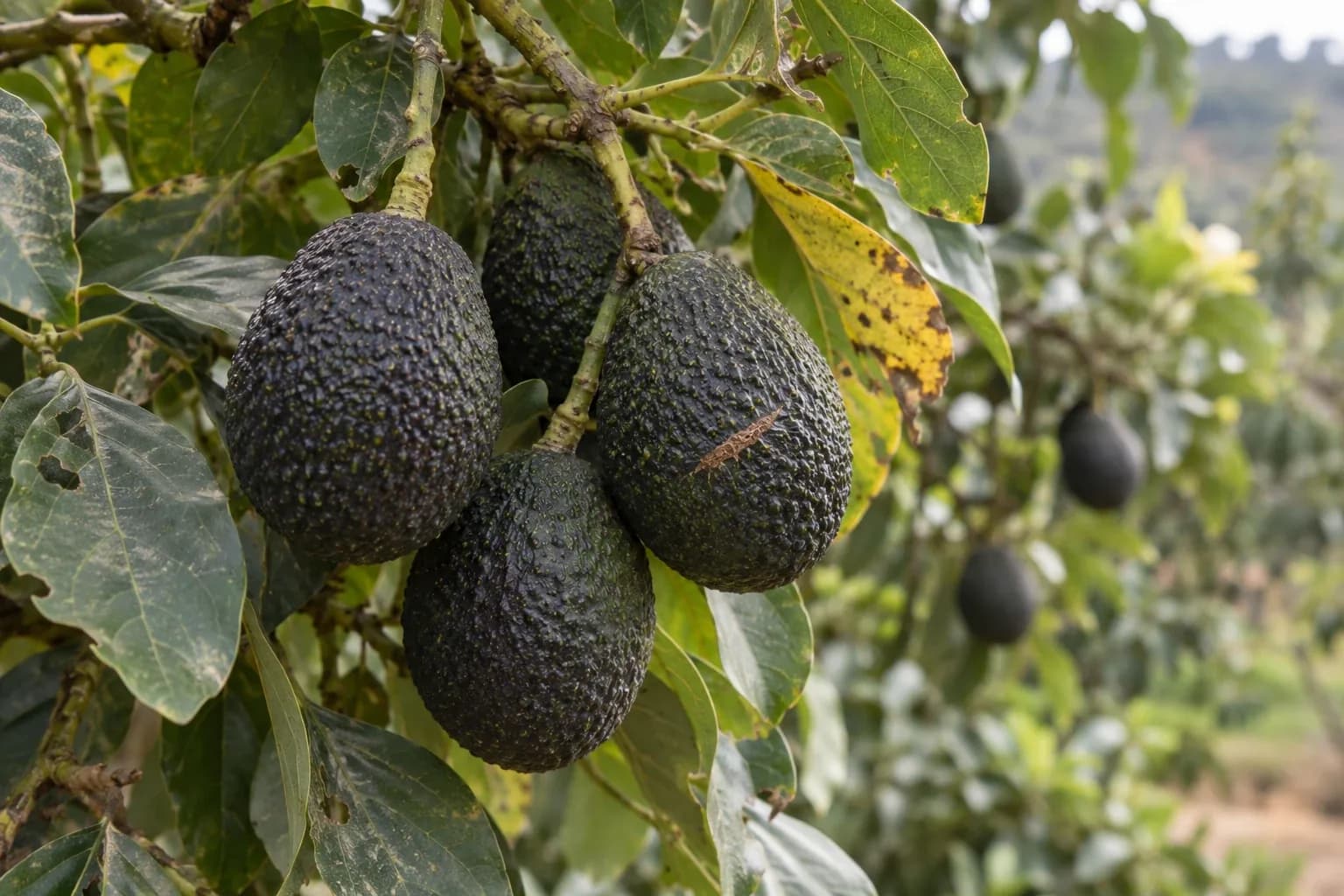
- Illustration of avocado fruit; cultivar and harvest timing vary by region.
- Illustration of published cold-tolerance thresholds; duration, tree age and acclimation affect injury.
- Illustration of orchard layouts from a California reference; it is not a local spacing recommendation.
Figures are published averages or study assumptions for the places named, not guarantees for your field. Check current local recommendations and product labels before acting.
Some visuals in this guide are illustrations rather than photographs of a specific farm. See image credits.