

Growing avocados in Pennsylvania
The reviewed sources do not document a commercial avocado production system in Pennsylvania. Penn State describes the state across hardiness zones 5–7, with regional freezes extending into spring and autumn; UC guidance places injury thresholds for common avocado types near or above freezing. Treat outdoor orchard investment as unsupported unless a protected, replicated farm trial establishes survival and repeatable marketable fruit.
Scope: Commercial outdoor avocado feasibility in Pennsylvania. This is a climate-risk screen using Pennsylvania cold-season evidence and avocado cultivar injury thresholds; it is not a state production recommendation. Updated 2026-10-07.
At a glance
Perennial growth and climate in Pennsylvania
A perennial planting remains in the field for multiple years. Establishment is a long-term investment; flowering, fruit development, harvest and plant care recur as the planting matures. Follow the named cultivar and production system.
Establish a long-lived planting1,2
Penn State places Pennsylvania in hardiness zones 5–7. Avocado injury thresholds occur near freezing, so first test whether a protected system can survive winter and produce fruit economically.
Historical monthly climate
Reference period: 1996-01-01 to 2025-12-31. ERA5-Land monthly mean soil temperature at 0–7 cm, air temperature and frost days at the regional reference point (40.9, -77.7). Select a month to inspect its historical conditions.
Month tiles show mean air temperature.
January historical conditions
- Mean topsoil temperature
- -0.3°C
- Mean air temperature
- -2.8°C
- Mean frost days per month
- 27.1 days
Use this monthly history to assess winter exposure, seasonal heat and water planning. It does not calculate cultivar chill hours, flowering dates, frost damage during bloom or fruit maturity. Topsoil at 0–7 cm describes shallow soil context, not the full root zone. The monthly history does not establish a local flowering, maturity or harvest period.
Climate source: Open-Meteo Historical Weather APICompare local winter lows with cultivar limits
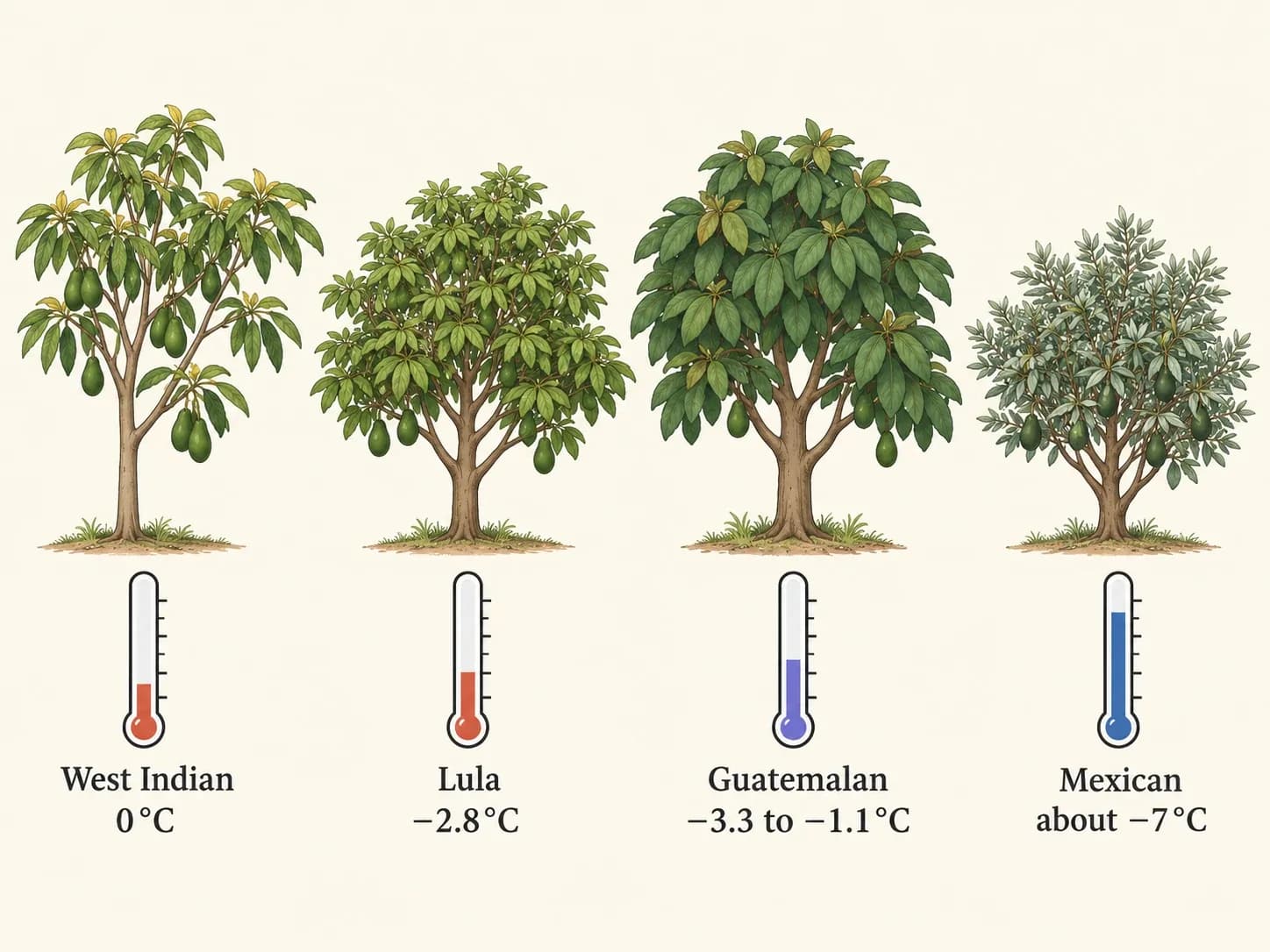
- Mexican race25 °F
- Fuerte hybrids28 °F
- Hass and tender Guatemalan29 °F
- Very tender Guatemalan30 °F
- 1
Select the station
Use the nearest frost station and the farm’s slope and cold-air drainage.
- 2
Compare cultivar exposure
Thresholds are approximate; cultivar, duration, age and tree condition change injury.
- 3
Price winter protection
Budget protected structures, heating, labour and backup systems.
- 4
Prove fruiting
Scale only after repeated, marketable crops and a positive budget.
- The state’s mildest district is not a statewide guide
- Penn State describes Pennsylvania as zones 5–7, from colder northern and mountain sites to the southeast. Its listed station averages also show freeze exposure into spring and autumn. Use farm-specific records rather than a state-level planting date.1,2
- Cultivar injury limits are close to freezing
- UC ANR lists approximate injury thresholds around 29°F for tender Hass types and 25°F for some Mexican-race types. These values are not guaranteed outdoor survival limits and do not establish Pennsylvania crop profitability.3
Separate protected production from field orchards
- 1
Cold exposure
Log minimum temperature, duration, protection used and tree injury.
- 2
Flowering
Record cultivar and bloom overlap; winter survival alone does not ensure fruit.
- 3
Fruit set
Measure retention and maturity by cultivar.
- 4
Commercial result
Calculate marketable yield, energy and labour costs.
Set a go or no-go threshold from farm evidence
Frequently asked questions
- Can avocados be grown commercially outdoors in Pennsylvania?
- The reviewed sources do not document a Pennsylvania commercial outdoor system. Penn State reports hardiness zones 5–7 and local spring and fall freezes; avocado injury thresholds are near freezing.
- Could a protected avocado crop work in Pennsylvania?
- It would need a separate protected-crop trial. Measure winter injury, heating and labour costs, pollination, fruit set and marketable yield across multiple seasons.
- Which avocado type is most cold tolerant?
- Some Mexican-race cultivars have greater cold tolerance than Hass, but the approximate injury threshold is still near 25°F and does not guarantee survival or commercial production.
- When should an avocado orchard be planted in Pennsylvania?
- No open-field planting month is supported. First determine whether a protected production system can survive winter and return its costs.
- Does Hass tolerate Pennsylvania winters?
- UC ANR lists an approximate injury threshold near 29°F for tender Hass types. Pennsylvania sites commonly experience colder freezes, so an outdoor commercial block is not supported by these sources.
Regional avocado guides
Local dates, soil-temperature history and sources for specific regions:
Sources and image credits
- 1. Penn State Extension — Trees and shrubs in Pennsylvania — Accessed 7 October 2026. Pennsylvania hardiness zones 5–7 and the need to match long-lived woody crops to local winter exposure.
- 2. Penn State Extension — Frost, critical temperatures and frost protection — Updated 18 March 2024. Average spring and fall freeze dates for Pennsylvania stations and the role of site-specific frost risk.
- 3. UC ANR — Frost and freeze protection for avocado growers — Accessed 7 October 2026. Approximate avocado cultivar-group injury thresholds; these are not Pennsylvania production trials.
Image credits
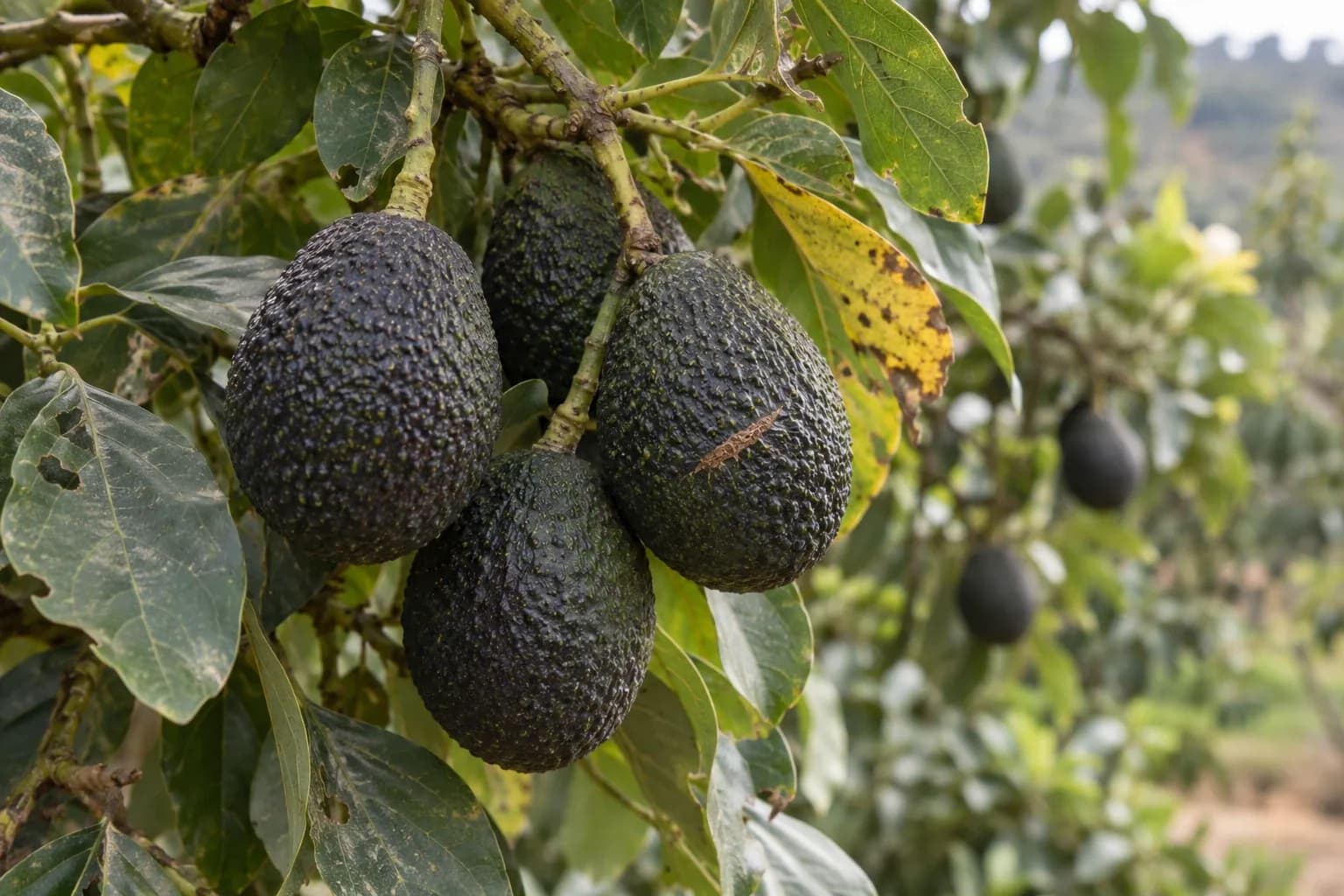
- Illustration of avocado fruit; cultivar and harvest timing vary by region.
- Illustration of published cold-tolerance thresholds; duration, tree age and acclimation affect injury.
- Illustration of orchard layouts from a California reference; it is not a local spacing recommendation.
Figures are published averages or study assumptions for the places named, not guarantees for your field. Check current local recommendations and product labels before acting.
Some visuals in this guide are illustrations rather than photographs of a specific farm. See image credits.