

How to grow carrots: a commercial guide
Carrots are direct-seeded into a fine, stone-free seedbed and need even moisture through a slow emergence. Stand establishment, leaf-blight control and cold storage decide whether roots make the grade. Figures here are Midwest US commercial practice unless stated.
Scope: Commercial fresh-market and processing carrots, US Midwest and northern Plains. Updated 2026-10-16.
At a glance
- Seed rate and stand
- 2.2–4.5 kg/ha (2–4 lb/acre); 65–100 plants per m (20–30 plants/ft) fresh market, 10–20 dicing1
- Row layout
- Single rows 41–76 cm (16–30 in), or 3-row beds 25–30 cm (10–12 in) apart on 91 cm (36 in) centres1
- Days to harvest
- About 60 (baby) to 120 (full-size Danvers)1
- Soil pH
- 6.0–6.81
- Storage
- 0°C (32°F) with very high humidity; months, not weeks4
Pick the carrot type for the market
| Type | Best for | Soil and timing |
|---|---|---|
| Imperator | Fresh market; long, slender, high sugar | Needs loose, deep soil |
| Nantes | Fresh and processing; cylindrical | Earlier maturity than Imperator or Danvers |
| Danvers | Diced processing; thinner, cone-shaped | Longest time to maturity |
| Chantenay | Short, girthy, sometimes globe-shaped | Copes with heavy soils |
Sources1
Prepare a fine seedbed
Sow and establish the stand
Between rows: 25–30 cm (10–12 in) · Within the row: 65–100 per m (20–30/ft)
Bed spacing: 91 cm (36 in) centre to centre
Midwest guide: three-row beds 25–30 cm (10–12 in) apart on 91 cm (36 in) centres, or single rows 41–76 cm (16–30 in) apart; 65–100 plants per m (20–30 plants per foot) for fresh market, 10–20 for dicing. Schematic.
- Carrot seed: 6–13 mm (¼–½ in)
- Timing
- Sow when soil reaches about 4°C (40°F) in the northern Plains, from mid-April into June. Fall crops are sown 10–12 weeks before first frost.2,3
- Depth and moisture
- Cover seed with 6–13 mm (¼–½ inch) of soil and keep the seedbed evenly moist until emergence; crusting is the main stand-loss risk.2,3
- Seed rate and spacing
- Drill in single rows 41–76 cm (16–30 inches) apart, or three-row beds 25–30 cm (10–12 inches) apart on 91 cm (36-inch) centres. Aim for 65–100 plants per m (20–30 plants per foot) for fresh-market slicing and 10–20 for dicing; 2.2–4.5 kg of seed/ha (2–4 lb of seed per acre).1
Fertility and water
- Nitrogen
- Apply about 65 kg N/ha (60 lb N/acre) before planting and sidedress 34–65 kg/ha (30–60 lb/acre) N 4–6 weeks after planting. Total N from fertilizer and credits should be about 110 kg/ha (100 lb/acre) for fresh-market and 120 for processing carrots on mineral soils, 56 kg/ha (50 lb/acre) less on muck.1
- Phosphorus and potassium
- Apply 0–180 kg/ha (0–160 lb/acre) P2O5 and 0–225 kg K2O/ha (0–200 lb K2O per acre) according to the soil test. On muck soil above pH 6.0, add 6.7 kg manganese sulfate/ha (6 lb manganese sulfate per acre) over the row.1
- Water
- At least about 2.5 cm (1 inch) a week from rain or irrigation; dry-wet swings produce misshapen, bitter roots.3
Protect the tops and the roots
- Leaf blights
- Alternaria and Cercospora leaf blights are sprayed from first detection; the TOM-CAST model (15 disease severity values) can time applications. Bacterial leaf blight follows hot, wet weather and can prevent harvest.1
- Cavity spot and aster yellows
- Pythium cavity spot downgrades roots. Aster yellows is spread by leafhoppers; use disease-free seed (hot-water treatment 50°C (122°F) for 20 minutes) and control leafhoppers before they feed.1
- Follow labels
- Fungicide and insecticide choices change by registration; check your current state label rather than an old product list.1
Harvest, cool and store
- 1
Sow
Soil about 4–7°C (40–45°F) or warmer; mid-April into June in the northern US.
- 2
Establish
Keep the seedbed evenly moist until emergence; crusting is the main loss.
- 3
Grow
About 60 days (baby) to 120 days (full-size Danvers).
- 4
Harvest
Roughly August to November in the Midwest, at market size.
- 5
Cool and store
Hydrocool, avoid ethylene, hold at 0°C (32°F) and very high humidity.
- UC Davis, 98–100% humidity7–9 months
- When
- Midwest carrots are harvested roughly August to November, when roots reach market size (about 19 mm (¾ inch) across at the shoulder is a common fresh-market minimum). Top-pullers break fewer roots than undercutting chain harvesters.1,2
- Cool quickly
- Remove field heat rapidly (hydrocooling is recommended) and keep roots away from ethylene; as little as 0.5 ppm causes bitterness within about two weeks.4
- Storage
- Topped roots store at 0°C (32°F) with very high humidity. UC Davis reports 7–9 months at 98–100% RH for mature roots. Free water from washing or condensation promotes decay.4
Economics
Yields and prices vary too much by market to quote one figure. Iowa State publishes a carrot enterprise budget you can open and edit; start from it and replace the prices and yields with your own buyer terms.
Frequently asked questions
- When do you plant carrots?
- As soon as soil reaches about 4–7°C (40–45°F), from mid-April in the northern US into June, then again 10–12 weeks before first frost for a fall crop.
- How deep do you sow carrot seed?
- 6–13 mm (¼–½ inch), kept evenly moist until emergence.
- How long do carrots take to grow?
- Commercial guidance ranges from about 60 days for baby carrots to 120 days for full-size Danvers types; variety, market size and season length affect the harvest date.
- What soil pH do carrots need?
- pH 6.0–6.8 in commercial guidance, in deep, loose, stone-free soil.
- How long can carrots be stored?
- At 0°C (32°F) and 98–100% humidity, UC Davis reports 7–9 months for mature roots. Actual storage life depends on variety, maturity and postharvest handling.
Regional guides and field planning
Sources and image credits
- 1. Midwest Vegetable Production Guide 2026 — Root Crops — 2026 edition; carrot sections reviewed 2022–2023. Types, row layout, seed rate, stand, days to harvest, fertility, diseases and nematodes for the Midwest.
- 2. South Dakota State University Extension — Carrots: How to Grow It — Accessed 30 September 2026. Northern Plains sowing from 4°C (40°F) soil, depth, water and harvest size.
- 3. Iowa State University Extension — Carrot Enterprise Budget (A1-17) — Updated August 2022. Editable farm-planning budget; not a production trial or price forecast.
- 4. UC Davis Postharvest Technology Center — Carrot produce fact sheet — Accessed 30 September 2026. Storage temperature and humidity, ethylene sensitivity and hydrocooling.
Image credits
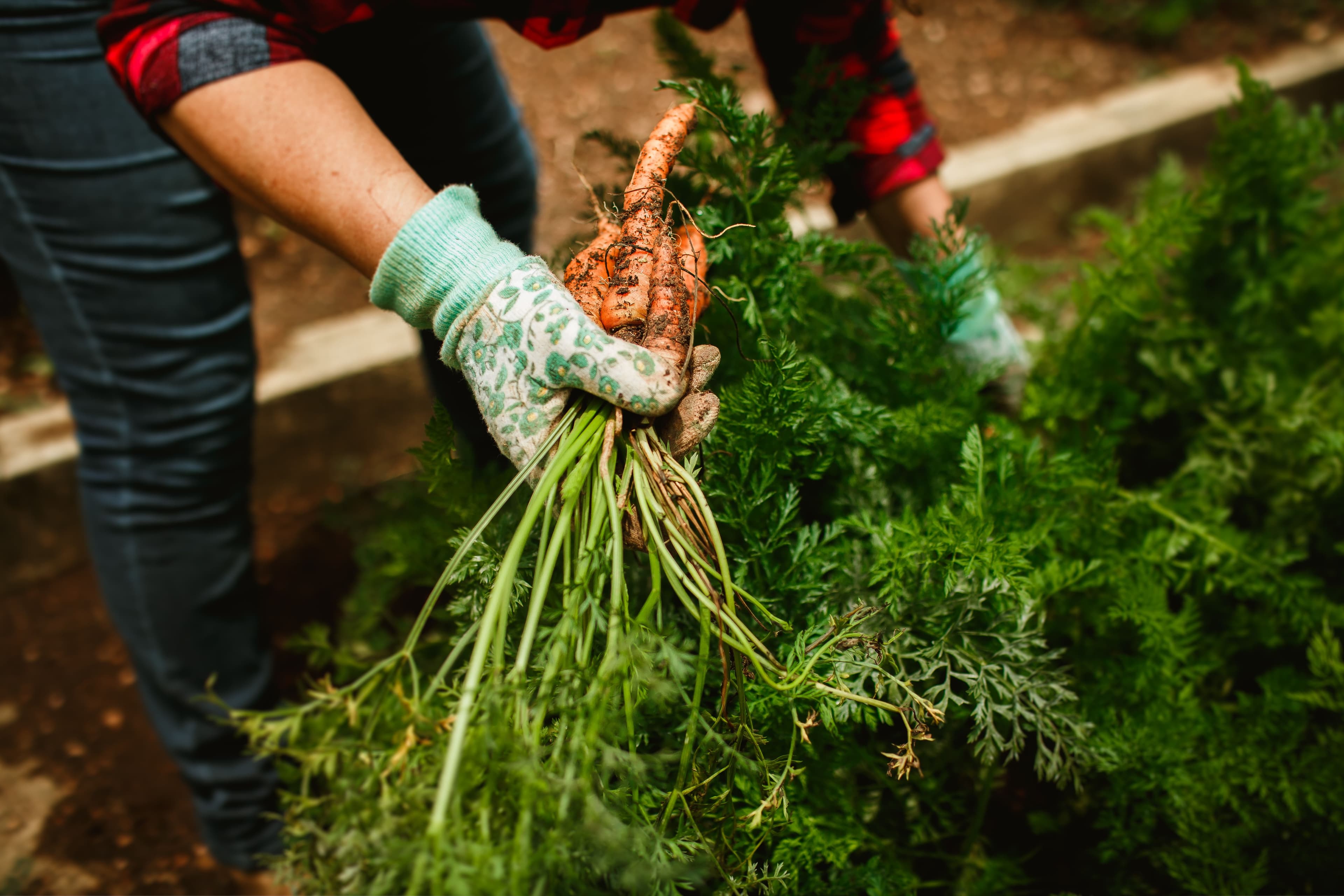
- Freshly harvested carrots. Photo: Helena Lopes, via Pexels (Pexels License).
Figures are published averages or study assumptions for the places named, not guarantees for your field. Check current local recommendations and product labels before acting.