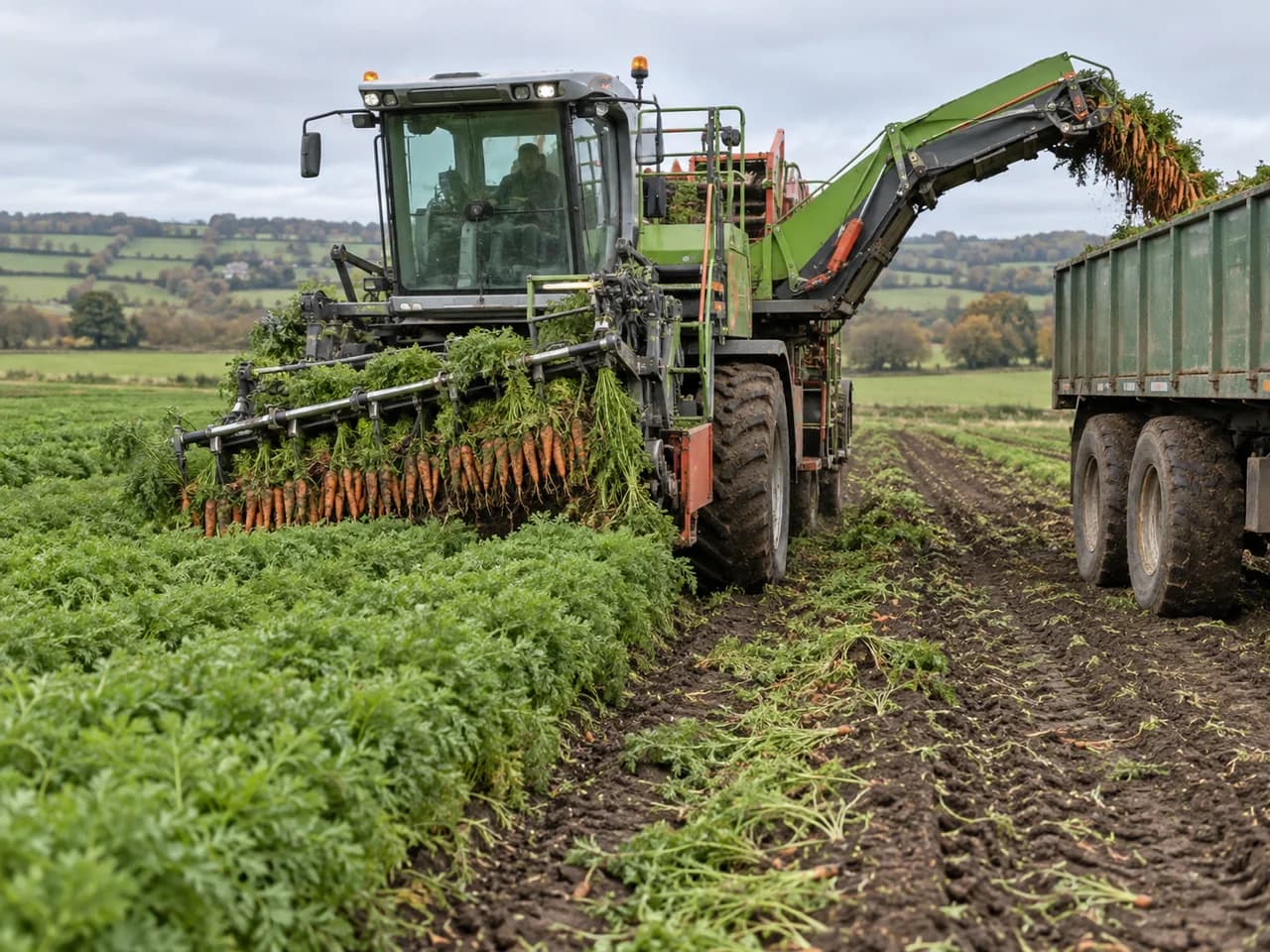
USDA’s 2022 Census reported 336 farms and 1,194 harvested acres: 512 fresh-market acres and 682 processing acres. The two markets need separate crop and buyer plans.
Match the crop to its market first. For small-seed establishment, pay close attention to crusting and moisture at emergence; UMN notes carrots are sensitive to dry periods during critical growth stages even in wetter years.
Audience
Commercial and prospective field growers
Model output
Historical soil-temperature comparison
Field decision
Check the actual field and market locally
1
Step 1 of 7 · Assess
Check field fit before committing to a crop plan
Use this checklist to organize a discussion with a local commercial crop adviser, contractor or buyer. It records planning topics; it does not score a parcel or forecast its performance.
6 topics still to verify· planning aid only, not a suitability score
Selections stay in this browser tab and are not saved or sent anywhere.
2
Step 2 of 7 · Plan
Temperature-supported carrot sowing estimate for Minnesota
Carrot seed-germination temperature window
Months when soil temperature fits carrot seed germination in Minnesota
Historical soil-temperature estimates place May–October inside the study's seed-germination reference range.
Soil-temperature window for carrot seed germination
Months inside the seed-germination range: May–October. This is a soil-temperature range, not a sowing calendar: frost, crop duration and harvest date set the real sowing window.
The carrot seed study found germination across 5–35°C, with slower or reduced germination at 5–10°C and above 30°C. Months above 10°C and at or below 30°C count as inside the range.
April: Cool · slower germination
Monthly soil-temperature estimate
5.0°C
Mean air temperature
6.3°C
Historical years in estimate range
0 / 30
Where complete historical daily soil-temperature records are available, a month is included when at least half of its complete annual monthly means fall above 10 C and at or below 30 C. Otherwise the stored monthly soil-temperature normal is compared with that interval.
Reference period: 1996-01-01 to 2025-12-31 · Soil-temperature depth: 0-7 cm. Regional climate estimate from a representative location, not a farm measurement.
UMN farmer-facing crop-planning example: UMN lists May 1 as a first carrot seeding date, with about 35 days to baby carrots and 55–75 days to full-size roots. The tool draws on seed-company recommendations, variety trials, on-farm experiments and farmer interviews; it is a bed-scale planning aid, not a guaranteed field date.
The model uses a single Minnesota reference point, not a statewide spatial average. UMN’s May 1 first-seeding date is a diversified bed-scale planning example, not a bulk-processing schedule.
3
Step 3 of 7 · Prepare
Prepare a seedbed and protect the root path
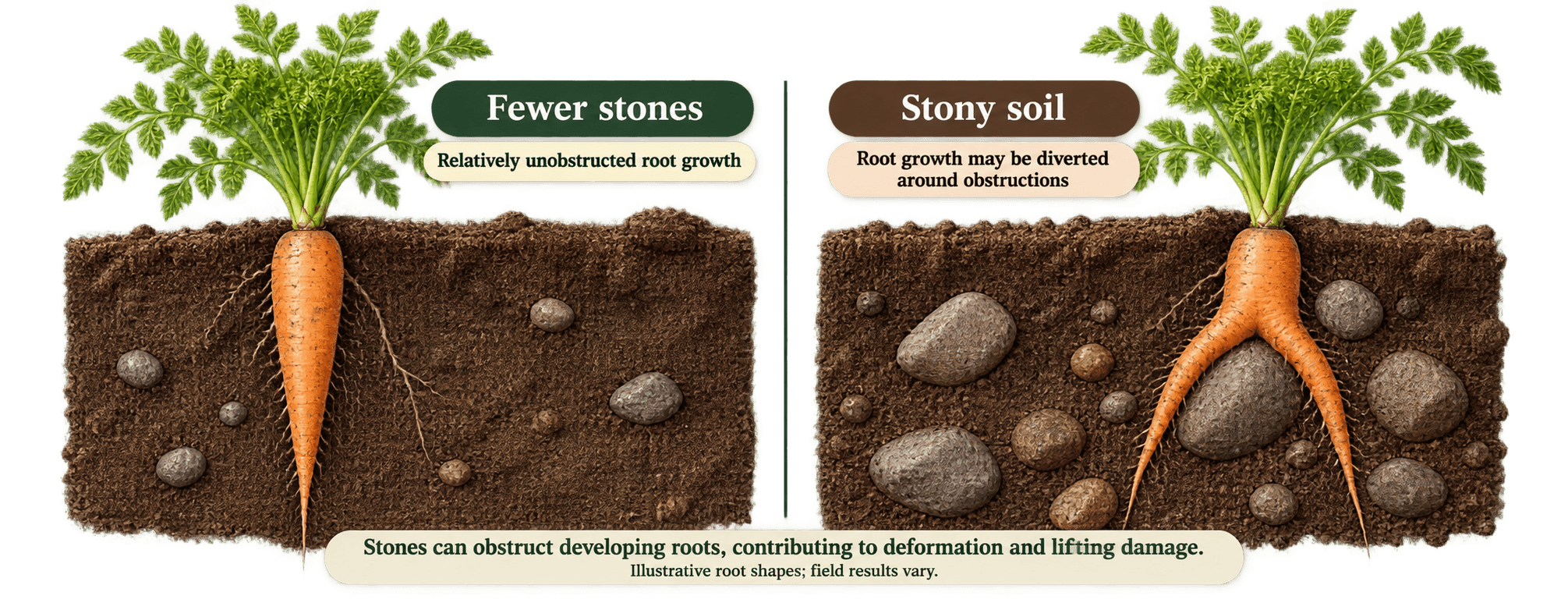
Carrots are direct-seeded commercial roots. Inspect soil texture, stones, clods, compaction, drainage and seedbed moisture in the actual field. The source-specific regional observations below explain what to check; they are not universal field thresholds.
Illustrative root shapes only. A field inspection or soil profile is needed to assess actual obstructions and structure.4
Step 4 of 7 · Establish
Establish the stand for the intended market
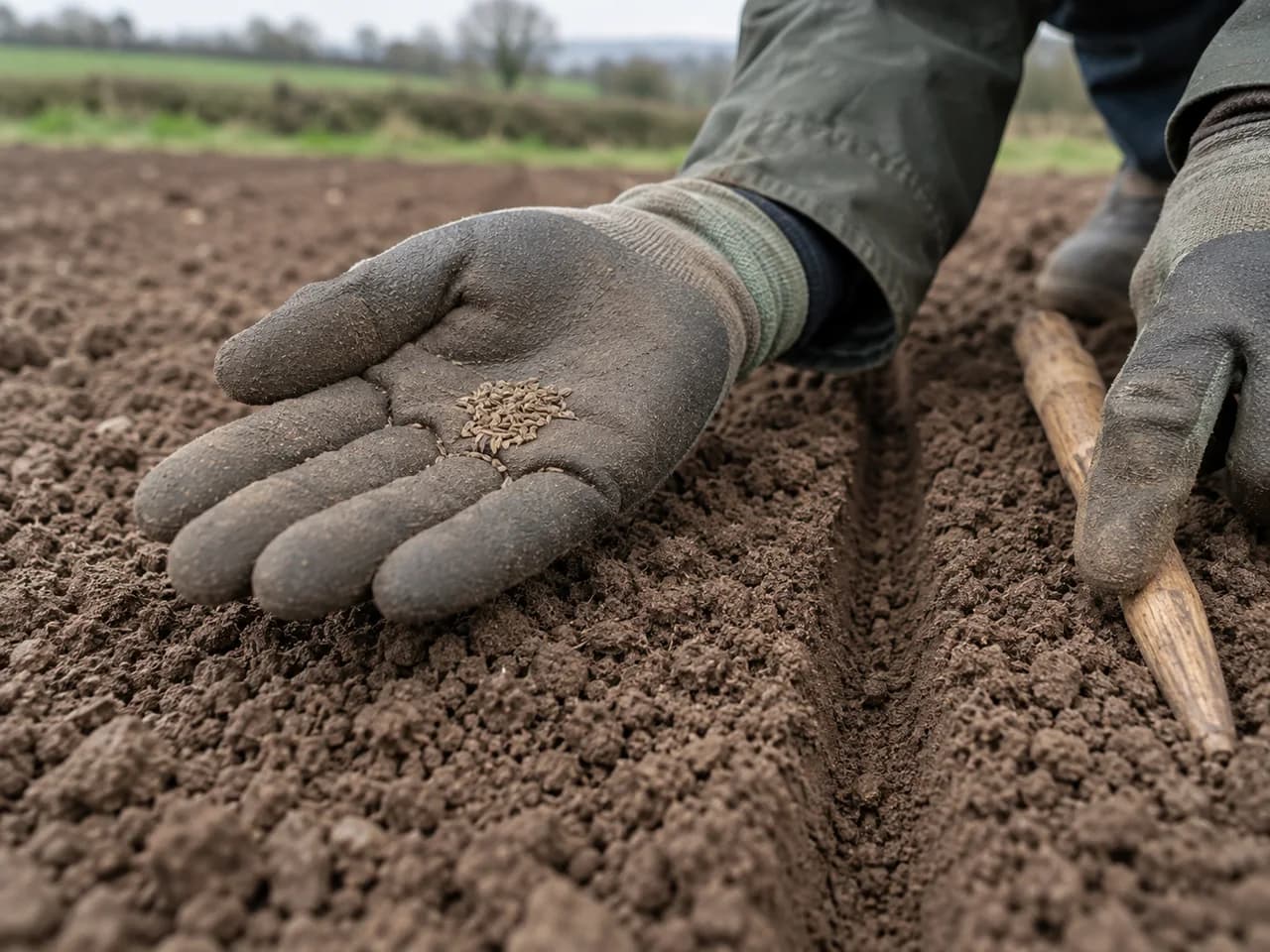
Use current, crop-system-specific advice for seed rate, sowing depth, row layout and target stand. Numeric settings vary with variety, seed lot, planter and buyer target; this guide shows them only when the cited regional source supports them.
Regional production notes
Prepare the field
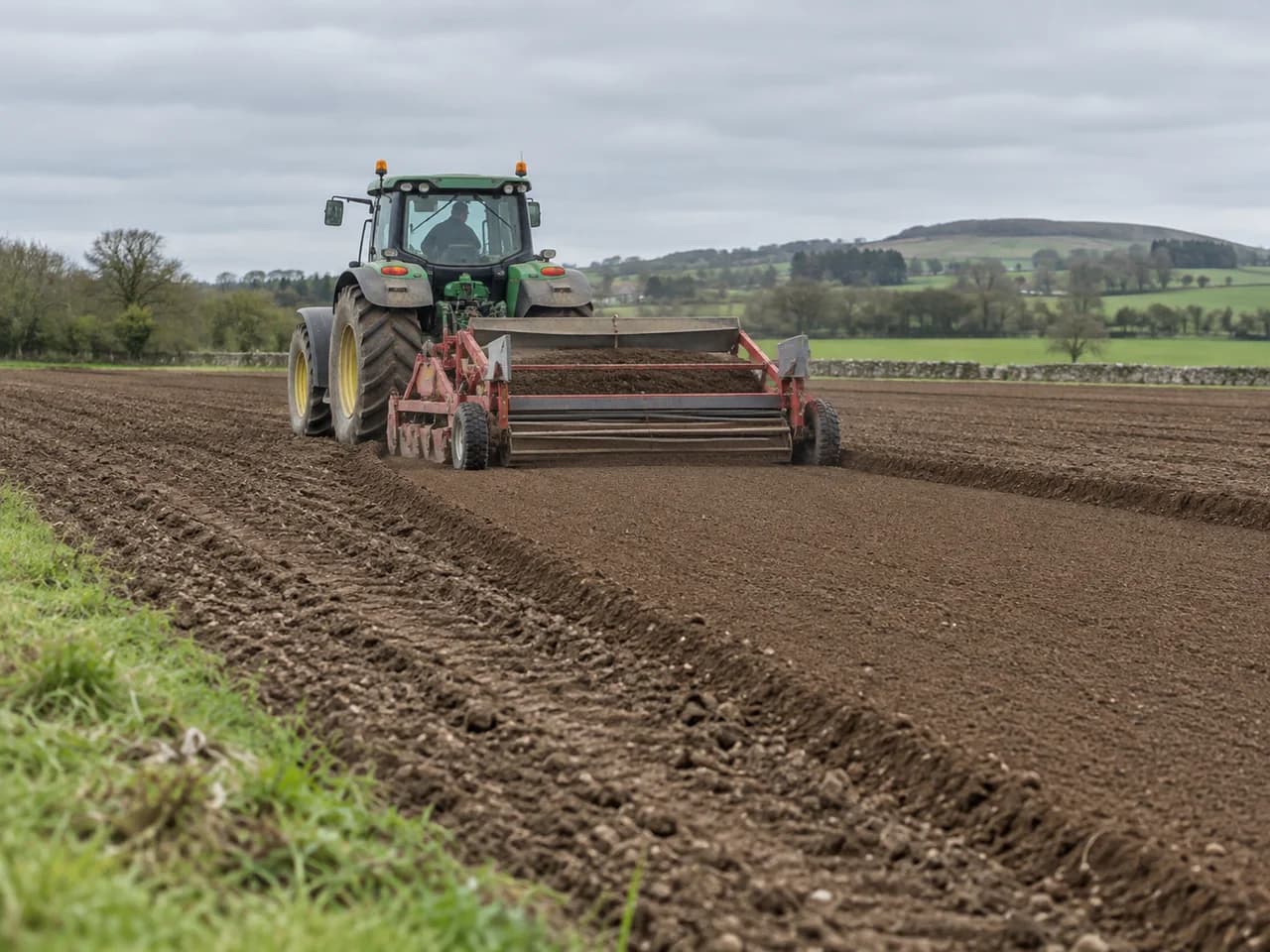
Check soil condition, bed formation and moisture before bringing the precision seeder into the field.
Calibrate and sow
Use the current local commercial guide, seed-lot information and buyer specification to set the equipment.
Multi-state commercial drill examples
The 2026 Midwest guide gives single-row spacing examples of 16–30 inches, or three rows 10–12 inches apart on beds; it gives 2–4 lb/acre seed rates and target stands that vary by use. These examples are not a Minnesota processor schedule or custom drill setting.
Treat fresh market and processing as different systems
The census shows substantial acreage in both. Variety, density, harvest equipment, grading and buyer terms should follow the intended market.
Manage moisture through establishment and root enlargement
UMN advises monitoring soil moisture and planning irrigation around crop stages. Small carrot seed can be vulnerable to crusting, especially on clay; rainfall totals alone do not reveal field moisture.
Protect post-harvest quality
UMN’s commercial handling reference gives storage at 32°F and 95% relative humidity, with months of shelf life under ideal conditions. This is a post-harvest reference, not a guarantee for every cultivar or store.
5
Step 5 of 7 · Manage
Manage moisture, crop health and changing conditions
Temperature is one part of emergence
The climate estimate compares historical soil temperature with controlled carrot-seed evidence. Seedbed moisture, oxygen, crusting, seed quality and field structure still affect establishment.
Rainfall is not a root-rot diagnosis
Rain can contribute to prolonged wet soil, but monthly climate totals do not establish field saturation, drainage or pathogen presence. Inspect the field and use local crop-health advice before choosing controls.
Do not reuse old pesticide rates or product lists: confirm current local approvals and labels.
6
Step 6 of 7 · Harvest
Plan harvest and handling back from the buyer
Decisions to settle before sowing
Target product, grade and acceptable root-size range.
Expected delivery period and whether supply is contracted.
Availability of lifting, washing, grading, cooling and storage.
Field access and transport capacity in the planned harvest period.
How undersized, misshapen or damaged roots will be handled.
Match harvest capacity to the crop plan
Confirm machinery, labour, storage and the buyer's receiving schedule before planting.
7
Step 7 of 7 · Reference
Evidence, image credits and limits
Regional source claims remain attached to their publication date, geography and crop system. The climate-based month grouping is not a field-level recommendation, sowing guarantee, yield forecast or proof of market demand.
AgriAuditor-generated illustrations · soil/root comparison, field preparation, seed placement and harvesting; illustrative, not source evidence or local farm photographs.