Carrot crop

Commercial field guide · Illinois

Growing carrots in Illinois

Illinois has recorded carrot production, but the available census footprint is modest. This guide combines the current Midwest commercial root-crop guide, Illinois grower observations and historical climate data to help plan a crop without turning a statewide reference point into a field promise.

For home growing, use our general carrot-growing guide.

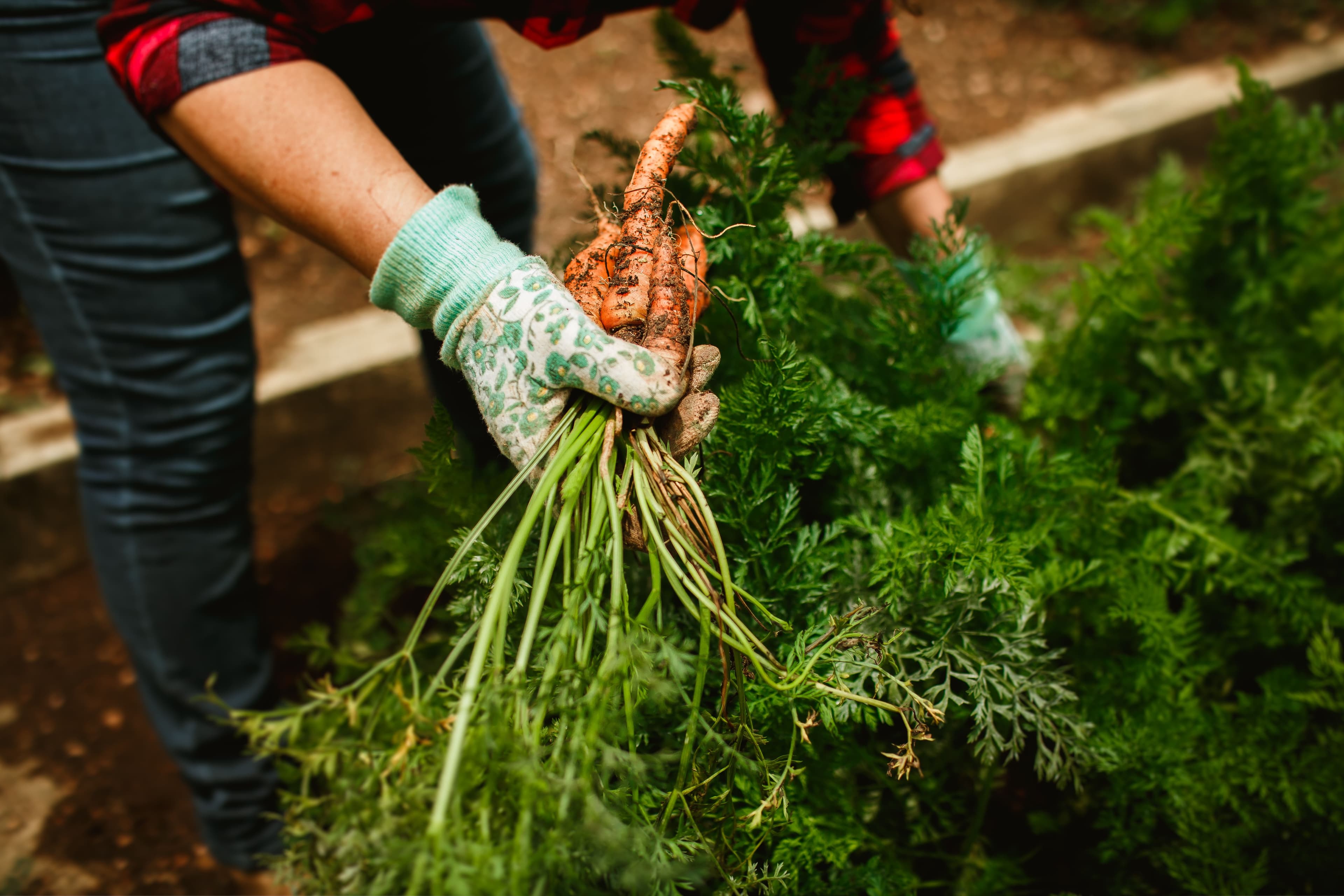
A farm worker holds a freshly harvested carrot by its foliage; the farm location is not stated.

Can carrots grow commercially in Illinois?

Statewide production evidence

Yes, carrots are produced in Illinois. USDA’s 2022 Census of Agriculture reports 126 farms and 34 harvested acres: 32 acres for fresh market and 2 for processing. That documents production activity, but the small reported footprint does not establish demand, profitability or suitability for a particular field.

A practical Illinois crop plan needs a workable seedbed, reliable moisture through emergence, a buyer-aligned variety and target stand, and a harvest route that fits the remaining season.

Audience
Commercial and prospective field growers
Regional signal
Commercial guide plus Illinois field observations
Limit
Climate comparison is not a field-level recommendation

Step 1 of 7 · Assess

Before planting: check the crop system and field

Use this list to structure a conversation with an Illinois Extension educator, commercial vegetable adviser, contractor or buyer. It is a planning checklist, not a field score.

6 topics still to verify· planning aid only, not a suitability score

Local crop-planning checks

Fresh-market slicing, baby-carrot and dicing systems use different variety and target-stand choices. Agree the product specification before setting the planter.

Not reviewed

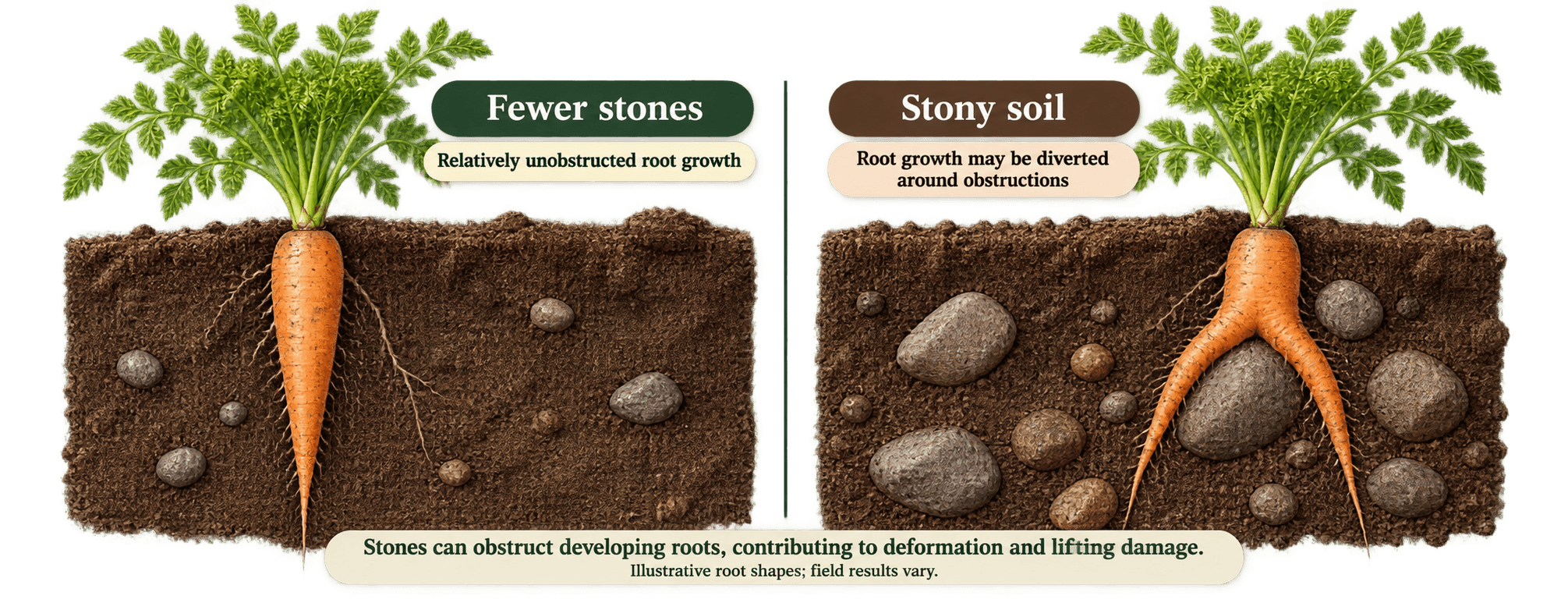
Look for a fine, even, stone-light seedbed and a sufficiently deep root zone. Stones, clods, compaction and residue can interfere with straight root development.

Not reviewed

Carrot seed is slow to establish and needs consistent moisture. Confirm irrigation access and how the field handles both dry spells and heavy rain after drilling.

Not reviewed

Use the current Midwest Vegetable Production Guide for crop-specific pest and disease monitoring, then follow current Illinois labels and adviser guidance.

Not reviewed

Confirm row arrangement, seeding equipment, weed-control tools and whether lifting will be by hand or machine.

Not reviewed

Check the delivery window, grading, washing, cooling or storage, transport and who accepts roots that miss the preferred grade.

Not reviewed

Selections stay in this browser tab and are not saved or sent anywhere.

Step 2 of 7 · Plan

Illinois sowing timing: use climate as one input

Carrots are classed as a cool-season crop in Illinois Extension material, but the extension planting-date pages are for home gardens. They should not be substituted for a commercial drilling calendar. The climate panel compares historical monthly mean soil temperatures with carrot seed-germination evidence; a month that passes this thermal comparison can still be too late or too wet for a particular commercial crop plan.

Carrot seed-germination temperature window

Months when soil temperature fits carrot seed germination in Illinois

Historical soil-temperature estimates place April–October inside the study's seed-germination reference range.

Soil-temperature window for carrot seed germination

Months inside the seed-germination range: April–October. This is a soil-temperature range, not a sowing calendar: frost, crop duration and harvest date set the real sowing window.

The carrot seed study found germination across 5–35°C, with slower or reduced germination at 5–10°C and above 30°C. Months above 10°C and at or below 30°C count as inside the range.

April: In seed-study range

Monthly soil-temperature estimate
12.4°C
Mean air temperature
12.4°C
Historical years in estimate range
27 / 30

Where complete historical daily soil-temperature records are available, a month is included when at least half of its complete annual monthly means fall above 10 C and at or below 30 C. Otherwise the stored monthly soil-temperature normal is compared with that interval.

Reference period: 1996-01-01 to 2025-12-31 · Soil-temperature depth: 0-7 cm. Regional climate estimate from a representative location, not a farm measurement.

Evidence: Corbineau et al. (1995), carrot seed germination response to temperature and oxygen. This is a seed-temperature estimate, not a field emergence or yield prediction.


What Illinois grower reports show: an Illinois Extension commercial update from Waterloo on March 26, 2024 said carrot planting opportunities were available, but dry soil was making consistent germination difficult. That is a dated local field observation, not a statewide annual calendar. Read the Waterloo grower update.

The Illinois frost maps cited by Extension use the 1991–2020 period and are designed for garden planning. Treat them as background geography only; do not use them alone to set commercial carrot planting dates.

Step 3 of 7 · Prepare

Soil and seedbed: protect emergence and root shape

The Midwest commercial guide distinguishes variety types by root form and soil fit: Chantenay types are shorter and suited to heavier soils, while long Imperator types need loose, deep soil. Use variety choice and field structure together; neither statement is a universal soil pass/fail threshold.

Illustrated comparison of a carrot root growing through fewer stones and a root diverted around stones in the soil.
Use a representative soil profile and field history to assess obstructions; this illustration does not predict the shape of roots in an Illinois field.

Illinois Extension’s home-garden page also describes how stones, clods and poorly prepared soil can deform roots. That is a practical seedbed warning, not commercial spacing or depth guidance. Read the Illinois Extension carrot guide.

Step 4 of 7 · Establish

Establish the stand: match the drill to the market

The 2026 Midwest Vegetable Production Guide is a commercial reference for Illinois and neighbouring states. Its carrot section was last reviewed in March 2022, so use these as regional examples and confirm current variety, target size, planter and buyer specifications before use.

What the regional commercial guide gives

Establishment
Direct-seeded in the field.
Seed-rate example
2–4 lb/acre.
Target stand
20–30 plants/ft for slicing/fresh market; 10–20 plants/ft for dicing.
Bed examples
Single rows 16–30 in apart, or three rows 10–12 in apart on beds 36 in centre-to-centre.

What still needs local confirmation

  • Seed lot, variety type, target root grade and emergence expectations.
  • Drill calibration and seed placement in the field’s actual seedbed.
  • Moisture management through the slow emergence period.
  • Current weed, pest and disease controls from the guide and Illinois labels.
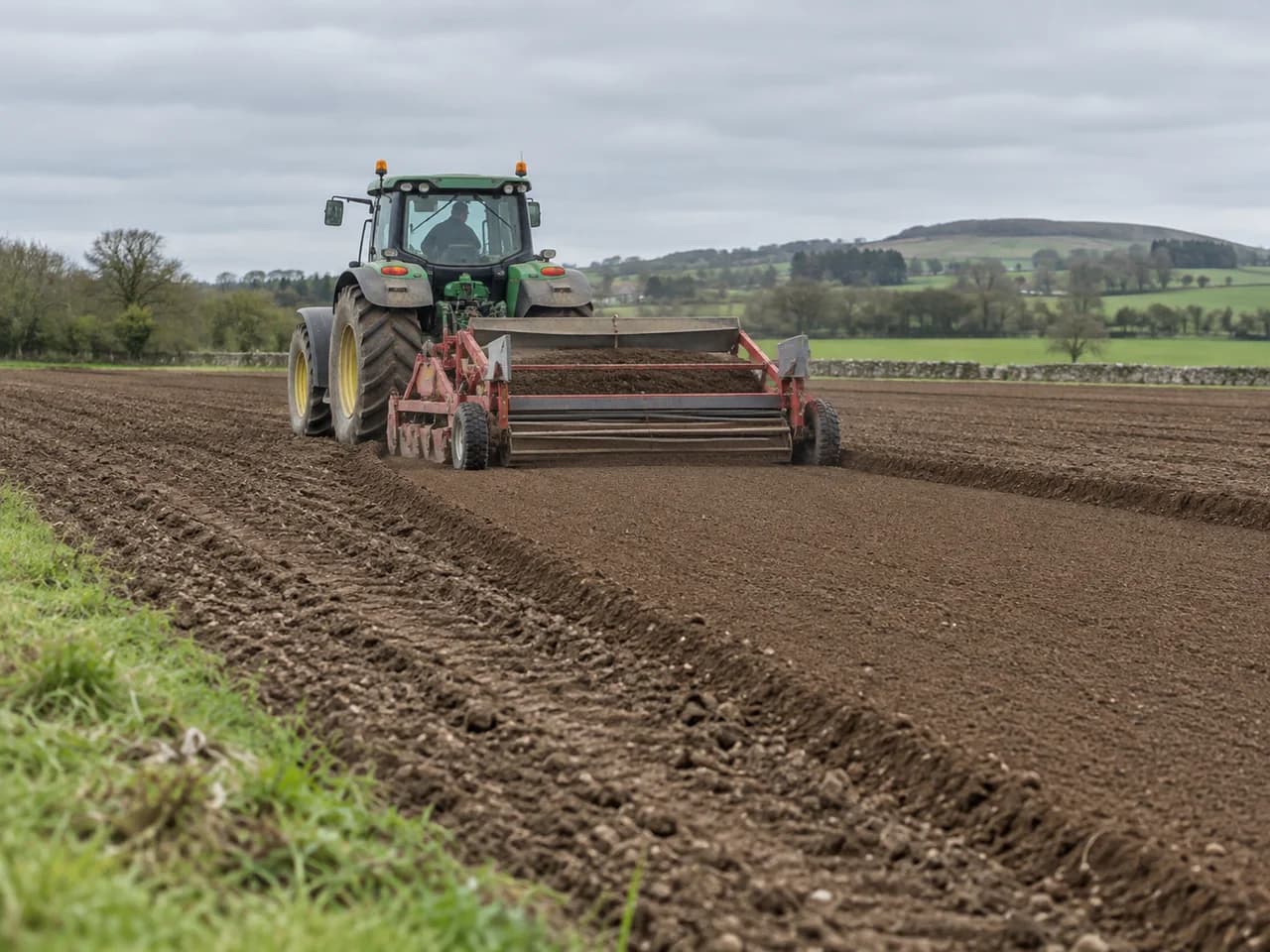
Illustration of machinery preparing and forming a carrot seedbed.

Prepare the field

Check soil condition and bed formation before bringing the precision seeder into the field.

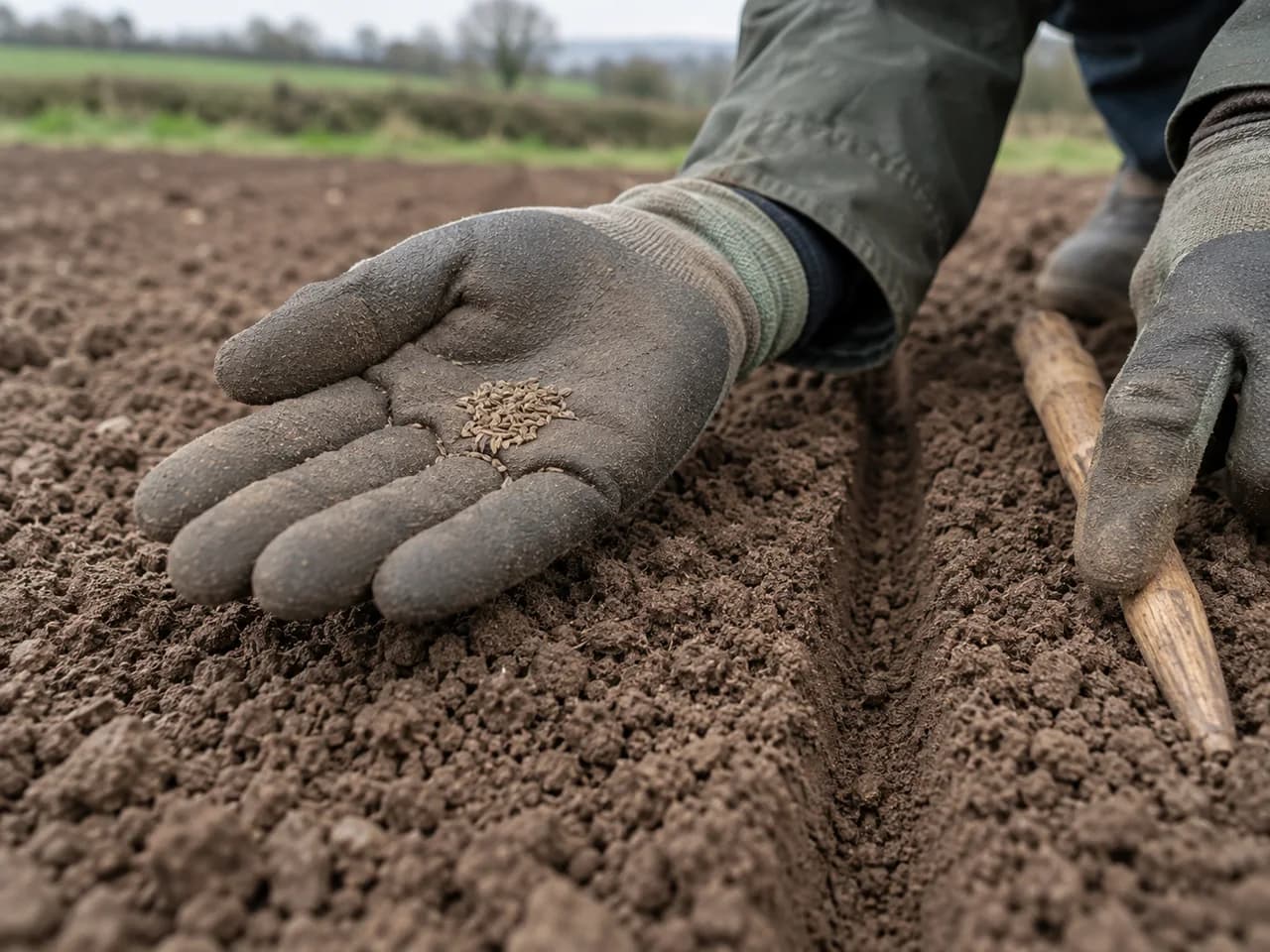
Illustration of carrot seed placed in a field drill.

Calibrate and sow

Use the current commercial guide and seed supplier information to set the machine for the chosen crop system.

The guide’s numbers are regional commercial examples, not a custom planter setting or a universal Illinois prescription. See the 2026 Midwest root-crop chapter.

Step 5 of 7 · Manage

Season risks: emergence, moisture and crop health

Dry seedbeds can break the temperature story

In the 2024 Waterloo update, the commercial grower report singled out dry soil as a challenge to carrot germination. Temperatures in a broad research band do not supply the water needed for uniform emergence.

Review the dated Illinois field note

Rainfall context is not a root-disease diagnosis

The current stored regional climate record has no monthly rainfall values. The engine reports that gap as unknown and does not calculate a disease score. For an actual field, assess drainage, irrigation, symptoms and crop history with local crop-health advice.

The Midwest commercial guide maintains state-relevant pest and disease information. Verify any treatment against the current guide, Illinois registration and product label; this page does not prescribe pesticides.

Step 6 of 7 · Harvest

Harvest to market: plan back from the product

The Midwest guide’s harvest context

  • It describes market-size harvests from August through November across the guide’s region; this is not an Illinois county forecast.
  • It gives a broad seeding-to-harvest span from about 60 days for baby carrots to 120 days for full-size Danvers types.
  • It notes both hand and mechanical harvest, and differing root-breakage risk by lifting system.
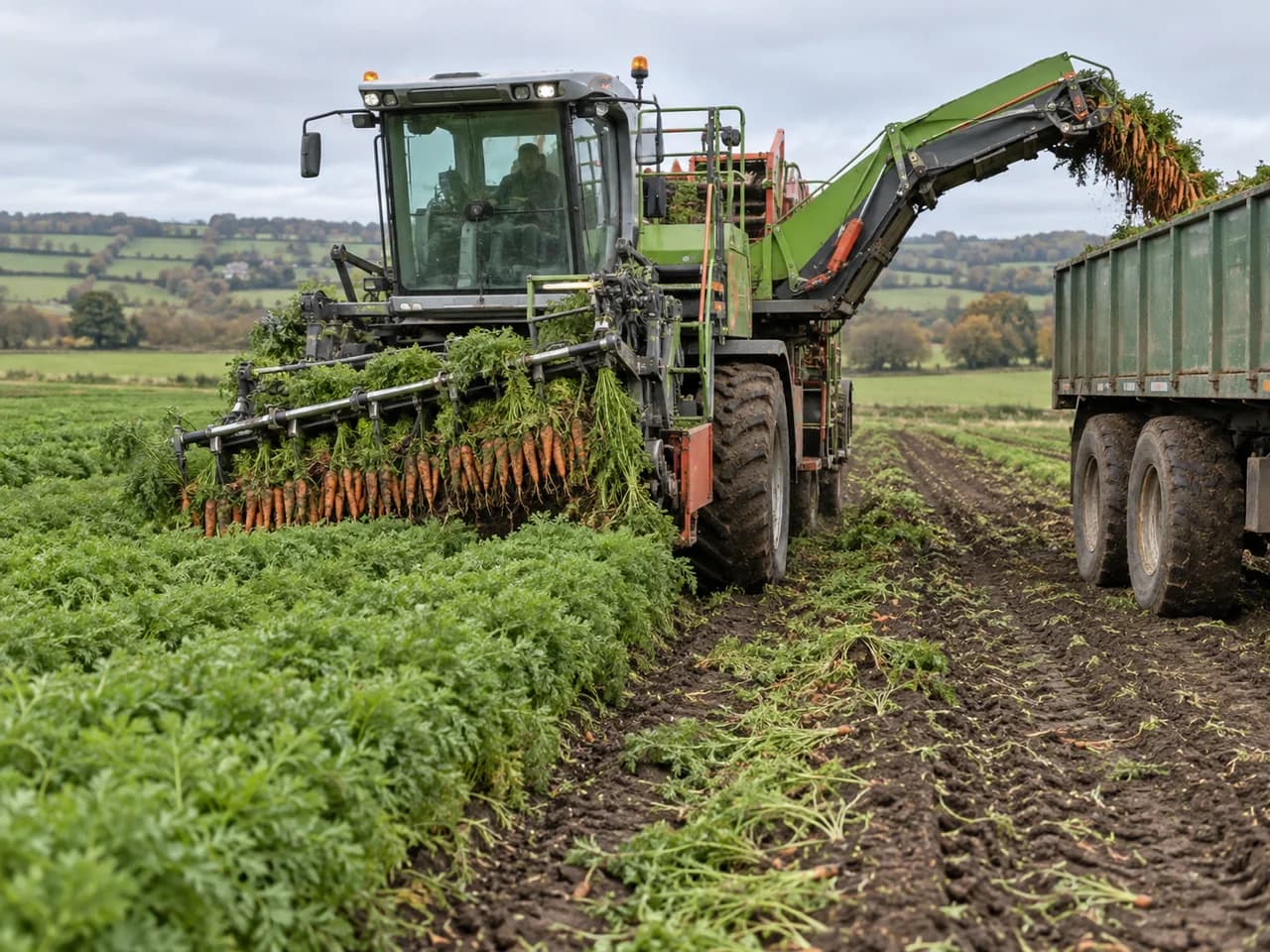
Illustration of a carrot harvester lifting roots and moving them toward a trailer.

Match harvest capacity to the buyer

Confirm lifting, grading, cooling, storage and transport before planting to a delivery window.

Step 7 of 7 · Reference

Evidence, image credits and limits

This guide separates Illinois crop evidence from multi-state commercial advice and home-garden references. The climate panel uses one representative point, not a spatial average across Illinois. None of these sources assesses an individual field, predicts profit or guarantees a stand.