

Do not combine Spain’s basins into one date range
Current Cádiz evidence and older Castilla y León monthly patterns describe different locations and systems. Keep their source, date and geography visible.
Commercial field guide · Spain
Carrot production calendars differ across Spain. Current crop-monitoring evidence in this review is strongest for Cádiz and should not be treated as a national sowing schedule.
For home growing, use our general carrot-growing guide.
Andalusia’s RAIF crop-monitoring service published a 2024 professional field report for Cádiz. MAPA also hosts official autonomous-community calendars, but the published series is from 2014–2016 and is historical context only.
Choose the actual production basin and market before using a crop window. The Cádiz report distinguishes Campiña and Costa Noroeste conditions and says planting-group shares vary with irrigation-water availability and market.
Step 1 of 7 · Assess
Use this checklist to organize a discussion with a local commercial crop adviser, contractor or buyer. It records planning topics; it does not score a parcel or forecast its performance.
6 topics still to verify· planning aid only, not a suitability score
Selections stay in this browser tab and are not saved or sent anywhere.
Step 2 of 7 · Plan
Historical soil-temperature estimates place April–October inside the study's seed-germination reference range.
Months inside the seed-germination range: April–October. This is a soil-temperature range, not a sowing calendar: frost, crop duration and harvest date set the real sowing window.
The carrot seed study found germination across 5–35°C, with slower or reduced germination at 5–10°C and above 30°C. Months above 10°C and at or below 30°C count as inside the range.
Where complete historical daily soil-temperature records are available, a month is included when at least half of its complete annual monthly means fall above 10 C and at or below 30 C. Otherwise the stored monthly soil-temperature normal is compared with that interval.
Reference period: 1996-01-01 to 2025-12-31 · Soil-temperature depth: 0-7 cm. Regional climate estimate from a representative location, not a farm measurement.
Evidence: Corbineau et al. (1995), carrot seed germination response to temperature and oxygen. This is a seed-temperature estimate, not a field emergence or yield prediction.
Current professional crop report: Cádiz only: RAIF’s December 2024 report describes three Cádiz sowing groups: mid-August–late September, early October–late November, and early December–late January. These describe Cádiz practice and vary with water availability and market; they are not a Spain-wide recommendation.
MAPA autonomous-community calendars: The official MAPA series records sowing and harvest patterns from 2014–2016. Its age makes it historical context, not current operating advice.
The Spain reference point near Madrid cannot describe Cádiz or other commercial basins. The estimate below is a single-point climate comparison, not a Spanish regional average.
Step 3 of 7 · Prepare
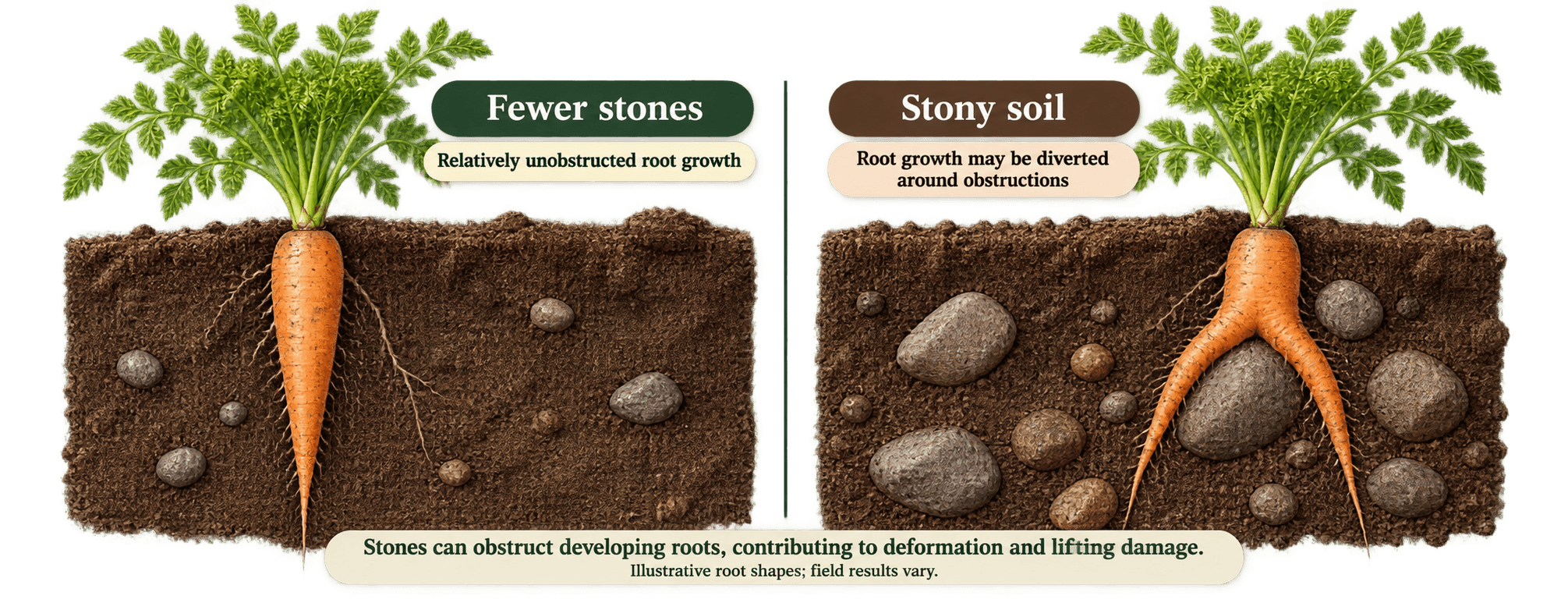
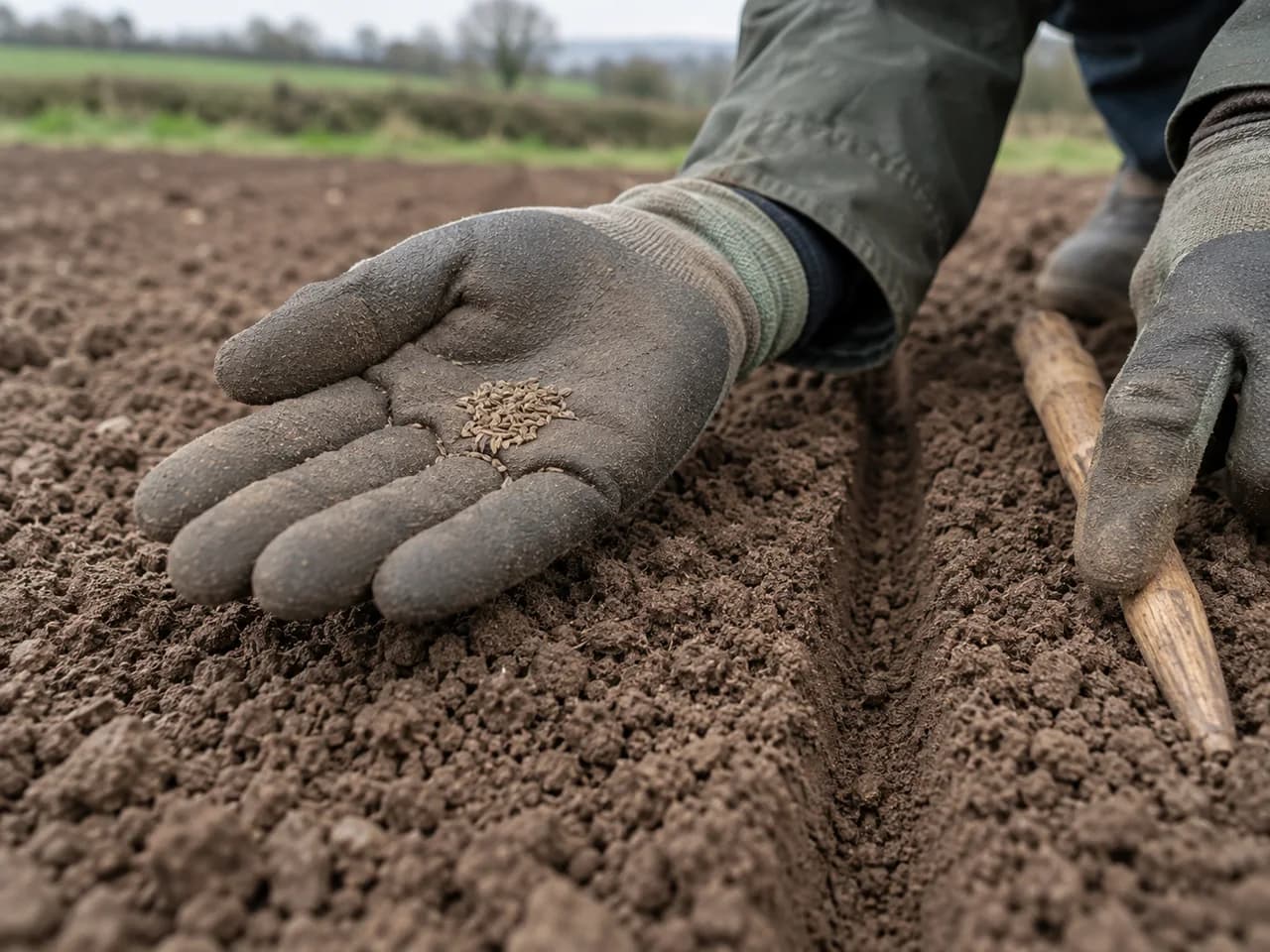
Carrots are direct-seeded commercial roots. Inspect soil texture, stones, clods, compaction, drainage and seedbed moisture in the actual field. The source-specific regional observations below explain what to check; they are not universal field thresholds.
Step 4 of 7 · Establish
Use current, crop-system-specific advice for seed rate, sowing depth, row layout and target stand. Numeric settings vary with variety, seed lot, planter and buyer target; this guide shows them only when the cited regional source supports them.
Prepare the field
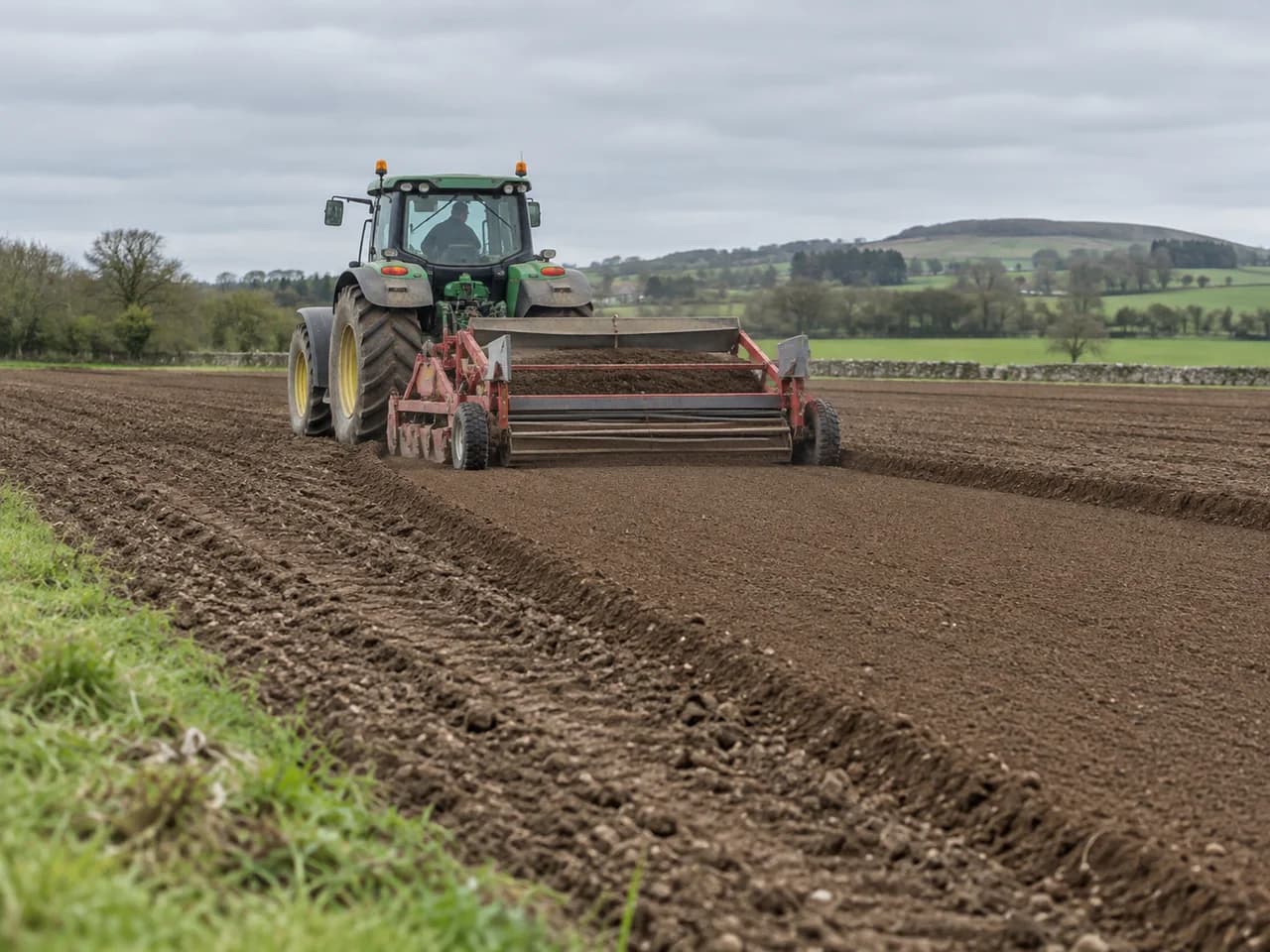
Check soil condition, bed formation and moisture before bringing the precision seeder into the field.
Calibrate and sow
Use the current local commercial guide, seed-lot information and buyer specification to set the equipment.
Current Cádiz evidence and older Castilla y León monthly patterns describe different locations and systems. Keep their source, date and geography visible.
The Cádiz report says planting-group shares vary with irrigation-water availability as well as market. A climate temperature estimate cannot establish available irrigation or field moisture.
Step 5 of 7 · Manage
The climate estimate compares historical soil temperature with controlled carrot-seed evidence. Seedbed moisture, oxygen, crusting, seed quality and field structure still affect establishment.
Rain can contribute to prolonged wet soil, but monthly climate totals do not establish field saturation, drainage or pathogen presence. Inspect the field and use local crop-health advice before choosing controls.
Do not reuse old pesticide rates or product lists: confirm current local approvals and labels.
Step 6 of 7 · Harvest
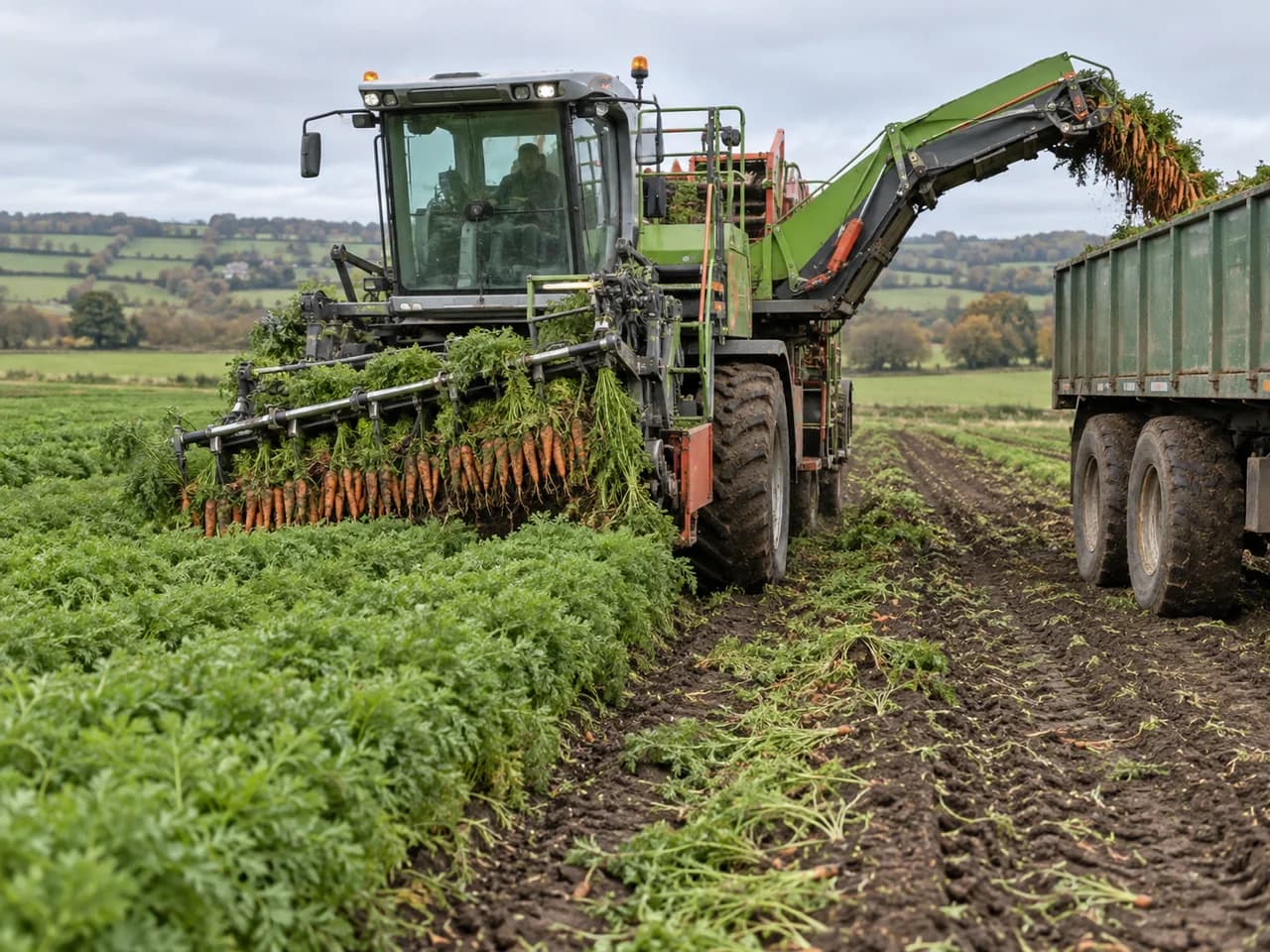
Match harvest capacity to the crop plan
Confirm machinery, labour, storage and the buyer's receiving schedule before planting.
Step 7 of 7 · Reference
Regional source claims remain attached to their publication date, geography and crop system. The climate-based month grouping is not a field-level recommendation, sowing guarantee, yield forecast or proof of market demand.