

Garlic farming in Texas
Garlic needs cold to bulb, and most of Texas is mild. The choices that matter are a variety suited to mild winters, planting in autumn once soil cools, giving the plants enough winter cold to vernalise, and steady spring water until the tops yellow.
Scope: Garlic in Texas, based on Texas A&M AgriLife Extension. Texas is not covered in USDA garlic statistics. Metric first, with the original US units in brackets. Updated 2026-10-03.
At a glance
- Cold needed
- Below 4°C (40°F) for 6–8 weeks to vernalise1
- Bulbing
- Starts when day length exceeds 13 hours and soil is above 16°C (60°F)1
- Plant when
- Autumn, with soil at 5 cm below 29°C (85°F)1
- Varieties
- California Early, California Softneck, Elephant, French Mild Silverskin, Mexican Purple, New York White1
- Spacing
- 7.5–10 cm (3–4 in) in the row, two lines on 97–102 cm (38–40 in) raised beds, 2.5 cm (1 in) deep1
- Fertiliser
- 112–196 kg N/ha (100–175 lb/acre); generalised 100-80-80 lb/acre1
- Water
- 380–510 mm (15–20 in) a season; 25–50 mm (1–2 in) a week in spring1
- Soil pH
- 6.0–8.4, sandy or clay loams1
Planting and harvest calendar for Texas
Match clove planting and bulb harvest to the named production area and cultivar. Autumn planting precedes harvest the following year. Use the month bands to plan field work, then check bulb maturity before lifting.
Plant cloves: October: historical southern Texas reference1,2
Texas A&M’s archived commercial bulletin places planting in October in the southern half of Texas and allows delaying planting until early spring in the north. The highlighted month belongs to the southern autumn system. Check the commercial guide’s soil-temperature trigger and cultivar chilling needs for the actual field.
Harvest bulbs: May–July, following year: historical cultivar references1,2
The commercial bulletin gives late May for Mexican Pink/Creole in southern Texas, June for Texas White and June or July for California Early White in central and northern Texas. These historical cultivar examples anchor the band. Confirm filled cloves and intact wrappers before lifting your crop.
Historical monthly climate
Reference period: 1996-01-01 to 2025-12-31. ERA5-Land monthly mean soil temperature at 0–7 cm, air temperature and frost days at the regional reference point (31.5, -99). Select a month to inspect its historical conditions.
Month tiles show mean topsoil temperature.
October historical conditions
- Mean topsoil temperature
- 23.1°C
- Mean air temperature
- 21.2°C
- Mean frost days per month
- 0.0 days
These are monthly means at one reference location. They describe seasonal field conditions, not crop maturity, actual seed-zone conditions, frost forecasts or a planting recommendation. Harvest bands follow the crop-specific production sources above.
Climate source: Open-Meteo Historical Weather APIGive garlic enough winter
- Vernalisation
- Garlic needs temperatures below 4°C (40°F) for 6–8 weeks. Once vernalised, bulbing starts when day length passes 13 hours and soil temperature exceeds 16°C (60°F). It adapts to all areas able to grow onions.1
- Soil
- Sandy or clay loams with pH 6.0–8.4, though garlic adapts to a wide range of soils if managed properly.1
Choose a variety and plant on raised beds
Between rows: 97–102 cm (38–40 in) bed · Within the row: 7.5–10 cm (3–4 in)
Bed spacing: 97–102 cm (38–40 in) wide raised bed
Cloves 2.5 cm (1 in) deep, two lines per bed. Elephant garlic goes 2–4 cloves per bed foot (about 7–13 per metre). Schematic, not to scale.
- Varieties
- AgriLife lists California Early, California Softneck, Elephant garlic, French Mild Silverskin, Mexican Purple and New York White. Softneck types suit mild winters.1
- When to plant
- Plant cloves in autumn when soil at 5 cm (2 in) depth is below 29°C (85°F), so the plant can vernalise through winter.1
Feed and water
- Nitrogen (N)112–196 kg/ha
- Phosphorus (P2O5)84–134 kg/ha
- Potassium (K2O)84–112 kg/ha
- Nitrogen timing
- Apply about 56 kg N/ha (50 lb/acre) at or before planting and the rest in one or two side-dressings as rapid growth begins in spring. Ammonium nitrate is stable; urea and ammonium sulfate lose nitrogen to evaporation unless incorporated.1
- Phosphorus and potassium
- Band 84–134 kg P2O5/ha (75–120 lb/acre) about 5 cm (2 in) below the cloves at planting, and apply 84–112 kg K2O/ha (75–100 lb/acre) with the first nitrogen. Base all rates on a soil test.1
- Irrigation
- Garlic uses 380–510 mm (15–20 in) in a season. The critical period runs from the start of rapid growth in spring until the tops yellow, when it needs 25–50 mm (1–2 in) a week.1
Diseases and pests
Harvest
- When
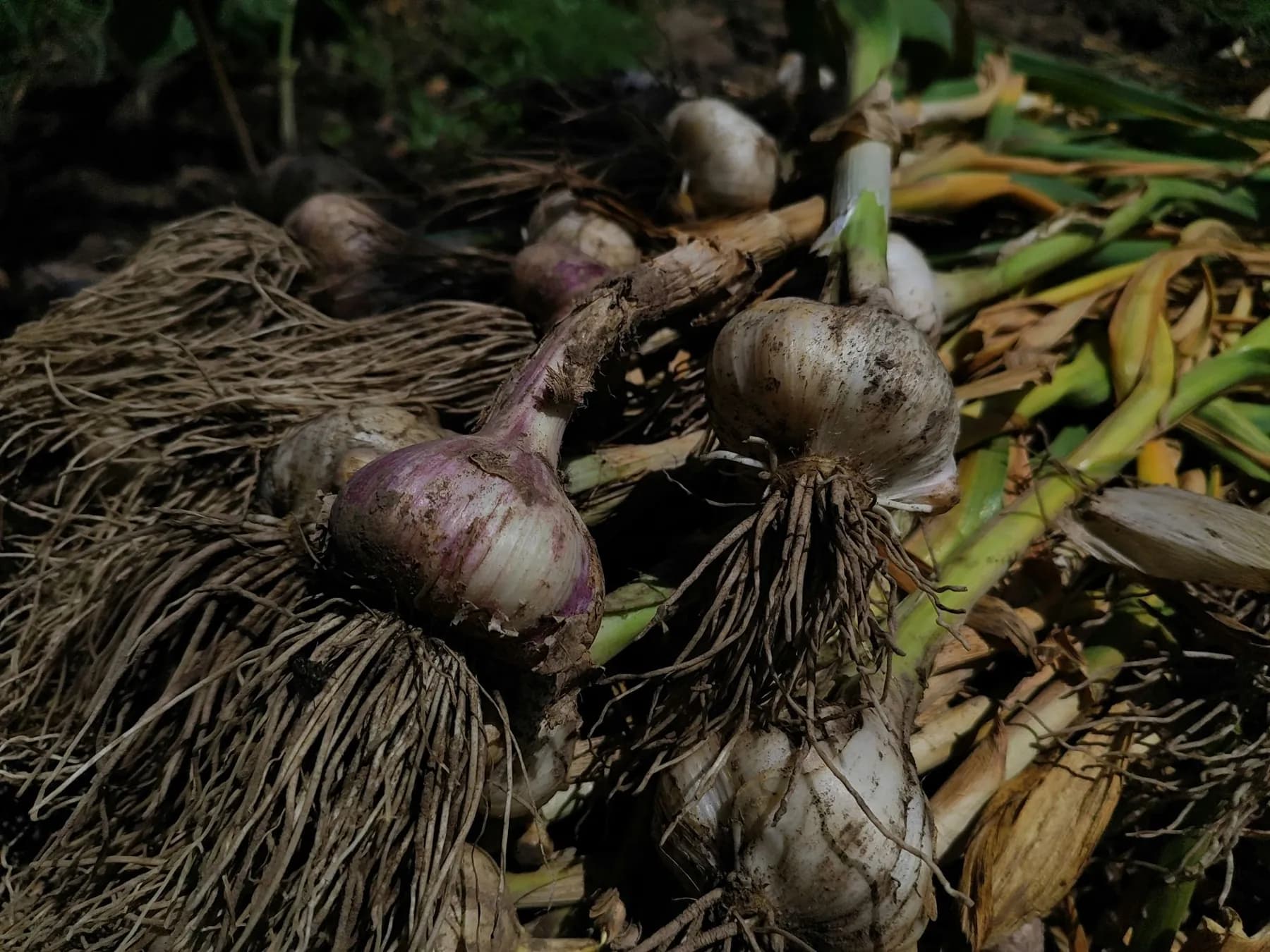
- The AgriLife sheet treats yellowing of the tops as maturity; irrigation ends then, and the bulbs are lifted, dried and cured before storage.1
- Test your own site
- Run a field audit for your coordinates to check winter cold hours and soil temperature, then put your own seed and price into the crop ROI estimator.1
Frequently asked questions
- When do you plant garlic in Texas?
- Plant in autumn once soil at 5 cm depth is below 29°C (85°F), allowing the crop to receive winter cold before spring bulbing. Choose the planting date for your field and variety.
- What garlic grows best in Texas?
- Softneck types such as California Early and California Softneck suit mild winters; AgriLife also lists Elephant garlic, French Mild Silverskin, Mexican Purple and New York White.
- How cold does garlic need to get?
- Below 4°C (40°F) for 6–8 weeks to vernalise. After that, bulbing starts when day length exceeds 13 hours and soil exceeds 16°C (60°F).
- How far apart do you plant garlic in Texas?
- 7.5–10 cm (3–4 in) apart in the row, in two lines on 97–102 cm (38–40 in) wide raised beds, 2.5 cm (1 in) deep.
- How much water does garlic need in Texas?
- About 380–510 mm (15–20 in) a season, and 25–50 mm (1–2 in) a week from the start of rapid growth until the tops yellow.
- Does USDA report Texas garlic?
- No. USDA reports commercial garlic only for California, so there is no Texas yield benchmark.
Regional garlic guides
Local dates, soil-temperature history and sources for specific regions:
Sources and image credits
- 1. Texas AgriLife Extension — Garlic (Commercial and Specialty Crop Guides) — January 2012. Varieties, soil, vernalisation, spacing, fertility, irrigation, diseases and insects.
- 2. Texas A&M Agricultural Extension Service — Garlic Production in Texas, L-2239 — Archived commercial bulletin; reviewed 3 October 2026. Historical southern Texas October planting and cultivar-specific late May, June and July bulb maturity. Named production areas, not a uniform statewide calendar.
Image credits
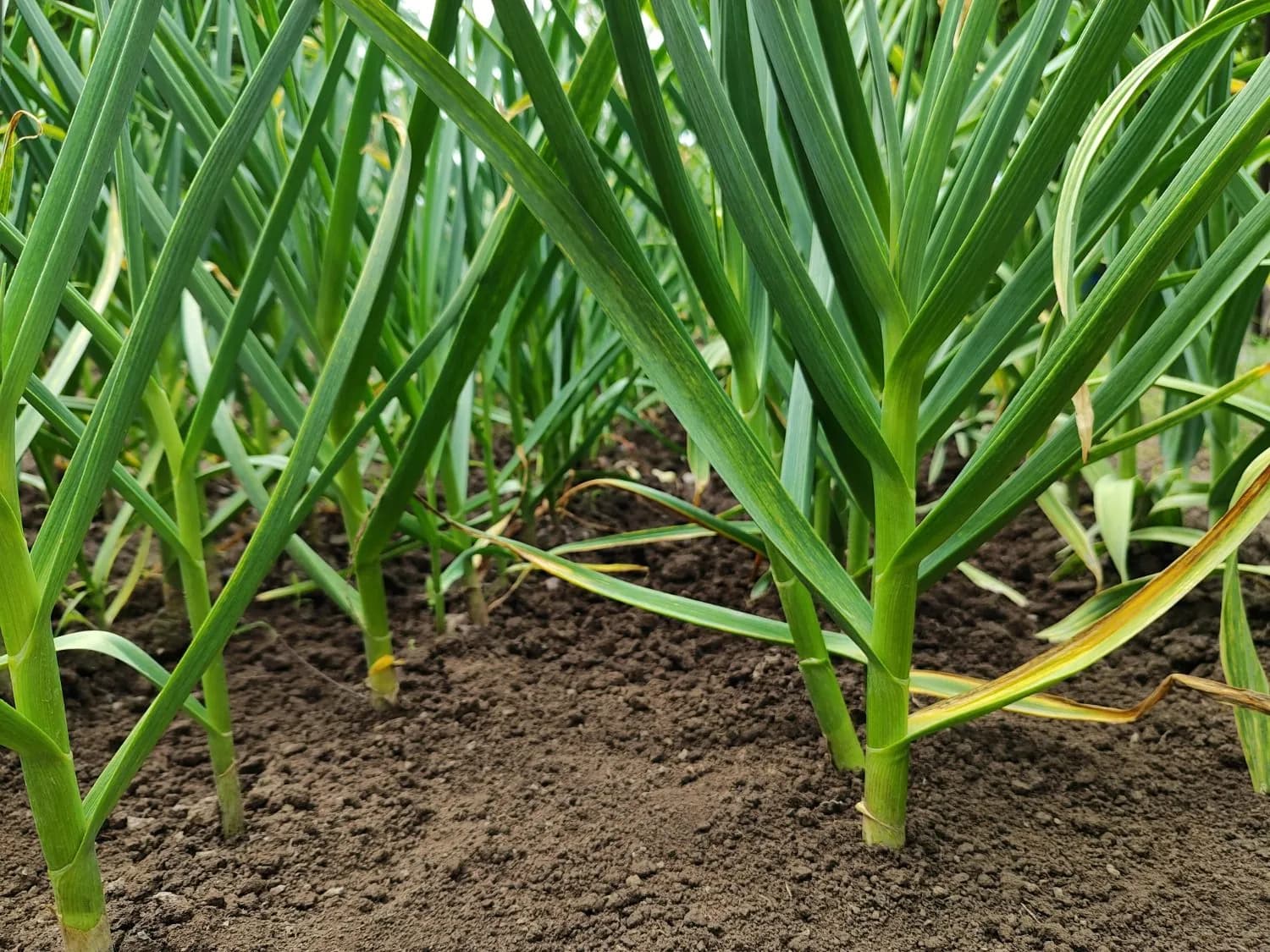
- Garlic in its spring growth stage. Photo: Anna Evans / Unsplash.
- Garlic lifted with roots and tops intact, before drying and curing. Photo: Anna Evans / Unsplash.
Figures are published averages or study assumptions for the places named, not guarantees for your field. Check current local recommendations and product labels before acting.