

Garlic farming in Minnesota
Minnesota garlic is established in fall, protected through winter and harvested the following summer. Cold-adapted planting stock, root establishment before freeze-up and reliable curing space are central farm decisions. The 2023 University of Minnesota and MISA guide gives separate northern and southern planting windows and practical guidance for upper Midwest garlic markets.
Scope: Field-grown bulb garlic for Minnesota farms, using the 2023 University of Minnesota, MISA, SARE and Sustainable Farming Association publication. Dates vary with location and season. Set final planting density, fertility and harvest timing for the field and cultivar. Updated 2026-10-03.
At a glance
- Northern planting reference
- Late September, with trials supporting a wider fall window2
- Southern planting reference
- First or second week of October2
- Soil pH
- 6.0–7.0 optimum2
- Clove placement
- Base 5–7.5 cm (2–3 in) deep, usually 15–20 cm (6–8 in) between plants2
- Winter mulch
- Approximately 7.5–10 cm (3–4 in) of seed-free straw2
- Observed harvest season
- Second week of July through first week of August4
Planting and harvest calendar for Minnesota
Match clove planting and bulb harvest to the named production area and cultivar. Autumn planting precedes harvest the following year. Use the month bands to plan field work, then check bulb maturity before lifting.
Plant cloves: September–October2
The Minnesota guide gives late September in the north and the first or second week of October in the south. Establish roots before freeze-up and adjust to the field and season.
Harvest bulbs: July–August, following year4
The guide reports the second week of July through the first week of August. Inspect declining leaves and sample bulbs; cultivars mature at different times.
Historical monthly climate
Reference period: 1996-01-01 to 2025-12-31. ERA5-Land monthly mean soil temperature at 0–7 cm, air temperature and frost days at the regional reference point (46, -94.5). Select a month to inspect its historical conditions.
Month tiles show mean topsoil temperature.
September historical conditions
- Mean topsoil temperature
- 17.3°C
- Mean air temperature
- 17.2°C
- Mean frost days per month
- 0.0 days
These are monthly means at one reference location. They describe seasonal field conditions, not crop maturity, actual seed-zone conditions, frost forecasts or a planting recommendation. Harvest bands follow the crop-specific production sources above.
Climate source: Open-Meteo Historical Weather APIChoose cold-adapted stock and a field with drainage
- Match variety to the market
- The Minnesota guide highlights porcelain and purple-stripe families for cold climates. Music and Chesnok Red are examples within those groups. Trial several cultivars before expanding, recording bulb size, winter survival, maturity and saleable quality.1
- Protect the next planting
- Plant healthy cloves from a traceable source and keep seed lots separate. Investigate weak plants, distorted growth and basal rot before retaining bulbs for propagation. Planting stock can carry disease between seasons and fields.3
- Prepare the soil
- Use well-drained land and soil tests, targeting the guide’s optimum pH of 6–7. Prepare the crop rows and irrigation access before separating bulbs into cloves.2
Plant for roots before freeze-up and protect the rows
Between rows: 76 cm (30 in) · Within the row: 15–20 cm (6–8 in)
The guide describes 30-inch single rows for machinery access. Its overall row-spacing range is 12–40 inches. Match the layout to equipment and bulb market, not this schematic alone.
- Local fall windows
- The guide gives late September in northern Minnesota and the first or second week of October in the south. Trials also found successful planting across a wider interval from mid-September to freeze-up. Aim for roots before winter and adjust to the season.2
- Place cloves and mulch
- Set cloves upright with the base 2–3 inches deep. Use approximately 3–4 inches of seed-free straw for winter protection. The 2023 guide generally leaves mulch on hardneck garlic through the crop rather than prescribing automatic spring removal.2
Set nitrogen from soil organic matter and crop credits
| Soil organic matter | Nitrogen reference |
|---|---|
| Below 3.1% | 135 kg N/ha (120 lb/acre) |
| 3.1–4.5% | 112 kg N/ha (100 lb/acre) |
| 4.6–19% | 90 kg N/ha (80 lb/acre) |
| Above 19% | 56 kg N/ha (50 lb/acre) |
Sources2
- Account for the field
- Use organic matter, soil tests and previous-crop nitrogen credits to set the program. The table is the guide’s starting benchmark. Alfalfa, clover and legumes can reduce purchased nitrogen needs.2
- Time available nitrogen
- For readily available nitrogen the guide places one-third to one-half in fall and the rest about one to two weeks after spring emergence, watered in. Organic sources require a plan for when nitrogen becomes available.2
- Manage water during bulbing
- The guide places the main bulbing period from late May into early July. Monitor soil water and avoid depletion beyond about half the available supply. It stops irrigation around two weeks before harvest, with timing adjusted to maturity and rainfall.2
Manage scapes, weeds and symptoms through spring
- Remove scapes without losing leaves
- Clip hardneck scapes as they begin to curl, above the top leaf. Protect the leaves that supply bulb growth and arrange a buyer if scapes are part of the farm’s sales.3
- Weeds and diagnosis
- Garlic competes poorly with weeds. Keep rows accessible and control weeds early. The Minnesota guide covers stem and bulb nematodes, white rot, aster yellows, rust and other crop problems. Identify the cause before treating or keeping affected bulbs as seed.3
Lift by bulb maturity and cure with airflow
- 1
Fall roots
Plant into prepared soil before freeze-up.
- 2
Winter protection
Manage mulch for the local winter.
- 3
Spring growth
Monitor water, fertility and crop development.
- 4
Harvest and curing
Inspect bulb maturity, then cure in ventilated conditions.
- Use the calendar as a scouting window
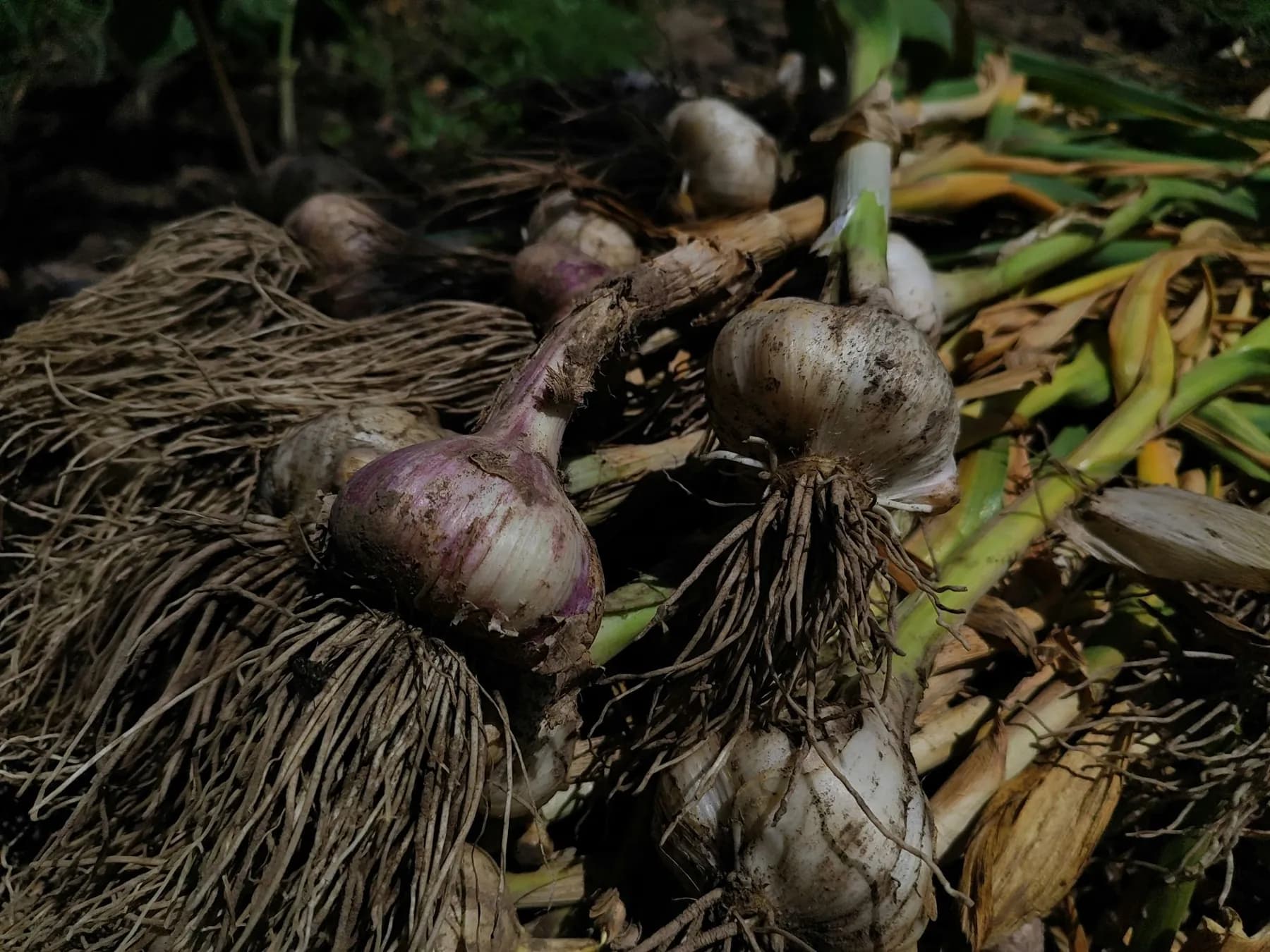
- Minnesota harvest commonly spans mid-July to early August. Inspect leaf decline and cut sample bulbs to check that cloves fill their skins. Varieties mature at different times, and late lifting can split wrappers.4
- Cure each bulb
- Lift carefully and dry in indirect light with airflow reaching every bulb. The guide describes approximately three to four weeks of curing. Confirm dry necks and wrappers, then trim, clean and grade without exposing cloves.4
Separate market bulbs from seed stock
- Market storage
- The Minnesota guide gives 0–4°C (32–40°F) and 60–70% relative humidity for table stock. Excess humidity promotes rooting and mold. Keep lot records and sell according to cultivar storage performance.4
Frequently asked questions
- When do Minnesota farms plant garlic?
- The 2023 guide gives late September in the north and the first or second week of October in the south, with a wider successful fall trial window. Establish roots before freeze-up.
- Which garlic types fit Minnesota?
- Cold-adapted porcelain and purple-stripe families are prominent in the Minnesota guide. Test cultivars on the farm before expanding acreage.
- Should hardneck garlic mulch be removed in spring?
- The 2023 guide generally leaves mulch on hardneck garlic through the crop. Assess stand development, weeds and field conditions.
- When is Minnesota garlic harvested?
- Usually from the second week of July to the first week of August. Inspect leaves and sample bulbs rather than relying on the calendar alone.
- Can seed garlic share the market-bulb storage program?
- Plan it separately. The guide gives cool storage for table stock and room-temperature storage with airflow for seed intended for fall planting.
Regional garlic guides
Local dates, soil-temperature history and sources for specific regions:
Sources and image credits
- 1. University of Minnesota / MISA — Garlic varieties and production systems — 2023. Cold-climate farm garlic types, cultivar selection and upper Midwest niche markets.
- 2. University of Minnesota / MISA — Soils, planting, mulching and irrigation — 2023. Minnesota planting windows and upper Midwest farm benchmarks for soil, nutrients, machinery spacing, mulch and irrigation.
- 3. University of Minnesota / MISA — Scapes, weeds, pests and diseases — 2023. Farm scape management, weed competition, seed-stock disease and pest identification.
- 4. University of Minnesota / MISA — Harvesting, curing and storing garlic — 2023. Minnesota harvest observations, maturity checks, curing airflow, and separate storage conditions for market and planting stock.
Image credits
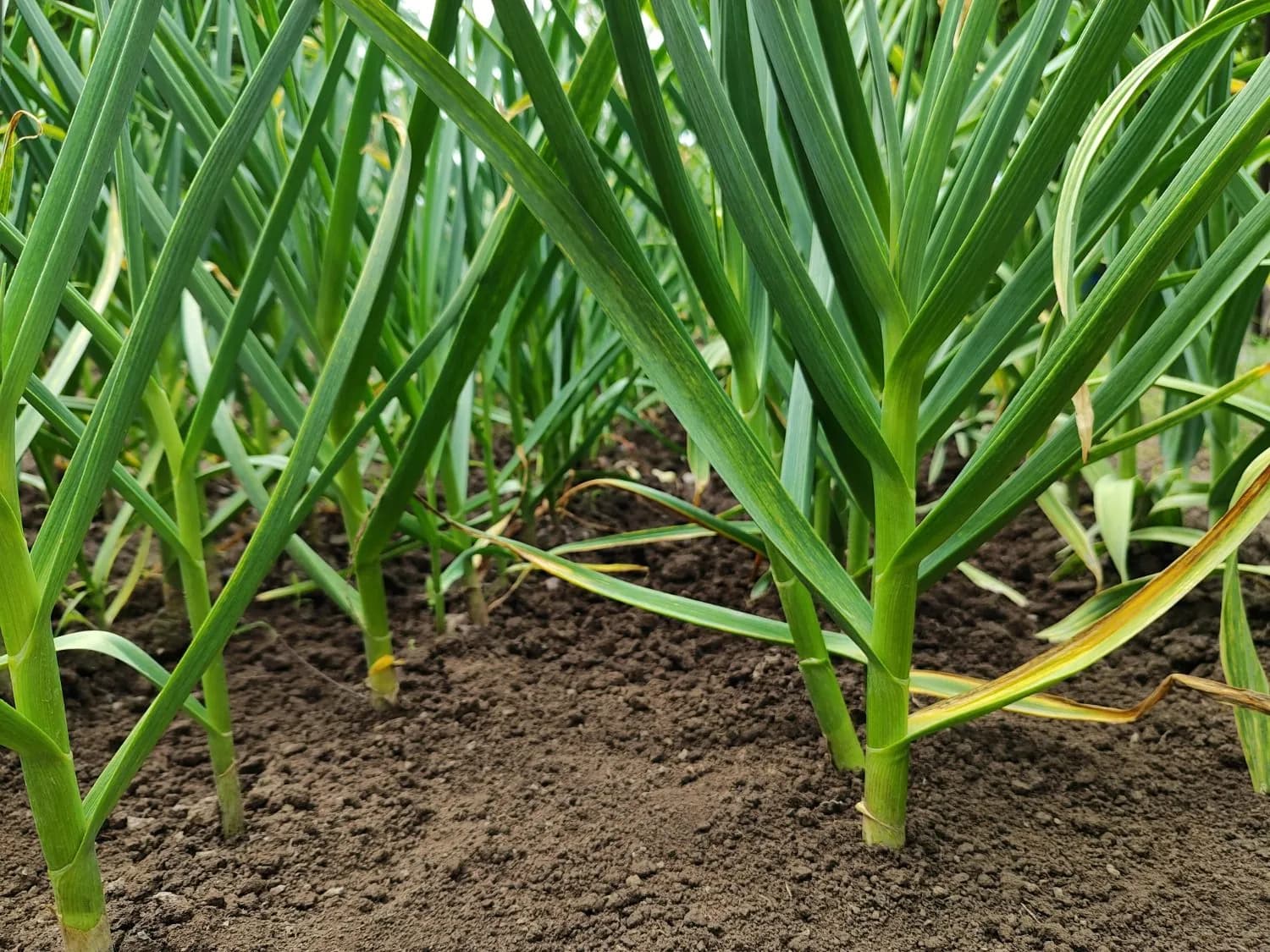
- Garlic field rows during vegetative growth. Photo: Anna Evans / Unsplash.
- Lifted bulbs before curing. Photo: Anna Evans / Unsplash.
Figures are published averages or study assumptions for the places named, not guarantees for your field. Check current local recommendations and product labels before acting.