

Garlic farming in Illinois
Schedule Illinois garlic around local ground freeze, not a single statewide planting day. University of Illinois commercial crop notes describe fall root establishment and report grower problems with thrips and delayed scape removal. Combine that local evidence with northern farm benchmarks for field layout, water and curing, then keep records for your own production area.
Scope: Field garlic for Illinois farms. Local evidence comes from dated Illinois Fruit and Vegetable News commercial crop reports. Soil, spacing, mulch and storage references come from the 2023 upper Midwest farm guide. Northern and southern Illinois require different timing. Updated 2026-10-03.
At a glance
- Illinois planting rule
- About six weeks before ground freezes, adjusted by region and season5
- Northern soil benchmark
- pH 6–7 with good drainage2
- Northern clove layout
- 15–20 cm (6–8 in) between plants, rows set for equipment2
- Local field risk
- 2016 north-central commercial report documented severe thrips damage6
- Hardneck management
- Remove scapes as they start curling and protect the leaves3
- Curing benchmark
- About 3–4 weeks with airflow and indirect light4
Planting and harvest calendar for Illinois
Match clove planting and bulb harvest to the named production area and cultivar. Autumn planting precedes harvest the following year. Use the month bands to plan field work, then check bulb maturity before lifting.
Plant cloves: September–October: northern planning benchmark2,5
This month band transfers Minnesota’s northern reference for planning. Illinois commercial guidance instead places planting about six weeks before local ground freeze, earlier in the north and later in the south. First air frost is not a ground-freeze date.
Harvest bulbs: July, following year: local commercial observation4,6
The July 2016 north-central Illinois report documents garlic already lifted and curing. It is a historical local observation. Inspect cultivar maturity; the broader northern reference extends into early August.
Historical monthly climate
Reference period: 1996-01-01 to 2025-12-31. ERA5-Land monthly mean soil temperature at 0–7 cm, air temperature and frost days at the regional reference point (40, -89). Select a month to inspect its historical conditions.
Month tiles show mean topsoil temperature.
September historical conditions
- Mean topsoil temperature
- 21.7°C
- Mean air temperature
- 20.8°C
- Mean frost days per month
- 0.0 days
These are monthly means at one reference location. They describe seasonal field conditions, not crop maturity, actual seed-zone conditions, frost forecasts or a planting recommendation. Harvest bands follow the crop-specific production sources above.
Climate source: Open-Meteo Historical Weather APIWork back from local ground freeze
- 1
Before fall planting
Prepare drainage, weed control, clean seed and cultivation access.
- 2
About six weeks before freeze
Illinois commercial guidance aims for roots without excessive tender shoots. The north starts earlier.
- 3
Winter protection
Fit the northern straw-mulch benchmark to the field and planting system.
- 4
Spring growth
Assess stand, feed from soil tests, irrigate as needed and watch for scapes.
- 5
Bulb maturity
Inspect sample bulbs and prepare the curing area before lifting.
- An Illinois timing rule
- The October 2014 commercial newsletter recommends planting roughly six weeks before ground freeze to encourage roots without excessive tender shoot growth. It describes an earlier window in northern Illinois and a longer fall window in the south. Its successful late planting anecdote is not a recommended statewide date.5
Keep planting rows accessible for crop care
Between rows: 76 cm (30 in) · Within the row: 15–20 cm (6–8 in)
Minnesota single-row machinery example, transferred for Illinois planning. The guide allows a wider row-spacing range. Set final spacing for equipment, cultivar and market bulb size.
- Spacing and depth
- The northern farm guide commonly uses 6–8 inches between cloves, placing the base 2–3 inches deep. Row widths vary with cultivation and harvest equipment. Check clove placement behind the planter and preserve room for timely weed control.2
- Winter mulch
- Its winter reference is 3–4 inches of seed-free straw, generally retained on hardneck garlic. Adjust cover to the Illinois field’s winter exposure and crop development. Avoid introducing weed seed with the mulch.2
Measure soil fertility and spring water supply
- Use a soil-based nutrient plan
- The northern guide ties nitrogen to organic matter and preceding-crop credits, splitting readily available nitrogen between fall and spring emergence. Use local soil results and source availability to set rates. One copied fertilizer total would not describe Illinois farms with different soils and rotations.2
- Monitor bulb growth
- Check moisture during active bulbing rather than irrigating by the calendar alone. The northern benchmark avoids loss of more than half the available soil water and ends irrigation about two weeks before harvest. Adjust for local rainfall and maturity.2
Scout thrips and remove scapes on time
- Local commercial observation
- The July 2016 north-central Illinois crop report describes severe thrips damage in a grower’s garlic, onions and shallots. Use this as evidence for scouting during the crop, not as a current statewide infestation report. Identify pests and damage before selecting control.6
- Make scape removal a scheduled job
- The same report associates missed scapes with smaller market bulbs. The northern guide removes hardneck scapes when they start curling, clipping above the top leaf. Schedule enough labor and protect leaves during the operation.3,6
- Diagnose seed-stock problems
- The northern guide covers nematodes, white rot, rust and aster yellows among garlic disorders. Keep suspect lots out of saved seed until diagnosis and maintain traceable source and field records.3
Lift by maturity and have curing capacity ready
- Inspect each cultivar
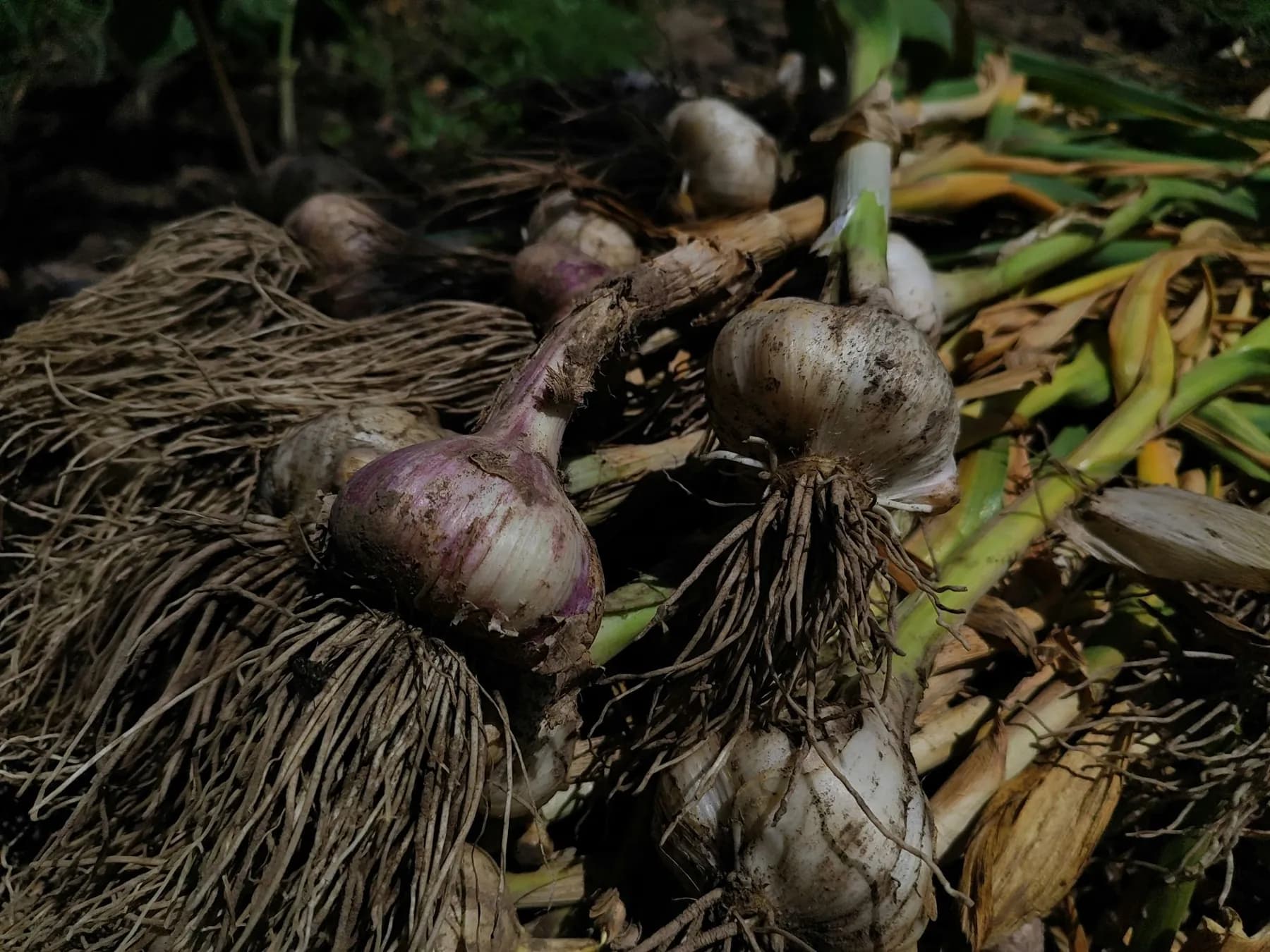
- Watch lower-leaf decline and cut sample bulbs to check filled cloves and intact wrappers. The Illinois July report documents one grower already pulling garlic and curing in a machine shed. It is a local seasonal observation, not a statewide harvest deadline.4,6
- Keep air moving around bulbs
- The northern guide describes three to four weeks of curing in indirect light. Arrange racks or other supports so air reaches the full load. Confirm dry necks and wrappers before trimming and grading.4
Store by purpose and calculate saleable output
- Table stock and seed
- The northern guide gives 0–4°C (32–40°F), 60–70% relative humidity for market bulbs and room-temperature holding with airflow for planting stock. Keep lots separate and track rooting, sprouting and discarded bulbs.4
Frequently asked questions
- When should an Illinois farm plant garlic?
- The commercial Illinois newsletter uses roughly six weeks before local ground freeze. Planting begins earlier in the north, with a longer fall window in the south.
- What spacing fits Illinois farm garlic?
- The northern reference commonly uses 6–8 inches between cloves and row widths chosen for machinery. Check the layout against the farm’s equipment and bulb market.
- Do garlic growers need to scout for thrips?
- Yes. An Illinois commercial crop report documented severe damage in one grower’s garlic and other Alliums. Check the current crop and identify damage before choosing treatment.
- When should hardneck scapes be cut?
- Clip as they begin to curl and keep the leaves intact. Illinois crop notes connect missed scapes with smaller market bulbs.
- How long does farm garlic need to cure?
- The upper Midwest guide describes about three to four weeks, with indirect light and airflow around each bulb. Confirm dry necks and wrappers before storage.
Regional garlic guides
Local dates, soil-temperature history and sources for specific regions:
Sources and image credits
- 1. University of Minnesota / MISA — Garlic varieties and production systems — 2023. Cold-climate farm garlic types, cultivar selection and upper Midwest niche markets.
- 2. University of Minnesota / MISA — Soils, planting, mulching and irrigation — 2023. Minnesota planting windows and upper Midwest farm benchmarks for soil, nutrients, machinery spacing, mulch and irrigation.
- 3. University of Minnesota / MISA — Scapes, weeds, pests and diseases — 2023. Farm scape management, weed competition, seed-stock disease and pest identification.
- 4. University of Minnesota / MISA — Harvesting, curing and storing garlic — 2023. Minnesota harvest observations, maturity checks, curing airflow, and separate storage conditions for market and planting stock.
- 5. University of Illinois — Commercial garlic planting timing — Illinois Fruit and Vegetable News, 13 October 2014. Farm planting timing relative to ground freeze and north–south differences. Late planting success is an individual anecdote.
- 6. University of Illinois — North-central commercial crop observations — Illinois Fruit and Vegetable News, 20 July 2016. Grower observations of thrips damage, missed garlic scapes, harvest and curing. Historical local report, not current prevalence.
Image credits
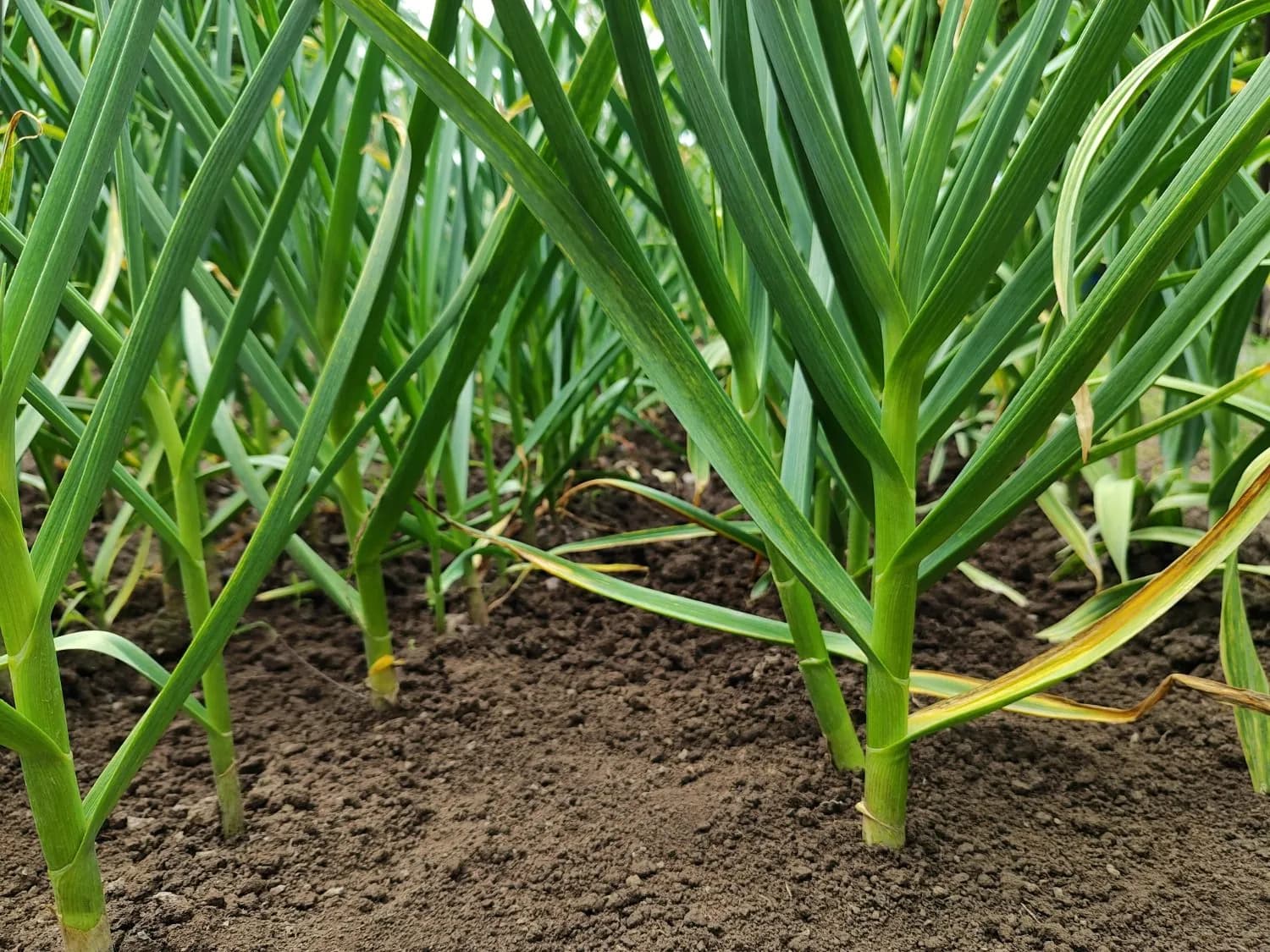
- Garlic field rows during vegetative growth. Photo: Anna Evans / Unsplash.
- Lifted bulbs before curing. Photo: Anna Evans / Unsplash.
Figures are published averages or study assumptions for the places named, not guarantees for your field. Check current local recommendations and product labels before acting.