

How to grow strawberries commercially
Strawberry plants are perennial, but commercial fields can be replanted annually or managed as multi-year beds. Plasticulture, day-neutral and matted-row systems use different planting stock, calendars, runner management and harvest plans. Choose the system for your climate, labour, market and infrastructure before setting dates.
Scope: Commercial system planning synthesized from California district guidance and Iowa and Illinois extension examples. Their dates and management practices apply to the named production systems and locations only. Updated 2026-10-16.
At a glance
Perennial strawberry growth calendar
A perennial planting remains in the field for multiple years. Establishment is a long-term investment; flowering, fruit development, harvest and plant care recur as the planting matures. Follow the named cultivar and production system.
Establish a long-lived planting1,2,3,4,5,6
The plant is perennial, but field life depends on system. Annual plasticulture and some day-neutral operations are replanted; June-bearing matted rows may be carried for several seasons. Set timing from local planting stock, field preparation and production system, not one global month.
Management: Establish crowns, runners or plugs as designed1,4,6,7
Plant type and management depend on whether the farm is using bare-root matted rows, annual plugs or another system. Protect roots and crowns, maintain moisture and use the system-specific local schedule.
Choose the field system before setting the calendar
- 1
Set the market
Choose fresh or processing use, harvest period and buyer.
- 2
Select the system
Compare annual plasticulture, day-neutral and matted-row production.
- 3
Arrange stock and field work
Match plugs or bare-root plants, beds, mulch, irrigation and labour.
- 4
Plan field duration
Decide whether the planting is renewed annually or carried across years.
- Annual and multi-year systems are different
- California district schedules, southern Illinois plasticulture, northern Illinois day-neutral trials and Iowa matted rows describe different operations. Choose a system that fits local climate, harvest market, labour and equipment before borrowing a date or practice.1,3,4,5,6
Prepare the field and handle planting stock well
- Prioritize drainage
- Choose a field that drains adequately and prepare beds to avoid standing water. UC IPM outlines commercial drainage and bed design; adapt that guidance to local soil, rainfall and production system.2
Manage stand, irrigation and crop health by system
Harvest for quality, cooling and packout
- 1
Check maturity
Follow fruit colour, field condition and buyer grade.
- 2
Pick frequently
Match crew visits to ripening and the local market window.
- 3
Remove rejects
Keep decayed or water-damaged fruit out of sound lots.
- 4
Cool and deliver
Protect fruit quality through packing and transport.
- Pick at the buyer’s maturity standard
- Use fruit colour and maturity, field temperature and buyer specifications to schedule picking. The documented California, Iowa and Illinois windows differ, so local field maturity should set the actual start and frequency.8,3,10,11,6
- Keep fruit clean and cool
- Remove decayed or water-damaged fruit, protect harvested berries from heat and move them promptly into the agreed cooling and packing chain. Record marketable packout and reject causes by field.8
Frequently asked questions
- Are strawberries annual or perennial?
- The plant is perennial. Commercial fields may be managed as annual plasticulture or day-neutral crops, or maintained as multi-year matted rows.
- When should commercial strawberries be planted?
- There is no universal month. Planting time depends on climate, cultivar, planting stock and whether the farm uses plasticulture, day-neutral or matted-row production.
- Do all strawberry systems use runners?
- No. Runners fill matted rows, while some annual day-neutral systems remove runners. Use the practice specified for the chosen production system.
- How long is strawberry harvest?
- Harvest duration varies by region, cultivar and system. Plan crews, cooling and delivery from observed maturity and the buyer’s schedule.
Regional guides and field planning
Sources and image credits
- 1. UC IPM — Handling Strawberry Transplants — UC ANR Publication 3468; updated July 2018. Commercial planting seasons, transplant certification and handling, regional bed densities, spacing from drip lines and first-month irrigation.
- 2. UC IPM — Field Preparation for Strawberry — UC ANR Publication 3468; updated July 2023. Commercial field drainage, bed designs, regional two-row and four-row systems, and mulch functions.
- 3. California Department of Pesticide Regulation — Economic Impact Report, Strawberry production systems — Published 2021; district schedule and acreage data from 2018. California commercial district planting and harvest periods, seasonal production systems, statewide year-round harvest context and typical annual field management.
- 4. Iowa State University Extension — Production Guide for Commercial Strawberries (PM 0672D) — Published September 2008. Commercial Iowa matted-row and spaced-matted-row production, spring planting, crown placement, first-year blossom removal, runnering, mature stand density, soil testing and cultivar adaptation. Confirm dated numeric input recommendations before use.
- 5. Illinois Extension Commercial Fruit and Vegetable Growers — Summer harvest and strawberry transplant timing at Dixon Springs Ag Center — 31 August 2026. Southern Illinois annual plasticulture bed preparation and typical September 10–15 plug transplant timing; local Extension guidance.
- 6. Illinois Extension Commercial Fruit and Vegetable Growers — Day-neutral strawberries still producing — 3 October 2023. Northern Illinois on-farm research: first-week-of-May bare-root planting, harvest into Halloween, six-week flower removal and July–August runner removal; not a statewide schedule.
- 7. Illinois Extension Commercial Fruit and Vegetable Growers — Neopestalotiopsis in strawberry — 27 September 2024. Illinois disease reporting and distinction between bare-root stock for matted rows and plug plants for plasticulture.
- 8. UC IPM — Strawberry Harvest — UC ANR Publication 3468; updated July 2018. Commercial field monitoring, soil moisture, irrigation-water salinity and removal of decayed or water-damaged fruit during harvest.
- 9. Illinois Extension Commercial Fruit and Vegetable Growers — Time to uncover strawberries — 20 February 2024. Southern Illinois spring management of matted-row straw and plasticulture floating covers; soil-temperature and plant-growth cues.
- 10. Iowa Department of Agriculture and Land Stewardship — Strawberry Season Underway Across Iowa — Accessed October 2026. Statewide harvest duration of about four weeks and variation in timing across Iowa.
- 11. Illinois Extension Commercial Fruit and Vegetable Growers — St. Louis Metro East fruit crop update — 30 April 2025. First-ripe southern Illinois plasticulture strawberries and matted-row June-bearing bloom; one dated regional observation.
- 12. Illinois Extension Commercial Fruit and Vegetable Growers — Strawberry plasticulture field observations from southern Illinois — 27 November 2024. Local end-of-fall field observations of plant decline, crown development and winter plant counts; observed symptoms were not diagnostically confirmed.
- 13. Iowa State University Extension and Outreach Commercial Horticulture — 6/10/26 Notes from “What in the Weather?” — 10 June 2026. Commercial Iowa observations of variable strawberry yields, possible winter and thrips stress, and prompt renovation after final harvest; field observations rather than a statewide trial.
Image credits
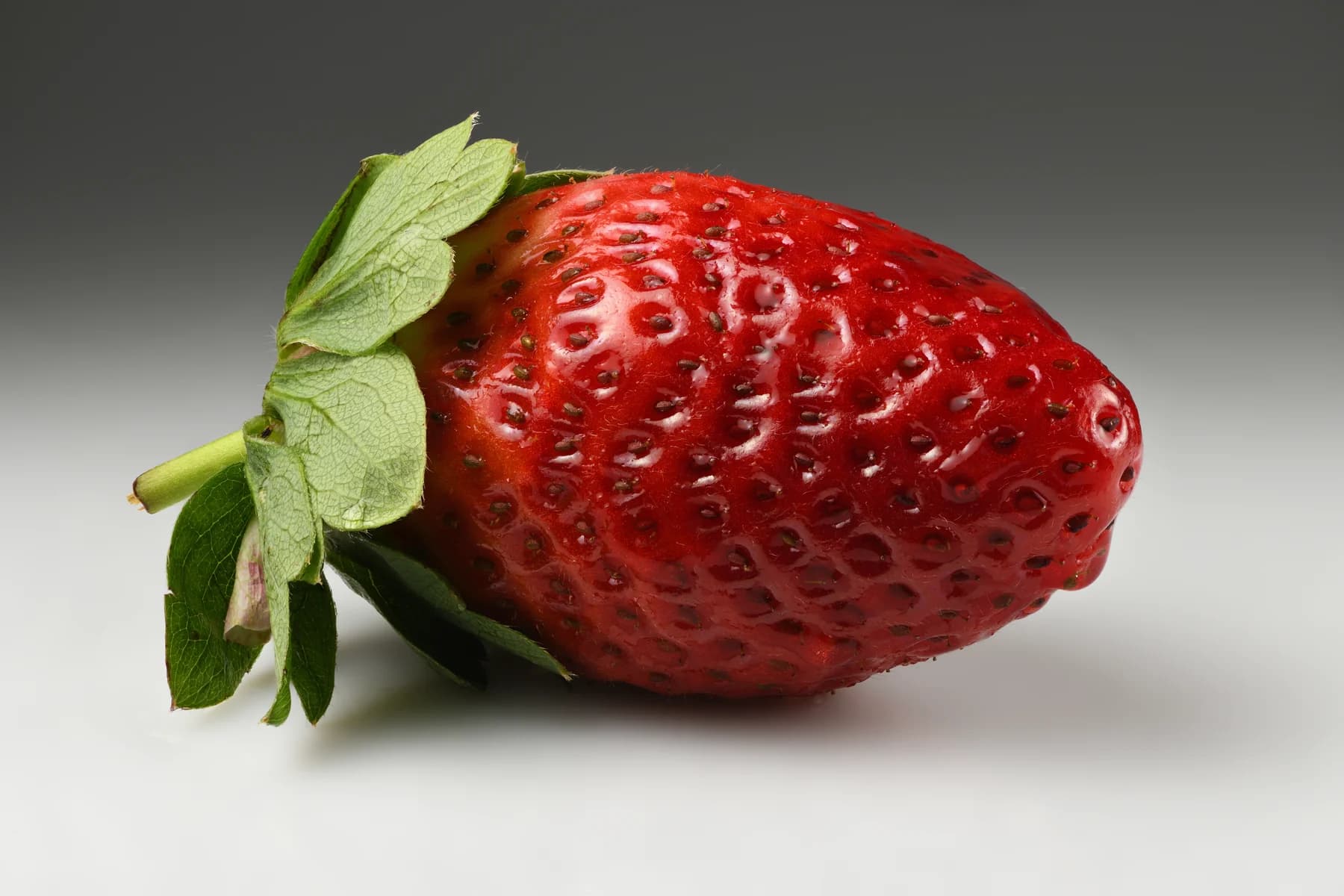
- Strawberry fruit grown in Spain. Photo: Ivar Leidus, CC BY-SA 4.0; resized under the same license.
Figures are published averages or study assumptions for the places named, not guarantees for your field. Check current local recommendations and product labels before acting.