

Growing oranges in Italy
Italy’s orange production is strongly associated with Sicily and Calabria, but national statistics for citrus area should not be mistaken for orange-only acreage. Sicily’s current integrated-production rules provide a useful local harvest reference; protected red-orange rules apply only inside their defined production area.
Scope: Commercial sweet-orange production, with practice detail centered on Sicily. IGP cultivar, density and product rules are specific to the protected Sicilian production area and do not apply to all Italian orange orchards. Updated 2026-10-07.
At a glance
- National orange output
- About 1.8 million tonnes reported for 20241
- Where citrus area is concentrated
- Sicily 58% and Calabria 26% of all-citrus area, not orange-only area1
- Sicily harvest reference
- Late October through late February under the 2026 integrated-production rules2
- Protected red-orange density cap
- Up to 1,111 trees/ha inside the Arancia Rossa di Sicilia IGP production area only3
- Harvest decision
- Sample maturity before picking; detached citrus fruit does not continue ripening2
Perennial growth and climate in Italy
A perennial planting remains in the field for multiple years. Establishment is a long-term investment; flowering, fruit development, harvest and plant care recur as the planting matures. Follow the named cultivar and production system.
Establish a long-lived planting1,2
Choose cultivar and rootstock for the proposed district, soil drainage, water quality, heat and market. Secure a local orchard plan and current nursery material; no national Italian establishment-month recommendation is supported by the reviewed sources.
Management: Set irrigation and canopy work from local conditions1,4
Sicilian and other southern Italian sites differ in water supply, soil, heat and orchard design. CREA describes current field research on irrigation and rootstocks, but that activity page is not a results-based water prescription. Use current regional advice and block measurements.
Harvest: Sicily citrus harvest reference2
Sicily’s 2026 integrated-production rules give a broad late-October through late-February citrus harvest period. The rules include orange and lemon under Citrus; actual orange maturity depends on cultivar, location, year and market. The range is not a national fixed harvest calendar.
Historical monthly climate
Reference period: 1996-01-01 to 2025-12-31. ERA5-Land monthly mean soil temperature at 0–7 cm, air temperature and frost days at the regional reference point (42.8, 12.8). Select a month to inspect its historical conditions.
Month tiles show mean air temperature.
October historical conditions
- Mean topsoil temperature
- 15.1°C
- Mean air temperature
- 15.1°C
- Mean frost days per month
- 0.0 days
Use this monthly history to assess winter exposure, seasonal heat and water planning. It does not calculate cultivar chill hours, flowering dates, frost damage during bloom or fruit maturity. Topsoil at 0–7 cm describes shallow soil context, not the full root zone. Harvest periods follow the production evidence above.
Climate source: Open-Meteo Historical Weather APIMatch the orchard plan to the production district
- 1
Choose a district and market
Distinguish fresh, processing and protected-product routes.
- 2
Assess soil and water
Check drainage, irrigation supply, quality and local heat exposure.
- 3
Select the plant material
Match cultivar and rootstock to the site and market specification.
- 4
Plan harvest and packing
Confirm maturity checks, labor, transport and packhouse capacity.
- Separate orange figures from citrus-wide statistics
- CREA reports about 1.8 million tonnes of orange production in 2024. Its Sicily and Calabria area shares refer to citrus overall, not orange acreage alone.1
- Treat red-orange designation rules as local
- Tarocco, Moro and Sanguinello are named in the Arancia Rossa di Sicilia IGP specification. The designation ties eligible fruit to a defined Sicilian production area and its requirements; it is not a blanket recommendation for all Italian oranges.3
Choose cultivar and rootstock for the buyer
- Define product before ordering trees
- Fresh fruit, juice and protected red-orange markets differ in cultivar, quality, traceability and harvest requirements. Confirm the buyer or processor and applicable specification before establishing a block.1,3
- Use local rootstock advice
- Rootstock affects tree size and orchard response. CREA’s 2026 field-day note describes trials at Palazzelli on irrigation and rootstocks, but it does not report results that support a single best rootstock.4
Set density from the orchard system
- 1
Identify cultivar vigor
Confirm scion and rootstock growth characteristics.
- 2
Plan equipment access
Allow for pruning, spraying, harvest and transport.
- 3
Check designation limits
Apply IGP rules only to eligible blocks inside the production area.
- 4
Verify the final layout
Use local technical design and survey the plantable area.
- Do not apply the IGP density cap nationally
- The Arancia Rossa di Sicilia IGP specification caps density at 1,111 trees/ha for the protected product area. That legal limit is not a general Italian planting recommendation; other orchards need a site- and system-specific layout.3
Manage irrigation, nutrition and plant health by site
- Plan water for the actual orchard
- The CREA Palazzelli activity describes research on deficit irrigation methods and rootstocks. It does not give a ready-made rate; set irrigation from soil, weather, tree and water-supply measurements.4
- Follow current integrated-production rules
- Sicily’s 2026 integrated-production rules link agronomic standards with current crop-defense and weed-control rules. Check the current crop sheet and local authority before choosing plant-health actions.2
- Keep protected-product records
- If selling under the Arancia Rossa di Sicilia IGP, maintain the records and permitted cultivars, rootstocks, density, harvest and handling practices required by its specification.3
Pick oranges at the correct maturity
- 1
Identify the crop sheet
Confirm whether the block follows general Citrus or IGP requirements.
- 2
Sample fruit before picking
Check maturity and quality for the cultivar and intended market.
- 3
Coordinate harvest crews
Align labor, collection and packing capacity.
- 4
Keep lots documented
Maintain block and product identity through delivery.
- Do not rely on dates alone
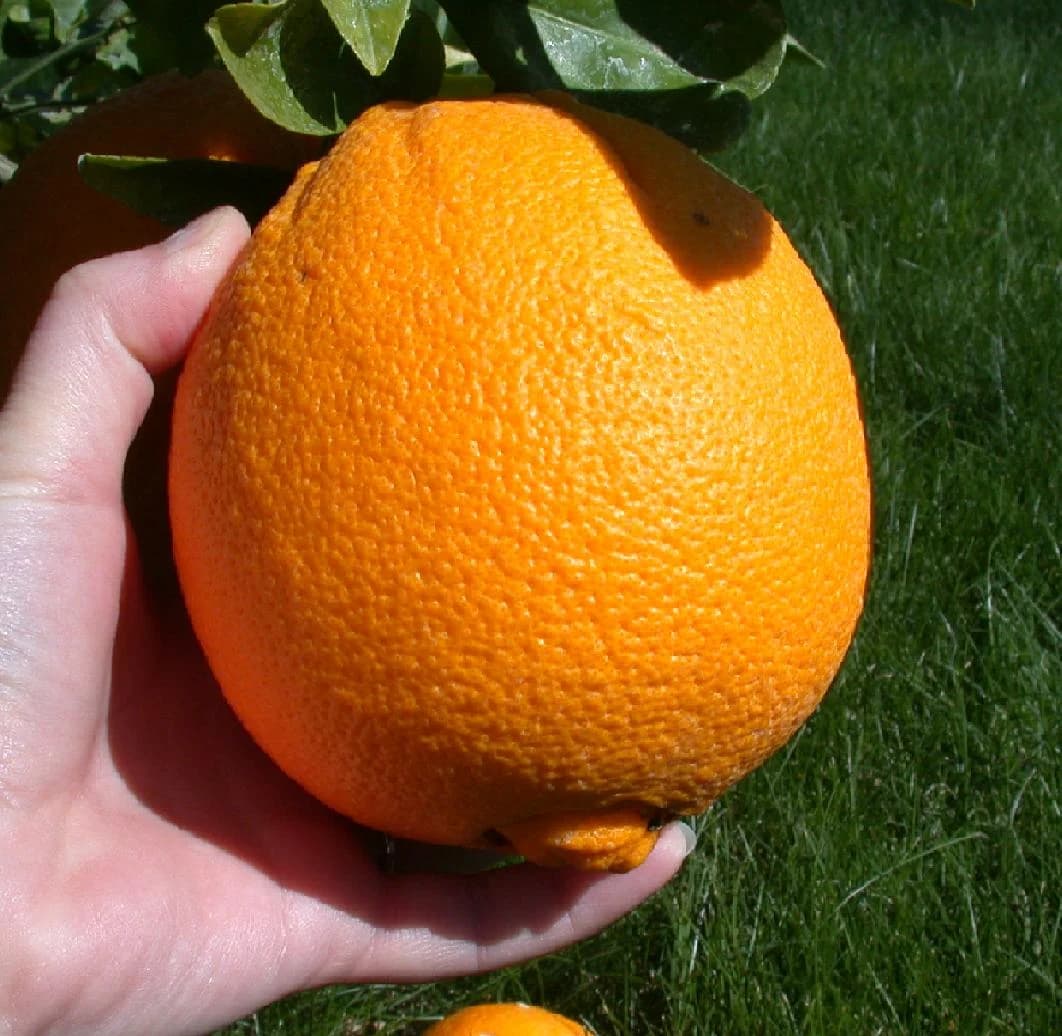
- The 2026 Sicilian rules recommend checking preharvest maturity and state that detached citrus does not continue ripening. Harvest readiness is a fruit measurement and market decision, not just a month on a calendar.2
- Follow protected-product handling where applicable
- For IGP red oranges, the specification names eligible varieties and requires clipping the peduncle with harvest scissors. Apply that requirement only to the defined protected product.3
Frequently asked questions
- Where are oranges grown in Italy?
- CREA identifies Sicily and Calabria as the main concentrations of citrus area. Those shares are for all citrus, not sweet oranges alone.
- When are oranges harvested in Sicily?
- Sicily’s 2026 integrated-production rules give a broad citrus harvest period from late October to late February. Orange cultivar, site, season and market determine actual maturity.
- What is the IGP orange density limit?
- The Arancia Rossa di Sicilia IGP specification caps density at 1,111 trees/ha within its defined protected production area. It is not a general Italian orchard spacing recommendation.
- Which orange cultivars are used for Arancia Rossa di Sicilia?
- The IGP specification names Tarocco, Moro and Sanguinello, subject to its defined production area and full production rules.
- Can oranges ripen after harvest?
- The 2026 Sicilian rules say citrus does not continue ripening after it is detached. Sample fruit and confirm maturity before picking.
Regional oranges guides
Local dates, soil-temperature history and sources for specific regions:
Sources and image credits
- 1. CREA — Annuario dell’Agricoltura Italiana 2024 — Presented 16 December 2025. National orange production for 2024 and all-citrus area distribution; the regional area shares are not orange-only.
- 2. Regione Siciliana — 2026 integrated-production agronomic rules, D.D.G. 1613 — 10 March 2026. Sicily citrus crop rules, correct maturity, preharvest checks and broad late-October to late-February harvest reference.
- 3. Gazzetta Ufficiale — Arancia Rossa di Sicilia IGP production specification — 27 March 2026. Protected production area, eligible cultivars, rootstocks, density cap, yield ceiling and harvest handling; applies only to the IGP.
- 4. CREA — Palazzelli field-day research on citrus irrigation and rootstocks — Accessed 7 October 2026. Current research activity on deficit-irrigation methods and rootstocks in Lentini, Sicily; the activity note is not a results-based prescription.
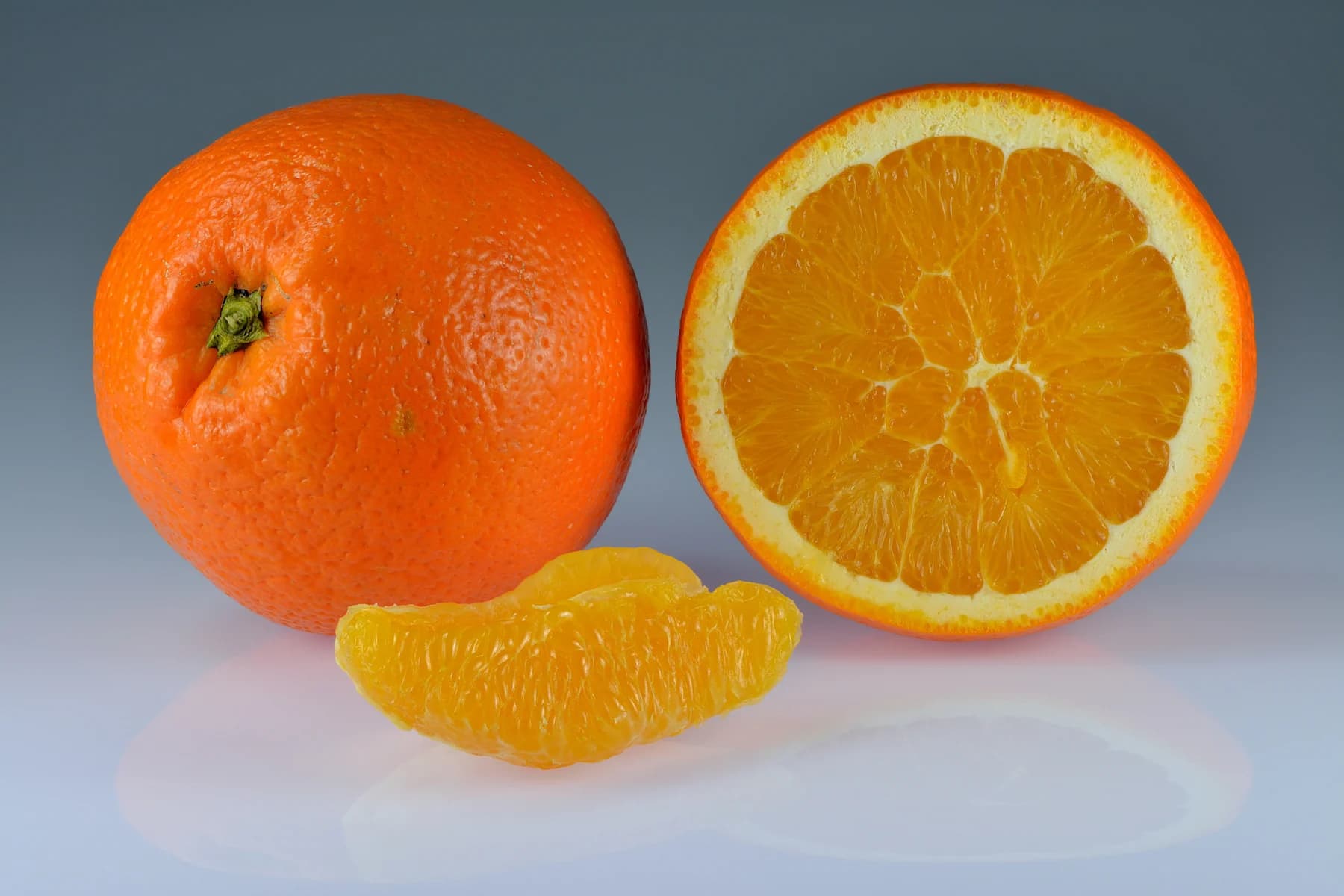
- 5. Orange fruit photograph — Ivar Leidus — January 3, 2021; CC BY-SA 4.0. Focus-stacked fruit photograph, resized. Crop identification; location and cultivar are not specified.
- 6. Picking an orange photograph — Dvortygirl — March 18, 2007; CC BY-SA 3.0. A hand supporting an orange on a tree. Source location and cultivar are not specified; not a demonstration of detachment, pruning-tool use or commercial harvest safety.
- 7. Orange fruit photograph license — CC BY-SA 4.0 — Creative Commons Attribution-ShareAlike 4.0. The resized fruit photograph retains its original share-alike license.
- 8. Orange picking photograph license — CC BY-SA 3.0 — Creative Commons Attribution-ShareAlike 3.0. The WebP photograph retains its original share-alike license.
Image credits
- Orange fruit and cut section. Photo: Ivar Leidus, CC BY-SA 4.0; resized under the same license.
- Picking an orange. Photo: Dvortygirl, CC BY-SA 3.0; converted to WebP.
Figures are published averages or study assumptions for the places named, not guarantees for your field. Check current local recommendations and product labels before acting.