

Growing artichokes in France
French artichoke production spans two distinct settings: mild, humid Brittany and the Mediterranean production areas of Provence, Languedoc-Roussillon and Roussillon. The crop is commonly kept for multiple years, so establishment, drainage, water supply, sucker control and harvest labor matter more than a single national planting date.
Scope: Commercial production context, with Brittany trial evidence and CTIFL production-season data for southern France and Brittany. Local cultivar and field records take precedence over national summaries. Updated 2026-10-05.
At a glance
- Main French production areas
- Brittany; Pyrénées-Orientales and other southern basins1
- French supply season
- South from March; Brittany from May through December1
- Stand life in Brittany trial
- Two to three years2
- Traditional Violet de Provence trial spacing
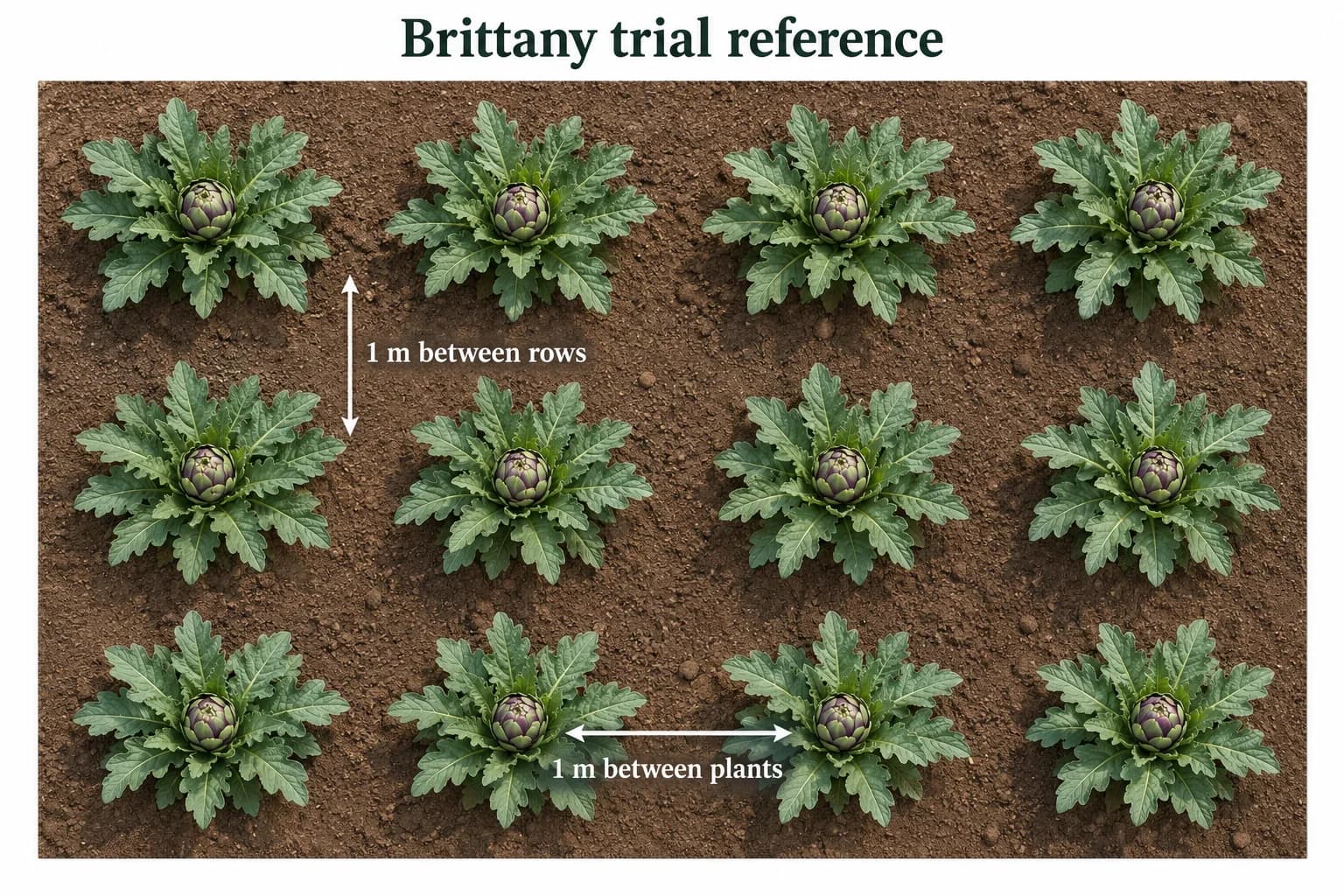
- 1 m by 1 m; 10,000 plants/ha in one Brittany reference field2
- First-year labor reference
- Up to 150 hours/ha in a Brittany production presentation3
Perennial growth and climate in France
A perennial planting remains in the field for multiple years. Establishment is a long-term investment; flowering, fruit development, harvest and plant care recur as the planting matures. Follow the named cultivar and production system.
Establish a long-lived planting1,2
Artichoke stands are retained for more than one production year in the French systems reviewed. Choose planting material, drainage and irrigation for the target production basin; the sources do not support one planting date for all of France.
Management: Stand care and field monitoring2,3
Track stand persistence, sucker load, weeds, water stress and disease through the crop cycle. A 2025 Brittany trial reported dry spring conditions affecting traditional offshoot establishment and emphasized repeated crop monitoring.
Harvest: French production-basin market season1
CTIFL reports production starting in March in Provence and Languedoc-Roussillon, with Brittany supplying traditional types from May through December. This describes regional supply, not a guaranteed window for an individual field.
Historical monthly climate
Reference period: 1996-01-01 to 2025-12-31. ERA5-Land monthly mean soil temperature at 0–7 cm, air temperature and frost days at the regional reference point (46.6, 2.4). Select a month to inspect its historical conditions.
Month tiles show mean air temperature.
March historical conditions
- Mean topsoil temperature
- 7.5°C
- Mean air temperature
- 7.9°C
- Mean frost days per month
- 4.4 days
Use this monthly history to assess winter exposure, seasonal heat and water planning. It does not calculate cultivar chill hours, flowering dates, frost damage during bloom or fruit maturity. Topsoil at 0–7 cm describes shallow soil context, not the full root zone. Harvest periods follow the production evidence above.
Climate source: Open-Meteo Historical Weather APIMatch the production system to the basin
- Upper reported reference150 hours/ha
- Brittany is the largest production basin
- CTIFL describes Brittany as the main French region, with the Pyrénées-Orientales also contributing. CTIFL notes that the crop suits mild, humid conditions, which helps explain the Breton production base.1
- Southern France has a different field context
- Mediterranean production faces a drier summer pattern than coastal Brittany. The Roussillon specification requires irrigation access and reliable drainage; a southern layout should be based on its local soil, water and market system.1
Manage artichokes as a perennial stand
- Plan for several production years
- The Brittany trial kept the crop in place for two or three years. The initial planting therefore commits field space, plant material and weed-management capacity beyond the first harvest.2
- Choose propagation for the target system
- Traditional Violet de Provence was planted from vegetative offshoots; the Brittany comparison used rooted seed-grown Capriccio plants. In the reported dry spring, the rooted plants established more reliably, while the seeded variety showed greater mildew sensitivity in wetter years. These were trial observations, not universal cultivar rankings.2
- Do not copy one trial density everywhere
- The Brittany reference field used 1 m square spacing for Violet de Provence. The same report describes different densities for seed-grown types, demonstrating why plant size, harvest access and disease pressure must shape the layout.2
Protect establishment and head development
- Avoid establishment stress
- Brittany producers reported that dry spring conditions and persistent east winds can impair traditional offshoot establishment. The trial found better early establishment with rooted seedling plugs in those conditions; local soil moisture and wind exposure still matter.2
- Keep water available at sensitive stages
- The Brittany source identifies water stress after planting and during stem elongation as risks to crop performance and head enlargement. Build irrigation and drainage plans around the field rather than relying on regional rainfall totals.2
Read the market calendar by region
- South-to-north supply sequence
- CTIFL reports French production entering the market in March from Provence and Languedoc-Roussillon, followed by Brittany production from May through December. These are basin-level supply periods, not cultivar-specific harvest predictions.1
Frequently asked questions
- Where are artichokes grown in France?
- Brittany is the main production basin. Southern production includes Provence, Languedoc-Roussillon and Pyrénées-Orientales.
- When are French artichokes harvested?
- CTIFL describes southern production starting in March and Brittany supply from May through December. Actual field harvest depends on basin, cultivar and year.
- How long does a French artichoke stand last?
- A Brittany field trial retained artichokes for two to three years. Treat this as a regional production example.
- How much labor does commercial artichoke production need?
- A 2025 Brittany presentation reports up to 150 hours per hectare in the first year, concentrated in sucker removal, harvest and crop maintenance.
Regional artichokes guides
Local dates, soil-temperature history and sources for specific regions:
Sources and image credits
- 1. CTIFL — Artichaut: production basins and commercial calendar — Verified 25 February 2026. French production regions, climate context, variety groups and regional market-season sequence.
- 2. Chambre d’agriculture de Bretagne — Artichaut de semis: une nouvelle opportunité en Bretagne? — 2025 field follow-up; observations from 2023–2025. Brittany commercial field example: stand life, propagation, spacing, labor operations, water stress, disease observations and trial harvest results.
- 3. CTIFL — Temps de travaux et difficultés techniques de la culture d’artichaut — Presented 20 May 2025. Brittany first-year labor estimate and the work concentrated in sucker removal, harvest and maintenance.
Image credits
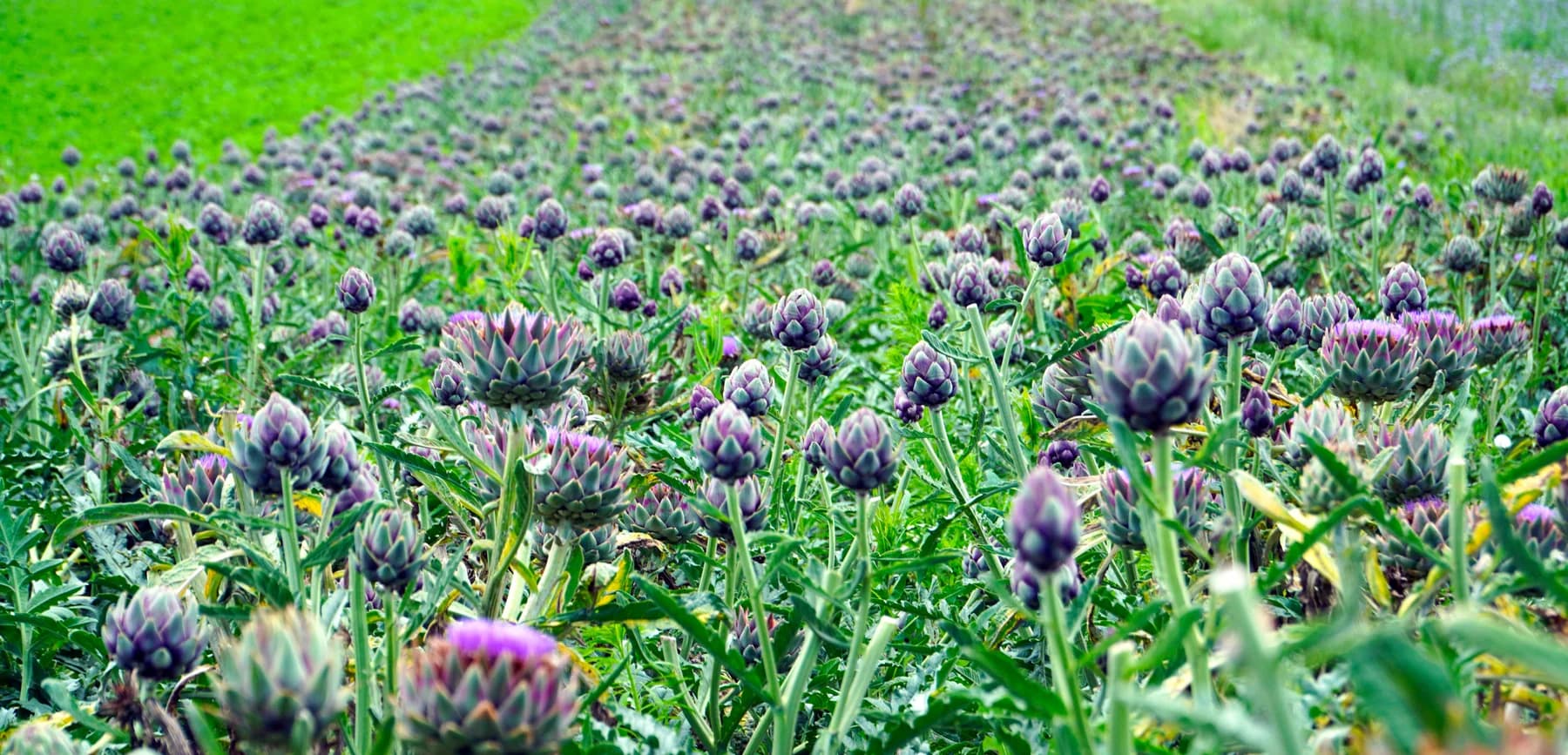
- Artichoke field. Photo: Matthias Böckel / Pixabay (image 5313977).
- Violet de Provence trial reference: 1 m between rows and plants. Illustration.
Figures are published averages or study assumptions for the places named, not guarantees for your field. Check current local recommendations and product labels before acting.
Some visuals in this guide are illustrations rather than photographs of a specific farm. See image credits.