

Growing artichokes in Florida
Globe artichokes are perennial plants, but Florida research has tested them as a cool-season annual crop. Warm winters can leave cultivars short of the chill that triggers flower buds, so UF/IFAS trials use cultivar selection and have evaluated gibberellic acid (GA). These are emerging-crop results, not a statewide production standard.
Scope: Commercial trial planning using UF/IFAS research in central and northeast Florida. Florida acreage and statewide commercial recommendations are not established in the reviewed sources. Updated 2026-10-05.
At a glance
- Harvest season reported in Florida
- January–May, depending on location1
- UF panel field layout
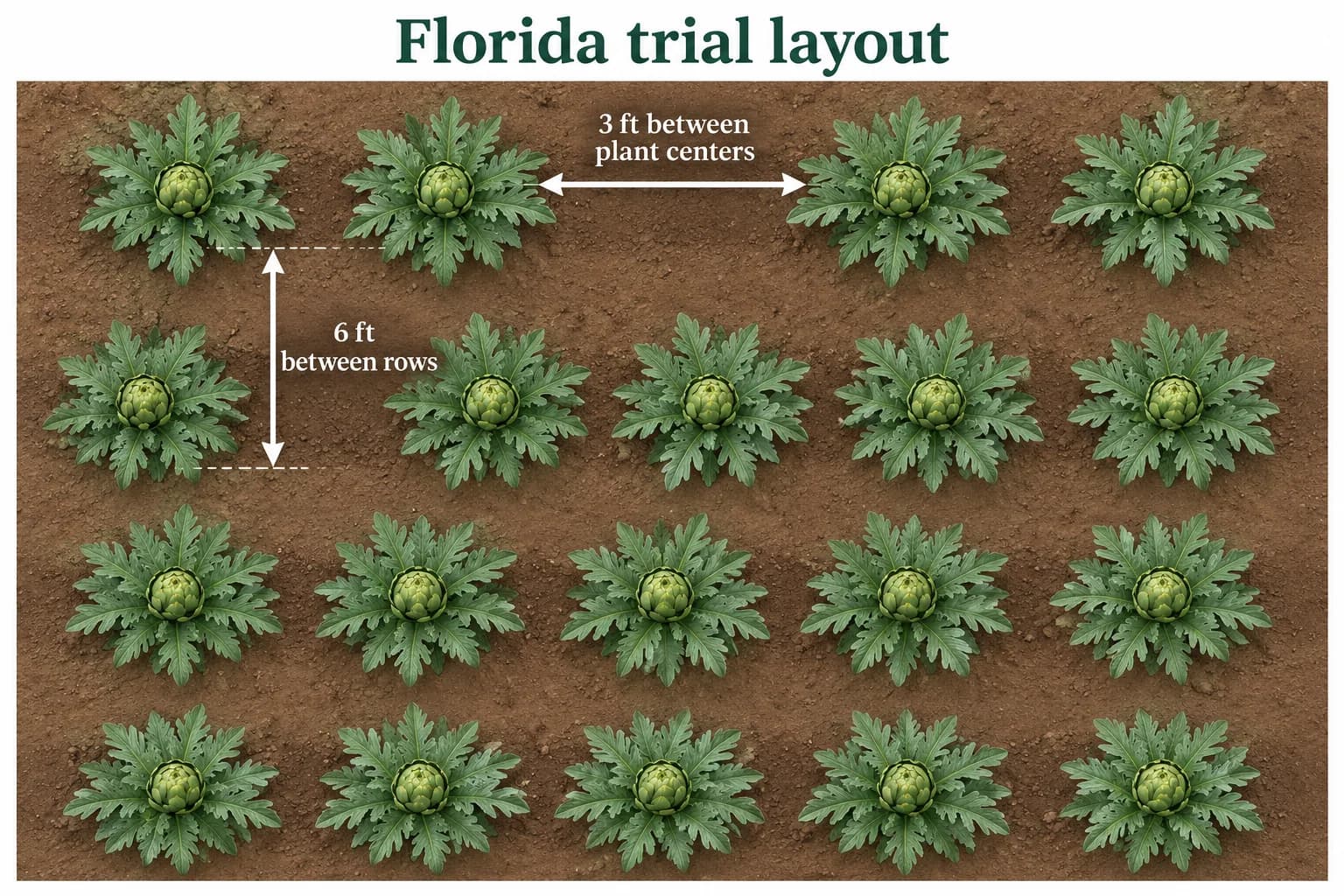
- 1.83 m (6 ft) between rows; 0.91 m (3 ft) in-row2
- Transplant to harvest
- 110–115 days in the UF alternative-crop production example2
- Main climate constraint
- UF/IFAS reports 200–1,300 cumulative hours below 10°C (50°F) for bud formation; cultivar response varies1
- Crop status
- Alternative-crop trials; no official Florida acreage record cited by UF/IFAS1
Planting and harvest calendar for Florida
Use the source-backed production windows to coordinate establishment, crop care and harvest. Production districts and cultivars can have different cycles; the historical climate adds context for the field plan.
Planting: Published Florida fall-transplant example3
A UF/IFAS field trial transplanted on 10 November 2015. Treat that date as one research example; planting date and cultivar response vary by site.
Historical monthly climate
Reference period: 1996-01-01 to 2025-12-31. ERA5-Land monthly mean soil temperature at 0–7 cm, air temperature and frost days at the regional reference point (28.6, -81.5). Select a month to inspect its historical conditions.
Month tiles show mean topsoil temperature.
November historical conditions
- Mean topsoil temperature
- 20.5°C
- Mean air temperature
- 20.1°C
- Mean frost days per month
- 0.0 days
These are monthly means at one reference location. They describe seasonal field conditions, not crop maturity, actual seed-zone conditions, frost forecasts or a planting recommendation. Harvest bands follow the crop-specific production sources above.
Climate source: Open-Meteo Historical Weather APITreat Florida as a cultivar and chill trial
- Warm winters limit bud formation
- Globe artichokes are adapted to cool-winter climates. UF/IFAS describes chilling as a key constraint in Florida; the 2024 article reports a broad 200–1,300 hours below 10°C (50°F), depending on cultivar and production context.1
Compare cultivars before investing in acreage
- Green Globe Improved, treated trial2.6 buds/plant
Budget for establishment and field fit
- Plan the crop as an annual trial
- The Florida production examples use fall transplants for winter and spring harvest. The 2025 UF panel gives 110–115 days from transplant to harvest for its reference system; record the interval and head quality for each cultivar at your site.2,3
- Use the figure as a starting layout
- The panel lists 6 ft rows and 3 ft between plants. The older GCREC experiment used 60 in rows and 36 in-row, illustrating that local research layouts differ. Test traffic, irrigation uniformity and harvest access before expanding.2,3
- Secure a buyer first
- UF/IFAS describes artichoke production in Florida as an emerging opportunity and notes that state acreage is not officially recorded in its source. Confirm demand, packing requirements and harvest labor before planting a commercial block.1
Harvest buds and assess the full market window
Frequently asked questions
- Can artichokes be grown commercially in Florida?
- UF/IFAS has demonstrated production in research and extension trials, but the reviewed sources describe an emerging crop rather than a mature statewide industry. Validate yields, chill management, labor and buyers locally.
- When are Florida artichokes harvested?
- UF/IFAS reports January through May depending on location. One Gulf Coast research trial harvested from March 9 to May 5.
- What spacing did Florida trials use?
- A 2025 UF alternative-crop panel lists 6 ft between rows and 3 ft between plants. A separate older GCREC trial used 60 in by 36 in.
- Why is growing artichokes difficult in Florida?
- Warm winters may not provide the chilling needed for bud formation. UF/IFAS trials have evaluated cultivar selection and GA to address that limitation.
Regional artichokes guides
Local dates, soil-temperature history and sources for specific regions:
Sources and image credits
- 1. UF/IFAS — Artichokes, known as a healthy food crop, also make for pretty plants — Published February 2024; updated March 2026. Florida trial locations, January–May harvest context, chilling limits, cultivar findings and research status.
- 2. UF/IFAS Highlands County — Alternative crop research: Artichoke, blackberry, and hops — Alternative Crop Panel, February 2025. Florida trial production calendar, 6 ft by 3 ft spacing and 110–115 day transplant-to-harvest reference.
- 3. UF/IFAS Gulf Coast Research and Education Center — Summer 2016 Berry Newsletter, artichoke field trial — Summer 2016. GCREC 2015–16 trial transplant and harvest dates, field layout, GA treatment and marketable buds per plant.
- 4. UF/IFAS Extension St. Johns County — Growing Artichokes in Florida: A New Crop with National Awareness — Published August 2022. Hastings trial history, cultivar comparisons and the distinction between research activity and a settled commercial system.
Image credits
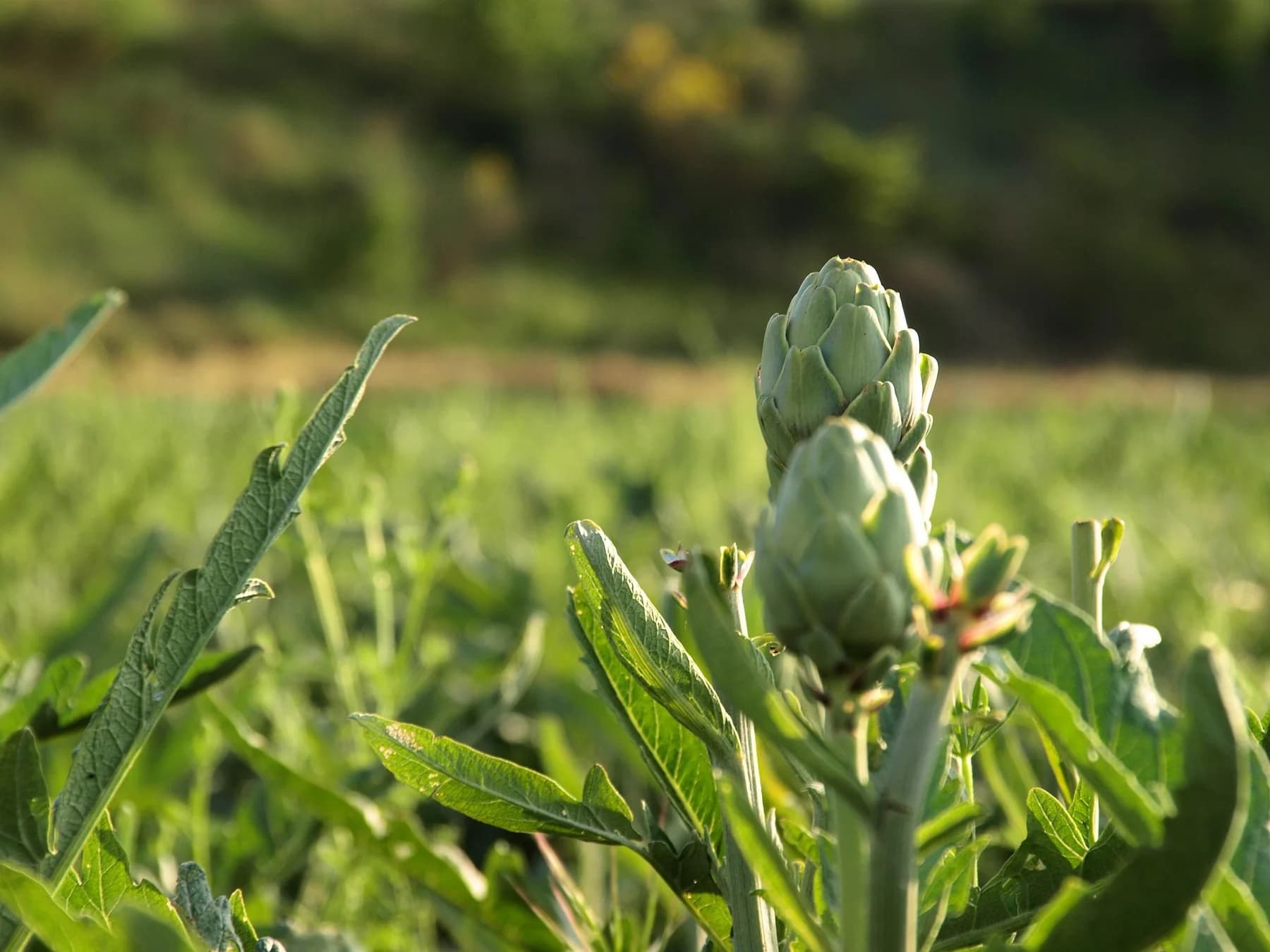
- Globe artichoke bud on the plant. Photo: Yusumania / Pixabay (image 574615).
- UF/IFAS field-spacing reference: 6 ft between rows and 3 ft between plants. Illustration.
Figures are published averages or study assumptions for the places named, not guarantees for your field. Check current local recommendations and product labels before acting.
Some visuals in this guide are illustrations rather than photographs of a specific farm. See image credits.