

Growing watermelons in Texas
Texas watermelon production follows the state’s regional growing seasons. Match a named production district, cultivar and buyer window; establish into warm soil, plan pollination before planting seedless types and schedule harvest labor around the local crop.
Scope: Commercial outdoor field production. Texas dates vary widely from the Lower Rio Grande Valley to the High Plains; the month bands name regional references and are not a statewide planting schedule. Updated 2026-10-05.
At a glance
Planting and harvest calendar for Texas
Use the source-backed production windows to coordinate establishment, crop care and harvest. Production districts and cultivars can have different cycles; the historical climate adds context for the field plan.
Planting: Texas district references: March–May5
The Texas A&M handbook lists March for the Lower Rio Grande Valley and Winter Garden, April for central, east and far west Texas, and May for the High Plains. These archived district references do not replace local frost, soil-temperature and current-season checks.
Harvest: Historical regional harvest starts: April–October6,8
Texas A&M sources describe early Valley harvest starting in April or May, depending on the source; later district starts span June through October. These older regional starts are context rather than a current forecast or full picking windows. Use current local crop guidance.
Planting climate heatmap
Reference period: 1996-01-01 to 2025-12-31. ERA5-Land monthly mean soil temperature at 0–7 cm, air temperature and frost days at the regional reference point (31.5, -99). Select a month to inspect its historical conditions.
Texas A&M’s commercial seeded-watermelon guide names a seed-zone soil temperature above 70°F (21.1°C) as an establishment reference after frost danger. ERA5-Land 0–7 cm monthly means are a shallow regional proxy. This screen checks the sourced lower threshold and mean frost context only.4
Muted green: the temperature meets the sourced minimum and no mean frost days recorded. Neutral tiles name the temperature or frost constraint. Gray: missing data. No upper soil-temperature limit is assessed. This screen does not assess the full growing season, field drainage or crop maturity.
March: Too cold
The monthly mean is outside the lower planting limit of 21.1°C.
- Mean topsoil temperature
- 16.7°C
- Mean air temperature
- 16.6°C
- Mean frost days per month
- 1.2 days
These are monthly means at one reference location. They describe seasonal field conditions, not crop maturity, actual seed-zone conditions, frost forecasts or a planting recommendation. Harvest bands follow the crop-specific production sources above.
Climate source: Open-Meteo Historical Weather APIChoose the market type and district
- Set the sales plan first
- Confirm fruit size, shape, seeded or seedless type, grade, packaging and delivery dates with the buyer. Texas has sequential regional harvests and established shipping markets; variety choice must fit the district window and the time available for harvest and transport.6,7
- Budget field and harvest labor
- Include seed, transplants, beds, mulch, irrigation, pollination, weed and disease scouting, repeated picking, grading and freight. Texas A&M identifies harvest, grading, labor and transport as material costs; its archived dollar totals are not a current budget.7
Establish into warm soil
- 1
Select district
Set the cultivar and buyer window for the production area.
- 2
Prepare field
Confirm drainage, soil test, beds and irrigation.
- 3
Check conditions
Wait until frost danger passes and seed-zone soil is warm.
- 4
Establish
Transplant or direct-seed to the chosen field system.
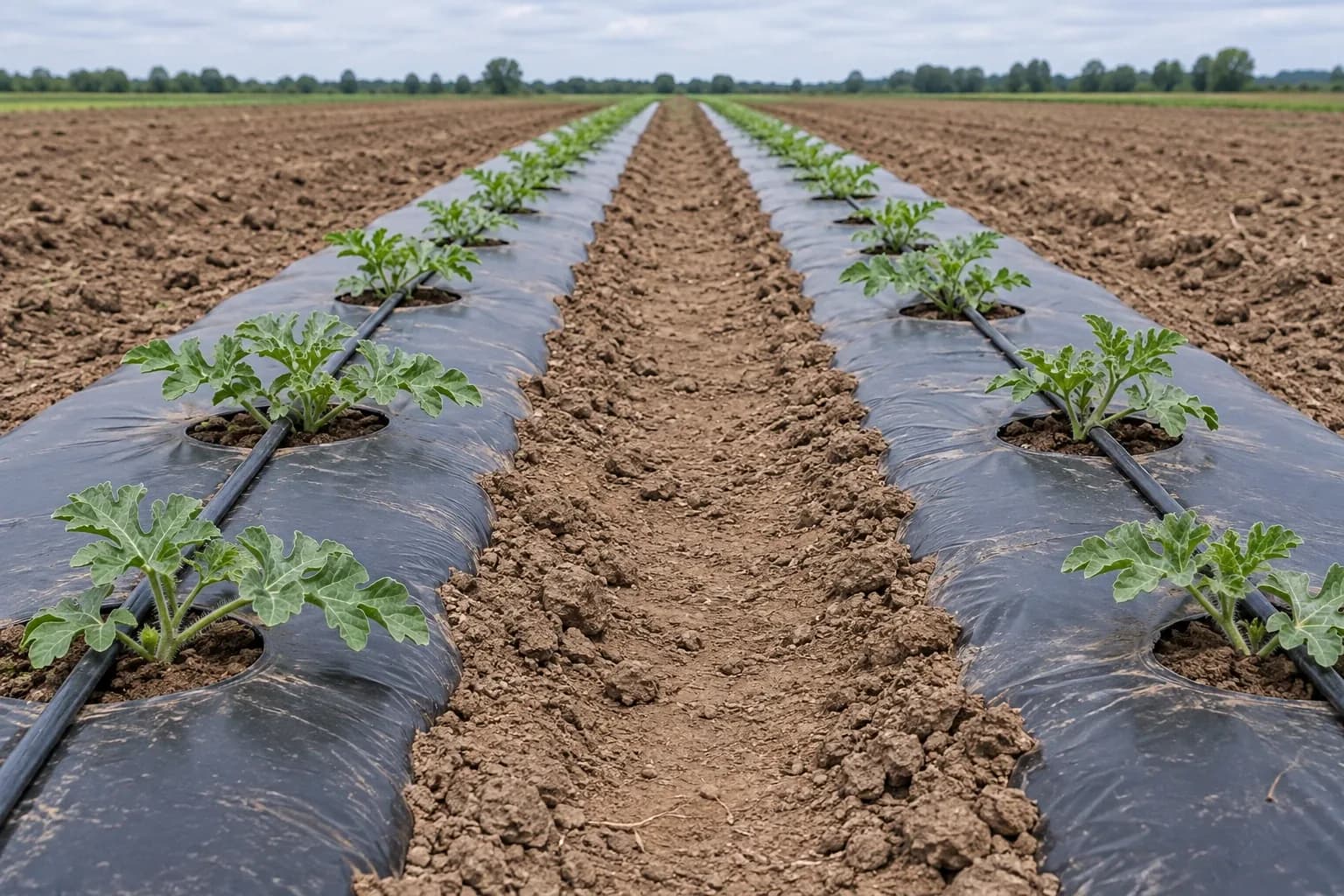
- Use local temperature and frost checks
- The commercial Texas guide gives a seed-zone soil reference above 70°F and says to wait until frost danger passes. Historical monthly soil means cannot confirm conditions in a particular field on planting day.4
Set plant population for the field system
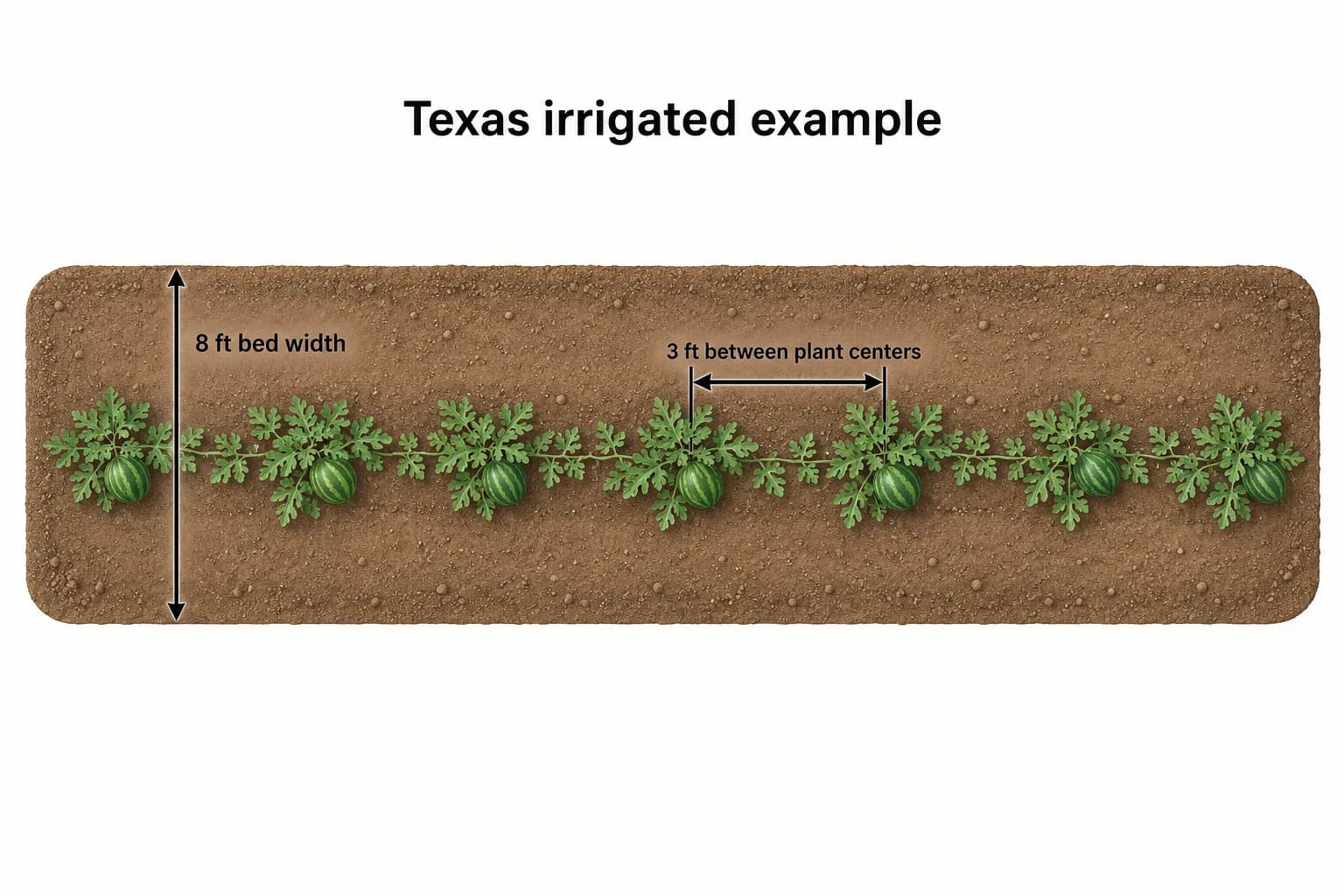
- Choose spacing with water access in mind
- The Texas A&M seeded-crop guide distinguishes irrigated from dryland bed systems. Final plant population also depends on fruit type, equipment access, soil, irrigation and harvest method. Keep alley and bed dimensions explicit in the field plan.4
Plan pollenizers and bee access
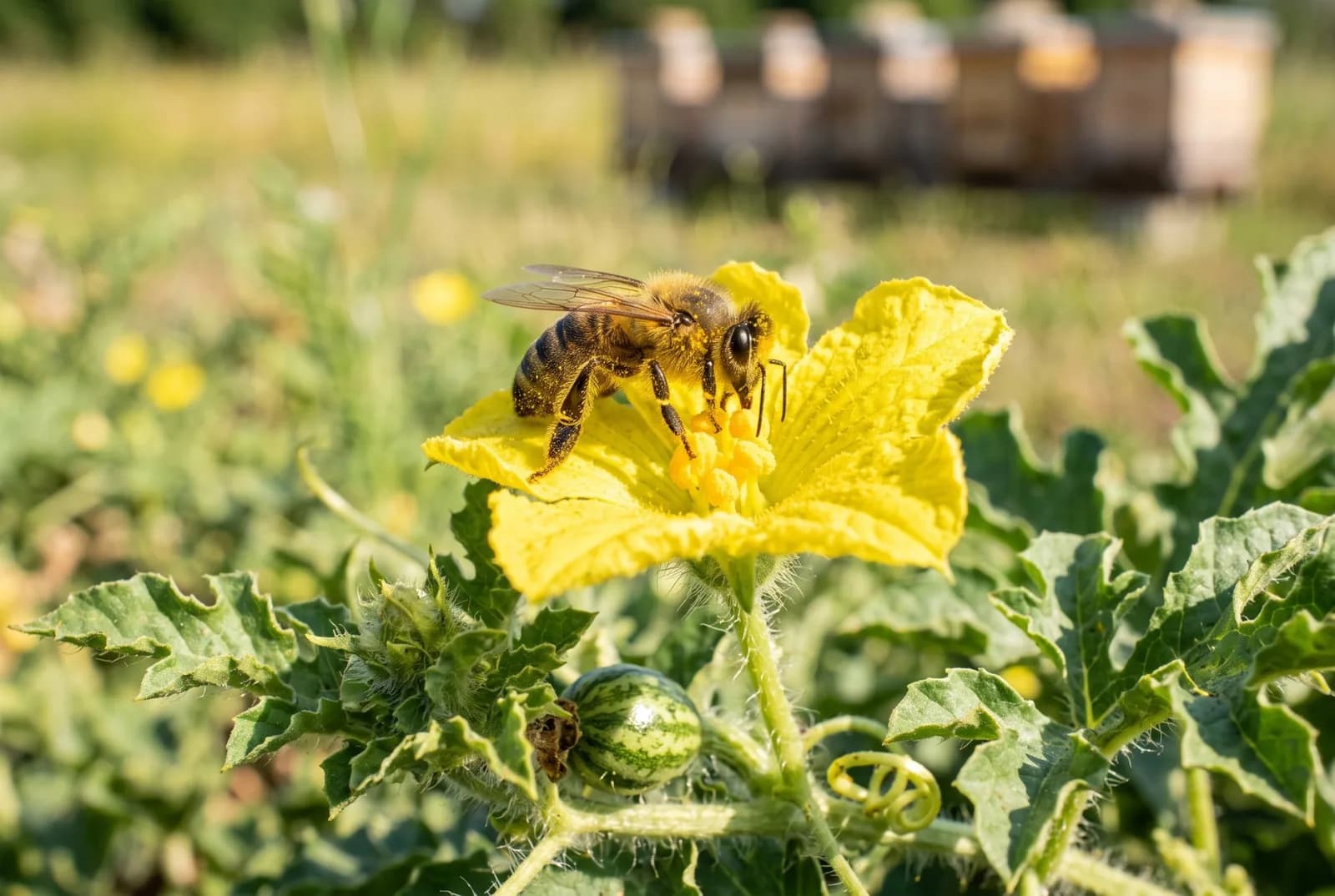
- Plant pollenizers with seedless types
- Seedless triploid plants need pollen from a compatible seeded variety. Decide the pollenizer row or in-row pattern when ordering seed, and use a cultivar that differs enough in appearance to sort at harvest.1,2,7
- Protect pollinating insects
- Texas A&M lists honeybees as necessary for crop pollination. Coordinate field operations with the bloom period and use current crop-labeled pest guidance that protects bees. Do not copy the archived chemical tables in older sources.7
Manage irrigation and crop nutrition
- Base nutrients on the field test
- The Texas guide gives broad nutrient amounts, but rates should be adjusted to soil tests, crop history, irrigation water and the production system. Keep nitrogen available during growth without using an archived rate as a prescription.4
- Maintain steady moisture
- Texas A&M identifies establishment, flowering, fruit set and enlargement as key moisture stages. Check the root zone and irrigation distribution; avoid abrupt moisture swings as fruit approaches maturity.4,7
- Keep weeds and disease visible
- Scout vines, leaf surfaces and fruit regularly. The Texas sources describe weeds as competitors for water and harvest access and list several fruit and vine diseases. Use rotation, clean seed and current local diagnoses; consult current extension guidance before choosing any control.4,5,7
Pick to maturity and buyer grade
- 1
Scout maturity
Check several fruit-ripeness signs across the field.
- 2
Cut carefully
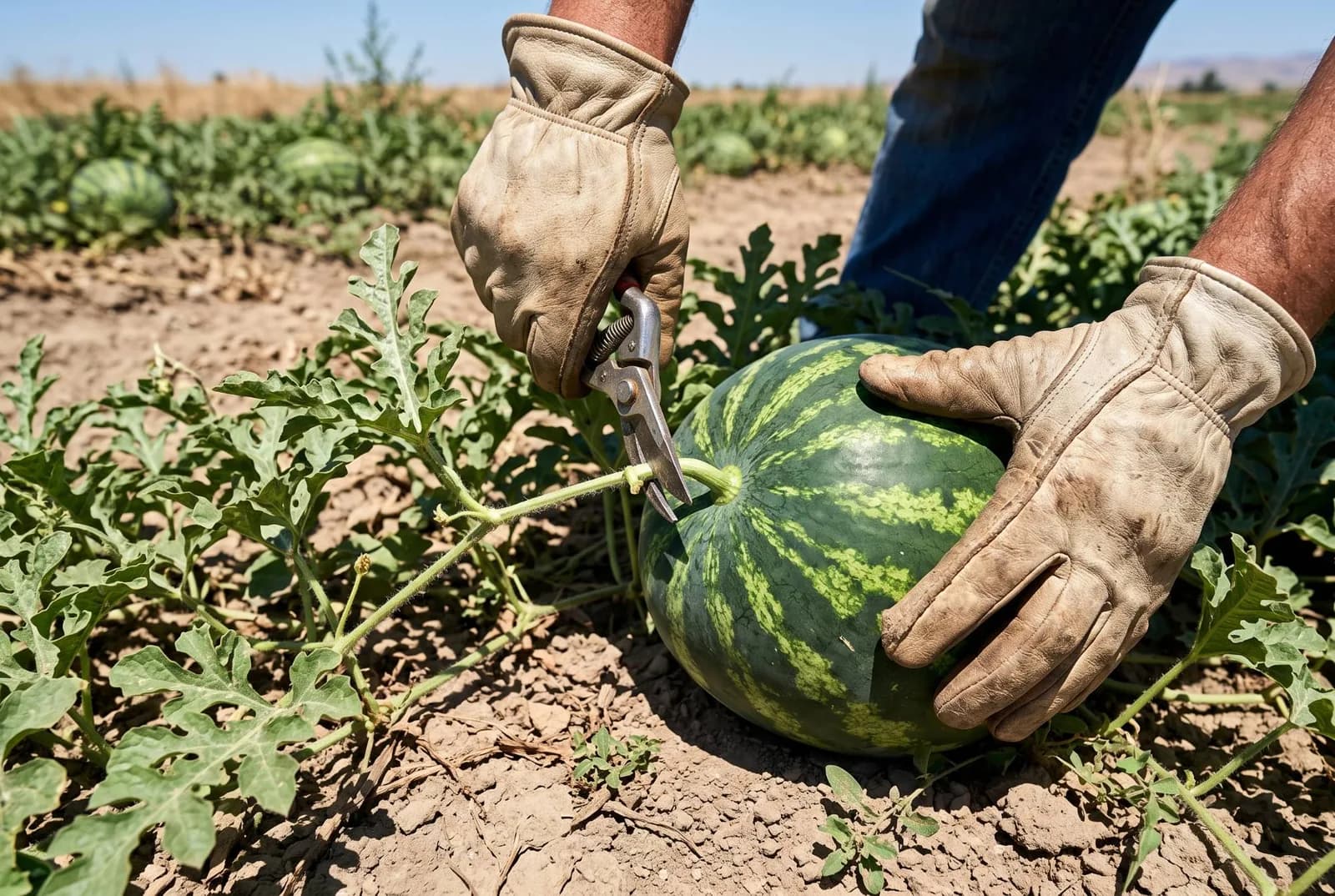
Keep the stem and avoid pulling or damaging vines.
- 3
Grade
Sort by buyer size, maturity and visible defects.
- 4
Move promptly
Coordinate field loading with the sales and shipping plan.
Frequently asked questions
- When do commercial farms plant watermelon in Texas?
- Texas A&M gives district references: March in the Lower Rio Grande Valley and Winter Garden, April across central, east and far west Texas, and May on the High Plains. Check frost, soil temperature and current district conditions.
- Is watermelon planting suitable across all of Texas in the same month?
- No. Production districts have different frost-free seasons and marketing windows. The regional month bands are planning references rather than a statewide schedule.
- What soil temperature does the Texas commercial guide use?
- The seeded-watermelon guide names a seed-zone soil temperature above 70°F (21.1°C), after frost danger. Confirm actual field conditions rather than relying on monthly historical means.
- Do seedless watermelons need another variety?
- Yes. Seedless plants need compatible pollen from a seeded pollenizer. Plan its placement and bee access before planting.
- When does watermelon harvest begin in Texas?
- Older Texas A&M district sources place harvest starts from April or May in the Lower Rio Grande Valley through September–October on the Southern High Plains. The source calendars differ for the earliest Valley start; cultivar and season also affect timing.
- Does a green climate tile guarantee a profitable crop?
- No. It screens historical monthly mean soil temperature and frost context. It does not predict this season, field drainage, market access, pollination, yield or profitability.
Regional watermelon guides
Local dates, soil-temperature history and sources for specific regions:
Sources and image credits
- 1. Midwest Vegetable Production Guide 2026 — Cucurbit Crops: Horticulture, Diseases and Insects — 2026 edition; horticulture reviewed 2022, diseases 2023, insects 2025. Midwest commercial melons, watermelon, pumpkins and squash: types, planting dates, spacing, fertility, harvest signs, bacterial wilt, Phytophthora, powdery mildew and cucumber-beetle thresholds.
- 2. Penn State Extension — Watermelon Production — Accessed 1 October 2026. Pennsylvania transplanting temperature, plant population, hive and pollenizer ratios, fertility, harvest signs, cooling and storage.
- 3. USDA NASS — Vegetables 2025 Summary — Published February 2026. US planted and harvested area, production and value; per-acre yields here are derived as production ÷ harvested acres.
- 4. Texas A&M AgriLife Extension — Seeded watermelon crop guide — Undated commercial guide; reviewed October 2026. Texas field establishment, seed-zone temperature, bed and plant layout, irrigation, harvest timing and handling. Archived chemical tables are not recommendations.
- 5. Texas A&M AgriLife Extension — Texas vegetable growers handbook, cultural practices — Undated handbook chapter; reviewed October 2026. Named Texas district planting-month references and commercial transplant production. The dates are regional planning references, not current field observations.
- 6. Texas A&M AgriLife Extension — Cucurbits and melon crops in Texas — Undated; reviewed October 2026. Regional commercial harvest starts and production areas across Texas. Timing varies with location, cultivar and season.
- 7. Texas A&M AgriLife Extension — Watermelon crops guide for small-acreage producers — Undated; reviewed October 2026. Market outlets, labor, irrigation, drainage, harvest and seedless-crop management considerations. Historical cost and profit figures are excluded.
- 8. Texas A&M AgriLife Extension — Watermelons in Texas crop brief — Prepared August 2000. Older district-specific harvest-start references. Its Lower Rio Grande Valley start differs by about a month from the later undated Crops of Texas overview; treat both as historical context, not a current forecast.
Image credits
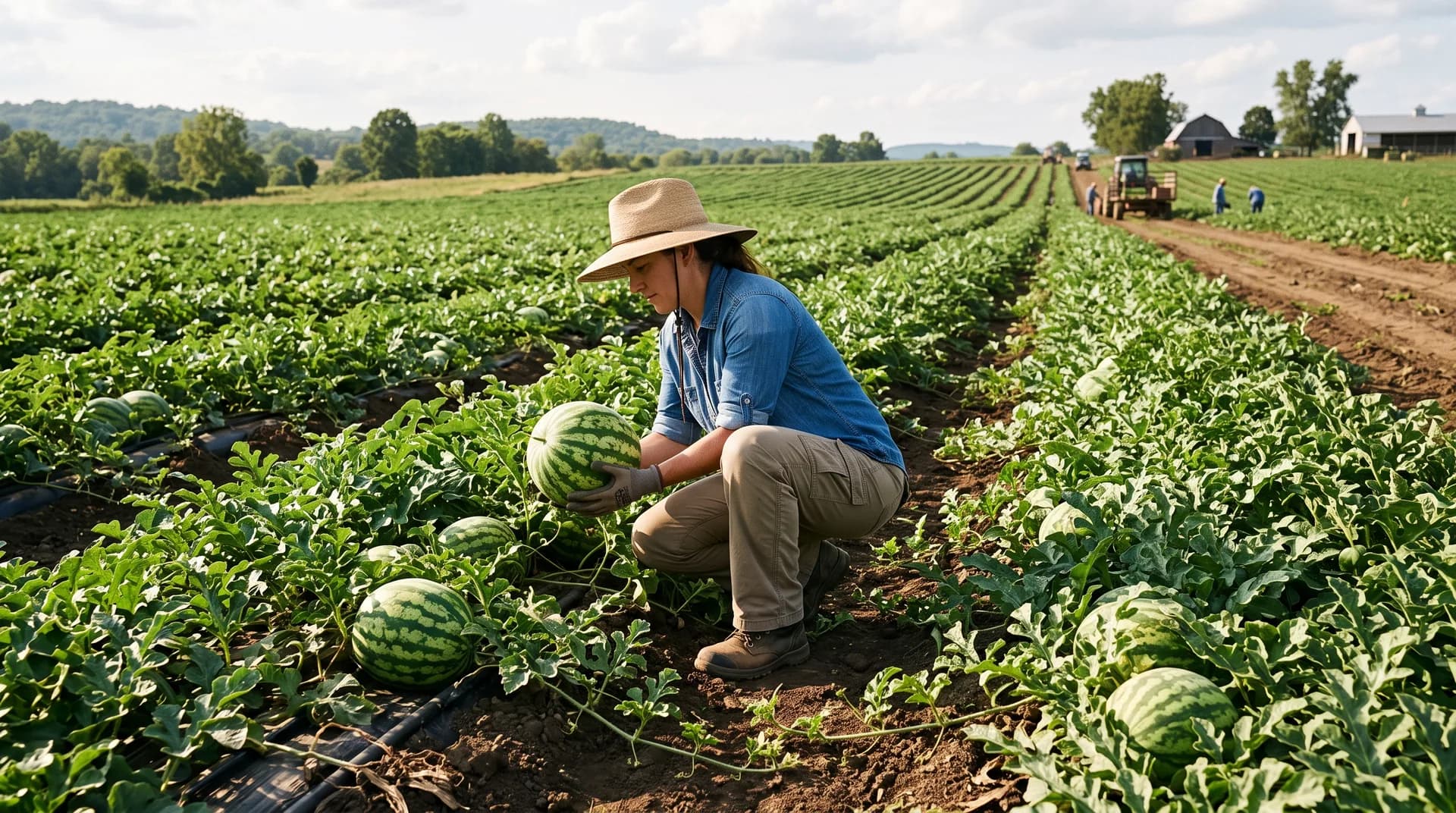
- Illustration of commercial watermelon field conditions.
- Texas A&M irrigated example: one row on an 8 ft bed, with plants 3 ft apart. Illustration, schematic not to scale.
- Transplants set through black plastic mulch with a drip line, the setup the Midwest guide recommends for all transplanted watermelons.
- Honeybees do the pollinating; Penn State recommends about 2.5 hives per hectare (one per acre).
- Cut the fruit from the vine, leaving 2.5–5 cm (1–2 inches) of stem, rather than pulling it.
Figures are published averages or study assumptions for the places named, not guarantees for your field. Check current local recommendations and product labels before acting.
Some visuals in this guide are illustrations rather than photographs of a specific farm. See image credits.