

Growing watermelons in Minnesota
Minnesota watermelon is a frost-sensitive, long-season field crop. Plan around the outdoor transplant reference, variety maturity and a short harvest window. Warm soil, a workable bed system and labor ready for frequent picking matter more than a statewide heatmap alone.
Scope: Outdoor transplanted commercial field production. High tunnels and other protected systems have different temperature, pollination and disease management and are not represented by this calendar. Updated 2026-10-05.
At a glance
- Production system
- Outdoor transplanted field crop; long-season and frost-sensitive4
- Outdoor transplant reference
- June 1, subject to frost and field conditions4
- Nursery lead time
- 21–28 days from seeding to transplant4
- Field spacing reference
- One row per bed; 18 in within-row for the UMN bed plan4
- First harvest after transplant
- 85–90 days; plan frequent picking over about two weeks4
Planting and harvest calendar for Minnesota
Use the source-backed production windows to coordinate establishment, crop care and harvest. Production districts and cultivars can have different cycles; the historical climate adds context for the field plan.
Planting: UMN outdoor transplant reference: June 14,2
The Minnesota field-planning reference uses June 1 for outdoor watermelon transplants. Treat it as a planning date, not a guaranteed day; frost and actual soil conditions still govern field establishment.
Harvest: Calculated first-pick reference: late August into September4
UMN lists 85–90 days from transplant to first watermelon harvest. Adding that interval to the June 1 planning date gives about August 25–30; its roughly two-week picking window can continue into September. This is a calculated reference, not a statewide observed harvest calendar.
Planting climate heatmap
Reference period: 1996-01-01 to 2025-12-31. ERA5-Land monthly mean soil temperature at 0–7 cm, air temperature and frost days at the regional reference point (46, -94.5). Select a month to inspect its historical conditions.
Penn State’s commercial transplant reference waits for soil at 3 inches (7.6 cm) to reach 60°F (15.6°C). Historical 0–7 cm monthly means are a shallow proxy. The heatmap checks that minimum and mean frost context; it does not assess whether enough frost-free season remains for maturity.2
Muted green: the temperature meets the sourced minimum and no mean frost days recorded. Neutral tiles name the temperature or frost constraint. Gray: missing data. No upper soil-temperature limit is assessed. This screen does not assess the full growing season, field drainage or crop maturity.
June: Meets minimum
The monthly mean meets the sourced planting-temperature minimum, with no mean frost days recorded. Confirm actual planting-zone conditions and the local crop calendar. This is a partial climate screen, not a guarantee of establishment.
- Mean topsoil temperature
- 18.8°C
- Mean air temperature
- 19.5°C
- Mean frost days per month
- 0.0 days
These are monthly means at one reference location. They describe seasonal field conditions, not crop maturity, actual seed-zone conditions, frost forecasts or a planting recommendation. Harvest bands follow the crop-specific production sources above.
Climate source: Open-Meteo Historical Weather APIChoose varieties for the short season and market
- Match maturity to the local window
- Watermelon is listed among Minnesota’s long-season crops and does not tolerate frost. Select a cultivar with maturity suited to your field and the local frost-free period; do not treat a monthly climate mean as proof the crop will finish.4
Prepare and transplant outdoors
- 1
Select cultivar
Match maturity and fruit type to the buyer and short season.
- 2
Start transplants
Use the Minnesota nursery lead-time reference.
- 3
Prepare beds
Confirm drainage, soil test, plastic mulch and drip system.
- 4
Set outdoors
Use June 1 as a planning reference and confirm frost and soil.
- Plan transplants ahead
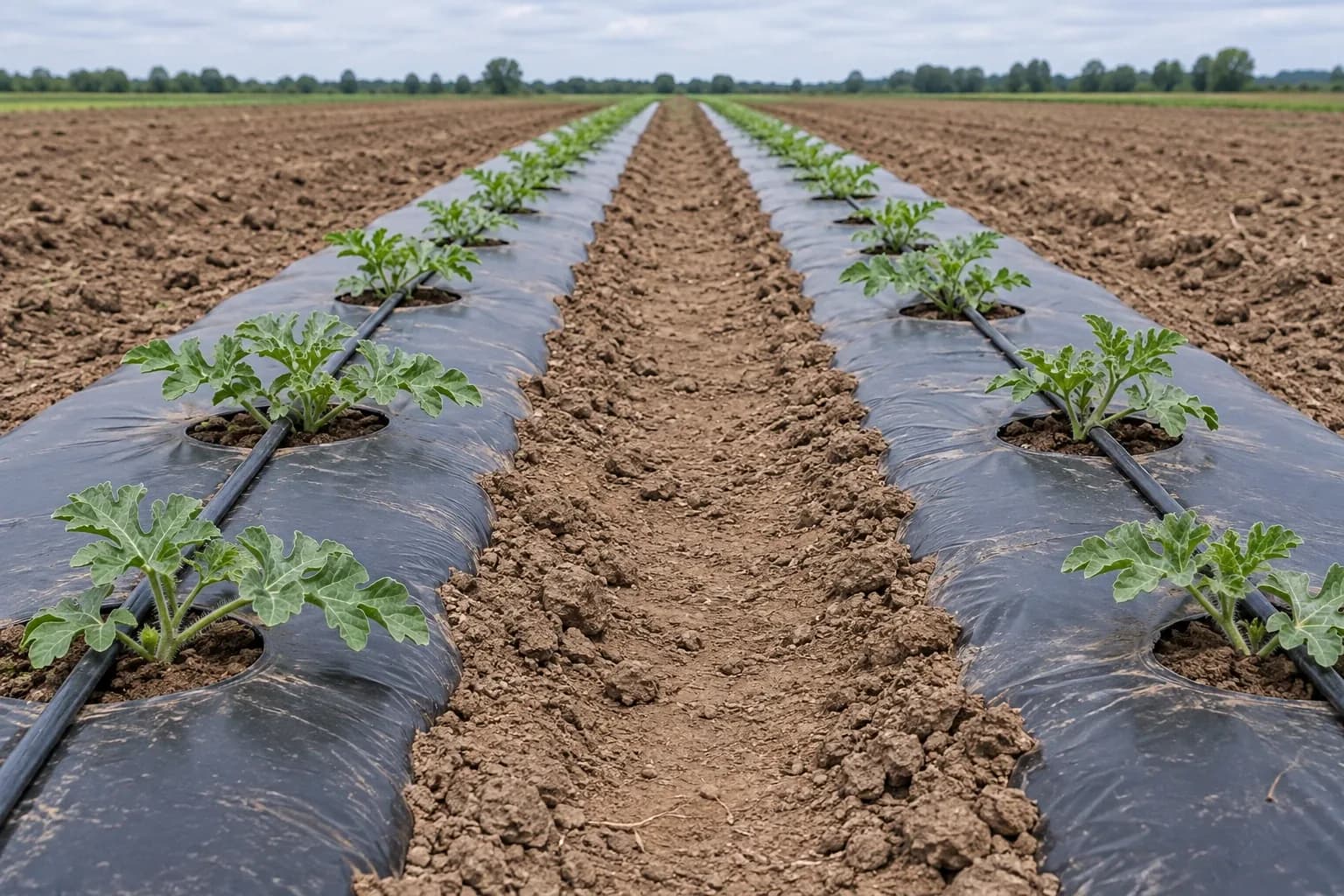
- UMN estimates 21–28 days from seeding to transplant and uses June 1 as an outdoor reference. Reserve seed and nursery space around this field date, then adjust to local weather and actual crop readiness.4
Use a bed layout the crew can manage
- Translate the table to your field
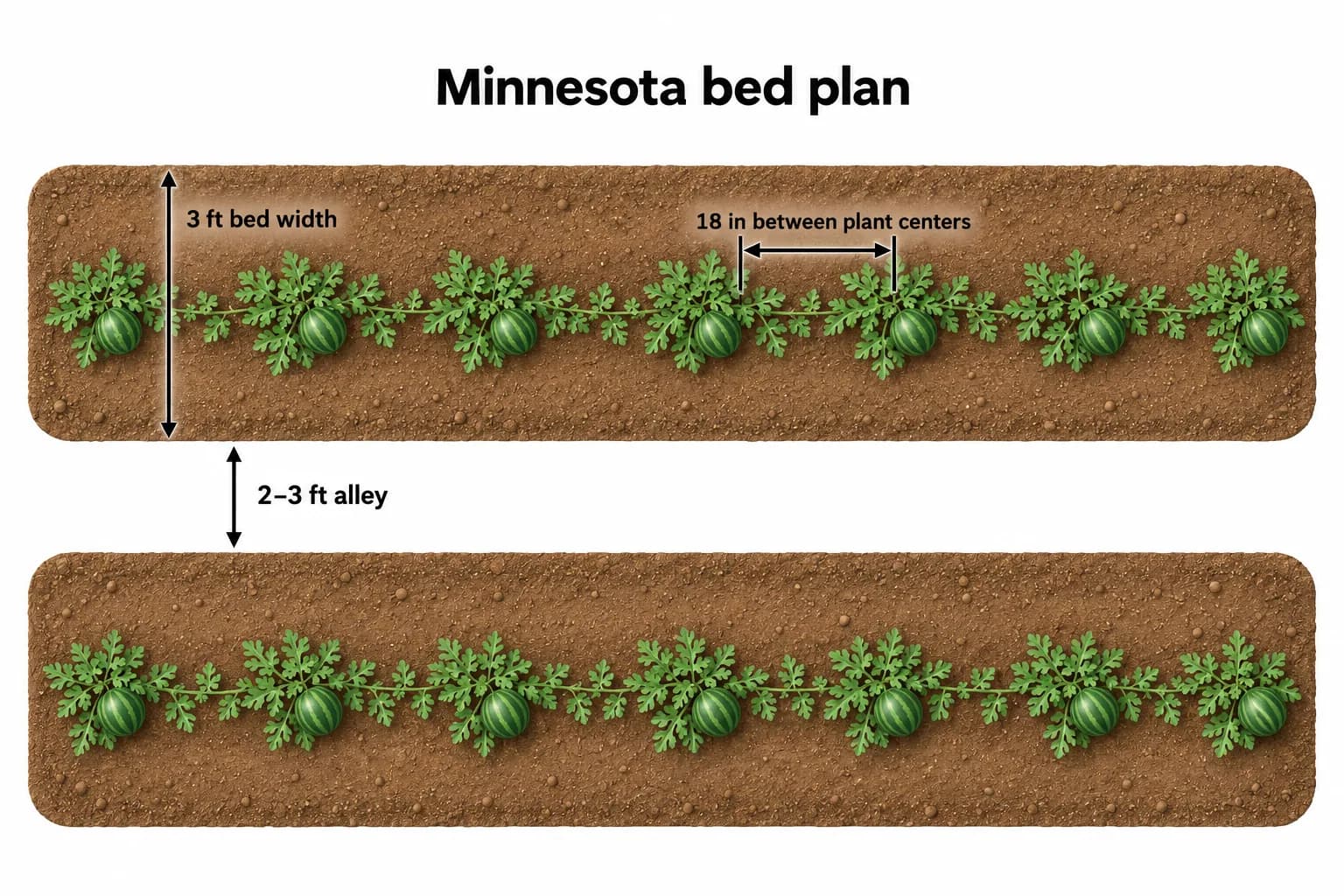
- The Minnesota source presents spacing per 100-foot bed. It assumes beds about 3 feet wide with 2–3 foot alleys and one row of watermelon per bed. Adapt equipment access, vine spread and soil trafficability to your operation.4
Support pollination and fruit set
Manage water and crop health
- Base fertility on soil results
- Use a soil test and field history to set nutrient needs. The commercial guide’s general rates are not a substitute for a Minnesota field plan or nutrient credits.2
- Keep water supply steady
- Check irrigation uniformity and soil moisture during establishment, bloom and fruit expansion. Avoid excess water as fruit nears maturity, when cracking can reduce marketable quality.2
Organize a concentrated harvest
- 1
Track fruit set
Record blocks and estimate when the first picks may be ready.
- 2
Check maturity
Use ground spot, nearest tendril and surface signs together.
- 3
Pick repeatedly
Plan several picking passes each week through the short window.
- 4
Grade and move
Sort to buyer grade and coordinate cooling and dispatch.
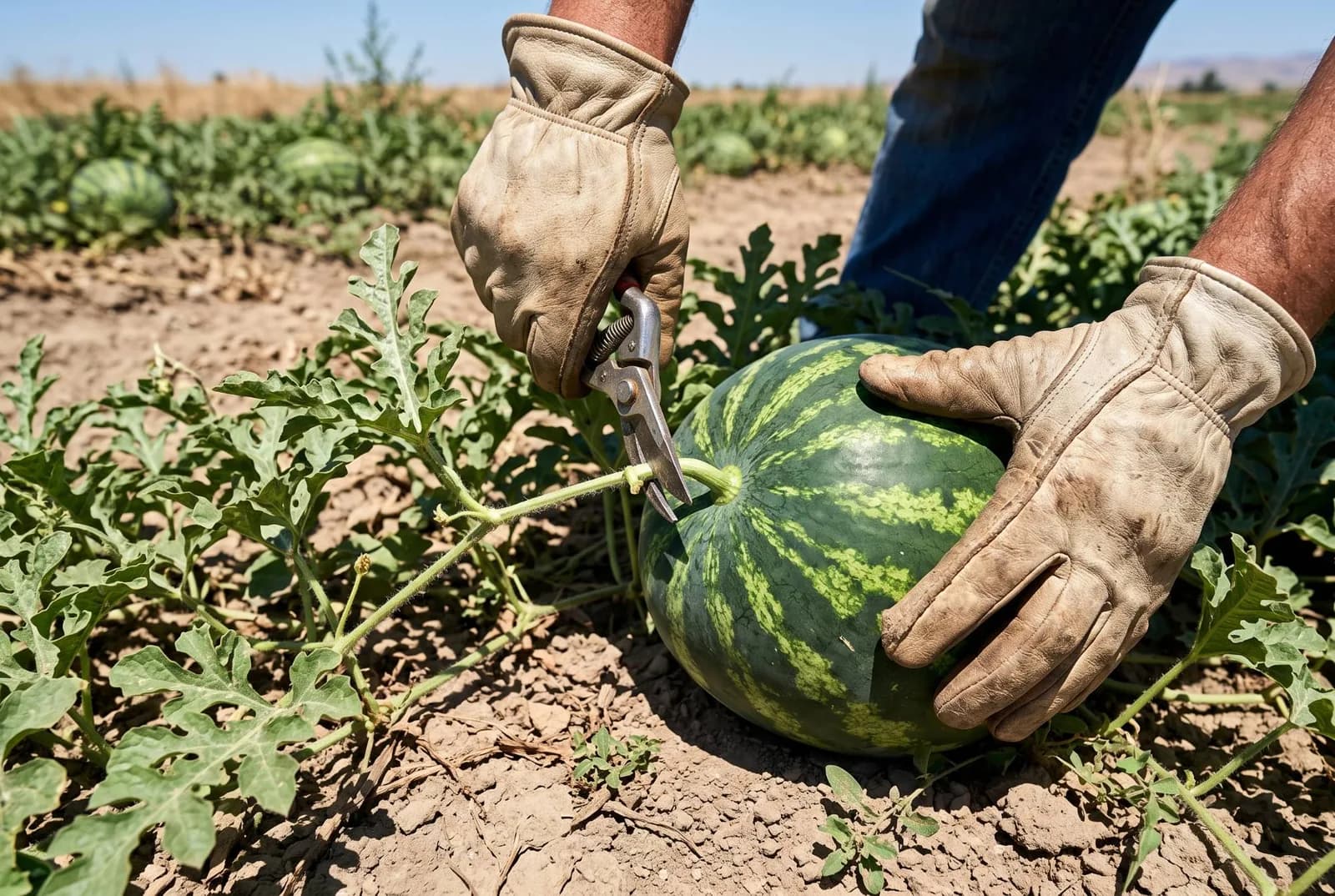
- Use the maturity estimate for planning
- Adding UMN’s 85–90 days from transplant to its June 1 outdoor date gives a calculated first-pick reference around August 25–30. Weather and cultivar change actual maturity; inspect the crop rather than picking by the calendar alone.4
- Schedule frequent passes
- UMN plans watermelon picking three to four times per week over about two weeks. Arrange crew, bins, grading and transport before the first mature fruit appears.4
Frequently asked questions
- When do Minnesota growers transplant watermelon outdoors?
- The UMN commercial planning table gives June 1 as a reference. Confirm local frost risk, soil warmth and field conditions before setting plants.
- When might the first harvest begin?
- UMN lists 85–90 days from transplant to first harvest. From its June 1 planning date, that calculates to about August 25–30, with picking potentially continuing into September.
- How is watermelon spacing shown for Minnesota?
- The UMN bed plan uses one row per bed and 18 inches within the row. It assumes beds about 3 feet wide and 2–3 foot alleys between beds.
- Does this outdoor calendar cover high tunnels?
- No. Protected production changes temperature, airflow, disease and pollination management and needs a separate production plan.
- Does a green climate tile mean the whole crop will mature?
- No. It checks historical monthly mean shallow soil temperature and frost context. It does not calculate frost-free days remaining, current weather or cultivar maturity.
- Do seedless watermelons need a pollenizer?
- Yes. A compatible seeded watermelon supplies pollen. Plan its placement and bee access before planting.
Regional watermelon guides
Local dates, soil-temperature history and sources for specific regions:
Sources and image credits
- 1. Midwest Vegetable Production Guide 2026 — Cucurbit Crops: Horticulture, Diseases and Insects — 2026 edition; horticulture reviewed 2022, diseases 2023, insects 2025. Midwest commercial melons, watermelon, pumpkins and squash: types, planting dates, spacing, fertility, harvest signs, bacterial wilt, Phytophthora, powdery mildew and cucumber-beetle thresholds.
- 2. Penn State Extension — Watermelon Production — Accessed 1 October 2026. Pennsylvania transplanting temperature, plant population, hive and pollenizer ratios, fertility, harvest signs, cooling and storage.
- 3. USDA NASS — Vegetables 2025 Summary — Published February 2026. US planted and harvested area, production and value; per-acre yields here are derived as production ÷ harvested acres.
- 4. University of Minnesota Extension — Crop and field planning tools for vegetable farmers — Reviewed in 2026. Minnesota commercial outdoor transplant date, nursery lead time, spacing and first-harvest planning. The displayed month range is calculated from the June 1 reference and published maturity estimate.
Image credits
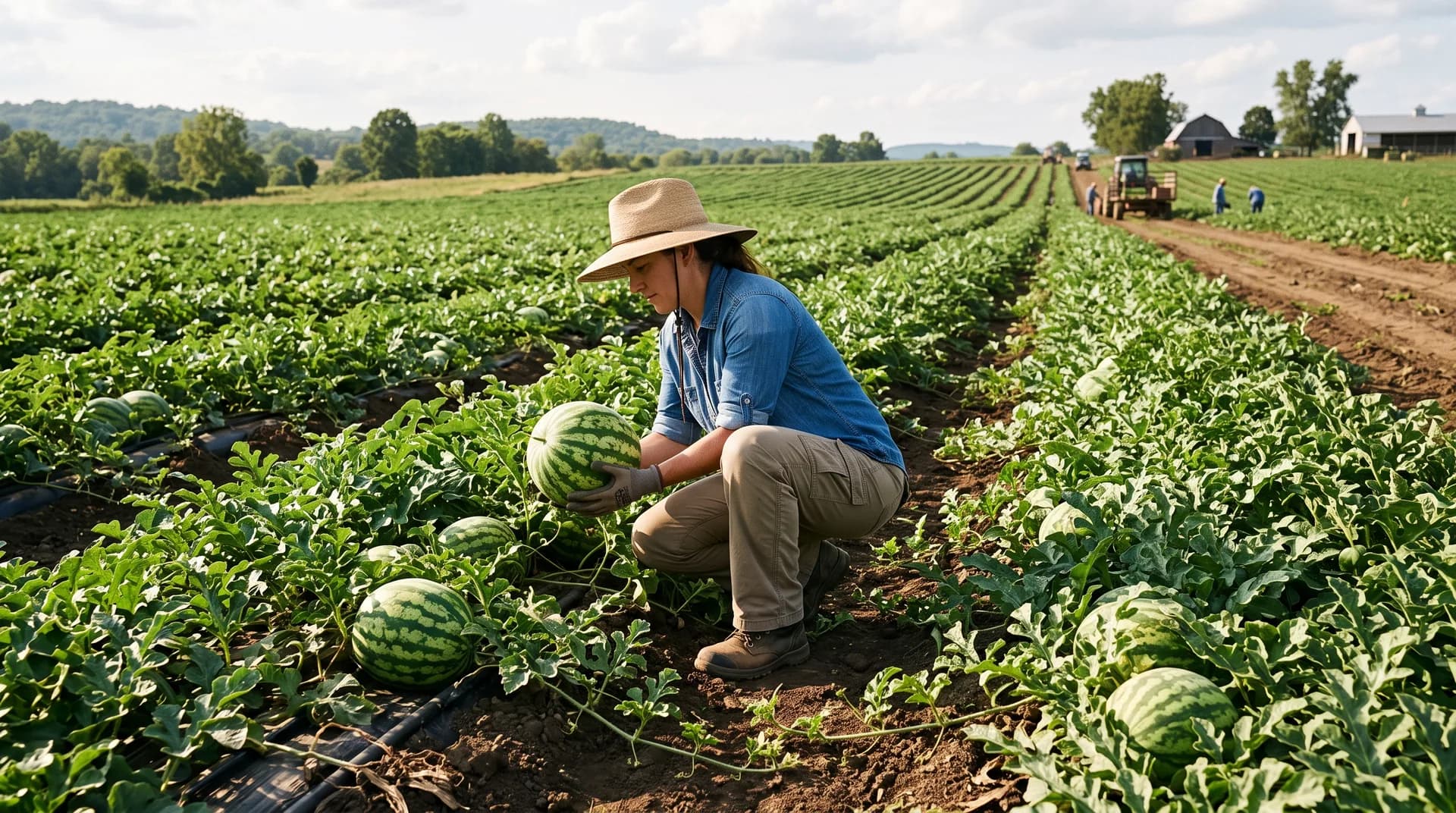
- Illustration of commercial watermelon field conditions.
- UMN Extension field plan: beds about 3 ft wide, one row per bed, 18 in between plants, and 2–3 ft alleys. Illustration, schematic not to scale.
- Transplants set through black plastic mulch with a drip line, the setup the Midwest guide recommends for all transplanted watermelons.
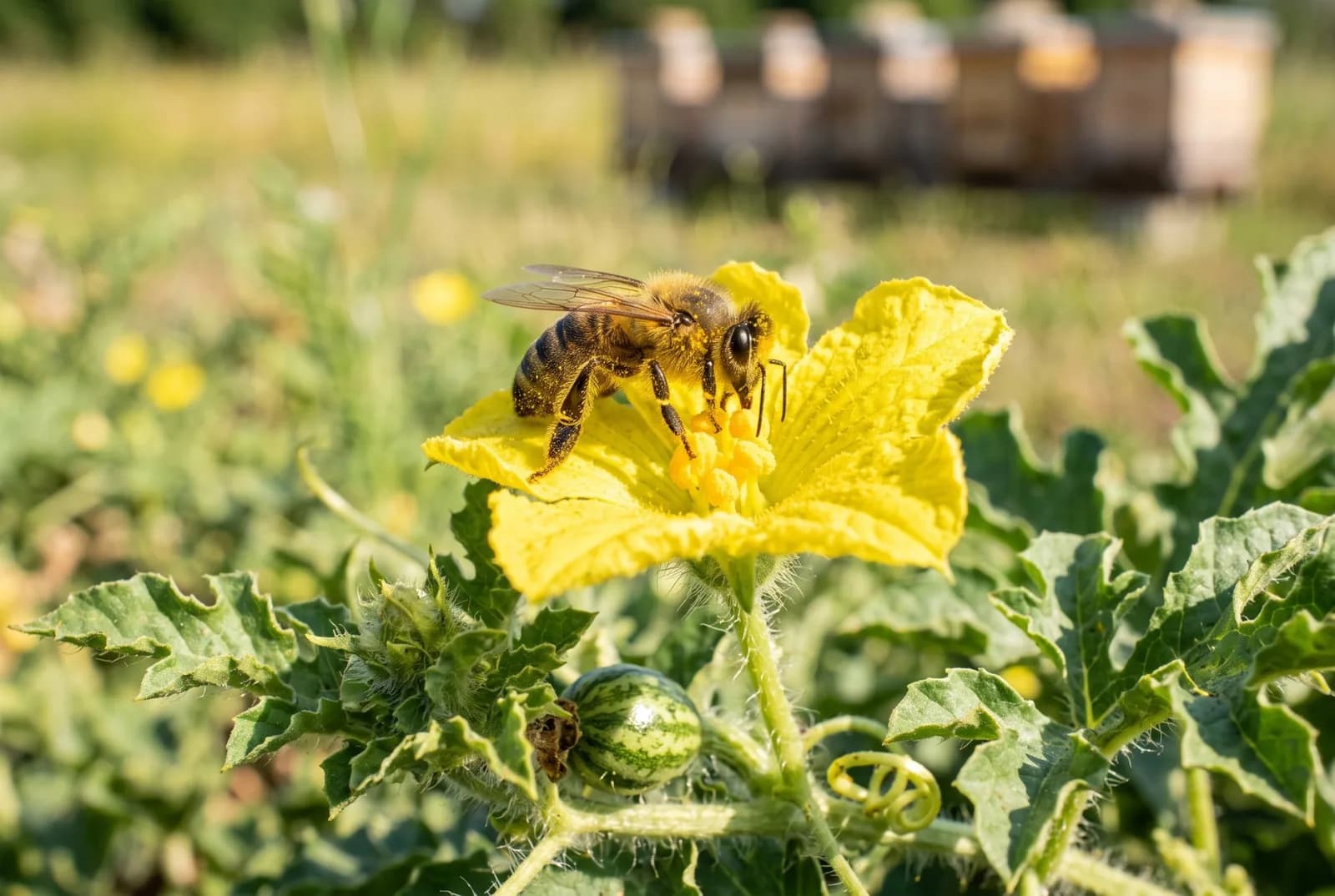
- Honeybees do the pollinating; Penn State recommends about 2.5 hives per hectare (one per acre).
- Cut the fruit from the vine, leaving 2.5–5 cm (1–2 inches) of stem, rather than pulling it.
Figures are published averages or study assumptions for the places named, not guarantees for your field. Check current local recommendations and product labels before acting.
Some visuals in this guide are illustrations rather than photographs of a specific farm. See image credits.