

Growing hazelnuts in Germany
Hazelnut cultivation is established but remains a small German orchard sector. Bavaria’s LWG production guide is a practical reference for organic orchards; it puts late-frost exposure, cross-pollination, deep soil and harvest timing at the center of block planning.
Scope: Commercial hazelnut orchards in Germany, using the Bavarian LWG organic-cultivation manual as the main production reference. Its recommendations are not a national trial result. Updated 2026-10-07.
At a glance
- German hazelnut area
- 521 ha nationwide in the 2022 tree-fruit survey2
- Documented southern production
- Baden-Württemberg and Bavaria are named as southern production states2,3
- LWG soil profile
- Deep soil (at least 1.5 m), pH 6–7, without a compacted layer1
- Orchard spacing reference
- 5–6 m between rows and 4–5 m between plants1
- Harvest cue
- First pass near 50% nut drop from the earliest cultivar1
Perennial growth and climate in Germany
A perennial planting remains in the field for multiple years. Establishment is a long-term investment; flowering, fruit development, harvest and plant care recur as the planting matures. Follow the named cultivar and production system.
Establish a long-lived planting1
Plant nursery trees when the site is frost-safe and soil is workable. The LWG manual favors autumn establishment and allows spring work where frozen or snow-covered ground prevents planting; treat this as German orchard guidance, not an annual sowing window.
Management: Catkins, pollen and bloom overlap1
The LWG guide describes catkins extending in winter and often through March–April, with timing changing by climate and cultivar. Pollen release lasts only a few days; compatible pollinizers must overlap female bloom.
Harvest: Nut drop and collection1
The LWG guide places ripening and nut drop in August–September. Begin when about half the nuts from the earliest cultivar have fallen, then repeat passes no more than a week apart to reduce mold, bird and rodent losses.
Historical monthly climate
Reference period: 1996-01-01 to 2025-12-31. ERA5-Land monthly mean soil temperature at 0–7 cm, air temperature and frost days at the regional reference point (51, 10). Select a month to inspect its historical conditions.
Month tiles show mean air temperature.
December historical conditions
- Mean topsoil temperature
- 2.0°C
- Mean air temperature
- 1.2°C
- Mean frost days per month
- 17.3 days
Use this monthly history to assess winter exposure, seasonal heat and water planning. It does not calculate cultivar chill hours, flowering dates, frost damage during bloom or fruit maturity. Topsoil at 0–7 cm describes shallow soil context, not the full root zone. Harvest periods follow the production evidence above.
Climate source: Open-Meteo Historical Weather APIChoose a site that limits late-frost risk
- 1
Map frost exposure
Avoid cold-air basins, valley frost pockets and sites with frequent late frost.
- 2
Inspect the soil profile
Confirm depth, texture, compaction, drainage and pH.
- 3
Check annual water supply
Compare rainfall and irrigation capacity with the site’s seasonal demand.
- 4
Plan pollinizers
Choose compatible varieties whose pollen timing overlaps.
- Protect flowering and fruit set
- The LWG guide says hazel wood can tolerate severe winter cold, while open flowers and fruit set can be damaged by late frost below about −8°C. A monthly climate average cannot show cold-air drainage or the timing of a frost event; inspect the field and use local weather records.1
- Check depth and water
- The German manual describes a preferred deep soil of at least 1.5 m, pH 6–7, no compacted layer, loamy humus and regular rainfall near 800 mm/year; it calls for irrigation when rainfall is lower. Use soil profile and water-quality tests at the farm.1
- Treat the climate tiles as context
- The historical monthly record describes one regional reference point. It does not calculate chill accumulation, bloom frost damage, fruit maturity or water availability for an individual orchard.1
Lay out a cross-pollinated orchard
Between rows: 5–6 m between rows · Within the row: 4–5 m between plants
The LWG guide recommends this spacing and at least an 8 m headland. Fit the final layout to equipment, terrain, tree form and compatible pollinizers.
- Use compatible cultivars
- Hazelnuts are self-incompatible and need cross-pollination. The LWG guide stresses overlapping pollen availability and female bloom; do not assume one variety pair is suitable throughout Germany.1
- Keep the canopy open enough to manage
- The guide cautions that closer orchard spacing can create dense stands more prone to Monilinia and other fungal disease. Plan access and pruning from the mature canopy and machinery system.1
Track flowering and orchard water
- Record phenology by cultivar
- Catkin development and pollen release vary by cultivar and climate. Keep observations of pollen shed, female bloom and late-frost events by block so pollination failures are not confused with poor site fit.1
- Use local measurements to schedule irrigation
- The LWG rainfall reference is a site-screening figure, not a fixed schedule. Check soil moisture, tree age, crop load and forecast rainfall before applying water.1
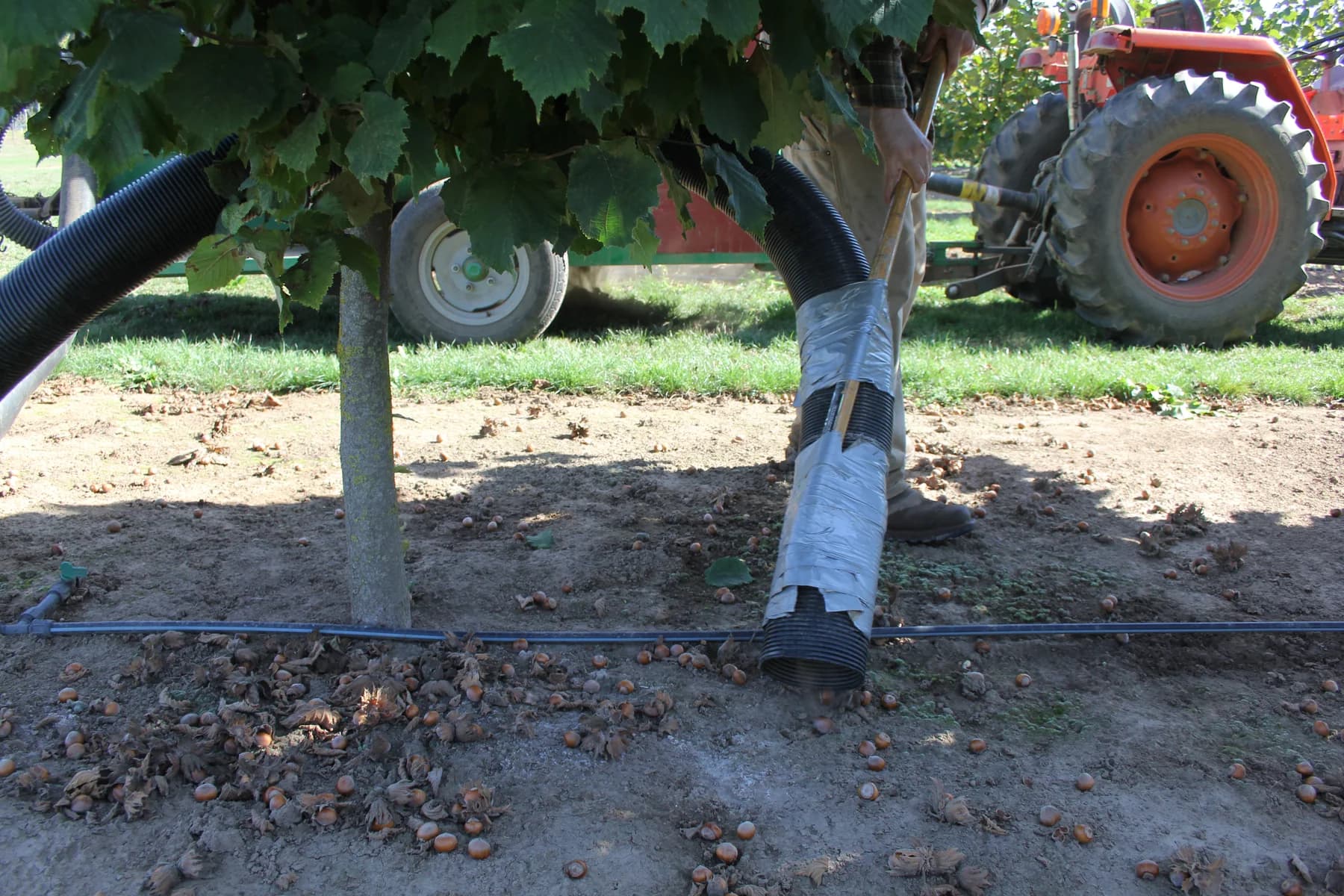
Collect fallen nuts in repeated passes
- 1
Watch the earliest cultivar
Check nut drop under the block, not just the calendar.
- 2
Start near half drop
The LWG guide uses about 50% drop in the earliest cultivar as the first-pass cue.
- 3
Repeat within a week
Return for subsequent passes to limit exposure to moisture, mold and animals.
- 4
Dry and grade
Protect quality and follow the buyer’s moisture, cleanliness and size specification.
- Use August–September as a reference only
- The LWG guide says ripening and nut drop begin in August or September. Humid conditions can raise mold pressure, so use maturity and nut drop rather than a fixed national date.1
Frequently asked questions
- Where are hazelnuts grown in Germany?
- The 2022 tree-fruit survey reports 521 ha nationwide and identifies southern states including Baden-Württemberg and Bavaria. These figures date from 2022.
- What site suits hazelnuts in Germany?
- The Bavarian LWG guide recommends deep, uncompacted soil, pH 6–7, regular water supply and a site without frequent late frosts or cold-air pooling.
- Do German hazelnuts need pollinizers?
- Yes. Hazelnut varieties are self-incompatible; choose compatible pollen partners with overlapping bloom.
- How are hazelnuts harvested in Germany?
- The LWG reference is August–September. Start near 50% nut drop in the earliest cultivar and collect in repeated passes no more than a week apart.
- How far apart are German hazelnut trees planted?
- The LWG commercial layout reference is 5–6 m between rows and 4–5 m between trees, with at least an 8 m headland.
Regional hazelnuts guides
Local dates, soil-temperature history and sources for specific regions:
Sources and image credits
- 1. Bavarian State Institute for Viticulture and Horticulture (LWG) — Organic hazelnut cultivation in Germany — 2025 edition; document status August 2024. German organic orchard site selection, frost, pollination, spacing, water, phenology and harvest. Practical state guidance, not a national trial result.
- 2. Federal Center for Agriculture (BZL) — Why are so few nuts grown in Germany? — Uses 2022 tree-fruit survey. National hazelnut area and southern production context; statistics are dated to the 2022 survey.
- 3. Statistical Office of Baden-Württemberg — Tree-fruit survey 2022 — 2022 survey. State hazelnut orchard area.
- 4. Hazelnut crop photo — Ivar Leidus — Wikimedia Commons; CC BY-SA 4.0. Common hazelnut crop-identification photograph; not a photograph of a regional orchard or Himalayan hazel.
- 5. Hazelnut harvest — Sean Nealon / Oregon State University — CC BY-SA 2.0 — https://creativecommons.org/licenses/by-sa/2.0/. Oregon State University orchard-floor harvest photo. Resized derivative retains CC BY-SA 2.0; cultivar and species are not established by the file description.
- 6. Hazelnut harvest photo license — CC BY-SA 2.0 — Creative Commons Attribution-ShareAlike 2.0. The resized Sean Nealon / Oregon State University photograph retains this license.
- 7. Hazelnut product photo license — CC BY-SA 4.0 — Creative Commons Attribution-ShareAlike 4.0. The resized Ivar Leidus photograph retains this license.
Image credits
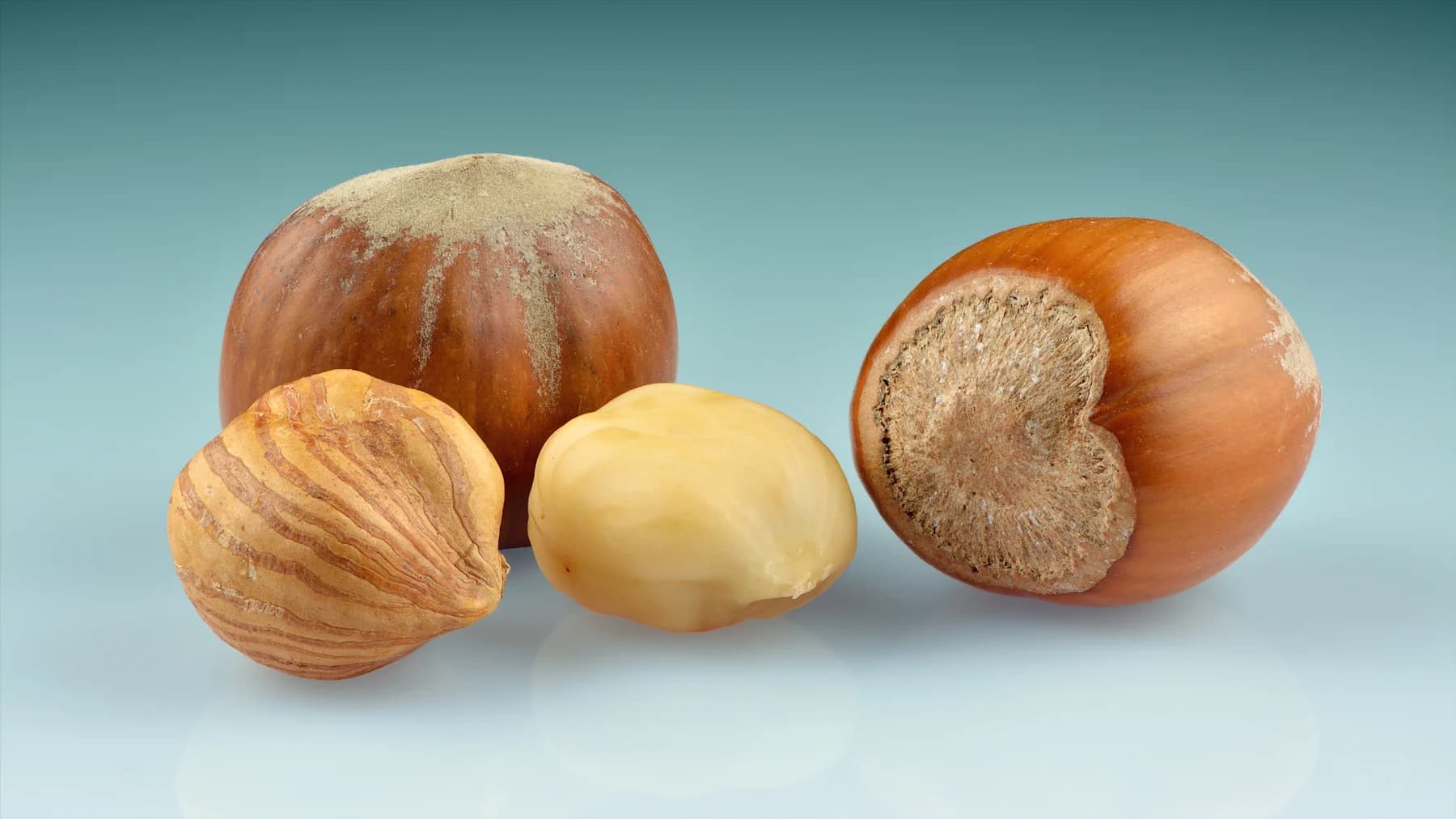
- Common hazelnuts (Corylus avellana) and kernels. Photo: Ivar Leidus, CC BY-SA 4.0; resized under the same license. Product reference, not a local orchard or an identified Ping’ou hybrid.
- Hazelnut harvest at Oregon State University’s North Willamette Research and Extension Center, USA. Photo: Sean Nealon / Oregon State University, CC BY-SA 2.0; resized under the same license. A harvest-system example, not a photograph of the page’s region.
Figures are published averages or study assumptions for the places named, not guarantees for your field. Check current local recommendations and product labels before acting.