

Early vine setting
April · before bud swelling advancesPlant only when the ground is workable and vines are still dormant. Keep roots protected and follow local guidance for graft-union and winter protection.
Regional vineyard guide · Quebec
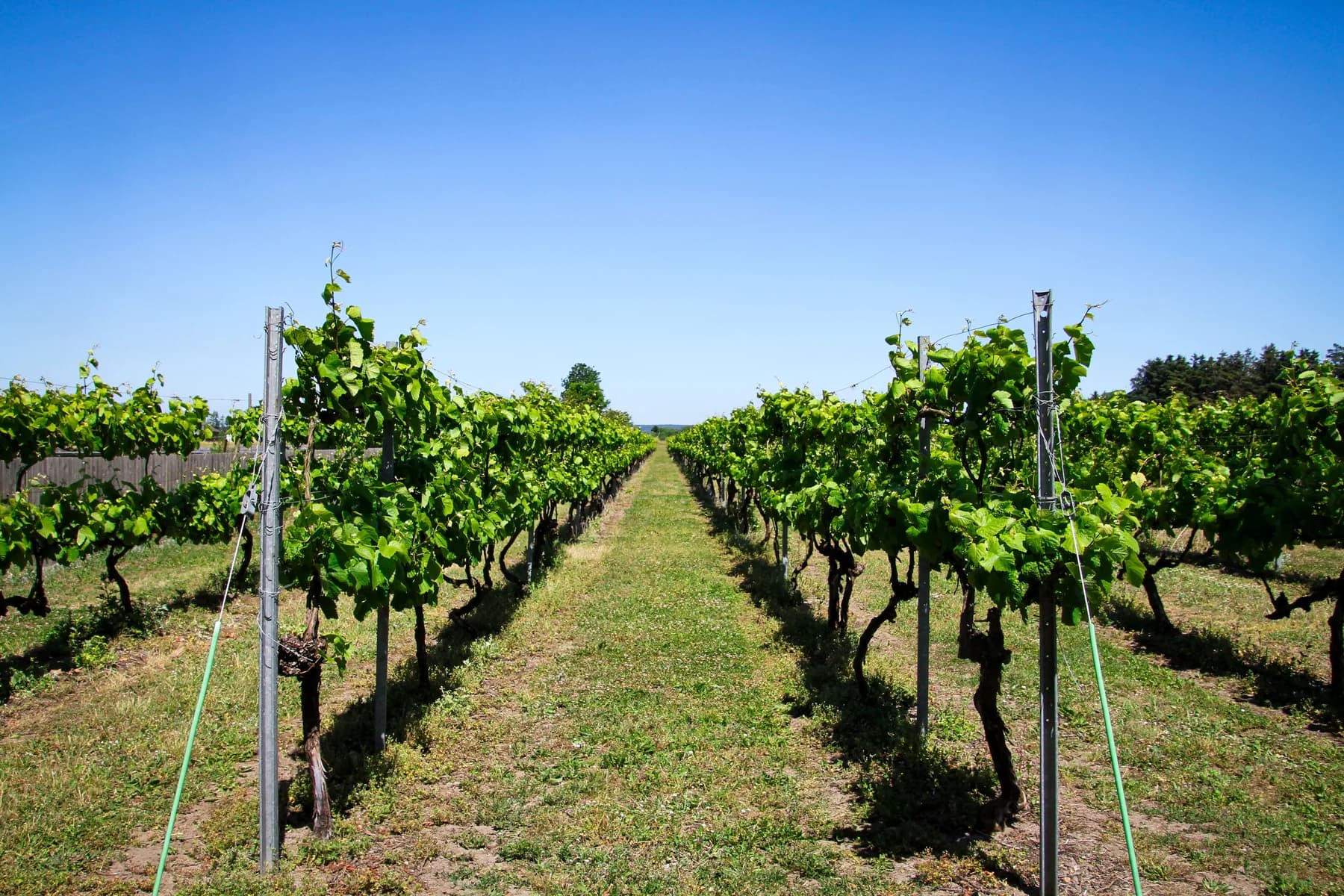
Grapes can be grown in Quebec with cold-hardy cultivars and a vineyard plan that accounts for winter protection. Budbreak, flowering, veraison and harvest run on a cool-climate calendar, so local phenology matters more than a national or continental average.
Cold-climate vineyards with winter-protection requirements
For vine establishment and management principles, read the general grape guide.
Regional climate screen · Not typically viable
Grapes is not typically viable in Quebec: winter lows (~-23.3°C) drop below its ~-20°C cold-hardiness limit, so it would freeze out in cold years; growing-season temperatures (~16.8°C) sit a little below its 18–30°C optimum.
This is a regional screen, not a field-level verdict. It does not rule out more favorable local sites or protected production; the full growing guidance and next checks remain below.
Regional crop context
Quebec’s agriculture ministry publishes a regional vineyard-work calendar showing bud swelling in April, budbreak in May, fruit maturation and harvest in September, and the end of harvest in October. Winter protection is a defining establishment and management consideration.
The climate strip uses one Quebec reference profile, not all vineyard districts. The April–early-May planting estimate is anchored to the local dormant-to-budbreak transition in the ministry calendar; confirm that nursery vines remain dormant and the soil is workable.
Step 1 of 7 · Assess
Start with the fruit’s destination and the vineyard’s life-cycle cost. Grapes are perennial vines: cultivar, rootstock, trellis, frost exposure and harvest route must work together for years.
6 topics still to verify· planning aid only, not a suitability score
Selections stay in this browser tab and are not saved or sent anywhere.
Need field-level conditions? Run a coordinate-level farm audit for local terrain, soil and water context.
Step 2 of 7 · Plan
Grapes are established as dormant bare-root vines or rooted potted plants. Stock type, the dormant season and local soil conditions determine the setting period.
Commercial vineyards are established from dormant bare-root vines or rooted potted stock. Use the month grid to choose the regional setting period, then plant when the soil is workable.
The MAPAQ seasonal calendar places bud swelling in April and budbreak in May. The planting band therefore targets workable soil before budbreak; the source is a regional phenology calendar, not a fixed nursery-planting prescription.
Month-by-month view
Jan
Outside window
Feb
Outside window
Mar
Outside window
Apr
April · dormant vines, soil permitting
May
Early May · before budbreak
Jun
Outside window
Jul
Outside window
Aug
Outside window
Sep
Outside window
Oct
Outside window
Nov
Outside window
Dec
Outside window
Plant only when the ground is workable and vines are still dormant. Keep roots protected and follow local guidance for graft-union and winter protection.
Use the end of the dormant window only where the soil and nursery stock permit planting before shoots emerge. Do not carry this calendar into warmer southern regions unchanged.
Historical regional climate
Green tiles are months whose mean soil temperature is at or above the 10°C root-growth base; the label on each tile gives the exact reference band. Early, median and late dates show when a seven-day soil-temperature mean first reaches 10°C in historical years. This is root-zone context; the dormant-vine calendar above gives the local setting period.
Early root-zone warming
May 04
10th percentile · 30 complete years
Median root-zone warming
May 11
Median year · 30 complete years
Late root-zone warming
May 21
90th percentile · 30 complete years
Open-Meteo · era5_land · 1996-01-01 to 2025-12-31 · reference point 46.50°N, 72.00°W. Soil values are modeled at 0–7 cm modeled soil layer; regional data are not a field probe or a region-wide spatial average.
Step 3 of 7 · Prepare
Select cold-hardy varieties and a well-drained site with air movement. Consider winter protection access, snow cover, spring frost and the local ripening season before committing to a vineyard block.
Prepare soil and trellis before vines arrive; coordinate the training system with winter protection from the start. Inspect dormant stock, maintain root moisture during planting and plan how young trunks will be secured and protected.
No single provincial spacing suits Quebec’s trellis systems and cold-protection methods. Design vine and row spacing around cultivar vigor, winter burial or covering equipment, canopy training, site slope and harvest access.
| Planting density in the budget | 3,472 plants/ha |
|---|---|
| Time to revenue | Three years with no revenue |
| Investment for 3 ha | $255,254 with hardy vines; $306,254 with non-hardy vines |
| Yield benchmark | 3 t/acre is regarded as excellent in Quebec |
Budgets and rules from the sources below; older budgets are labelled and their prices are outdated. These are published designs, not a recommendation for your site. For establishment steps and a cost comparison see the grape growing guide.
Step 4 of 7 · Establish
Plant nursery vines during the regional window above. Prepare the roots, set the vine at its original nursery depth and support new growth.
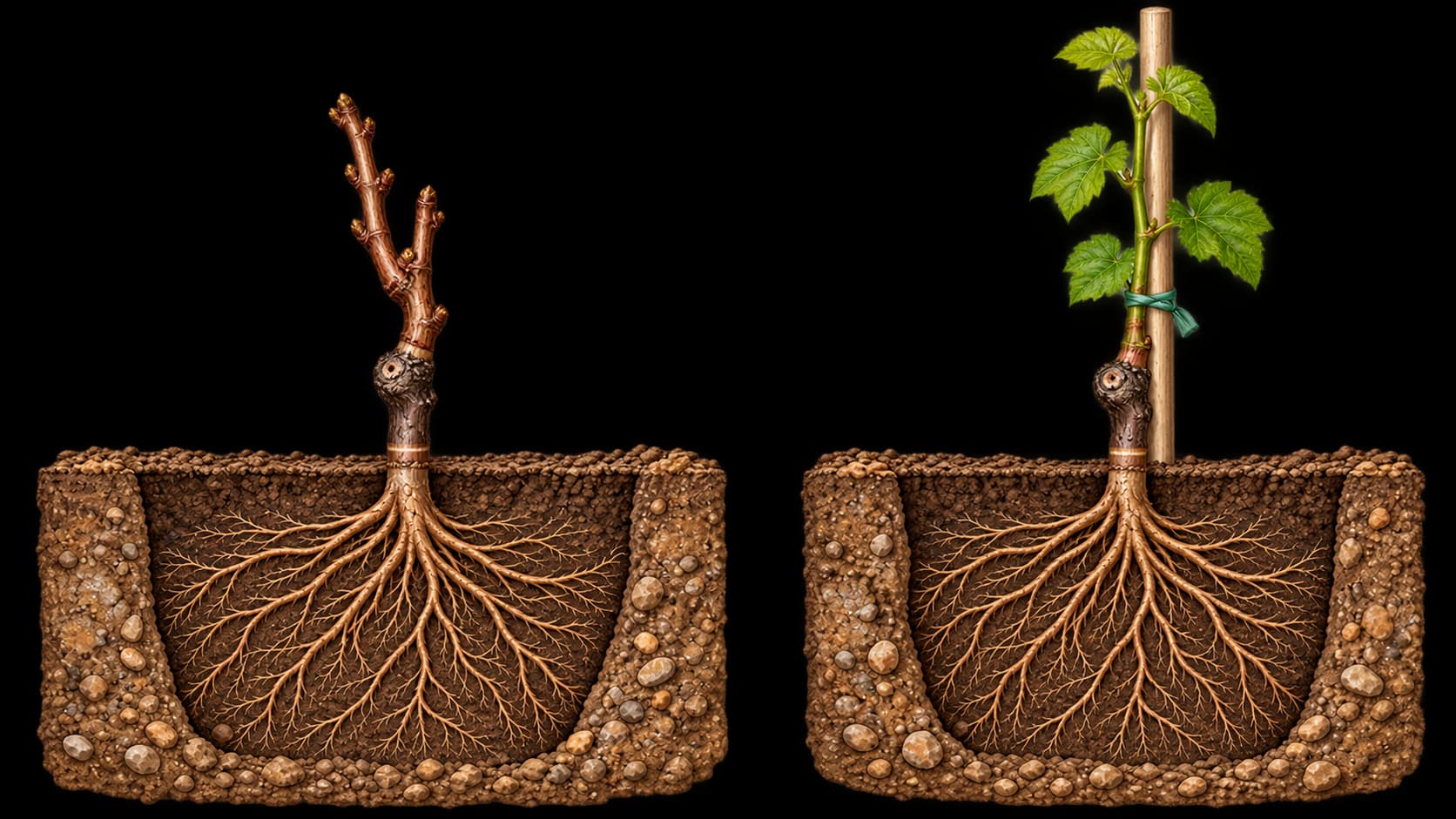
Keep bare roots cool, shaded and moist until planting. Soak them in clean water for a few hours before setting; keep rooted potted vines watered and their root balls intact.
Make a hole wide enough for the roots, set the vine at its nursery soil mark, spread roots without bending or crowding, then backfill and firm the soil.
Water thoroughly after planting. For grafted vines, keep the graft union above the finished soil line; stake and train the new shoot to the chosen trellis.
Years 1–2
Establish roots, trunk and trellis framework. Remove or limit young clusters so growth builds the permanent vine structure.
Years 3–4
A healthy, well-established vine commonly gives its first crop in the third or fourth year after planting.
Years 5–6
Vines typically reach full production around the fifth or sixth year, depending on establishment and management.
Step 5 of 7 · Manage
Low winter temperatures, freeze-thaw cycles and spring frost can injure buds and trunks. The MAPAQ calendar shows a compressed April–May transition from dormant vines to budbreak; protect tender vines and use local station observations.
Use irrigation scheduling, soil moisture and local heat forecasts together. The regional soil-temperature chart is a 0–7 cm climate estimate, not the deeper, wetter root zone of a mature vineyard.
Record frost injury, canopy humidity, disease pressure, water status and fruit maturity by block. Choose current pest and disease controls for the crop’s use and local label.
Step 6 of 7 · Harvest
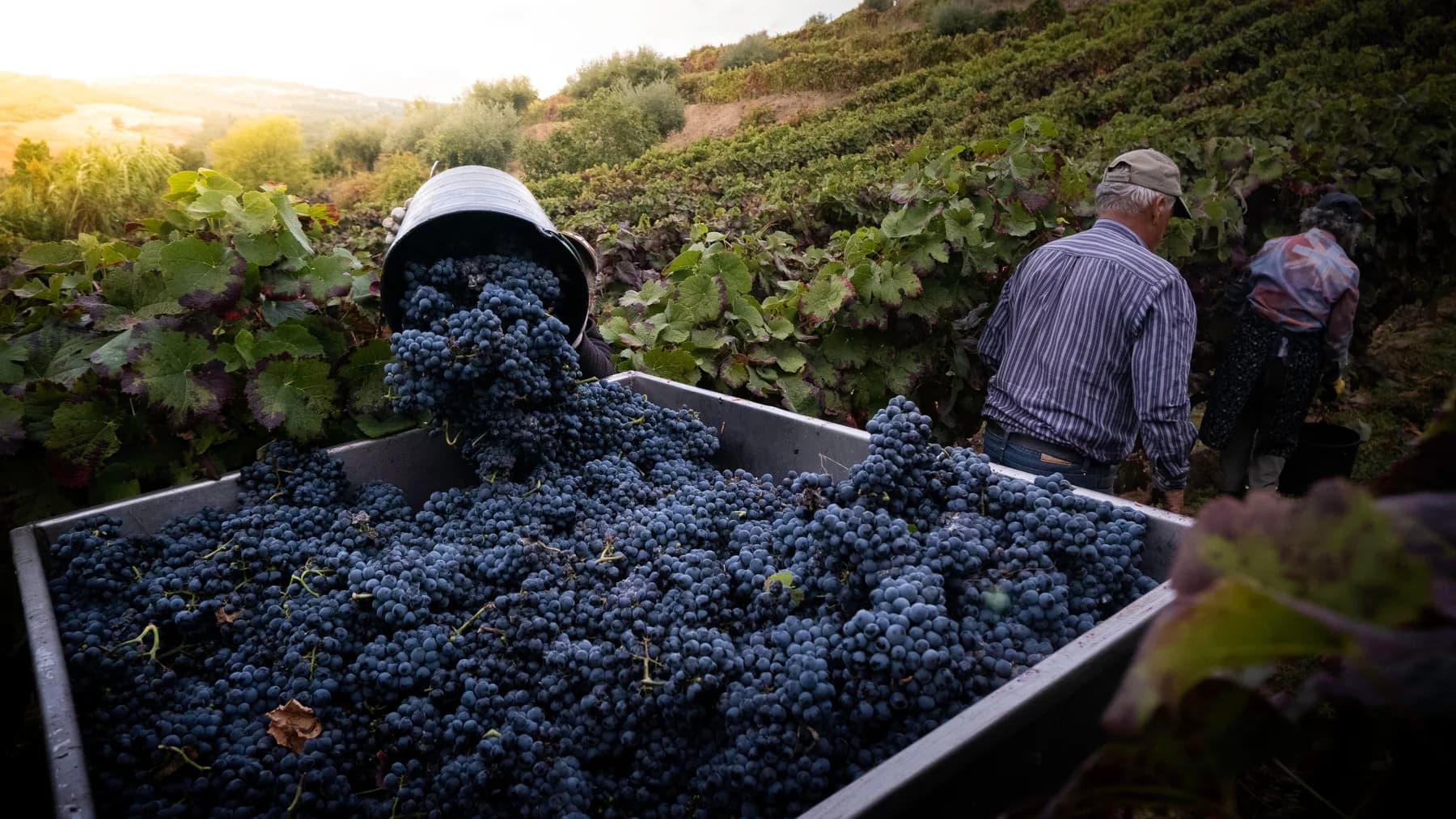
MAPAQ places fruit maturation in September and the end of harvest in October. Sample each cultivar and block through ripening; use winery targets, disease condition and the forecast to choose the picking day.
Regional harvest calendar
The Montérégie vineyard-work calendar marks fruit maturation in September and harvest completion in October. Use it as a regional seasonal range; cultivar and year determine the actual start and finish.
Jan
—
Feb
—
Mar
—
Apr
—
May
—
Jun
—
Jul
—
Aug
—
Sep
Harvest period
Oct
Harvest period
Nov
—
Dec
—
Typical harvest period
1 · Check maturity
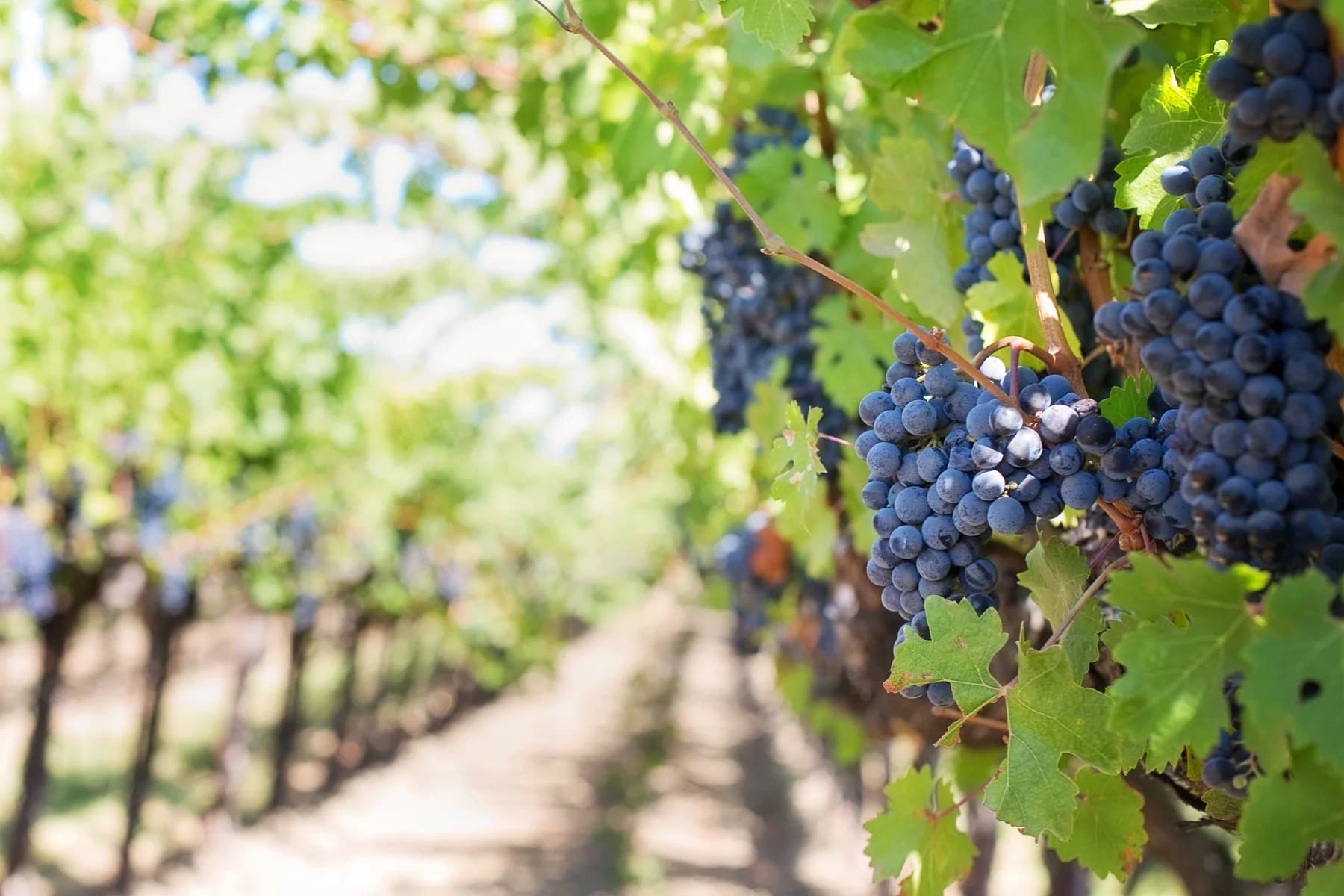
Sample berries from multiple vines and cluster positions. For wine grapes, track °Brix, pH, acidity and flavor against the winery target. For table grapes, check full berry size, sweetness, texture and appearance; color alone is not enough.
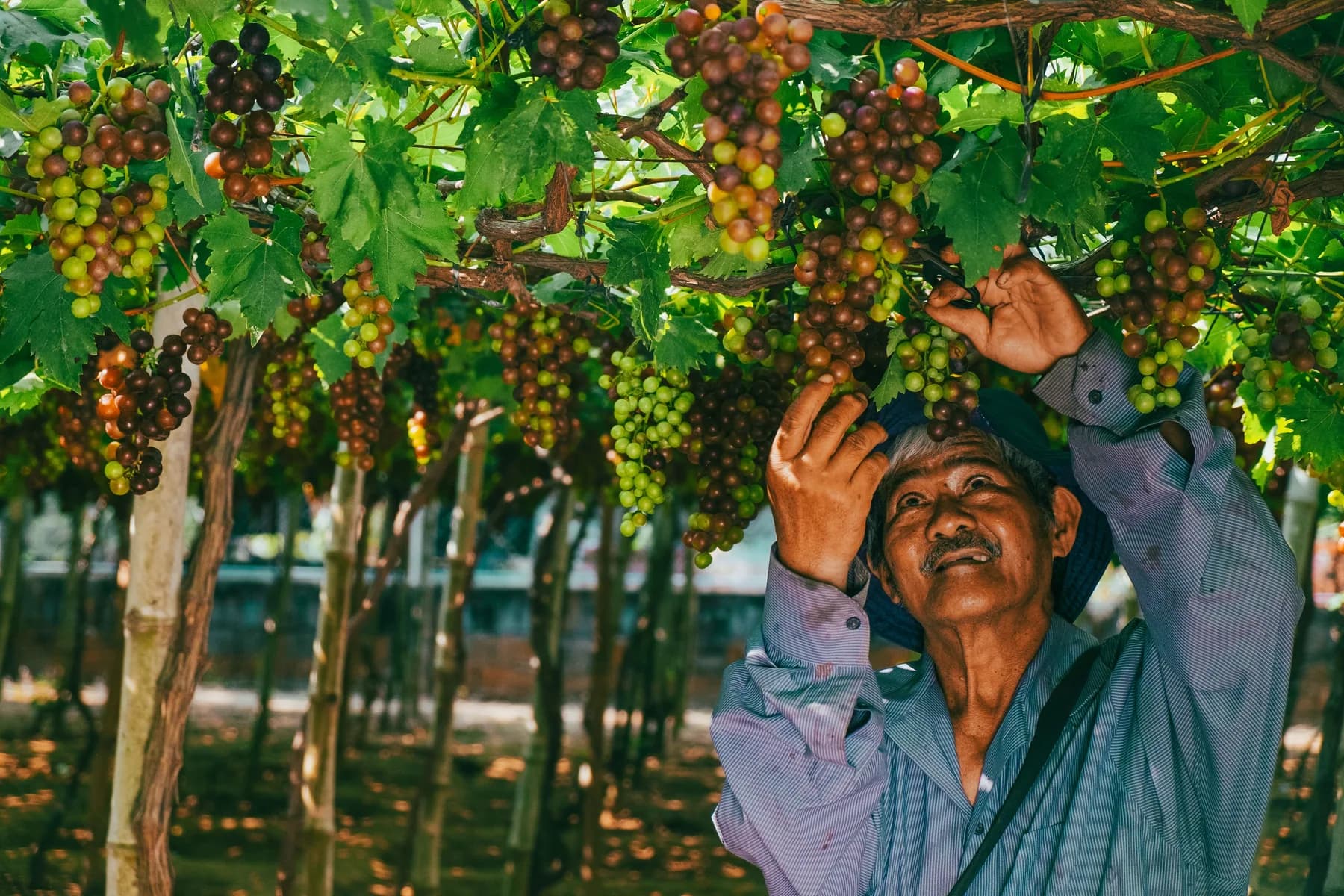
2 · Pick the cluster
Use clean, sharp harvest shears to cut the stem. Support the bunch and handle it gently so berries and their protective skin coating are not bruised or rubbed.
3 · Move fruit promptly
Place clusters carefully in clean picking containers and move them to the winery, packhouse or processing area. For table grapes, keep fruit dry and cool it rapidly after harvest.
Set the pick date from representative block samples and the winery’s target composition.
Pick by eating quality, cluster condition and buyer grade; harvest uneven blocks in more than one pass.
Match maturity and field logistics to the drying or processing plan.
Step 7 of 7 · Reference
Montérégie phenology and work timing: dormant season, April bud swelling, May budbreak, September fruit maturity and September–October harvest.
Describes winter protection and cultivar knowledge as central research needs for Quebec Vitis vinifera production.
A Shiraz experiment found root growth increased with accumulated soil heat; a 10°C base approximated fine-root growth. This is used only for the root-zone warming estimate, not as a planting-temperature prescription.
A controlled Kyoho-vine study describes root activity beginning around 8–10°C at 5 cm and examines 25, 30 and 35°C root-zone treatments. Cultivar and experimental conditions are retained in the interpretation.
Dormant bare-root and container-vine timing, root hydration, planting depth, root spread, firming soil and watering after planting.
Spring planting and handling dormant bare-root vines, including hydration and preparation of the planting hole; local planting windows vary by climate.
Planting holes sized for roots, roots spread in all directions and the graft union kept above the soil surface for grafted vines.
First grape harvest is usually in year three or four after planting, depending on cultivar vigor; clusters that appear in year two should be removed.
Grapevines take several years to produce their first crop and typically reach full production in the fifth or sixth year after planting.
Table-grape maturity cues, clipping the cluster instead of pulling, careful handling and rapid cooling after harvest.
Repeated representative sampling over time, using soluble solids (°Brix), pH, titratable acidity and sensory checks to decide harvest readiness.
3 ha vineyard at 3,472 plants/ha; three years without revenue; $255,254 investment for hardy vines vs $306,254 for non-hardy; 3 t/acre regarded as excellent.
Image credits and usage details are listed on the photo credits page.