

Growing rice in Texas
Texas rice is concentrated on the Gulf Coast and uses both dry-seeded and water-seeded systems. Fields are commonly planted from mid-March into May, with timing shaped by soil temperature, water supply and location. Main-crop harvest starts in summer; a ratoon crop may follow where the main crop and regrowth support it, but it is not a guaranteed second harvest.
Scope: Commercial rice production in Texas, using Texas A&M AgriLife guidance, USDA statistics and 2026 extension crop updates. Ratoon performance, planting progress and yields vary substantially by year and field. Updated 2026-10-07.
At a glance
Planting and harvest calendar for Texas
Use the source-backed production windows to coordinate establishment, crop care and harvest. Production districts and cultivars can have different cycles; the historical climate adds context for the field plan.
Planting: Main crop establishment across the Texas rice belt1,3,4
Texas A&M AgriLife guidance and recent crop reports place planting from mid-March through spring. By 26 April 2026, 78% of Texas rice was planted versus an 82% 2021–2025 average; 95% was planted by 11 May. District, variety, seedbed temperature, rainfall and irrigation availability change field timing.
Harvest: Main crop in summer; ratoon crop may extend harvest3,5,6
2026 Texas A&M reports show main-crop harvest beginning in July, progressing through August and wrapping up in parts of the state by September. A ratoon crop regrows after the first harvest and is harvested later if stand, heat units and pest pressure allow; late-September and October scouting is important.
Historical monthly climate
Reference period: 1996-01-01 to 2025-12-31. ERA5-Land monthly mean soil temperature at 0–7 cm, air temperature and frost days at the regional reference point (31.5, -99). Select a month to inspect its historical conditions.
Month tiles show mean topsoil temperature.
March historical conditions
- Mean topsoil temperature
- 16.7°C
- Mean air temperature
- 16.6°C
- Mean frost days per month
- 1.2 days
These are monthly means at one reference location. They describe seasonal field conditions, not crop maturity, actual seed-zone conditions, frost forecasts or a planting recommendation. Harvest bands follow the crop-specific production sources above.
Climate source: Open-Meteo Historical Weather APIPlan the field around water, soil and district
- 1
Choose the seeding system
Use dry drill/broadcast or water seeding to suit the field, equipment and water plan.
- 2
Prepare the seedbed
Level fields and build or maintain levees for controlled irrigation.
- 3
Establish the main crop
Plant in the spring window when field conditions support emergence.
- 4
Manage flood and fertility
Coordinate nitrogen, flood timing and crop stage.
- 5
Decide whether to ratoon
Use field condition, regrowth and pest pressure to assess a second crop.
- Start with a reliable water plan
- Rice in Texas is irrigated. Check source reliability, pumping cost, field grade, levee condition and drainage before seed is ordered. USDA ERS notes that Gulf Coast operations use both dry-seeded and water-seeded systems.1,6
- Use the right scope for state statistics
- USDA NASS recorded 145,000 planted acres and 139,000 harvested acres in 2025, with a state average yield of 7,730 lb/acre. These totals describe a year and are not a farm yield target.2
Establish the main crop in spring
- 26 April78 % planted
- 11 May95 % planted
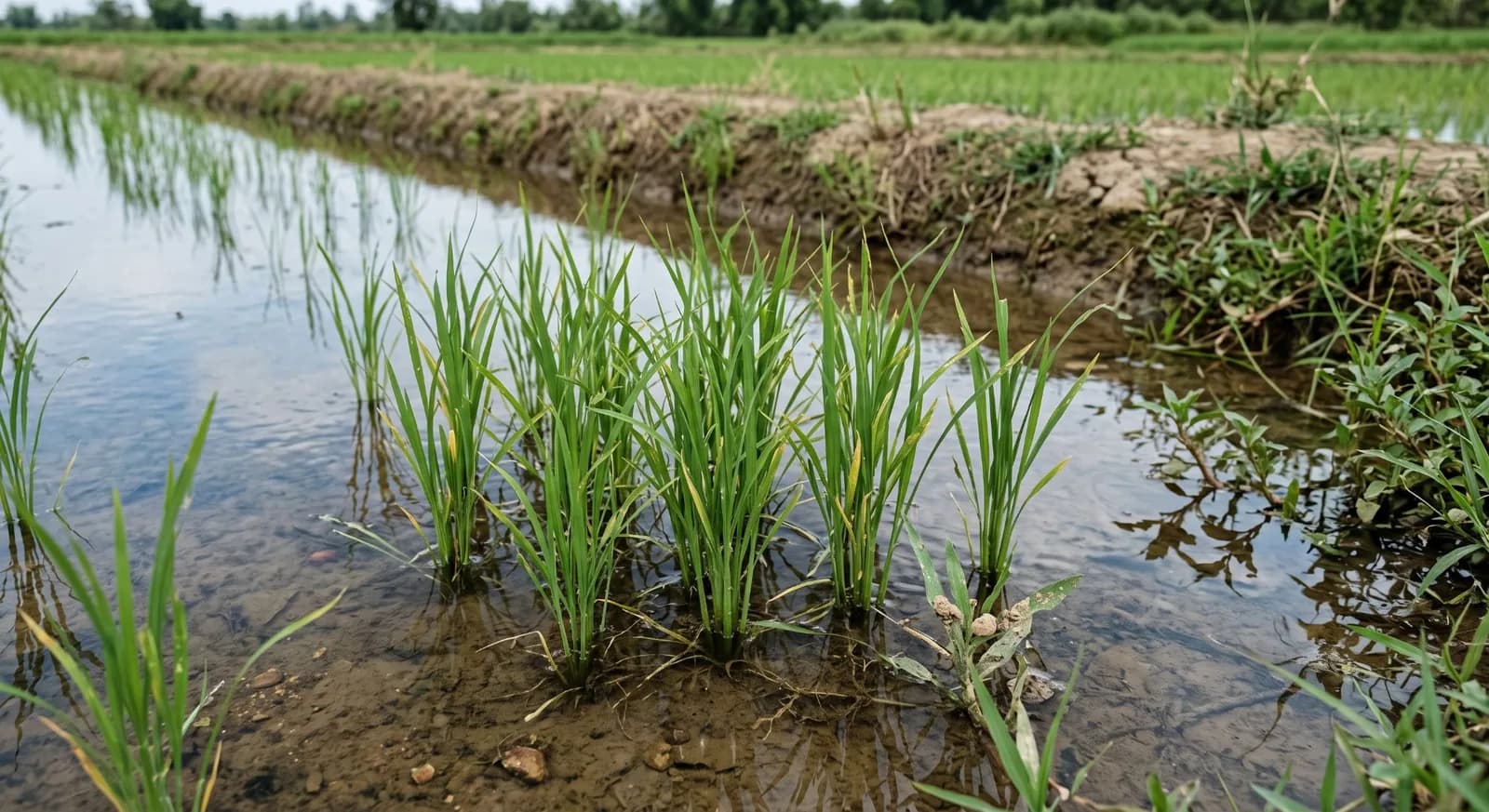
- The planting window follows the Gulf Coast season
- Texas A&M’s 2023 production guidelines describe planting from mid-March into late spring, with soil temperature, seedling survival and drying seedbeds affecting the date. In 2026 the USDA progress report showed 78% planted by 26 April; the state reached 95% by 11 May. That progress is a recent season example, not a universal target.1,3,4
Coordinate nitrogen, flood and crop protection
- 1
March-sown fields
Texas A&M outlines a three-part schedule around establishment, preflood and panicle differentiation.
- 2
April-sown fields
Warmer conditions can shift early crop growth and nitrogen demand.
- 3
Check the stand and soil
Adjust timing to variety, planting date, soil and crop condition.
- 4
Scout before treatment
Use field monitoring and current integrated pest-management thresholds.
- Avoid one statewide nitrogen rate
- The Texas A&M guide varies nitrogen timing by planting month and crop stage. Field rate depends on variety, soil, crop condition and yield potential; use the current local recommendation and avoid treating a study schedule as a blanket prescription.1
- Keep flood management coordinated with fertility
- Precise field levelling and levee management support more even water distribution. The timing of preflood nitrogen and flood establishment affects nitrogen efficiency, so plan the sequence before planting.1
- Scout the main and ratoon crops separately
- Rice delphacid pressure can damage ratoon growth. Texas A&M recommends especially close scouting as ratoon rice develops in late September and October, with attention after rainfall events.5
Harvest the main crop and assess ratoon potential
- 1
Harvest main crop
Summer harvest timing moves with planting date, maturity and the season.
- 2
Assess stubble and regrowth
Check remaining stand, stubble condition, heat and water supply.
- 3
Manage pests
Scout ratoon rice closely, especially in late September and October.
- 4
Harvest only if viable
A second crop is partial and variable; it is not assured by the main harvest.
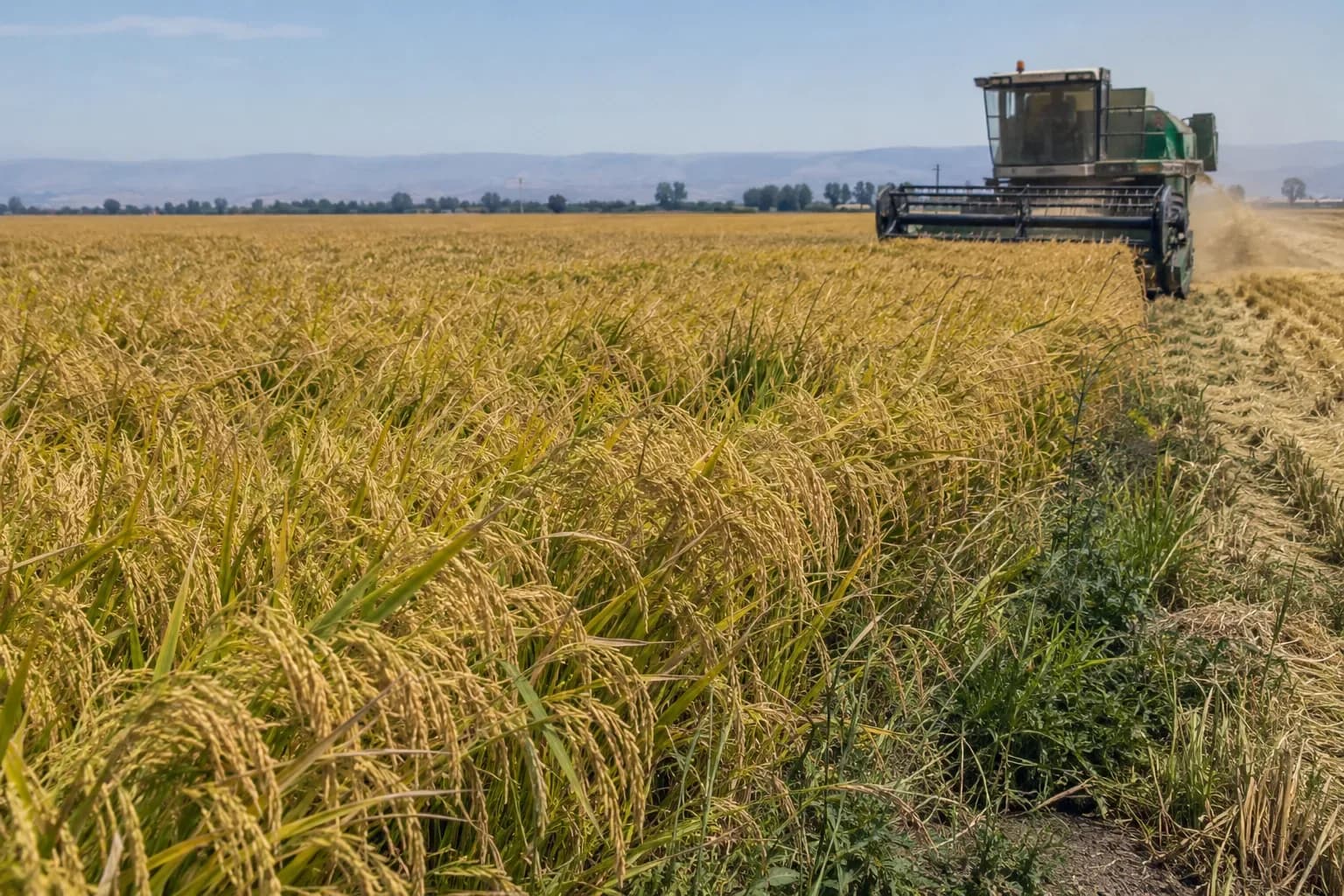
- Harvest progress changes by district
- In August 2026, AgriLife reported the west side of Houston area was mostly through main-crop harvest while the east side was earlier in progress. The statewide calendar therefore needs current local crop reports, not a single harvest date.5
- Ratoon is an option, not a guaranteed crop
- USDA describes the practice of reflooding some Texas and southwest Louisiana fields for a partial second crop. AgriLife reports that ratoon yield commonly falls well below the main crop and can collapse under pest pressure; use an enterprise budget before relying on it.5,6
- Dry and store grain to buyer specifications
- Set combine, drying and storage plans to the buyer’s grade and target moisture. Harvest readiness, grain quality and dryer capacity should be part of the field plan before the crop reaches maturity.1
Frequently asked questions
- When is rice planted in Texas?
- Texas rice is generally planted from mid-March into spring. USDA progress reports showed 78% planted by 26 April and 95% by 11 May in 2026; district and field conditions shift the date.
- How is rice seeded in Texas?
- Texas producers use dry drilling or broadcasting and water seeding. The method depends on the field, water supply, equipment and weed plan.
- When is Texas rice harvested?
- Main-crop harvest starts in summer and progresses by district; 2026 Texas A&M reports document activity from July through September. Check current local crop reports.
- Does Texas rice produce a second crop?
- Some fields can produce a partial ratoon crop from regrowth after the main harvest. It depends on stand, heat, water and pest pressure and should not be budgeted as guaranteed yield.
- What was Texas rice yield in 2025?
- USDA NASS reported 7,730 lb/acre on 139,000 harvested acres in 2025. It is a statewide average, not an individual-farm target.
Regional rice guides
Local dates, soil-temperature history and sources for specific regions:
Sources and image credits
- 1. Texas A&M AgriLife Research — Texas Rice Production Guidelines — 2023. Texas field preparation, planting methods and window, variety selection, crop-stage nitrogen timing, irrigation and main/ratoon production.
- 2. USDA NASS — 2025 State Agriculture Overview: Texas — 2025 data. Texas planted and harvested rice acres, yield and production; state-level annual results.
- 3. Texas A&M AgriLife — Rice Extension Agronomy Newsletter, April 2026 — 2 April 2026. 2026 Texas rice acreage expectation and early-season planting progress.
- 4. USDA NASS — Crop Progress, 26 April 2026 — 27 April 2026. Texas and other states rice planting progress compared with 2025 and the 2021–2025 average.
- 5. Texas A&M AgriLife — Rice Extension Agronomy Newsletter, May 2026 — 13 May 2026. Texas planting progress as of 11 May 2026 and research observations on late-March/early-April planting.
- 6. Texas A&M AgriLife — Rice Extension Agronomy Newsletter, August 2026 — 12 August 2026. 2026 regional main-crop harvest progress and ratoon crop variability, including pest effects.
- 7. USDA Economic Research Service — Rice sector at a glance — Accessed 7 October 2026. US rice seeding systems and the partial ratoon crop in Texas and southwest Louisiana.
- 8. Texas A&M AgriLife Extension — Rice delphacid — Accessed 7 October 2026. Rice delphacid injury and monitoring, including increased ratoon crop vulnerability.
Image credits
- Rice establishment varies by production system. Illustration.
- Harvest grain at the moisture and maturity suited to the buyer and dryer. Illustration.
Figures are published averages or study assumptions for the places named, not guarantees for your field. Check current local recommendations and product labels before acting.
Some visuals in this guide are illustrations rather than photographs of a specific farm. See image credits.