

Growing apricots in India
Apricot production evidence in India is concentrated in temperate Himalayan and hill regions; it does not support a single India-wide production calendar. The references here focus on ICAR-CITH cultivars and trials, with planting density and management examples kept within their source regions. Confirm cultivar, planting material, chill and local market with the state horticulture service before scaling a block.
Scope: India-wide framing, with agronomic detail limited to ICAR-CITH and temperate Himalayan research references. The country-level climate panel is one representative point and cannot classify every Indian growing district. Updated 2026-10-07.
At a glance
Perennial growth and climate in India
A perennial planting remains in the field for multiple years. Establishment is a long-term investment; flowering, fruit development, harvest and plant care recur as the planting matures. Follow the named cultivar and production system.
Establish a long-lived planting1,3
Apricot is a perennial tree crop. The reviewed Indian sources do not set one planting month for all states. Select the cultivar and rootstock with the local horticulture service and coordinate establishment with the regional source of healthy grafted stock.
Management: Verify the cultivar and planting lot1,3
ICAR-CITH reports improved apricot material and current propagation technology transfer in Ladakh. Confirm the named cultivar, rootstock, propagation source and intended use with the local research or horticulture office.
Management: Track bloom, frost and fruit set locally2
The cited Indian cultivar and field evidence comes from selected temperate sites. Record dormancy, bloom dates, frost exposure and fruit set in the intended district instead of converting a national monthly mean into a farm calendar.
Management: Use crop stage to plan orchard operations4
An ICAR production report describes training and pruning, pollination, integrated nutrient and pest management, drip irrigation and organic mulching as part of its apricot system. Adapt these operations to the local field trial and current state advice.
Historical monthly climate
Reference period: 1996-01-01 to 2025-12-31. ERA5-Land monthly mean soil temperature at 0–7 cm, air temperature and frost days at the regional reference point (22, 79). Select a month to inspect its historical conditions.
Month tiles show mean air temperature.
January historical conditions
- Mean topsoil temperature
- 19.8°C
- Mean air temperature
- 18.5°C
- Mean frost days per month
- 0.0 days
Use this monthly history to assess winter exposure, seasonal heat and water planning. It does not calculate cultivar chill hours, flowering dates, frost damage during bloom or fruit maturity. Topsoil at 0–7 cm describes shallow soil context, not the full root zone. The monthly history does not establish a local flowering, maturity or harvest period.
Climate source: Open-Meteo Historical Weather APIKeep the India guide within its evidence region
An India-wide URL should not imply that one climate, cultivar or crop calendar applies from Himalayan production areas to warm lowland states.
- 1
Name the production district
Confirm that the site is within a temperate-fruit area with local apricot evidence.
- 2
Select verified planting stock
Record cultivar, rootstock, nursery source and propagation method.
- 3
Run a measured block
Track winter dormancy, bloom, frost, fruit set, marketable grade and handling.
- 4
Scale from local results
Use multi-season performance and a buyer specification before adding acreage.
- A national monthly average is not a production-zone recommendation
- The Indian work cited here concerns temperate Himalayan sites, including ICAR-CITH and an ICAR research station in Himachal Pradesh. Apricot response depends on local winter chill, bloom frost, cultivar and elevation; evaluate the proposed district rather than treating the India reference profile as a farm forecast.2,3
- Start with local access to true-to-type trees
- ICAR-CITH reports a quality planting-material constraint in Ladakh and has transferred improved propagation methods for stone fruits, including apricot, to nursery growers in Kargil. Ask the regional horticulture authority which cultivars and rootstocks are currently available and verified for the site.3
- Separate fresh, drying and processing objectives
- ICAR-CITH describes its named apricot selections for different fruit traits and uses. Match cultivar and maturity to the intended local outlet; the source does not establish a buyer, price or profitable supply chain for every district.1
Choose a cultivar from local trial evidence
- 1
Compare fruit traits
Use the CITH description for size, colour, sweetness and intended use.
- 2
Check site fit
Compare the trial location and elevation with the proposed production district.
- 3
Confirm pollination
Verify the selected cultivar’s pollination needs and compatible bloom overlap.
- 4
Record field performance
Measure survival, flowering, set, yield and marketable quality by cultivar.
- Use CITH cultivar descriptions as a shortlist
- The ICAR-CITH publication describes CITH Apricot-1 and -2 as table and processing types, and CITH Apricot-3 for a dry-region use. These are institute cultivar references, not proof that each one is suited to every Indian state.1
- Keep experimental yields labelled as trials
- ICAR reports yields and fruit-quality measurements from defined cultivar evaluations. The reported figures belong to those trial conditions; they are not a commercial yield guarantee or an India-wide benchmark. Build a local comparison block before using them in a farm budget.1,2
Compare the CITH density references with the farm system
- Conventional: 6 × 6 m278 trees/ha
- Medium density: 5 × 5 m400 trees/ha
- Medium density: 3.5 × 3.5 m816 trees/ha
- These figures are tied to the institute reference
- ICAR-CITH reports 3.5 × 3.5 m and 5 × 5 m medium-density planting against a 6 × 6 m conventional comparison for its apricot technology. Do not copy the closest spacing without checking cultivar vigor, rootstock, slope, irrigation, equipment access and training system.1
- Match planting material and management
- An ICAR production report links its apricot results to proper training and pruning, pollination, integrated nutrient and pest management, drip irrigation and organic mulch. Treat the full system as a package to evaluate locally, not a spacing-only recipe.4
Build a local orchard record before scaling
- Measure the site before planting
- Record winter temperature, chill accumulation where available, spring frost exposure, elevation, soil drainage and irrigation-water quality. The India page’s historical climate chart is one representative profile and does not calculate cultivar chill or frost injury.2,3
- Keep the tree lifecycle distinct from a seasonal crop
- Apricot trees persist for years. Establishment and annual care follow dormancy, bloom, fruit development and postharvest stages; a single “sowing month” does not describe this crop.1,4
- Use current local technical advice for inputs
- The ICAR report describes integrated nutrient and pest management, drip irrigation and organic mulching, but does not provide one rate that applies to every Indian soil and water source. Base fertilizer, irrigation and plant-protection decisions on local tests, monitoring and current labels.4
Confirm the buyer and handling route
- Choose the product before expanding
- The cited CITH materials identify fruit for fresh table use and processing, while regional production systems may also include drying. Confirm buyer grade, harvest maturity, packaging, storage and transport with a local buyer before sizing the orchard.1
Frequently asked questions
- Can apricots be grown commercially in India?
- The strongest evidence reviewed is from temperate Himalayan and hill regions, including ICAR-CITH work and an ICAR trial in Himachal Pradesh. It does not establish a national production package. Check local chill, spring frost, cultivar availability and buyers before planting.
- Which apricot varieties are covered for India?
- ICAR-CITH describes CITH Apricot-1, CITH Apricot-2 and CITH Apricot-3. Their documented fruit traits and use are a shortlist for local evaluation, not a recommendation for every Indian district.
- What spacing does ICAR-CITH report for apricot?
- The cited CITH reference gives 3.5 × 3.5 m (about 816 trees/ha) and 5 × 5 m (400/ha) medium-density examples, compared with 6 × 6 m (278/ha). Verify that the system fits your cultivar, rootstock, terrain and equipment.
- When should apricot trees be planted in India?
- The reviewed Indian sources do not provide one planting month for the whole country. Coordinate planting-stock delivery and field preparation with the local horticulture service for the selected cultivar and site.
- Does the climate chart show when to plant apricots?
- No. It shows historical monthly conditions at one representative point. It does not calculate winter chill, frost injury during bloom, or establishment conditions for a named cultivar.
Regional apricots guides
Local dates, soil-temperature history and sources for specific regions:
Sources and image credits
- 1. ICAR-Central Institute of Temperate Horticulture — Agricultural Technologies Commercialized: Horticulture, Volume 1 — ICAR-CITH cultivar and technology descriptions. CITH Apricot-1, -2 and -3 fruit traits, reported uses, medium-density planting references and institution-reported performance. These figures do not guarantee a result at another site.
- 2. ICAR — Crop Management — ICAR crop-management report. Apricot cultivar and management research, including planting-density and crop-management observations; older study context, not a current national prescription.
- 3. ICAR — CITH transfers improved stone-fruit nursery technologies to Ladakh — Updated 14 July 2026. Recent propagation technology transfer for apricot and peach nursery stock in Kargil, Ladakh; regional context, not planting instructions for all India.
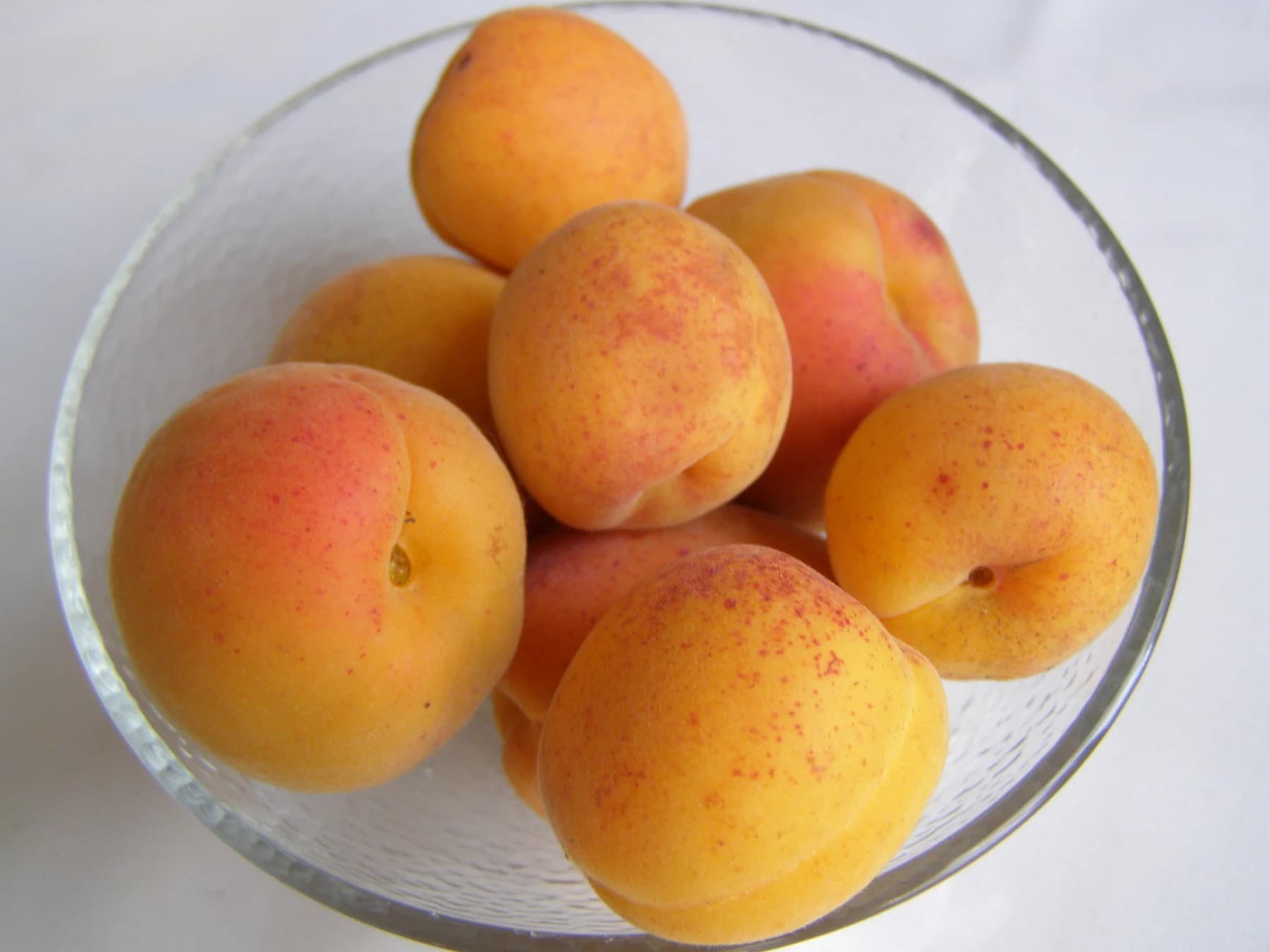
- 4. Apricot fruit photograph — Kmtextor — July 11, 2009; CC BY-SA 4.0. Apricots in a glass bowl, photographed in Germany. Product reference, not a local orchard, cultivar identification or harvest-method demonstration.
- 5. Apricot photograph license — CC BY-SA 4.0 — Creative Commons Attribution-ShareAlike 4.0. The resized photograph retains its original share-alike license.
Image credits
- Apricot fruit. Photo: Kmtextor, CC BY-SA 4.0; resized under the same license.
Figures are published averages or study assumptions for the places named, not guarantees for your field. Check current local recommendations and product labels before acting.
Some visuals in this guide are illustrations rather than photographs of a specific farm. See image credits.