

How to grow saffron commercially
Saffron production starts with healthy Crocus sativus corms and ends with carefully dried red stigmas. Plan the field, daily flower picking and processing together. Start with a measured trial before expanding acreage.
Scope: Commercial production reference based on University of Vermont research. Vermont depth and spacing describe the cited system. Adjust them to your field, climate, corm size and stand duration. Updated 2026-10-16.
At a glance
Choose planting conditions by weather and corm stage
- Establish dormant corms before active growth
- Coordinate dormant, healthy planting stock with a prepared bed and the local transition from the warm dormant period to cooler growing conditions. Plant promptly after delivery rather than holding stock for a fixed calendar month. Confirm crop stage and delivery timing with the supplier.1,2,3
- Prioritize drained soil and controlled moisture
- Choose a well-drained bed with no standing water in the corm zone. During active establishment, maintain moisture without saturation. Check actual field moisture and expected rain before irrigating. Rainfall assumptions from Vermont do not establish the water needs of a dry or irrigated production district.1,2
- Understand the temperature sequence
- A controlled study found favorable flower formation at 23–27°C during corm incubation, followed by flower emergence after cooling to about 17°C. These describe distinct crop stages. They are not an ideal soil-temperature range for planting. Use the warm-to-cool seasonal pattern, corm dormancy and field drainage to plan establishment, then validate timing locally.8
Plan the field, buyer and processing capacity
- Resolve drainage first
- Inspect how the corm zone drains after rain or irrigation. Prolonged standing water can rot corms. Raised beds can help only when water can leave the bed. Use a soil test and local agronomic advice to set amendments instead of copying a blanket fertilizer rate.1
Establish healthy corms in a drained production bed
- Verify stock identity and grade
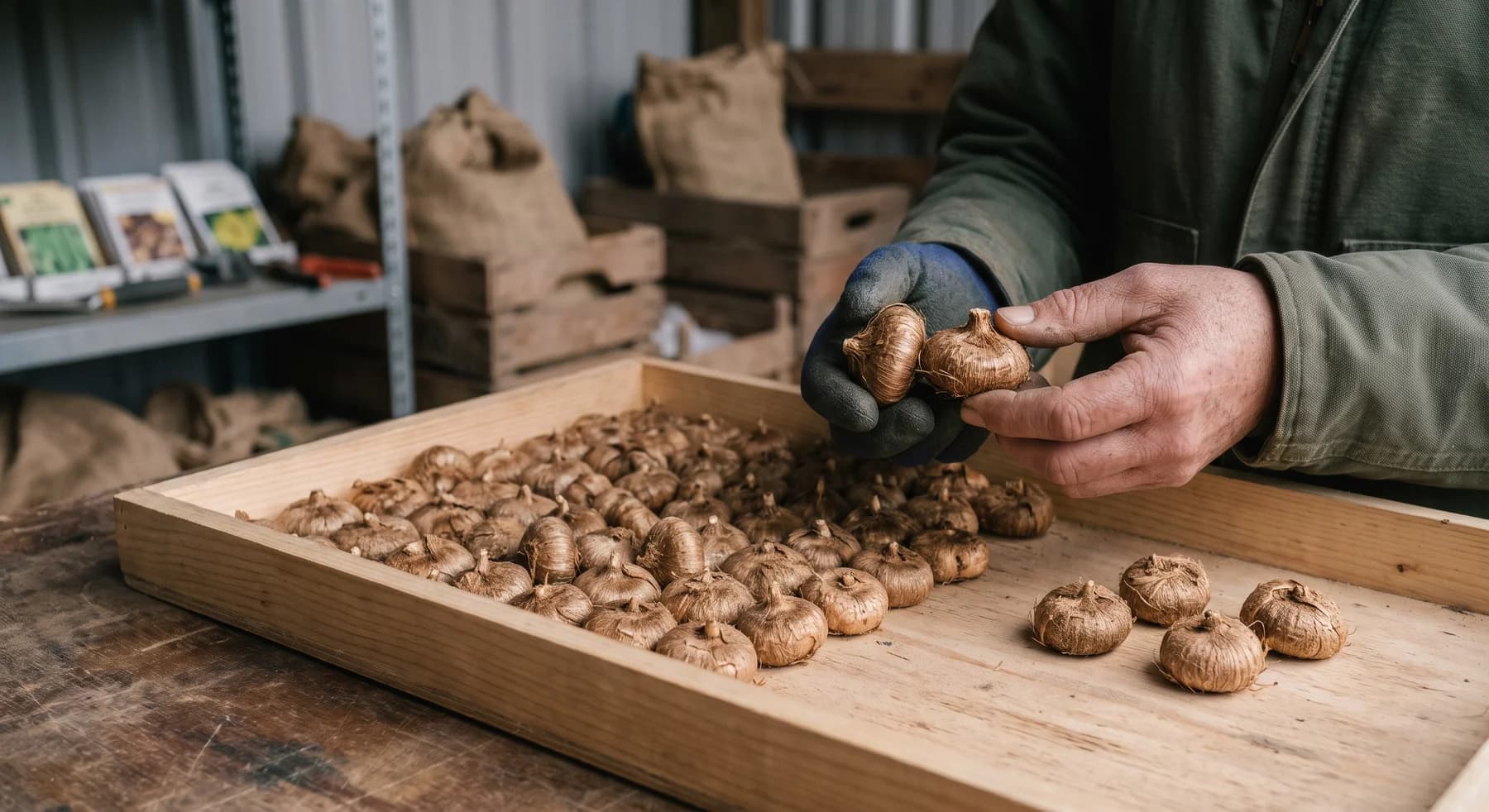
- Buy traceable Crocus sativus corms and record supplier, lot, size and condition. UVM suggests 9–10 cm or larger circumference for flowering stock. Circumference is not diameter. Larger stock can support first-year flowering, but a size grade does not guarantee yield.3
- Prepare before delivery
- Resolve drainage, weed pressure, access and water supply before corms arrive. UVM trials used light sandy loam; prolonged standing water can rot corms. Raised beds are one production option, but must drain rather than hold water around the corms.1
- Treat depth and density as trial variables
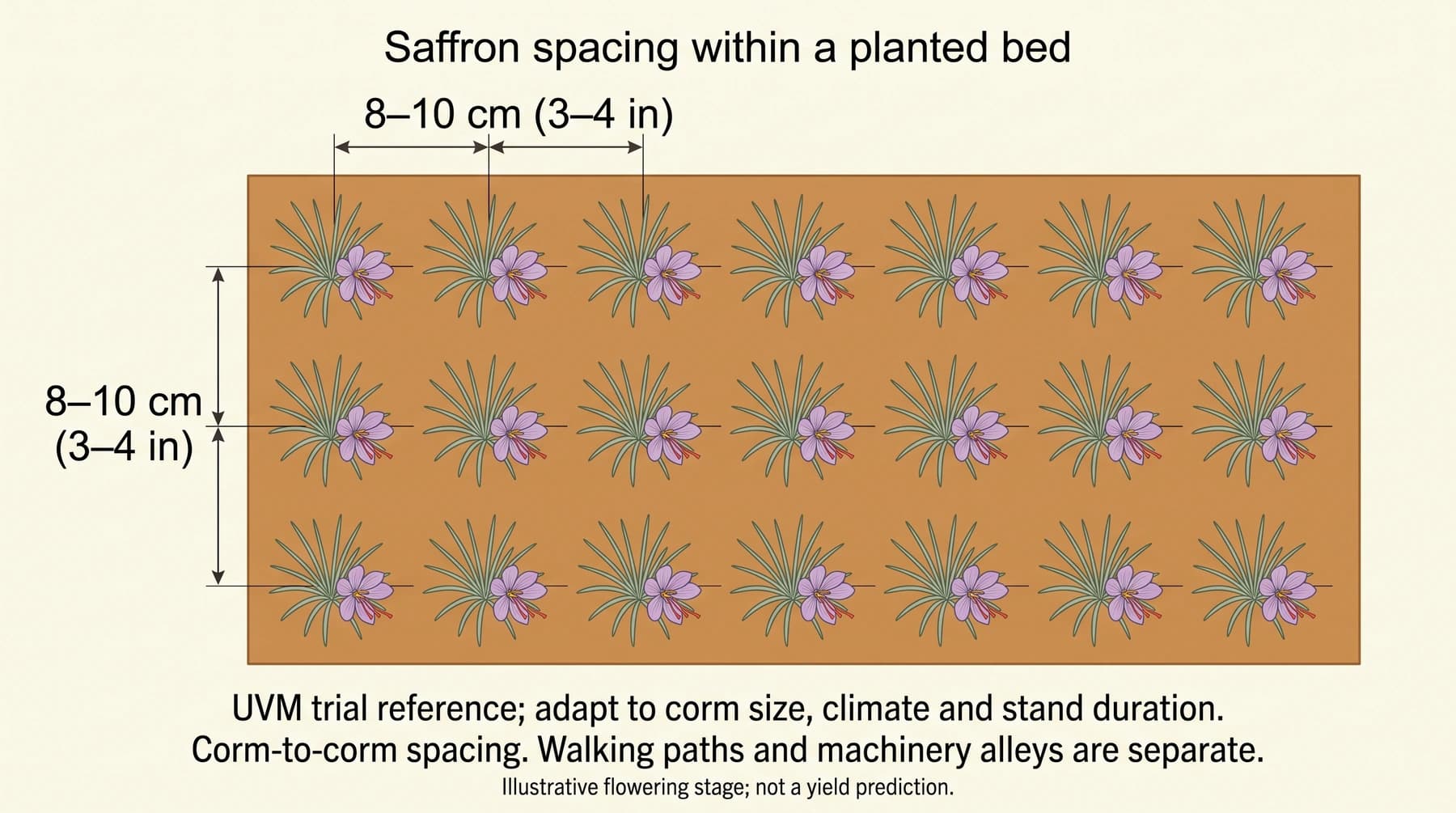
- The UVM reference covers corms with about 15 cm (6 in) of soil and spaces them 8–10 cm (3–4 in) apart in the planted bed. The authors say climate, corm size and stand duration change the appropriate layout. Retain separate walking or equipment access and compare layouts before scaling.1
Manage the recurring corm cycle
- 1
Sprout and flower
Observe autumn crop stage; pick flowers as they become ready.
- 2
Keep green foliage
Leaves support daughter-corm growth after spice harvest.
- 3
Observe senescence
Leaves yellow and dry as the active cycle ends.
- 4
Dormancy and renewal
Avoid routine watering of dormant corms; lift crowded stands by plant stage.
- Preserve active foliage
- After flowering, leaves remain active and support daughter corms above the parent corm. Avoid cutting green foliage during flower harvest or treating the crop as finished when picking ends.2,4
- Base irrigation on stage and field moisture
- During active growth, maintain moisture without saturation. Vermont outdoor rainfall assumptions do not establish an irrigation schedule for this region. Check moisture in the actual corm zone, drainage and crop stage. Stop routine irrigation for confirmed summer-dormant corms remaining in soil.1,2
- Inspect declining patches
- Record missing plants, weak growth and soft corms. Keep suspect lots separate and obtain a diagnosis before changing management. At renewal, discard diseased or damaged corms away from production beds and retain the protective brown husk on healthy stock.7
- Renew when the stand requires it
- Daughter corms progressively crowd and become shallower. UVM describes reassessing stands around years 4–5 and lifting after leaves have fully dried. Use local senescence and corm condition to set the operation date.7
Organize daily flower harvest and separation
- Pick by flower stage
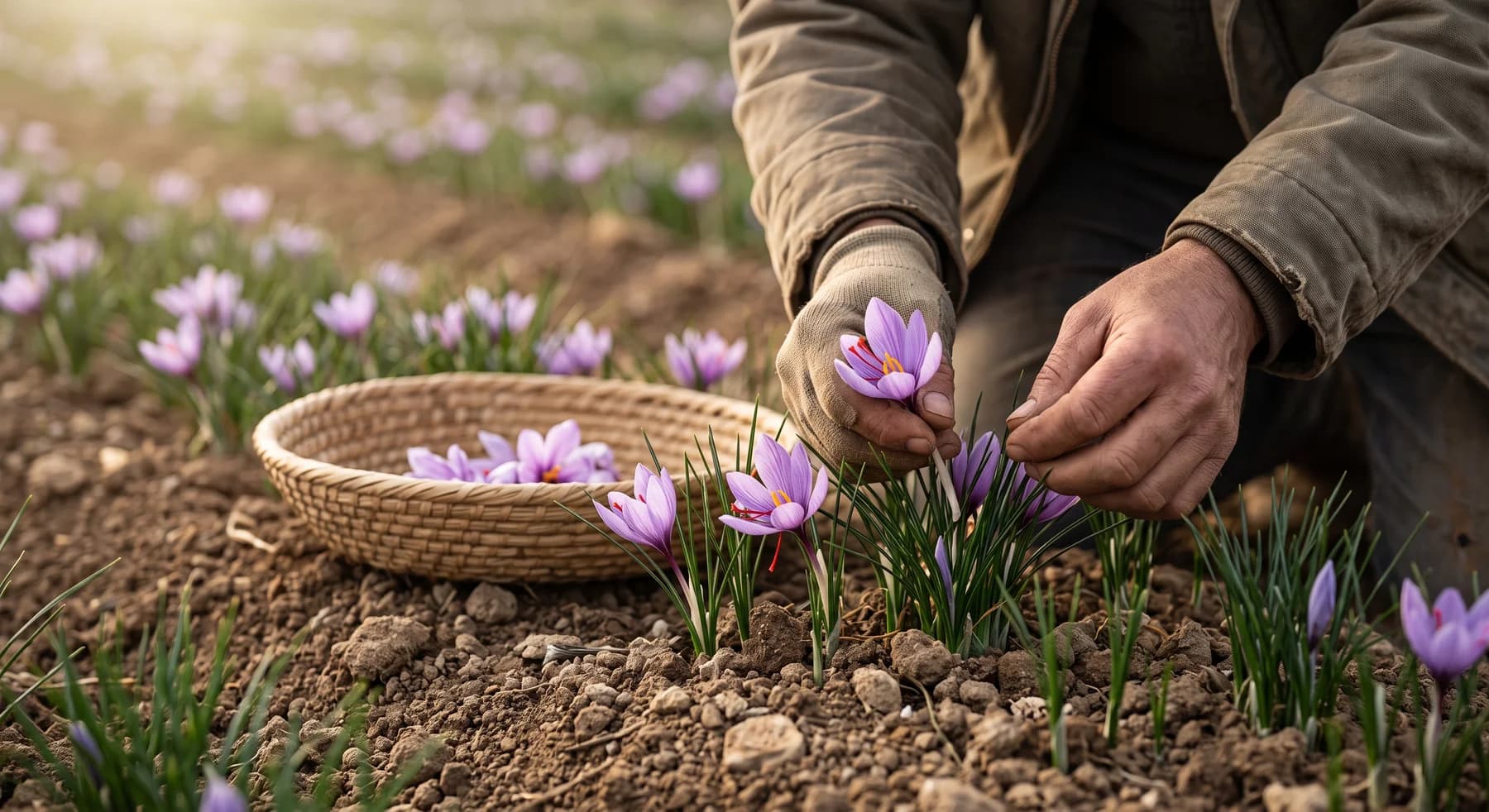
- UVM recommends fully elongated flowers just beginning to open. Check beds daily at peak bloom. Rain-wet, dewy or frozen flowers should dry or thaw before picking. Keep foliage intact and use clean shallow collection containers.4
- Harvest the red stigmas
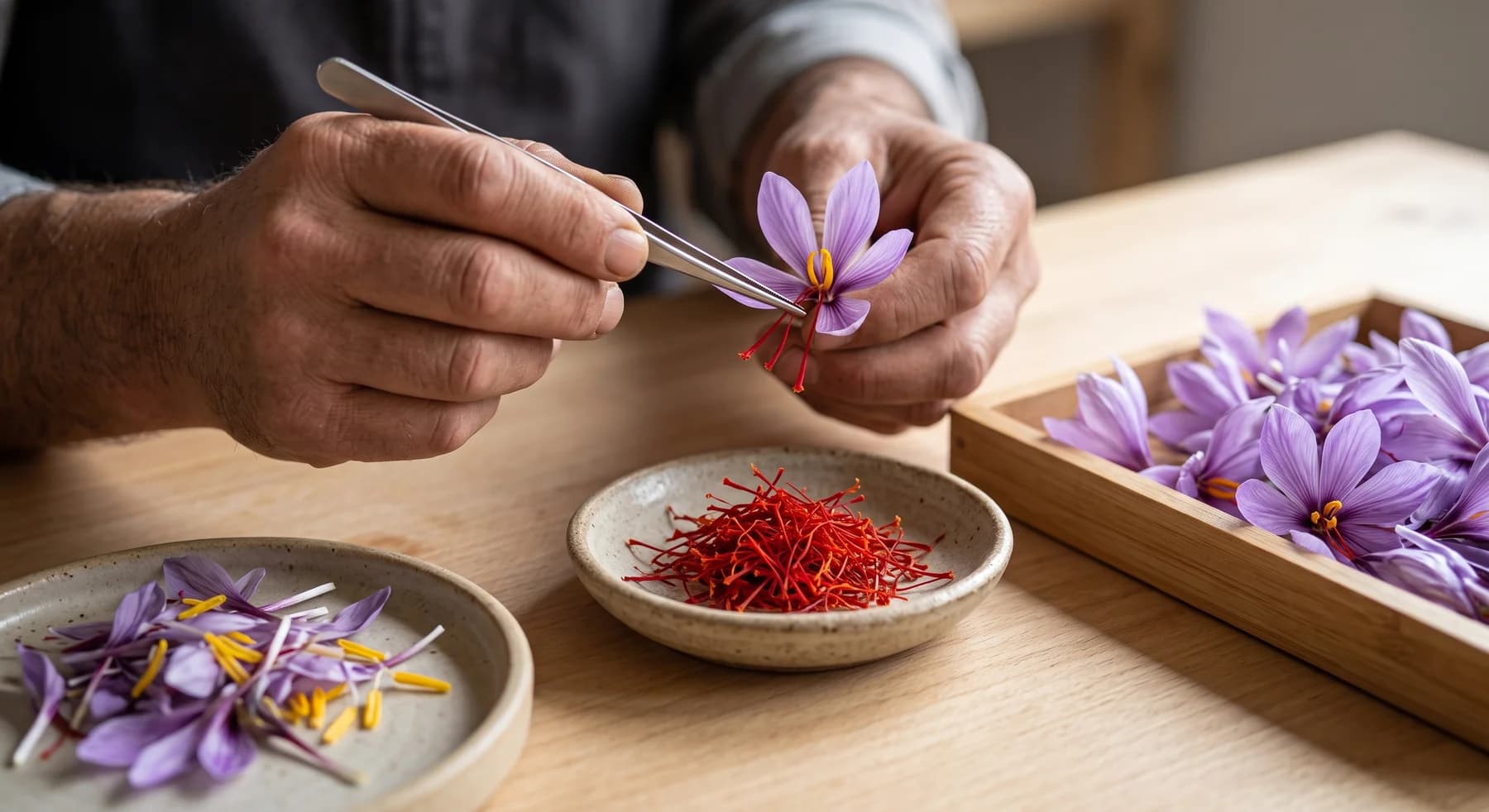
- The spice is the red stigma tissue. Separate it from the yellow stamens and purple petals. Keep the flower lot protected from direct sun and process promptly; refrigerate flowers when immediate separation is impossible.4,5
- Plan the processing bottleneck
- Have trained workers, clean surfaces and dryer capacity ready before peak bloom. The UVM best-practice reference favors separation within a few hours, with refrigeration if delayed and completion within 24 hours. Record each harvest date and lot.5
Validate drying and protect the finished lot
- 1
Pick and identify
Collect ready flowers in clean containers; assign a harvest lot.
- 2
Separate promptly
Retain red stigmas and keep the processing surface clean.
- 3
Dry and verify
Use a recorded process and check the moisture endpoint.
- 4
Cool and seal
Weigh cooled saffron; store airtight, away from light and humidity.
- Control the process
- Spread separated stigmas without overlap on clean trays. Check for uneven drying and record equipment, load, temperature and duration. The UVM best-practice target is less than 12% water content; brittle threads are an inspection cue, not a moisture test.5
- Avoid copying an oven timer
- University drying trials compared different temperatures and durations and reported conflicting findings across studies. Establish a repeatable process for your equipment and tray load rather than assuming one timer guarantees quality. Avoid unvalidated ambient drying in humid conditions.5,6
- Cool, weigh and store
- Cool fully before weighing and sealing in airtight glass. Protect the dried product from light and humid air. Keep lot identity through separation, drying and storage so a buyer can trace the finished saffron back to the harvest.5
Use the trial to decide whether to expand
Build the farm budget from measured saleable dried weight and actual work time. A retail price or a grower anecdote does not establish the return from a new field.
Frequently asked questions
- Is saffron an annual crop?
- Saffron is a perennial corm crop. UVM describes stands commonly maintained for 4–5 years before renewal. First establishment is separate from the recurring flowering, foliage and dormancy cycle.
- When are saffron corms planted?
- Establish dormant corms in a prepared, well-drained bed before local active growth begins. Match delivery to that crop stage and the transition toward cooler growing conditions. No universal calendar month or validated planting-soil temperature is supplied by the cited references.
- Can saffron be grown from seed?
- Commercial saffron uses Crocus sativus corms. The crop is sterile. Buy traceable stock and check species identity, supplier lot, size and condition.
- How far apart are saffron corms planted?
- UVM trials use 8–10 cm between neighboring corm centers in both directions inside a close-planted bed, with about 15 cm of soil cover. Access alleys are separate. Adjust depth and density to climate, corm size and stand duration.
- Which flower parts become saffron?
- The red stigmas are separated and dried. Yellow stamens and purple petals are different flower parts and are not the spice.
- How should a farm estimate saffron returns?
- Use measured saleable dried weight, corm losses, labor, processing costs and buyer terms from your trial. Retail prices and another farm’s harvest do not establish your yield or margin.
Regional guides and field planning
Sources and image credits
- 1. University of Vermont — Saffron cultivation: descriptions of planting methods — September 2021. Vermont trial methods: corm sourcing, drainage, depth and density. Adjust the establishment plan to local conditions.
- 2. University of Vermont — Life cycle of saffron — June 2017. Perennial corm development, autumn flowering, foliage and summer dormancy. Timing varies with climate.
- 3. University of Vermont — Where can you order saffron corms? — July 2020. Crop identity, corm sourcing and circumference grades. Vendor mentions do not imply current availability or certification.
- 4. University of Vermont — Harvesting saffron flowers — August 2021. Flower stage, daily hand harvest and handling. Follow local bloom and weather conditions.
- 5. University of Vermont — Saffron post-harvest handling best practice recommendations — March 2023. Sanitation, prompt separation, drying endpoint, lot records and storage.
- 6. University of Vermont — Saffron drying methods — September 2021. Comparative drying trials. Temperature and time combinations require validation for the equipment and load.
- 7. University of Vermont — Saffron corm harvesting — July 2021. Dormancy-based lifting, daughter-corm crowding, corm health and storage.
- 8. Molina et al. — Temperature effects on flower formation in saffron (Crocus sativus L.) — 2004. Controlled corm incubation and observations of crop stages in Spain. Flower-development temperatures are not validated field planting-soil thresholds.
Image credits
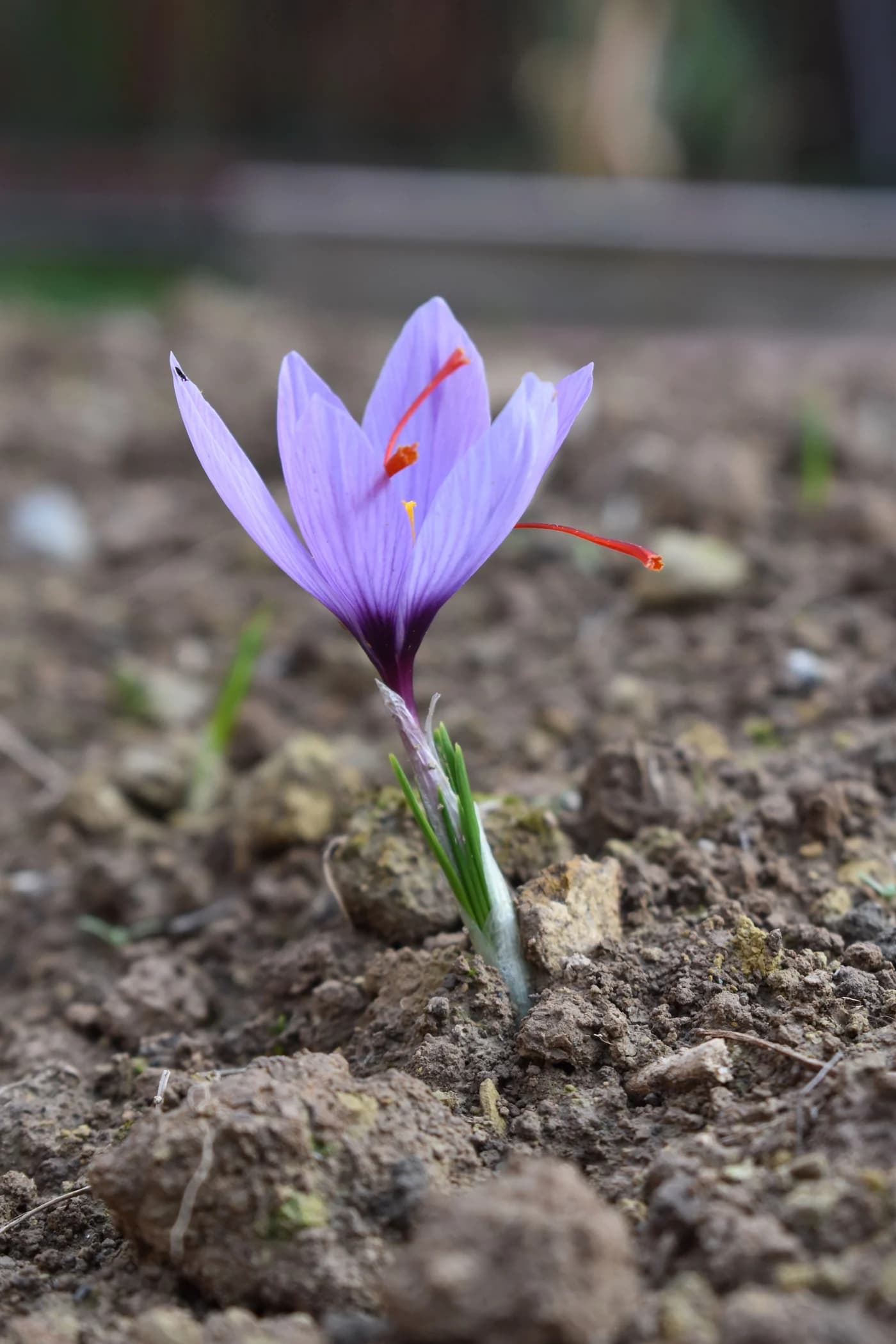
- Saffron flower and red stigmas in Srinagar, India. Photo: Ovais Ibn Farooq / Pexels. Pexels License.
- Dormant saffron corm inspection. Illustration.
- UVM trial reference: 8–10 cm (3–4 in) between adjacent corm centers in both directions within the planted bed. Each short arrow measures one interval. Access alleys are separate. See source 1. Schematic illustration.
- Hand collection of saffron flowers. Illustration.
- Separating the red stigmas before drying. Illustration.
Figures are published averages or study assumptions for the places named, not guarantees for your field. Check current local recommendations and product labels before acting.