

Commercial green bean farming
Commercial snap beans are grown for fresh markets or processing. Choose the variety, field layout, harvest method and cooling capacity together because processing grade, mechanical access and fresh-pod quality have different requirements. This guide covers field production of snap beans, not dry beans or lima beans.
Scope: Commercial bush snap bean production, with regional field references from Texas, Georgia and the Mid-Atlantic. Row layouts, planting thresholds and input rates are examples, not a universal prescription. Updated 2026-10-16.
At a glance
Choose the market, variety and harvest method
Fresh-market and processing crops may need different pod types, grades, maturity targets and harvest arrangements. Confirm those requirements before buying seed.
- 1
Confirm the buyer
Set the crop type, grade, quantity and delivery requirements.
- 2
Select a variety
Match pod type, maturity and harvest pattern to the contract.
- 3
Calibrate planting
Set the planter for the seed lot, target stand and machinery.
- 4
Schedule harvest
Line up labor or machine capacity and transport.
- 5
Cool or process promptly
Remove field heat or deliver within the processor’s schedule.
- Agree on the outlet first
- Processors may set pod diameter, sieve size, quantity and delivery dates. Fresh-market buyers may require repeated hand picks, grading, packing and fast cooling. Match the cultivar and harvest capacity to the actual outlet.1,2
- Match plant type to harvest
- Bush snap beans tend to set a concentrated crop that suits once-over machine harvest. Runner or pole types set over a longer period and may need repeated picking; the Georgia reference describes three to ten picks in some systems. This guide focuses on commercial bush fields.2
Prepare a warm, well-drained field
| Reference | Row layout | Within-row target | How to use it |
|---|---|---|---|
| Mid-Atlantic, 2024–25 | 30–36 in (76–91 cm) rows | 6–10 plants per ft (30 cm) | Standard regional example; narrow rows may complicate later cultivation |
| Georgia Extension | 30–36 in (76–91 cm) typical; 18–24 in (46–61 cm) is another trialled layout | 5–7 seeds per ft typical; 4–6 in narrower rows | Match planter, variety, harvest equipment and field access |
| Texas A&M commercial profile | 38–40 in (97–102 cm) raised beds | About 2 in (5 cm) between seeds | Archival Texas example; verify current local and equipment requirements |
- Wait for suitable soil and air conditions
- Snap beans are frost-sensitive. The archival Texas A&M commercial profile gives 60–65°F soil as a spring direct-seeding reference. Use the locally recommended threshold and actual seed-zone temperature rather than a shared planting date.3
Set a uniform stand
Between rows: 76–91 cm (30–36 in) between rows · Within the row: 6–10 plants per 30 cm (1 ft) of row
One commercial reference layout, not a global planting prescription. Narrow rows, seed size, cultivar and harvest equipment can change the target.
Maintain moisture and monitor the crop
- 1
Emergence
Check plant population, crusting, gaps and early weed pressure.
- 2
Canopy growth
Maintain drainage and correct nutrient issues from field evidence.
- 3
Bloom and pod set
Avoid moisture stress and scout for pests affecting marketable pods.
- 4
Pre-harvest
Check pod grade, harvest readiness, equipment and cooling capacity.
- Protect flowering and pod set from water stress
- The Texas, Georgia and Mid-Atlantic production references all emphasize reliable moisture for crop development. Use field soil-moisture checks, rainfall and irrigation-system capacity to schedule water; their regional seasonal totals are not interchangeable.1,2,3
Harvest to grade and cool promptly
- Use pod condition, not just days after planting
- Georgia Extension describes bush snap beans harvested at mature green while pods remain tender. Processor sieve standards or the fresh-market grade determine the acceptable range. Sample the field and coordinate with the buyer before the main pass.1,2
- Avoid over-mature pods
- Leaving pods on the plant too long can make them tough and fibrous and may reduce later production. Bush crops can have a concentrated set; runner types may need repeated harvests.2
- Remove field heat quickly
- Snap beans deteriorate rapidly after picking. The Georgia postharvest reference recommends prompt cooling and gives 5–7.5°C (41–45°F) as a storage range for its system. Confirm temperature, humidity, packaging and delivery limits with the buyer.2
Frequently asked questions
- When should commercial farmers plant green beans?
- There is no one planting date for every region. Plant after frost risk and local soil-temperature limits are met, then use the crop calendar for the district and intended harvest market.
- Are green beans direct-seeded or transplanted?
- Commercial snap beans are generally direct-seeded. The seed and equipment are suited to direct planting, so a nursery transplant stage is usually not needed.
- What row spacing should a snap bean field use?
- It depends on the variety, seed rate, cultivation and harvester. Mid-Atlantic and Georgia sources give both 30–36-inch rows and narrower alternatives; the Texas A&M profile describes 38–40-inch beds.
- How much water do green beans need?
- Maintain moisture through flowering and pod set without keeping the root zone saturated. Set irrigation from field moisture, rainfall, soil and local crop guidance rather than a single seasonal total.
- When are snap beans ready to harvest?
- Harvest when pods meet the variety and buyer grade while remaining tender. Processing contracts may set a sieve-size target; fresh-market crops also need rapid packing and cooling.
- Can one spacing or harvest method fit all green bean farms?
- No. Bush beans for machine harvest, fresh-market hand picking and runner types need different row arrangements, maturity timing and field access.
Regional guides and field planning
Sources and image credits
- 1. University of Maryland Extension — 2024–2025 Commercial Vegetable Production Recommendations — 2024–2025 edition. Mid-Atlantic snap bean planting, plant density, row layout, regional heat cautions and harvest guidance.
- 2. University of Georgia Cooperative Extension — Commercial Snap Bean Production in Georgia — Commercial production bulletin, accessed October 2026. Bush and runner production systems, varieties, planting, irrigation, scouting, harvest, grading and postharvest cooling. Historical budgets and market statistics are not presented as current.
- 3. Texas A&M AgriLife Extension — Bean: Green/Snap, Commercial and Specialty Crop Guides — Archival Texas commercial guide, 2011. Texas soil, temperature, bed, irrigation and harvest references. The archived pesticide examples are not repeated.
- 4. Oregon State University Extension — Snap Bean: Western Oregon Nutrient Management Guide — Extension guide, accessed October 2026. Nutrient management for western Oregon bush snap beans; recommendations are local to the described production area.
- 5. Jeffery Martin — Green beans in a pile — December 19, 2013. Harvested snap-bean product reference; no specific region or cultivar is asserted. Resized and converted to WebP.
- 6. Photo license — CC0 1.0 — CC0 1.0. Public-domain dedication for the green-bean photograph.
Image credits
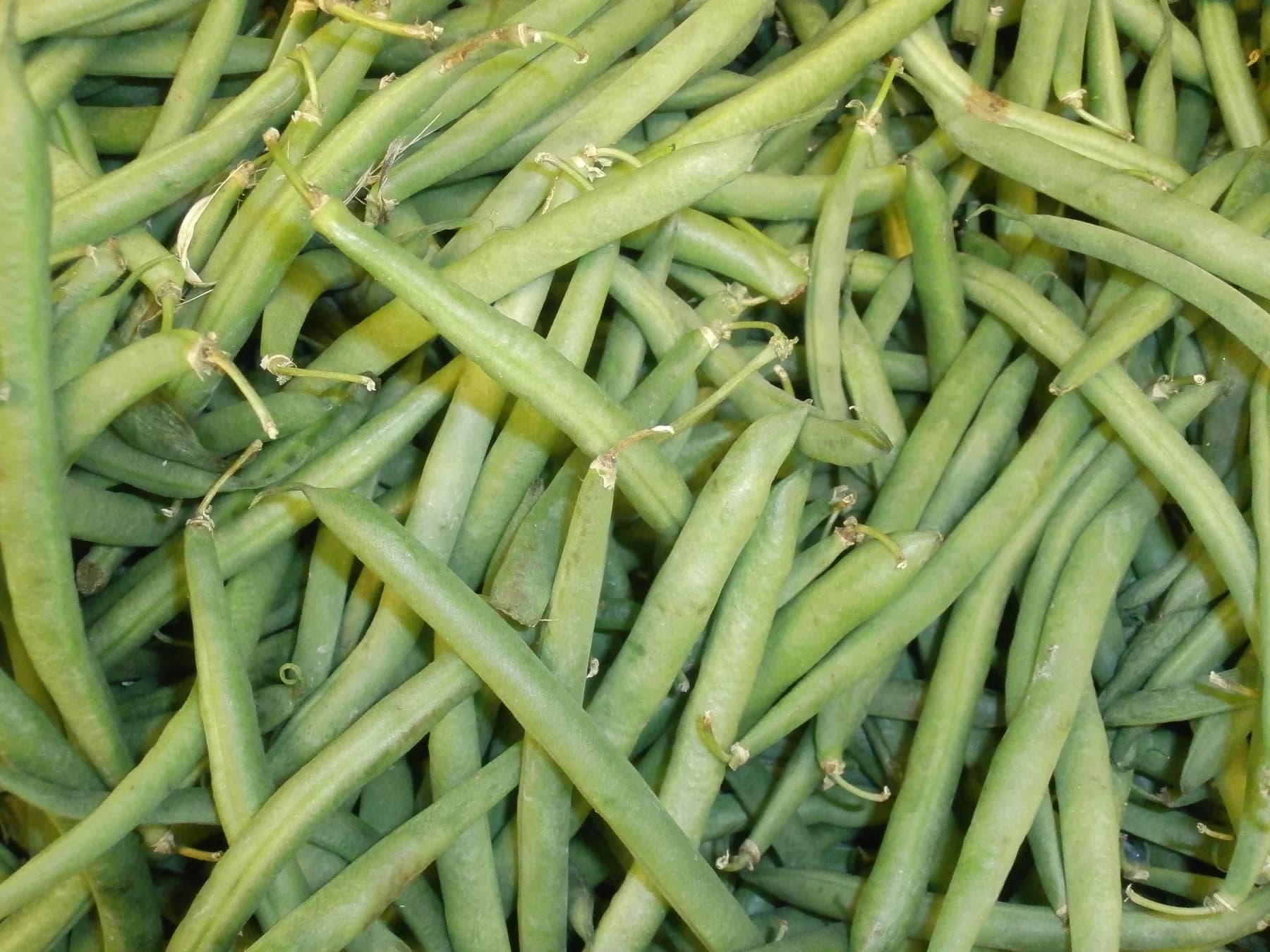
- Harvested snap-bean pods. Photo: Jeffery Martin, CC0; resized and converted to WebP.
Figures are published averages or study assumptions for the places named, not guarantees for your field. Check current local recommendations and product labels before acting.