

Green bean farming in Texas
Plan a Texas snap-bean crop around your buyer, planting conditions and harvest capacity. Choose a bush variety suited to fresh sales or processing, check seed-zone temperature and allow for heat during flowering. The Winter Garden planting and harvest months below are historical local references. Confirm dates for your district with current Extension advice.
Scope: Commercial snap-bean field production in Texas, from seedbed preparation and irrigation to harvest and cooling. The Winter Garden calendar is a historical regional reference. Updated 2026-10-07.
At a glance
- Documented Texas regions
- Winter Garden and High Plains are named in the Texas A&M profile; current acreage by region is not established here2
- Spring soil reference
- 60–65°F (15.6–18.3°C) for direct seeding in the archived commercial guide1
- Temperature response
- 55–60°F nights and 80–85°F days; the guide associates days above 90°F with blossom drop1
- Field layout reference
- 38–40 in (97–102 cm) raised beds; about 2 in (5 cm) within-row spacing1
- Water reference
- 10–15 in (254–381 mm) seasonal water; bloom and pod set are critical stages1
- Texas statistics
- USDA’s 2025 snap-bean summary does not publish a separate Texas estimate3
Planting and harvest calendar for Texas
Use the source-backed production windows to coordinate establishment, crop care and harvest. Production districts and cultivars can have different cycles; the historical climate adds context for the field plan.
Planting: Historical Winter Garden reference2
An undated Texas A&M crop profile places bush snap-bean planting in February–April and August–September in the Winter Garden area. This is a historical local pattern, not a current statewide schedule; use measured seed-zone conditions and current buyer and Extension guidance.
Harvest: Historical Winter Garden harvest reference2
The same Texas A&M profile lists May–June and October–November harvest for the Winter Garden calendar. Harvest the field by pod maturity and buyer or processor specifications; these months do not apply statewide.
Planting climate heatmap
Reference period: 1996-01-01 to 2025-12-31. ERA5-Land monthly mean soil temperature at 0–7 cm, air temperature and frost days at the regional reference point (31.5, -99). Select a month to inspect its historical conditions.
This preliminary screen combines the archival Texas A&M spring minimum of 60°F (15.6°C) with its fall reference of soil below 85°F (29.4°C). It compares monthly mean 0–7 cm soil temperature, not actual seed-depth conditions. Check the appropriate local season and expected heat during flowering before planting.1
Muted green: temperature fits the sourced range and no mean frost days recorded. Neutral tiles name the temperature or frost constraint. Gray: missing data. This screen does not assess the full growing season, field drainage or crop maturity.
February: Too cold
The monthly mean is outside the lower planting limit of 15.6°C.
- Mean topsoil temperature
- 12.2°C
- Mean air temperature
- 12.3°C
- Mean frost days per month
- 4.4 days
These are monthly means at one reference location. They describe seasonal field conditions, not crop maturity, actual seed-zone conditions, frost forecasts or a planting recommendation. Harvest bands follow the crop-specific production sources above.
Climate source: Open-Meteo Historical Weather APIChoose the market and production system first
Confirm the outlet before ordering seed or setting acreage. Fresh-market and processing beans can have different variety, stand, harvest and handling requirements.
- Match the type to the buyer
- The Texas A&M profile describes bush snap beans in the Winter Garden area, some High Plains production, and pole-type beans in East Texas fresh-market channels. Its processing share and acreage estimates are not dated, so they should not be used as current market totals.2
- Check the current Texas data limit
- USDA NASS reports snap-bean production for 2023–2025 but does not publish a separate Texas estimate in its state table. The United States totals do not establish Texas acreage, yield or revenue. Use verified local figures for your market and cost planning.3
- Secure harvest capacity
- Before planting, agree on the market grade, picking or machine-harvest arrangement, delivery schedule and cooling capacity. The older Texas A&M guide lists both hand and machine harvest, including bulk bins for machine-harvested crops.1
Prepare a warm, well-drained seedbed
Texas A&M’s commercial profile favors well-drained silt loams, warns against crusting and high salt, and gives pH 5.5–6.8 as a reference. Test each field rather than treating that old profile as a soil prescription.
- Spring seed-zone reference15.6–18.3 °C60–65°F soil for direct seeding
- Night temperature12.8–15.6 °C55–60°F
- Day temperature26.7–29.4 °C80–85°F
- Blossom-drop caution32.2 °CAbove 90°F air temperature
- Plant into warm soil
- The archival commercial guide gives 60–65°F (15.6–18.3°C) as the spring soil range for direct seeding. The regional heatmap checks monthly shallow-soil means only; measure the actual seed zone and consider the expected weather before planting.1
- Protect bloom from heat
- The same guide describes cool nights of 55–60°F (12.8–15.6°C), warm days of 80–85°F (26.7–29.4°C), and blossom drop when air temperatures exceed 90°F (32.2°C). These are historical crop-profile references, not a forecast or a statewide guarantee.1
- Avoid crusting and salinity problems
- Use a soil test and field history to identify crusting, drainage and salt risks. Establishment can fail when direct-seeded beans cannot emerge through a crust or when salts restrict the seedling root zone.1
Set up the bed and stand
| Field detail | Published reference | Use it as |
|---|---|---|
| Raised-bed width | 38–40 in (97–102 cm) | A dated Texas production example; verify bed and wheel-track fit for the operation |
| Within-row seedling spacing | About 2 in (5 cm) | A starting reference, not a complete planter prescription |
| Between-row spacing | Not specified in this source | Set row centers from the bed plan, equipment and current variety guidance |
Sources1
- Calibrate for the target stand
- The older commercial guide lists 6–10 seeds per foot and 70–80 lb/acre, but seed size, germination, planter and current cultivar choice affect the actual rate. Confirm a current seeding rate with the seed supplier or local Extension before using those archival figures.1
- Keep seed placement even
- Calibrate the planter for the seed lot and soil moisture. Confirm sowing depth with your seed supplier and local adviser, then check emergence across representative beds. The archived Texas profile does not give a numeric sowing depth.1
Maintain moisture through bloom and pod set
- 1
Before planting
Test soil and confirm the field, variety, buyer and harvest system.
- 2
At establishment
Seed into warm, moist soil and check that the stand emerges uniformly.
- 3
At bloom and pod set
Avoid moisture stress; these are critical water-demand stages in the Texas profile.
- 4
Before harvest
Coordinate maturity, labor or machine capacity, cooling and delivery.
- Treat the water figure as a planning benchmark
- The 2011 Texas A&M commercial guide lists 10–15 inches (254–381 mm) of seasonal water and identifies bloom and pod set as critical moisture stages. It does not replace a local irrigation schedule. Account for rainfall, soil, rooting depth, system capacity and current weather.1
- Keep water supply reliable at reproductive stages
- Check soil moisture and irrigation uniformity before flowering begins. A seasonal total alone will not prevent stress if water is unavailable when flowers and pods are developing.1
Scout crop health and protect marketable quality
- Scout the crop and field edges
- The Texas A&M profile lists aphids, cutworms, white grubs, whiteflies, beet armyworms and leafhoppers among pests reported on Texas green/snap beans. The same profile names white and gray molds, Sclerotinia, Rhizoctonia, bacterial blights, rust and Pythium. Use current diagnostic and integrated-management advice for the field.2
- Use current crop-protection advice
- Identify the pest or disease before choosing a treatment. Check current Texas guidance and the product label for the crop and intended use. The archived commercial profile contains older examples that may no longer be registered.1
Harvest promptly and protect the cold chain
- Use days to harvest as a check, not a deadline
- The old Texas A&M commercial guide gives 40–60 days after planting as a harvest reference. Temperature, variety and field conditions change crop development, so base harvest on pod condition and the buyer or processor specification.1
- Prevent quality losses in the field and shed
- The guide warns that delayed picking increases fiber and seed starchiness. Texas A&M’s commercial handbook also notes that green beans lose quality quickly in field heat, so plan harvest, shade, grading and rapid cooling before the crop is ready.1,4
- Interpret harvest months narrowly
- May–June and October–November are listed for the Winter Garden area in the undated Texas crop profile. They are not verified statewide commercial harvest forecasts.2
Frequently asked questions
- When do farmers plant green beans in Texas?
- An undated Texas A&M crop profile gives February–April and August–September as historical Winter Garden windows. The archival commercial guide gives 60–65°F soil as a spring direct-seeding reference. Neither is a statewide planting schedule.
- What temperatures suit Texas snap beans?
- The older Texas A&M profile lists 55–60°F nights and 80–85°F days, and warns that air temperatures above 90°F can cause blossom drop. Check current field forecasts because that source is historical.
- How are commercial green beans spaced?
- A Texas A&M commercial guide describes 38–40-inch raised beds and about 2 inches within the row. It does not specify row-center spacing; set that from equipment and current field guidance.
- How much water do Texas green beans need?
- The archived commercial guide lists 10–15 inches of seasonal water, with bloom and pod set as critical moisture stages. Treat it as a historical planning reference and schedule irrigation for local rainfall, soil and system capacity.
- How long do snap beans take to harvest?
- The archived Texas commercial profile gives 40–60 days after planting. Use pod maturity and buyer or processor specifications, not the number of days alone.
- Does USDA publish a Texas snap-bean yield?
- The 2025 USDA NASS snap-bean summary does not provide a separate Texas state estimate. Its United States totals cannot establish a Texas yield.
Regional green beans guides
Local dates, soil-temperature history and sources for specific regions:
Sources and image credits
- 1. Texas A&M AgriLife Extension — Bean: Green/Snap, Commercial and Specialty Crop Guides — Archival Texas commercial guide, 2011. Direct seeding, soil and temperature references, bed and within-row spacing, irrigation, harvest timing, yield assumptions and handling. Pesticide examples and generalized input rates are not carried forward as current advice.
- 2. Texas A&M AgriLife — The Crops of Texas: Beans and Vegetables Legumes — Publication date not stated; accessed October 2026. Historical Texas crop context, including the Winter Garden planting and harvest pattern and production areas. It does not state a current survey period, so acreage and processing-share estimates are not presented as current.
- 3. USDA NASS — Vegetables 2025 Summary — Published February 2026. 2023–2025 snap-bean acreage, yield, production, price and value for named states and the United States. The report does not publish a separate Texas state estimate.
- 4. Texas A&M AgriLife Extension — Texas Vegetable Growers Handbook, Chapter X: Harvesting and Handling — Online handbook, accessed October 2026. Commercial vegetable harvest preparation, field-heat losses and postharvest handling context for Texas growers.
- 5. Jeffery Martin — Green beans in a pile — December 19, 2013. Harvested snap-bean product reference; no Texas location or cultivar is asserted. Resized and converted to WebP.
- 6. Photo license — CC0 1.0 — CC0 1.0. Public-domain dedication for the green-bean photograph.
Image credits
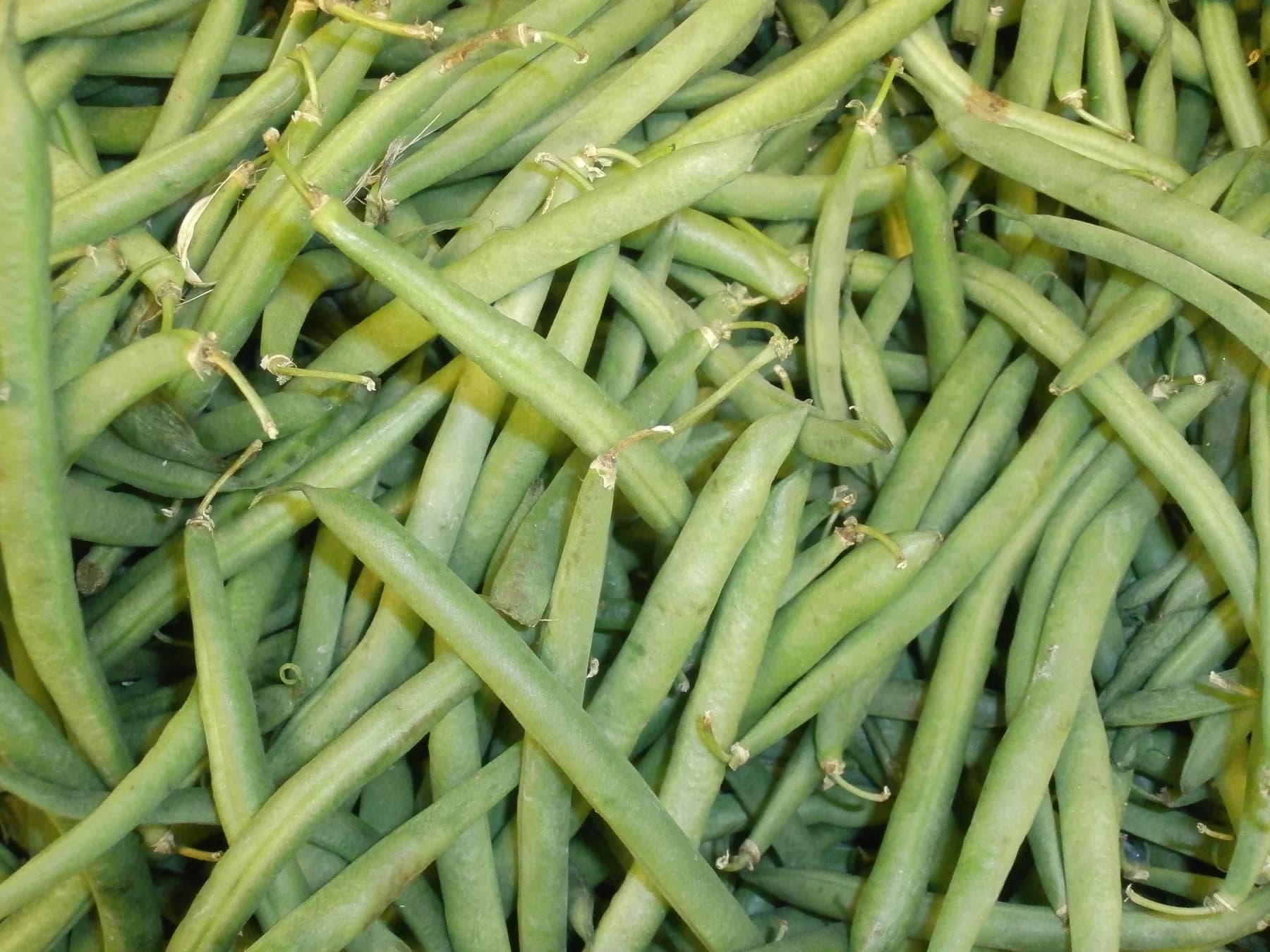
- Harvested snap-bean pods. Photo: Jeffery Martin, CC0; resized and converted to WebP.
Figures are published averages or study assumptions for the places named, not guarantees for your field. Check current local recommendations and product labels before acting.