

Growing triticale in Washington
The strongest Washington evidence is winter grain triticale in a semiarid inland Pacific Northwest dryland rotation. A nine-year WSU/USDA farmer-field trial near Ritzville records deep-furrow September drilling and grain yields; those are practices and outcomes from that farm system, not statewide recommendations or forage guidance.
By AgriAuditor. Updated .
Scope: Winter grain triticale in semiarid inland Washington dryland rotations. Forage and pasture systems are distinct and not covered.
At a glance
- Production system
- Winter grain in a no-till dryland rotation near Ritzville1
- Trial seeding practice
- First 10 days of September; deep-furrow drill; 17-inch rows; 50 lb seed/acre1
- Trial harvest
- Early August in the study system1
- Historical trial yield
- 63–111 bu/acre, 86 bu/acre mean over 2011–2019; not a Washington yield target1
Planting and harvest calendar for Washington
Use the source-backed production windows to coordinate establishment, crop care and harvest. Production districts and cultivars can have different cycles; the historical climate adds context for the field plan.
Planting: Ritzville winter-grain trial drilling1
The WSU/USDA farmer-field trial drilled during the first ten days of September to reach stored soil moisture. This is one dryland trial practice, not a statewide planting recommendation.
Harvest: Ritzville trial harvest1
The trial harvested in early August. Use crop maturity and current local conditions; the month band is a historical study reference, not a forecast.
Historical monthly climate
Reference period: 1996-01-01 to 2025-12-31. ERA5-Land monthly mean soil temperature at 0–7 cm, air temperature and frost days at the regional reference point (47, -119.5). Select a month to inspect its historical conditions.
Month tiles show mean topsoil temperature.
September historical conditions
- Mean topsoil temperature
- 21.8°C
- Mean air temperature
- 19.8°C
- Mean frost days per month
- 0.0 days
These are monthly means at one reference location. They describe seasonal field conditions, not crop maturity, actual seed-zone conditions, frost forecasts or a planting recommendation. Harvest bands follow the crop-specific production sources above.
Climate source: Open-Meteo Historical Weather APIChoose grain use and rotation before planting
- 1
Confirm grain end use
The cited system targets grain, primarily livestock-feed use.
- 2
Select the rotation position
Use the study’s dryland no-till context.
- 3
Check stored soil moisture
Establishment depended on stored moisture in the trial.
- 4
Plan a buyer or on-farm feed use
Match harvest and storage capacity to the end use.
Use the Ritzville drill setup as a trial reference
- 1
Measure stored moisture
Use field-specific soil moisture and fall conditions.
- 2
Prepare deep-furrow seeding
The study used a custom drill.
- 3
Set the trial row spacing
The reported configuration used 17-inch rows.
- 4
Calibrate the seed rate
The trial used 50 lb/acre; confirm seed size and local recommendations.
- Reported seeding details belong to one trial
- The study drilled in the first ten days of September using a custom deep-furrow drill, 17-inch rows and 50 lb seed/acre to reach stored moisture. This is a documented field practice, not a statewide planting date, seed rate or monthly feasibility classification.1
Manage fertility from field and rotation records
- 1
Test the field
Record soil depth, fertility and previous crop.
- 2
Track precipitation
Measure growing-season and stored soil moisture.
- 3
Scout stand and weeds
Record establishment, winter survival and crop competition.
- 4
Log inputs by year
Keep rate and timing connected to field conditions.
- Base fertilizer decisions on soil tests
- In the trial, nutrients were managed in relation to the comparable winter-wheat system and documented by season. The study site was a deep silt loam and cannot represent every Washington dryland field; base local decisions on soil tests and current WSU recommendations.1
Use trial harvest and yield with their limits
- 1
Check grain maturity
Use crop condition and harvest equipment readiness.
- 2
Plan early-August harvest capacity
The study’s date is a local historical reference.
- 3
Dry and store grain
Follow current buyer and storage moisture specifications.
- 4
Compare trial records
Benchmark only against the study’s field and year range.
- The 86 bu/acre mean is not an expected yield
- The 2011–2019 trial harvested in early August and reported 63–111 bu/acre, averaging 86 bu/acre. Those outcomes depend on the trial’s farm, cultivar and management and must not be represented as a Washington state average.1
Frequently asked questions
- What triticale is grown in Washington?
- The best documented regional system is winter grain triticale in semiarid inland dryland rotations near Ritzville.
- When was winter triticale drilled in the Ritzville study?
- The study drilled during the first ten days of September to reach stored soil moisture. This is one trial’s practice, not a statewide planting date.
- How much triticale seed was used in the trial?
- The study reports 50 lb/acre in 17-inch rows with a custom deep-furrow drill. Confirm current seeding advice and seed characteristics before using the number.
- What yield can Washington triticale farms expect?
- The 2011–2019 Ritzville trial reported 63–111 bu/acre and an 86 bu/acre mean. It is not a statewide yield forecast.
Put your own numbers in
Sources and image credits
- 1. WSU Crops & Soils — Winter Triticale in the Semiarid U.S. Pacific Northwest Drylands — Published 2021; trial years 2011–2019. Ritzville dryland grain system, rotation, seeding, harvest and year-specific yields.
- 2. WSU Extension — Historical forage triticale study — 1988. Different forage objective; cited only to maintain the grain/forage distinction.
- 3. Triticale crop-identification photo — Wikimedia Commons contributor — Wikimedia Commons; CC BY-SA 3.0. Crop-identification image only; it is not a photograph of the named region or a production recommendation.
Image credits
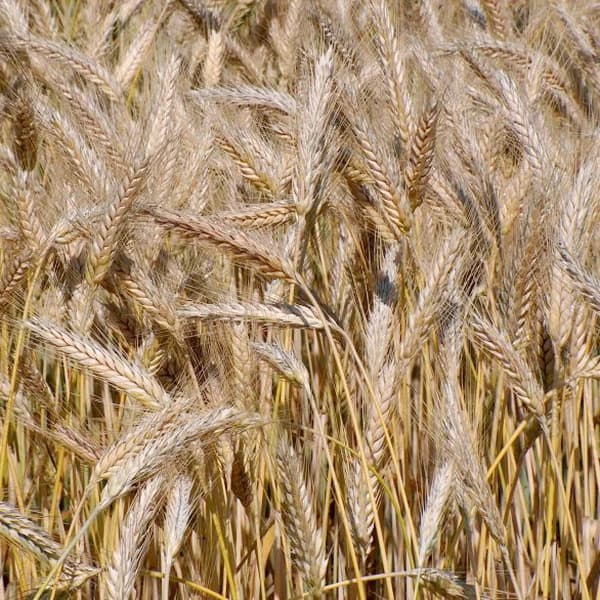
- Crop-identification photo; not a Washington production field. Photo: Wikimedia Commons contributor, CC BY-SA 3.0.
Figures are published averages or study assumptions for the places named, not guarantees for your field. Check current local recommendations and product labels before acting.