

Growing spinach in Texas
Texas spinach is grown for both fresh market and processing, with the Winter Garden as the principal documented production region. Older Texas A&M guides describe fall planting and winter-to-spring harvest; use those dates as historical commercial patterns, not a current climate-based planting recommendation.
Scope: Commercial spinach systems in Texas, especially the Winter Garden. Calendar and production figures are source-era references; verify current cultivars, labels, processor requirements and local field conditions. Updated 2026-10-07.
At a glance
- Principal production area
- Winter Garden; additional production is described on the High Plains and in the Lower Rio Grande Valley1
- Conventional bed reference
- Two to four seed rows on a 40-inch raised bed in the commercial profile3
- Baby-leaf profile
- Dense planting on an 80-inch bed; seed-row and in-row layout differs from conventional spinach3
- Current state acreage
- USDA discontinued Texas spinach estimates beginning in 2024; recent public state totals are unavailable7
Planting and harvest calendar for Texas
Use the source-backed production windows to coordinate establishment, crop care and harvest. Production districts and cultivars can have different cycles; the historical climate adds context for the field plan.
Planting: Historical commercial planting pattern1,2
An older Texas A&M account gives September–November planting statewide by production region; its 2004 Winter Garden conference notes late September to mid-October. Treat these as historical local observations, not monthly feasibility ratings or a current planting prescription.
Harvest: Historical Winter Garden harvest pattern1,2
The older state account describes November–April multiple harvests; the 2004 Winter Garden source describes mid-November through late March. Current crop stage, market type, weather and buyer schedule should set harvest decisions.
Historical monthly climate
Reference period: 1996-01-01 to 2025-12-31. ERA5-Land monthly mean soil temperature at 0–7 cm, air temperature and frost days at the regional reference point (31.5, -99). Select a month to inspect its historical conditions.
Month tiles show mean topsoil temperature.
September historical conditions
- Mean topsoil temperature
- 29.4°C
- Mean air temperature
- 26.3°C
- Mean frost days per month
- 0.0 days
These are monthly means at one reference location. They describe seasonal field conditions, not crop maturity, actual seed-zone conditions, frost forecasts or a planting recommendation. Harvest bands follow the crop-specific production sources above.
Climate source: Open-Meteo Historical Weather APIChoose fresh-market, baby-leaf or processing spinach
- 1
Fresh market
Select for leaf appearance, handling and the intended bunch or loose-leaf pack.
- 2
Baby leaf
Plan dense stands and a once-over cut suited to the target pack.
- 3
Processing
Confirm machine-harvest traits, field cleanliness, delivery volume and processor specification.
- 4
Secure the outlet
Processor and fresh-buyer schedules change the cultivar, harvest and handling plan.
- Keep regional crop dates in historical context
- Texas A&M describes the Winter Garden as the main production region and documents additional production areas. The cited planting and harvest months come from older extension material; they are not a present-day acreage map or a climate-derived sowing assessment.1,2
- Do not infer current acreage from unavailable statistics
- USDA NASS discontinued Texas spinach estimates beginning in 2024 and suppressed earlier state values in the cited summary. The extension sources establish production context but do not provide a current statewide acreage total.7
Use the historical season as a planning reference
- 1
Confirm local field conditions
The historic calendar does not replace current seed-zone temperature and field moisture checks.
- 2
Match the planting to the outlet
Fresh and processing crops have different crop durations and harvest standards.
- 3
Schedule successive harvests
The old state profile describes multiple harvests across its regional production season.
- 4
Update with current advice
Confirm current cultivar performance, buyer needs and local extension recommendations.
- Separate a month band from feasibility
- The September–November planting and November–April harvest bands summarize older Texas commercial practice. They do not classify individual months as feasible from historical climate data, and cannot account for today’s seedbed, field, cultivar or forecast conditions.1,2
Fit bed layout to the harvest system
- 1
Conventional crop
The extension profile describes two to four seed rows on a 40-inch raised bed.
- 2
Baby leaf
Its dense example uses an 80-inch bed with 15–30 seed rows and 1–2 inch in-row spacing.
- 3
Fit the seeder
Check drill width, seed delivery and bed shape before setting the final layout.
- 4
Fit harvest access
Keep the stand and field lanes compatible with the intended cutter and packout.
- Do not mix baby-leaf and conventional layouts
- The commercial profile describes two-to-four seed rows on a 40-inch raised bed for conventional spinach, but a much denser 15–30 rows on an 80-inch bed for baby leaf. Select one harvest system and calibrate the seeder and bed geometry to it.3
- Base fertility and irrigation on current field measurements
- The older profile gives generalized irrigation and fertilizer figures, while also directing growers to soil tests and tissue analysis. Treat those rates as historical context; use current soil and tissue results, water supply and local adviser guidance for the farm plan.3
Control weeds and monitor disease risk
- 1
Scout seedling establishment
High seed-zone temperatures can reduce stands; inspect uniformity after emergence.
- 2
Keep the crop clean
Weeds add hand-sorting work and can violate processor tolerances.
- 3
Track foliar disease
Local cultivar trials document variable white-rust and Stemphylium responses.
- 4
Check current labels
Use current product registrations and buyer requirements before any treatment.
- Disease resistance evidence is local and variable
- A 2021–2023 trial near Crystal City found resistant or moderately resistant responses in some cultivars to Stemphylium leaf spot and white rust in at least two trials. Disease and year affected results; this is not a universal cultivar ranking.4
- Use the 2026 cultivar trial cautiously
- The Winter Garden field-day report notes significant differences among 52 cultivars but also says widespread white rust confounded ratings. It does not establish a definitive statewide best cultivar.5
Harvest, cool and deliver to specification
- 1
Set the maturity target
Fresh, baby-leaf and processing crops have different harvest stages.
- 2
Harvest cleanly
Minimize soil and foreign material, especially for processing lots.
- 3
Protect fresh product
Spinach loses quality quickly; the older profile describes icing or high-humidity handling.
- 4
Coordinate delivery
Confirm receiving time and lot requirements with the buyer or processor.
- Fresh and processing crops are handled differently
- Texas A&M describes fresh loose-leaf or root-cut product packed for rapid cooling, while processing spinach is machine-cut and shipped in bulk for canning or freezing. Match the harvest and delivery chain to the market before seeding.3
Frequently asked questions
- Where is commercial spinach grown in Texas?
- Texas A&M identifies the Winter Garden as the principal production area, with additional production on the High Plains and in the Lower Rio Grande Valley.
- When is spinach planted in Texas?
- Older Texas A&M material describes September–November planting; a 2004 Winter Garden source narrows its local observation to late September through mid-October. Verify current local conditions and advice before planting.
- How many rows of spinach fit on a Texas bed?
- The commercial profile describes two-to-four seed rows on a 40-inch raised bed for conventional spinach. Baby-leaf production uses a distinct, denser 80-inch-bed layout in that source.
- Which spinach varieties resist Texas diseases?
- A Crystal City trial found some resistance responses for cultivars including Colusa, Kodiak, PV-1569 and PV-1664 in multiple study years. Response varied by disease and year; confirm current seed availability and local trial results.
- How much spinach acreage does Texas have?
- The USDA NASS summary says state estimates were discontinued beginning in 2024 and suppresses recent Texas values. The sources reviewed do not establish a current public statewide acreage total.
Regional spinach guides
Local dates, soil-temperature history and sources for specific regions:
Sources and image credits
- 1. Texas A&M AgriLife — Texas leafy greens and petioles — Texas crop guide. Commercial spinach production regions and historical planting and harvest pattern.
- 2. Texas A&M AgriLife — 2004 Spinach Conference — 2004. Historical Winter Garden planting and harvest observations and commercial field context.
- 3. Texas A&M AgriLife — Spinach: Commercial and Specialty Crop Guides — Extension profile. Market systems, bed layouts, crop durations, historical irrigation and fertility context, harvest and handling.
- 4. Spawton, Stein & du Toit — spinach disease resistance trials near Crystal City — HortScience, 2024. Multi-year local cultivar responses to Stemphylium leaf spot and white rust; not a universal yield ranking.
- 5. Texas A&M AgriLife / WSU — 2026 Winter Garden spinach field-day report — 2026. Local cultivar trial of 52 entries; white-rust pressure confounded some interpretation.
- 6. Texas A&M AgriLife — Spinach weed control for Texas — Texas Extension guide. Weed-control and harvest-system context for Texas spinach.
- 7. USDA NASS — Vegetables 2025 Summary — February 2026. Notes Texas spinach estimates were discontinued beginning in 2024; does not provide a current state acreage total.
- 8. Texas A&M AgriLife-Weslaco — spinach seed for food-grain evaluation — 2023. Exploratory grain use after leaf harvest; yields and economics remained under evaluation.
- 9. Spinach photograph — Sayeed Chowdhury — Pexels license. Spinach leaves in cultivation. Photo: Sayeed Chowdhury via Pexels; resized. Crop reference, not a Texas or Argentine field.
- 10. Spinach photograph license — Pexels license. Reuse terms for the credited photograph; resizing is noted in its caption.
Image credits
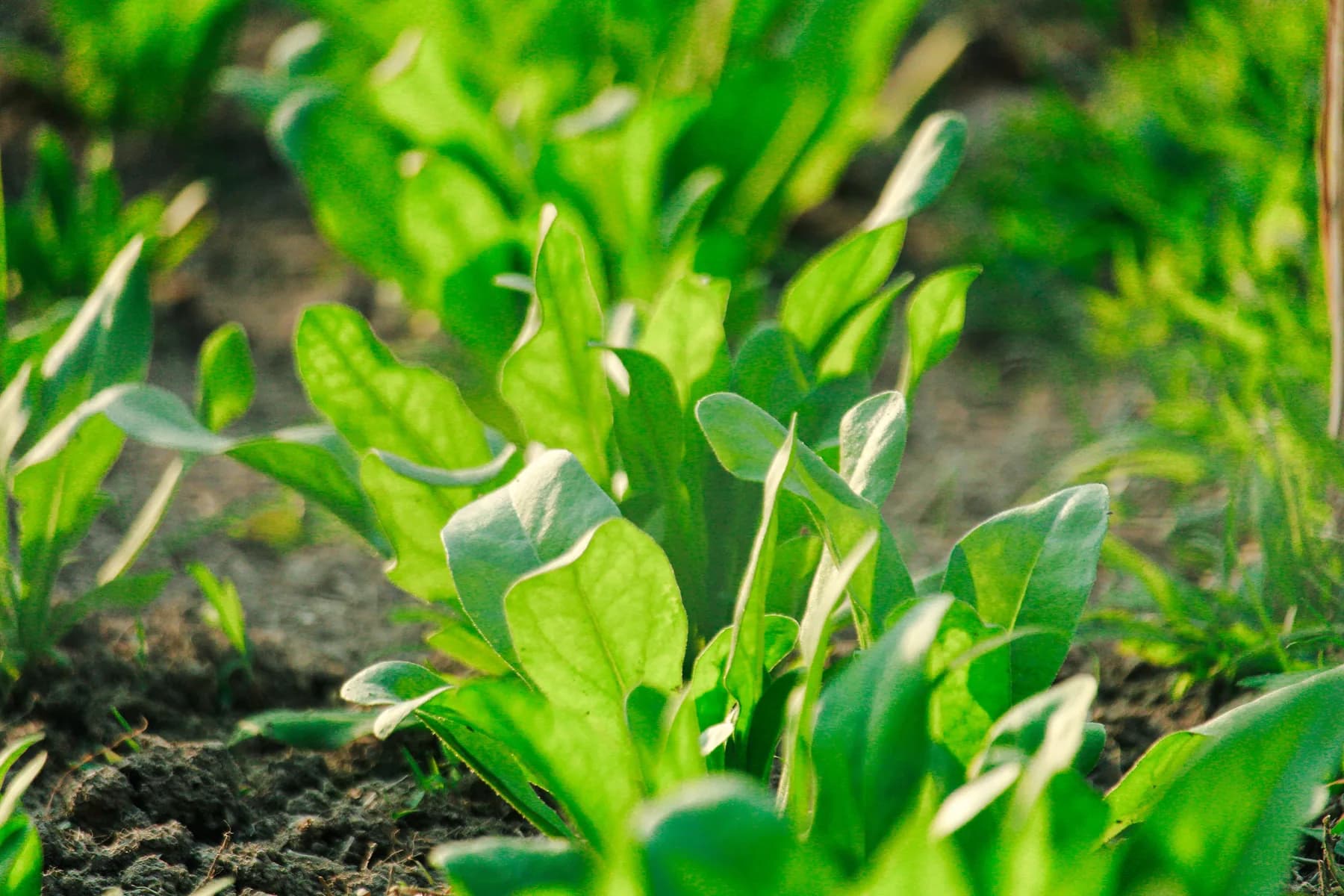
- Spinach leaves in cultivation. Photo: Sayeed Chowdhury via Pexels; resized. Crop reference, not a Texas or Argentine field.
Figures are published averages or study assumptions for the places named, not guarantees for your field. Check current local recommendations and product labels before acting.