

Growing cucumbers in Spain
Protected cucumber production in Almería offers a regional example for planning a Spanish greenhouse crop. A representative short-cycle system transplants in September. Adapt transplant timing, cultivar and greenhouse management to your location and market rather than applying that date to every Spanish farm.
Scope: Protected cucumber production in Almería and Poniente Almeriense. Reported crop output, trial density and historical short-cycle economics are local references; open-field farms and other Spanish regions may use different systems. Updated 2026-10-07.
At a glance
- Short-cycle transplant example
- Mid-September; removal around mid-February in the cited cost model1
- Trial density
- 2 plants/m² in one IFAPA La Mojonera greenhouse trial3
- 2024/25 Almería crop
- About 621,000 t of cucumber; 5,345 ha under biological control5
- Whitefly priority
- Prevent entry, scout the leaf underside and protect biological-control agents4
Planting and harvest calendar for Spain
Use the source-backed production windows to coordinate establishment, crop care and harvest. Production districts and cultivars can have different cycles; the historical climate adds context for the field plan.
Planting: Short-cycle greenhouse transplant example1
A Poniente Almeriense cost model uses a mid-September transplant. The timing is a short-cycle example, not a national Spain planting date.
Harvest: Market and harvest reference1,2
The historic short-cycle model runs from mid-September transplant to a mid-February crop removal; market data place the main Almería/Granada cucumber marketing period in October–February, traditionally strongest in November and December.
Historical monthly climate
Reference period: 1996-01-01 to 2025-12-31. ERA5-Land monthly mean soil temperature at 0–7 cm, air temperature and frost days at the regional reference point (40.2, -3.7). Select a month to inspect its historical conditions.
Month tiles show mean topsoil temperature.
September historical conditions
- Mean topsoil temperature
- 22.8°C
- Mean air temperature
- 20.9°C
- Mean frost days per month
- 0.0 days
These are monthly means at one reference location. They describe seasonal field conditions, not crop maturity, actual seed-zone conditions, frost forecasts or a planting recommendation. Harvest bands follow the crop-specific production sources above.
Climate source: Open-Meteo Historical Weather APIScope the Almería greenhouse system
Spain has several cucumber production contexts. The figures below describe the greenhouse cluster around Almería, not every Spanish region.
- A major protected-crop area
- The Junta de Andalucía reported 621,000 tonnes of cucumber production in Almería’s 2024/25 campaign and 5,345 ha of cucumber under biological control. The latter is the area reported under that practice, not total planted area.5
- Market types differ
- Andalusian market reporting distinguishes long Almería cucumbers, French types and short cucumbers. Confirm the buyer’s type and size specification before selecting seed and greenhouse cycle.2
Plan transplanting and crop density
- La Mojonera trial2 plants/m²
- Treat density as a trial reference
- An IFAPA La Mojonera greenhouse experiment transplanted cucumber at 2 plants/m² in September 2018. It is a documented trial layout, not a universal density recommendation for every variety or greenhouse.3
- Use the crop cycle to plan labour
- The Poniente Almeriense short-cycle model allows about six weeks from transplanting to first production and about three and a half months of production. Confirm the production cycle with the seed supplier and buyer.1
Balance irrigation, humidity and ventilation
- Lower reported8 kg/m²
- Most frequent9.5 kg/m²
- Upper reported11 kg/m²
- Avoid excess greenhouse humidity
- RAIF reports higher fungal-disease risk when winter cucumber houses stay humid and leaves remain wet. Ventilation and irrigation should reduce condensation and drip while protecting crop water status.4
- Read yield examples in context
- A Junta cost model for a short-cycle Dutch cucumber in Poniente Almeriense reports 8–11 kg/m², with 9.5 kg/m² most common among the surveyed farms. This is a local sample, not a guaranteed yield or national average.1
Start integrated pest management before transplant
- Exclude and monitor whitefly
- RAIF identifies Bemisia tabaci as an important vector of ToLCNDV in cucurbits. Start with healthy planting material, greenhouse screens and clean doors; use yellow traps and leaf-underside scouting to detect entry early.4
- Protect beneficial organisms
- Biological control is a core part of protected horticulture in Almería. Remove crop residues and weed hosts, release or conserve appropriate beneficial organisms, and only use products authorised for the crop and pest when monitoring justifies it.4,5
- Keep records by cycle
- Track pest counts, ventilation, irrigation, disease symptoms and picking grades across each greenhouse cycle so changes are tied to a specific house and planting date.4
Schedule picking and commercial removal
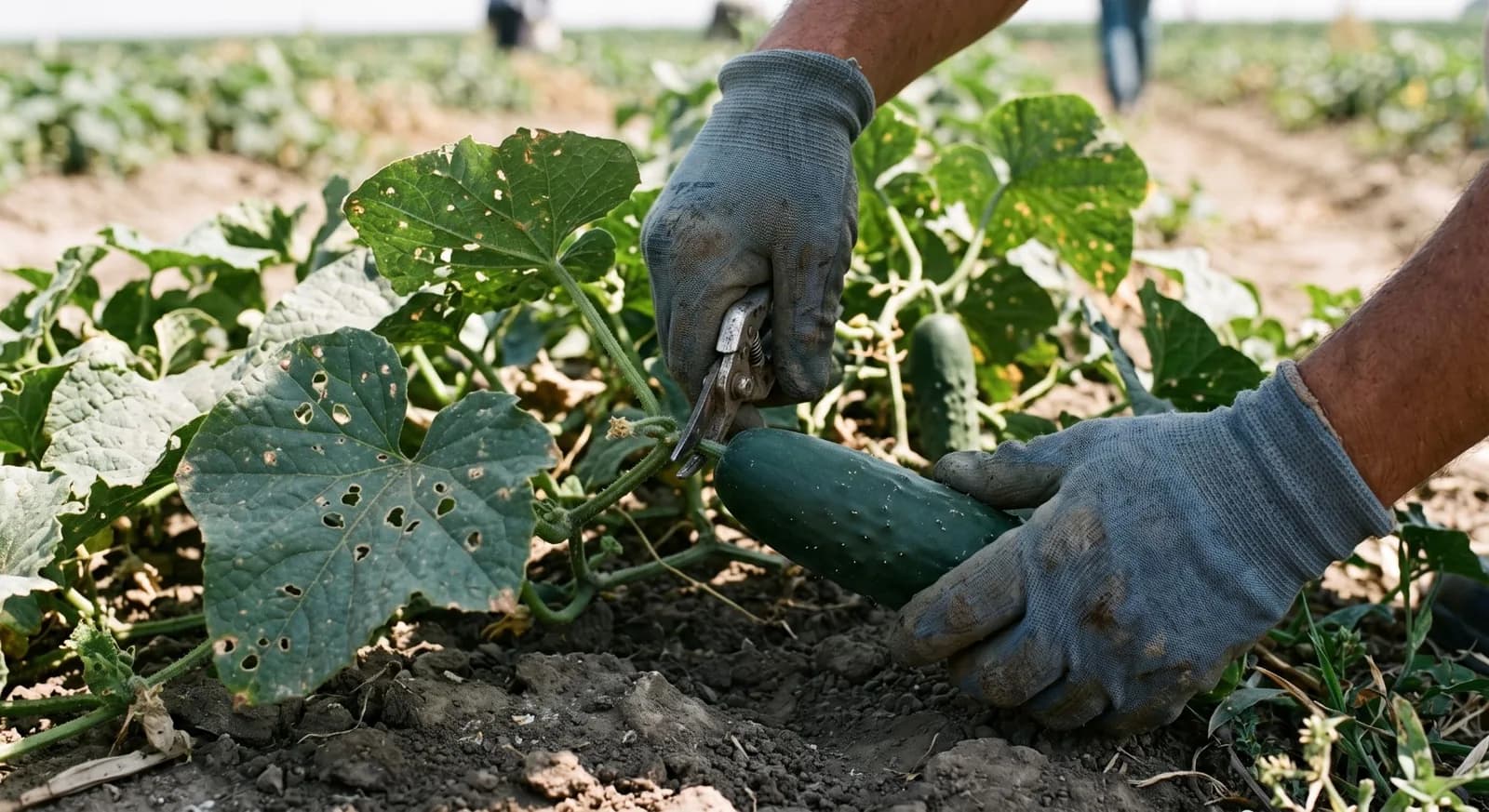
- Align harvest to the market channel
- The regional market report shows cucumber marketed mainly October–February, with historical peaks in November and December. Fruit length and type vary: Almería types are long, while French and short types are smaller.2
- Use economics as a local reference
- The regional short-cycle cost model describes one greenhouse production system and its surveyed crop costs. Rebuild the budget for the current energy, labour, seed, water and buyer terms before expanding.1
Frequently asked questions
- Where is most greenhouse cucumber grown in Spain?
- The guide focuses on Almería. Andalusian reporting places the main protected cucumber area in Almería and Granada, with Almería the larger production centre.
- When are cucumbers transplanted in Almería?
- A Poniente Almeriense short-cycle cost model uses a mid-September transplant. Other greenhouse cycles and open-field regions differ.
- What is a typical Almería greenhouse cucumber yield?
- A regional short-cycle cost survey reported 8–11 kg/m², most often 9.5 kg/m². It is a local reference, not a guaranteed yield.
- How many cucumber plants per square metre?
- An IFAPA La Mojonera trial used 2 plants/m². Check current cultivar and greenhouse recommendations before using that trial density.
- What is the main greenhouse pest risk?
- Whitefly is important both for direct feeding and virus transmission. Screen openings, scout leaves and traps, remove crop residues, and protect beneficial insects.
Regional cucumber guides
Local dates, soil-temperature history and sources for specific regions:
Sources and image credits
- 1. Junta de Andalucía — Análisis de rentabilidad de hortícolas protegidos: pepino — Historical regional cost model; accessed 7 October 2026. Short-cycle greenhouse cucumber in Poniente Almeriense: crop dates, production duration and reported yield range.
- 2. Junta de Andalucía — Datos básicos del pepino — 2020/21 campaign reference. Almería and Granada greenhouse market calendar, cucumber types and seasonal marketing data.
- 3. IFAPA — La Mojonera greenhouse cucumber experiment — 2018–2019 trial. Experimental greenhouse cucumber density, transplant date, trial cycle and irrigation treatments.
- 4. RAIF — Gestión integrada de mosca blanca en cultivos protegidos — 29 September 2026. Whitefly identification, cucumber-relevant virus risk, exclusion, monitoring, biological control and integrated management.
- 5. Junta de Andalucía — 2024/25 Almería horticultural campaign — 2025 campaign report. 2024/25 Almería cucumber production and area reported under biological control.
Image credits
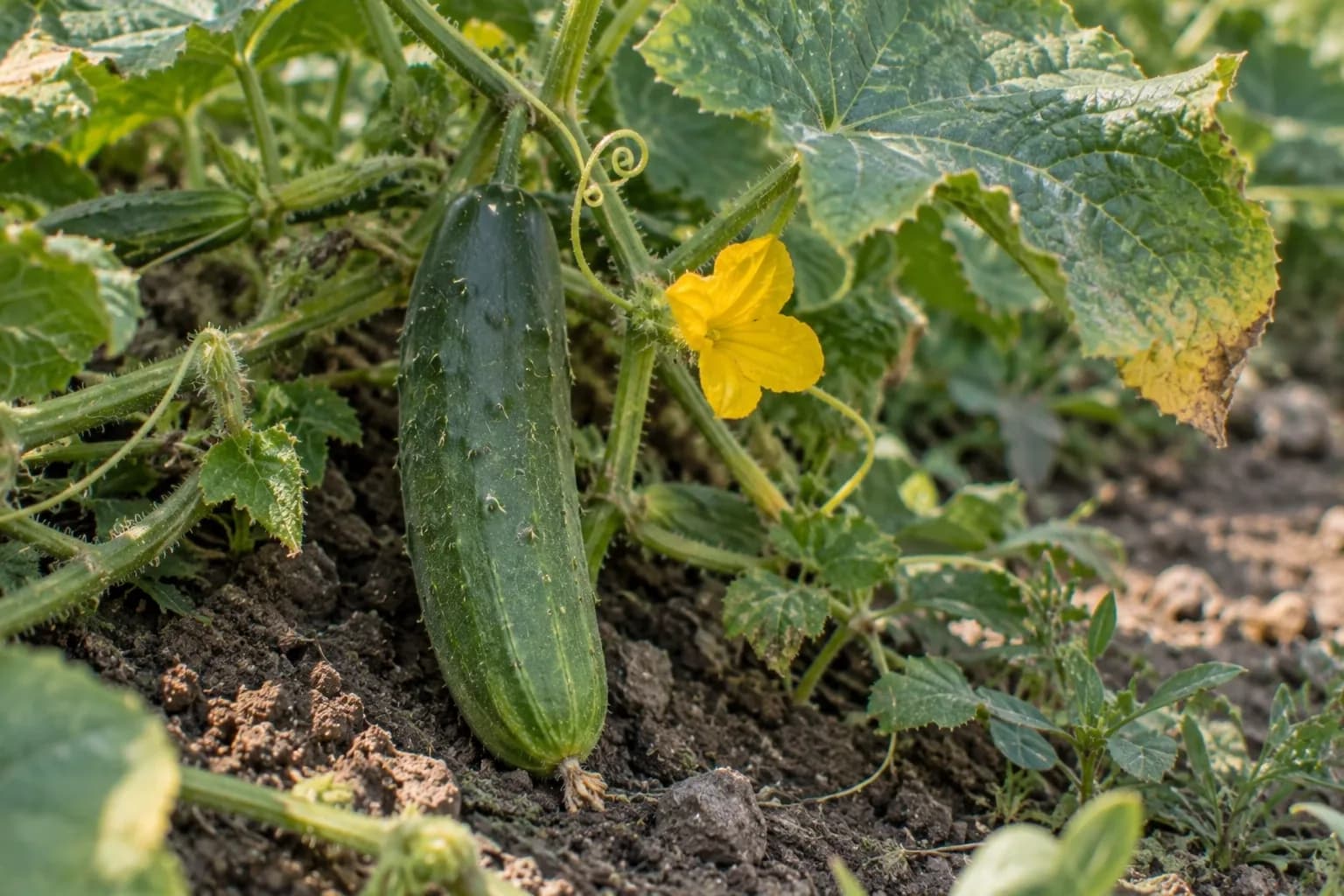
- Cucumber fruit morphology reference; this is not a view of an Almería greenhouse. Illustration.
- Cucumber harvest example; greenhouse cycle and market grade vary. Illustration.
Figures are published averages or study assumptions for the places named, not guarantees for your field. Check current local recommendations and product labels before acting.
Some visuals in this guide are illustrations rather than photographs of a specific farm. See image credits.