

Growing beetroot in Spain
Plan table-beet production in Spain around your district, buyer and field conditions. Table beet (remolacha de mesa) differs from sugar beet. Official 2023 statistics place most reported table-beet area in Andalucía and Castilla y León. The 1984 national agronomy manual provides historical field examples, so confirm sowing dates and current practices with local advisers before using them.
Scope: Commercial table beet in Spain. Production figures are from 2023; detailed national agronomy examples are historical and should not be treated as current field prescriptions. Updated 2026-10-07.
At a glance
- Spain table-beet area sown, 2023
- About 1,120 ha1
- Biological production, 2023
- About 51,111 t; 50,157 t harvested1
- Main reported production areas
- Andalucía: 643 ha; Castilla y León: 310 ha1
- Historical germination reference
- MAPA’s 1984 manual gives about 15°C as an optimum, not a current planting threshold2
- Historical mechanical layout
- Three seed rows at 37 cm plus a 55 cm machinery alley in an older manual example2
Planting and harvest calendar for Spain
Use the source-backed production windows to coordinate establishment, crop care and harvest. Production districts and cultivars can have different cycles; the historical climate adds context for the field plan.
Planting: Sowing timing is not resolved nationally2,3
MAPA’s 1984 manual describes different historical sowing systems by zone and irrigation, and its sections do not reconcile to one Spain-wide schedule. The official 2014–2016 province calendar is listed in Sources but its table was not used to assign month tiles. Use a current local adviser, soil moisture, temperature, irrigation and buyer plan before sowing.
Harvest: Harvest to root size and market grade1,2
The reviewed current MAPA production table reports area and volume, not a harvest month window. The 1984 manual gives historical harvest descriptions but does not support a current national harvest calendar; sample roots and follow the buyer or processor specification.
Historical monthly climate
Reference period: 1996-01-01 to 2025-12-31. ERA5-Land monthly mean soil temperature at 0–7 cm, air temperature and frost days at the regional reference point (40.2, -3.7). Select a month to inspect its historical conditions.
Month tiles show mean topsoil temperature.
January historical conditions
- Mean topsoil temperature
- 4.7°C
- Mean air temperature
- 5.4°C
- Mean frost days per month
- 13.6 days
These are monthly means at one reference location. They describe seasonal field conditions, not crop maturity, actual seed-zone conditions, frost forecasts or a planting recommendation. Harvest bands follow the crop-specific production sources above.
Climate source: Open-Meteo Historical Weather APIConfirm the table-beet market and production zone
- Andalucía biological production24,519–51,111 tonnes
- Castilla y León biological production19,319–51,111 tonnes
- Spain biological production51,111–51,111 tonnes
- Keep table beet separate from sugar beet
- MAPA reports 2023 provincial data for remolacha de mesa: about 1,120 ha sown and 51,111 t biological production. This is distinct from the much larger sugar-beet industry.1
- Check irrigation and regional fit
- The 2023 MAPA table shows most sown table-beet area under irrigation and concentrates reported production in Andalucía and Castilla y León. Provincial concentration does not mean every farm in those regions has suitable water, soils or a buyer.1
Prepare a uniform root zone
- 1
Check soil depth and texture
The older manual favors deep, medium-textured soil and warns that heavy soil can deform roots.
- 2
Prepare the seedbed
Use a fine, even seedbed and calibrated seeding equipment.
- 3
Manage moisture
Avoid prolonged dry periods and waterlogging.
- 4
Confirm the local plan
Use current agronomy advice and buyer requirements for the actual field.
- Treat the temperature value as historical
- MAPA’s 1984 manual calls temperate, humid conditions favorable and gives about 15°C as an optimum germination temperature. It is not a tested soil-temperature threshold or a modern planting prescription.2
- Check field conditions before sowing
- The monthly climate panel shows average air and shallow-soil temperatures at one regional reference point. It does not establish seed-zone conditions on your farm or predict successful emergence. Check soil temperature, moisture and current local advice when scheduling sowing.2
Treat historical machine layouts as examples
| Evidence | What it provides | How to use it |
|---|---|---|
| MAPA 2024 yearbook | 2023 provincial area and production | Current scale context, not a monthly field calendar |
| MAPA 1984 manual | Older sowing examples, soil and machinery layouts | Historical technical context only |
| MAPA 2014–2016 sowing calendar | Official province calendar document | Month distribution not used here; verify the original table and current local practice first |
Between rows: 37 cm between seed rows · Within the row: 55 cm machinery alley
Bed spacing: Three rows in the bed
This comes from a 1984 manual and is not verified for modern Spanish planters, varieties, harvesters or buyer grades. Use it only as a historical layout reference.
- Do not lift old fertilizer rates into a current plan
- The 1984 manual includes fertilizer and irrigation formulas that are decades old. Use current soil and irrigation-water analyses and regional technical advice rather than copying those rates.2
- Match machinery to the production outlet
- The historic layout describes three rows at 37 cm plus a machinery alley. Confirm today’s planter, thinning or singulation system, lifting equipment, headlands and buyer grade before finalizing field geometry.2
Harvest to size and intended use
Frequently asked questions
- Where is table beet grown in Spain?
- MAPA’s 2023 provincial table reports most area in Andalucía and Castilla y León, with smaller production elsewhere. It is table beet, not sugar beet.
- When should beetroot be planted in Spain?
- The sources reviewed do not support one current nationwide sowing window. MAPA’s 1984 manual describes different historical schedules by region and irrigation; confirm the present local plan with an agronomist and buyer.
- What soil temperature does Spanish beetroot need?
- The 1984 MAPA manual gives about 15°C as an optimum germination reference. It is not a modern, validated soil-temperature threshold for a planting decision.
- What spacing does the Spanish production guide recommend?
- An older 1984 MAPA manual shows three seed rows 37 cm apart plus a machinery alley. Treat this as a historical example and design for current equipment and market grade.
- When is beetroot harvested in Spain?
- The current provincial statistics reviewed do not give a harvest month calendar. Harvest to measured root maturity and the buyer’s specification.
Regional beetroot guides
Local dates, soil-temperature history and sources for specific regions:
Sources and image credits
- 1. MAPA — Anuario de Estadística 2024, table 7.7.41.1: table beet — 2023 provincial data; published in the 2024 yearbook. Area sown, harvested area and biological production of table beet by province.
- 2. MAPA — Cultivo extensivo de la remolacha de mesa — 1984. Historical Spain-wide table-beet agronomy, soil, sowing examples, field layout, irrigation and harvest; not current technical advice.
- 3. MAPA — Provincial sowing and harvest calendar: table beet, 2014–2016 — 2014–2016 historical calendar. Official provincial sowing/harvest calendar. No month bands are asserted here because the table has not been independently verified against current practice.
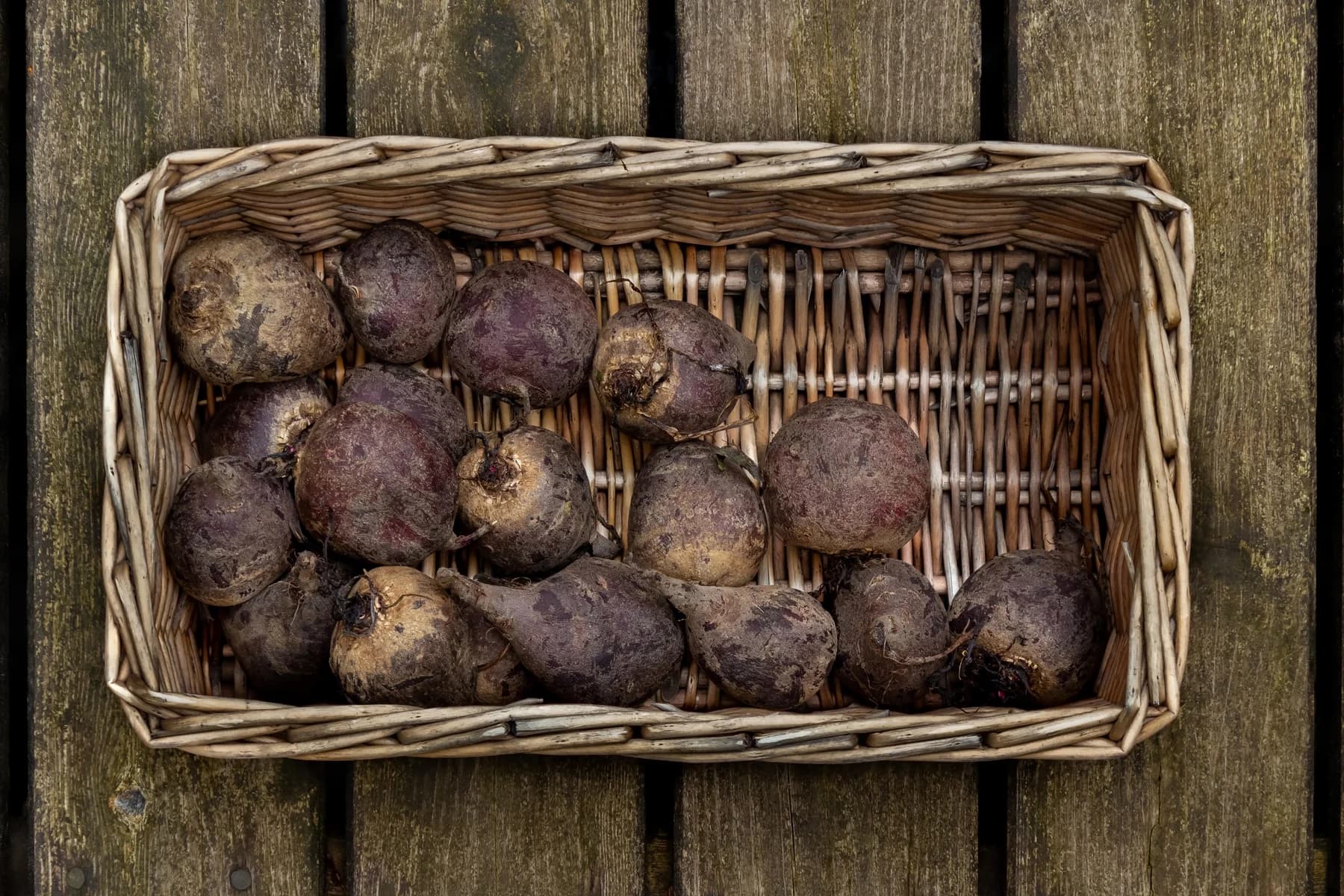
- 4. Beetroots in a basket — W.carter — Photographed October 5, 2021; CC BY-SA 4.0. Newly harvested Beta vulgaris in Tuntorp, Sweden. The source is focus-stacked and retouched; this resized derivative retains CC BY-SA 4.0. Not a photograph of Australian or Spanish production.
- 5. Beetroot photo license — CC BY-SA 4.0 — Creative Commons Attribution-ShareAlike 4.0. The resized W.carter photograph retains this license.
Image credits
- Newly harvested beetroot in Tuntorp, Sweden. Photo: W.carter, CC BY-SA 4.0; resized under the same license. Harvested-crop reference, not a local field or grading standard.
Figures are published averages or study assumptions for the places named, not guarantees for your field. Check current local recommendations and product labels before acting.