

Bean farming in the Netherlands: crop identity and evidence
Common beans (Phaseolus) and faba beans (Vicia faba) are different crops. Dutch faba-bean manuals describe another production system. For a common-bean farm, confirm whether the intended product is fresh pods or dry seed, then obtain Dutch cultivar and field records for that system.
Scope: Common bean (Phaseolus; species and harvested product still need clarification) in the Netherlands. Faba bean (Vicia faba) management is explicitly excluded. Updated 2026-10-07.
At a glance
Planting and harvest calendar for the Netherlands
Use the source-backed production windows to coordinate establishment, crop care and harvest. Production districts and cultivars can have different cycles; the historical climate adds context for the field plan.
Planting: Regional planting window not established1,2
Plan dates with local crop advice and field observations in the Netherlands. No region-wide month band is shown here. The historical climate tiles describe one reference location and cannot determine when your field is ready for planting or harvest.
Harvest: Regional harvest window not established1,2
Plan dates with local crop advice and field observations in the Netherlands. No region-wide month band is shown here. The historical climate tiles describe one reference location and cannot determine when your field is ready for planting or harvest.
Historical monthly climate
Reference period: 1996-01-01 to 2025-12-31. ERA5-Land monthly mean soil temperature at 0–7 cm, air temperature and frost days at the regional reference point (52.2, 5.3). Select a month to inspect its historical conditions.
Month tiles show mean topsoil temperature.
January historical conditions
- Mean topsoil temperature
- 3.3°C
- Mean air temperature
- 3.5°C
- Mean frost days per month
- 11.3 days
These are monthly means at one reference location. They describe seasonal field conditions, not crop maturity, actual seed-zone conditions, frost forecasts or a planting recommendation. Harvest bands follow the crop-specific production sources above.
Climate source: Open-Meteo Historical Weather APIResolve the crop record before following a farm manual
- 1
Check the Latin name
Current site record identifies Phaseolus.
- 2
Check the harvested product
Clarify fresh pod, dry seed or another market.
- 3
Reject mismatched source
Do not transfer Vicia faba recommendations.
- 4
Find a matching protocol
Use Dutch trials for the exact species and end use.
Separate an evidence gap from a production claim
- 1
Identify local farms
Confirm species, scale and fresh or dry market.
- 2
Collect crop records
Record cultivar, site, establishment and harvest.
- 3
Measure field performance
Track stand, yield, water and costs across seasons.
- 4
Validate buyer requirements
Confirm quality, storage and delivery standards.
Use the correct system once identity is confirmed
- 1
Confirm species and cultivar
Verify Phaseolus and the intended crop type.
- 2
Choose the sales product
Fresh pods and dry seed require separate plans.
- 3
Find regional extension
Use Dutch evidence matching the species and production system.
- 4
Build a local pilot
Document crop response before expanding the planting.
- Fresh and dry beans need different decisions
- A fresh-pod crop depends on tender-pod harvest, labor, cooling and a fast market route. A dry-seed crop has different maturity, combining, drying and storage needs. Choose the intended product and buyer before budgeting establishment, machinery and harvest labor.1
Avoid an invented planting calendar
- 1
Choose the harvested product
Decide whether the farm will sell fresh pods or dry common beans.
- 2
Find regional sources
Contact Dutch extension or crop research programs.
- 3
Verify growing dates
Use field trials, not faba-bean dates or climate normals.
- 4
Use verified field results
Keep unresolved data gaps visible.
Frequently asked questions
- Does the Netherlands bean guide cover faba beans?
- No. The site’s crop record identifies Phaseolus. WUR’s Dutch field-bean manual covers Vicia faba, a different species.
- Is there a Dutch commercial guide for common beans?
- The reviewed sources did not establish a current commercial Phaseolus production package. Local farm presence is not ruled out, but species-specific records are needed.
- Can Dutch faba-bean spacing be used for common beans?
- No. The species and crop systems differ. Do not transfer Vicia faba populations or row layouts to Phaseolus.
- When should common beans be planted in the Netherlands?
- No current local commercial Phaseolus calendar was verified. Confirm species, product type and local extension evidence before setting dates.
Regional common bean guides
Local dates, soil-temperature history and sources for specific regions:
Sources and image credits
- 1. AgriAuditor crop snapshot — Bean record — Current committed crop record. Site taxonomy identifies the crop genus as Phaseolus; it does not specify a regional Dutch production system.
- 2. Wageningen University & Research — Teelt van veldbonen — 2025. Dutch field/faba bean (Vicia faba) production manual; cited to distinguish this source from common bean.
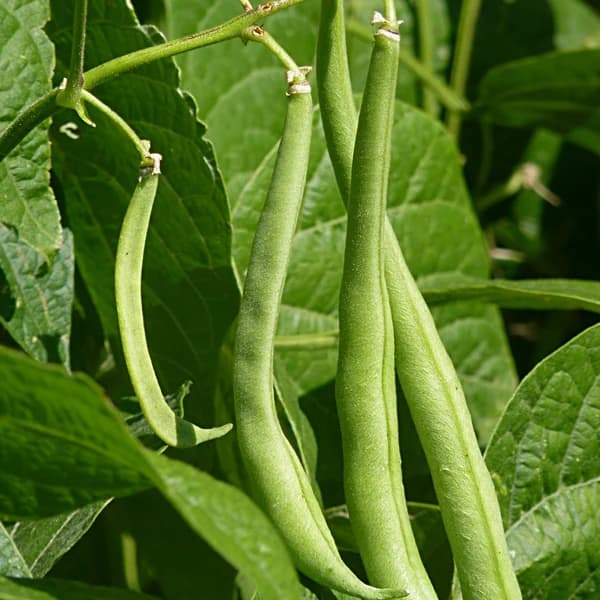
- 3. Common bean crop-identification photo — Jamain — Wikimedia Commons; CC BY-SA 3.0. Crop-identification image only; it is not a photograph of the named region or a production recommendation.
Image credits
- Crop-identification photo; not a the Netherlands production field. Photo: Jamain, CC BY-SA 3.0.
Figures are published averages or study assumptions for the places named, not guarantees for your field. Check current local recommendations and product labels before acting.