

Growing apple in South Africa
South African apple farming is centered in the Western and Eastern Cape and is strongly connected to export markets and controlled-atmosphere storage. Orchard design, water supply, cultivar and maturity decisions vary by production area and market, so this guide does not prescribe one national spacing or input package.
By AgriAuditor. Updated .
Scope: Commercial export-oriented deciduous apple orchards in South Africa. National harvest context is dated; orchard spacing and input rates remain site, cultivar and rootstock specific.
At a glance
Perennial growth and climate in South Africa
A perennial planting remains in the field for multiple years. Establishment is a long-term investment; flowering, fruit development, harvest and plant care recur as the planting matures. Follow the named cultivar and production system.
Establish a long-lived planting2,4
The sources reviewed do not establish a single South African apple planting month. Match nursery delivery and orchard preparation to the production district, cultivar and local Hortgro guidance.
Historical monthly climate
Reference period: 1996-01-01 to 2025-12-31. ERA5-Land monthly mean soil temperature at 0–7 cm, air temperature and frost days at the regional reference point (-29, 26). Select a month to inspect its historical conditions.
Month tiles show mean air temperature.
January historical conditions
- Mean topsoil temperature
- 27.3°C
- Mean air temperature
- 23.8°C
- Mean frost days per month
- 0.0 days
Use this monthly history to assess winter exposure, seasonal heat and water planning. It does not calculate cultivar chill hours, flowering dates, frost damage during bloom or fruit maturity. Topsoil at 0–7 cm describes shallow soil context, not the full root zone. Harvest periods follow the production evidence above.
Climate source: Open-Meteo Historical Weather APIChoose cultivar and destination together
- 1
Select production area
Start with local climate, soil and water access.
- 2
Name cultivar and rootstock
Use the regional planting protocol and market requirement.
- 3
Secure an exporter route
Confirm destination, grade, residue and timing rules.
- 4
Plan storage capacity
Match expected harvest volume with controlled-atmosphere logistics.
- Market timing changes the orchard decision
- Hortgro advises matching cultivar to climate, soil and marketability, including timing, size, keeping quality and yield. South Africa’s 2024 USDA report describes export demand and controlled-atmosphere storage; use current destination rules and buyer specifications when selecting cultivars.1,2,5
Design the orchard around local conditions
- 1
Test soil and water
Assess rooting conditions and irrigation supply before planting.
- 2
Review climate history
Map chill, spring frost and heat for the orchard location.
- 3
Choose a local system
Confirm cultivar, rootstock and tree density with regional advice.
- 4
Protect the water plan
Use current drought guidance and water allocation information.
- Do not use a single nationwide spacing
- The reviewed Hortgro outline does not provide a universal row spacing or tree density. Choose rootstock, canopy and layout with the relevant production-area protocol, field slope, soil, machinery and market; avoid carrying a trial or one region’s design across the country.2
Manage water using current local guidance
- 1
Check allocation and quality
Confirm reliable seasonal supply before orchard investment.
- 2
Measure block demand
Use current local irrigation scheduling and soil monitoring.
- 3
Prioritize tree stages
Apply the current regional shortage protocol when supply is constrained.
- 4
Record water and yield
Track each block to improve the next season’s plan.
- Water is a material orchard constraint
- Hortgro published critical-water-shortage irrigation guidance in 2026 for deciduous fruit trees. It is timely regional context, not an apple-specific numerical schedule; use current block, soil and water measurements before setting irrigation volumes.4
Harvest to cultivar maturity and export grade
- 1
Sample maturity often
Follow the cultivar-specific harvest protocol.
- 2
Avoid wet-fruit handling
Schedule picking and field movement to protect quality.
- 3
Grade to destination
Check current size, quality and residue requirements.
- 4
Move into cold storage
Coordinate harvest lots with packhouse and CA capacity.
Frequently asked questions
- Where are apples grown in South Africa?
- The 2024 USDA report says the Western and Eastern Cape together account for more than 95% of apple production, with smaller areas farther north.
- When are South African apples harvested?
- The 2024 report gives January–May, peaking February–April. Cultivar maturity and orchard conditions determine the actual picking schedule.
- What spacing should an apple orchard use in South Africa?
- There is no single national spacing in the sources reviewed. Choose a locally validated cultivar-rootstock-canopy system for the production area.
- How does export affect apple harvest?
- Export fruit must meet destination grades and maturity protocols, and long storage depends on harvest quality and controlled-atmosphere capacity.
Put your own numbers in
Sources and image credits
- 1. USDA Foreign Agricultural Service — Fresh Deciduous Fruit Annual: South Africa — 2024 report; 2024/25 forecasts are dated forecasts. Production-area concentration, broad harvest season, export cultivars and controlled-atmosphere context.
- 2. Hortgro — Pome fruit production — Industry technical guidance. Commercial cultivar, rootstock, site and market-planning principles; no universal spacing.
- 3. Hortgro — Pome fruit harvest — Industry technical guidance. Repeated maturity checks and cultivar-specific picking and handling.
- 4. Hortgro Science — Critical Water Shortages Irrigation Guidelines for Deciduous Fruit Trees — February 2026. Current water-shortage context for deciduous orchards; not an apple-specific irrigation-rate schedule.
- 5. Hortgro — Key Deciduous Fruit Statistics — 2025 edition listed as latest in review. Annual South African production and export market statistics; check latest edition before use.
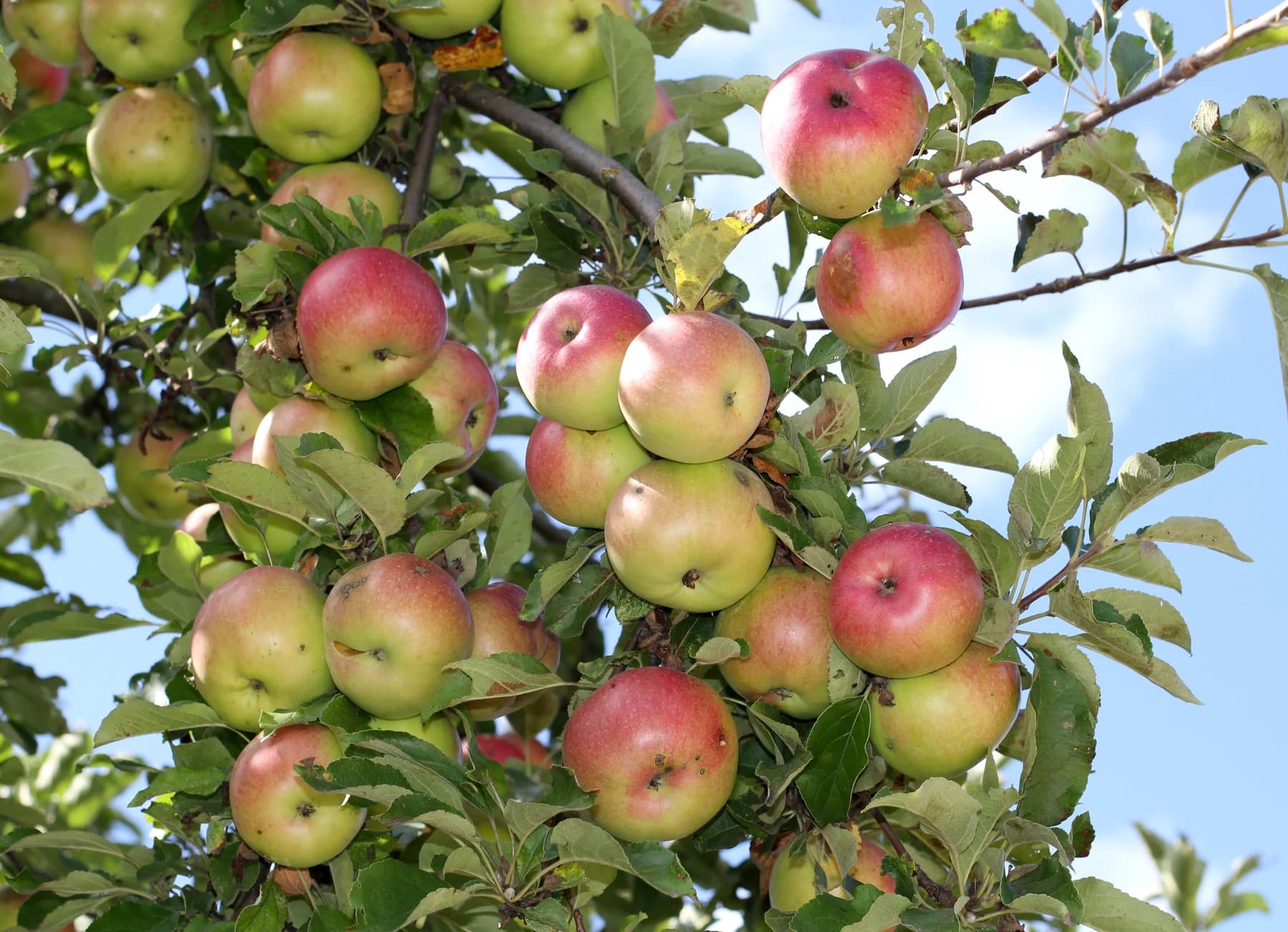
- 6. Apples on tree 2011 G1 — George Chernilevsky — August 24, 2011; author public-domain release. Malus domestica fruit photographed in Ukraine. Crop reference, not evidence of a South African orchard or locally recommended cultivar.
Image credits
- Apples growing on a tree in Ukraine. Photo: George Chernilevsky, public domain; resized and converted to WebP.
Figures are published averages or study assumptions for the places named, not guarantees for your field. Check current local recommendations and product labels before acting.