

Growing amaranth in California
The clearest California production evidence is for leafy amaranth sold as an Asian specialty vegetable, also called Chinese spinach. Local Extension material describes a short crop cycle and grower-reported nitrogen use, but does not establish a statewide variety, spacing, irrigation, yield or planting-date package.
Scope: Commercial and small-farm leafy amaranth in California specialty-vegetable systems. Local observations are identified as such; the reviewed sources do not support a statewide production recommendation. Updated 2026-10-07.
At a glance
Planting and harvest calendar for California
Use the source-backed production windows to coordinate establishment, crop care and harvest. Production districts and cultivars can have different cycles; the historical climate adds context for the field plan.
Planting: California planting dates not established1,2
The Santa Clara County survey reports a two-to-three-month crop cycle but no sowing dates or crop-specific temperature threshold. The historical climate tiles are regional context, not a planting-feasibility heatmap.
Harvest: Crop-cycle observation, not a month band2
The local survey reports one or two harvests during a two-to-three-month crop. It does not establish California harvest months; use farm and buyer records.
Historical monthly climate
Reference period: 1996-01-01 to 2025-12-31. ERA5-Land monthly mean soil temperature at 0–7 cm, air temperature and frost days at the regional reference point (37, -120). Select a month to inspect its historical conditions.
Month tiles show mean topsoil temperature.
January historical conditions
- Mean topsoil temperature
- 8.9°C
- Mean air temperature
- 9.4°C
- Mean frost days per month
- 3.5 days
These are monthly means at one reference location. They describe seasonal field conditions, not crop maturity, actual seed-zone conditions, frost forecasts or a planting recommendation. Harvest bands follow the crop-specific production sources above.
Climate source: Open-Meteo Historical Weather APIDefine the leafy product and buyer
- 1
Confirm the product
Agree whether the market wants green, red or variegated leaf types.
- 2
Secure a buyer
The reviewed sources do not provide a current California amaranth price or demand forecast.
- 3
Prepare the field
Use a fine seedbed and plan for early weed competition.
- 4
Scout the crop
Check leaves for blight and record crop development by field and seed lot.
- Keep leafy and grain amaranth separate
- Santa Clara County Extension lists vegetable amaranth as Chinese spinach and describes green, red and variegated market types. Confirm the species, cultivar and leaf color with your seed supplier and buyer before ordering seed. A grain cultivar or unfamiliar leafy type may not meet the intended market.1
- Treat the market as a specialty channel
- UC ANR describes Fresno-area Southeast Asian farmers growing amaranth for a specialty food market in a 2018 account. This supports local production context, not current statewide acreage, buyer demand or farm-gate prices.4
Manage establishment with local records
- 1
Record seed and market type
Identify the seed lot and leaf type that matches the buyer specification.
- 2
Log sowing and emergence
Build a local date and temperature record; the reviewed sources give no crop-specific California threshold.
- 3
Track weeds and leaf blight
These are the production problems named in the local Extension primer.
- 4
Record harvest passes
Compare actual crop duration and number of cuts with the Santa Clara observation.
- Do not infer a planting month from the crop duration
- The Santa Clara survey reports a two-to-three-month crop and one or two harvests, but gives no sowing dates or crop-specific temperature threshold. The evidence cannot support a monthly planting-feasibility heatmap for California.2
- Control weeds early and scout foliage
- The local UCCE primer identifies weeds and leaf blight as production concerns. It does not supply a current commercial control program; use local diagnosis and current, label-compliant recommendations.1
Interpret local input figures as observations
| Measure | Reported observation | How to use it |
|---|---|---|
| Crop duration | 2–3 months | Local survey context, not a maturity guarantee |
| Harvests | One or two | Observed practice; crop type and market specification can differ |
| Nitrogen use | 40–140 lb N/acre | Grower-reported range, not an application recommendation |
Sources2
- Do not turn the nitrogen range into a rate
- The presentation reports grower use between 40 and 140 lb N/acre. Its amaranth table is observational; the described nitrogen trials concerned other Asian vegetables. Base a farm fertility plan on field history, soil testing, crop removal and current local advice.2
Harvest to the buyer specification
- 1
Check leaf quality
Use the buyer’s size, colour and condition requirements.
- 2
Record each harvest
The local survey reports one or two harvests during a two-to-three-month crop cycle.
- 3
Review losses and labor
Compare actual field records with the buyer’s accepted volume.
- 4
Update the next crop plan
Use the farm’s results; no current statewide yield benchmark was found.
- Use the crop-cycle figure carefully
- The two-to-three-month duration and one-or-two-harvest pattern are observations from the Santa Clara County small-farm presentation, not a California-wide promise or a harvest calendar.2
Frequently asked questions
- What kind of amaranth is grown in California?
- The local Extension sources describe leafy vegetable amaranth, also called Chinese spinach, and list green, red and variegated types. They do not identify the species or cultivar used by every California grower.
- How long does leafy amaranth take in California?
- A Santa Clara County grower survey reported a two-to-three-month crop cycle with one or two harvests. Treat that as local observation, not a statewide maturity guarantee.
- How much nitrogen should California amaranth receive?
- The local presentation reports grower use of 40–140 lb N/acre. That is an observed range, not a recommendation; the nitrogen trials described there covered other vegetables.
- When should amaranth be planted in California?
- The sources reviewed do not establish a California commercial planting window or crop-specific temperature threshold. Log local sowing and emergence and check with a county farm advisor.
- What production problems are reported locally?
- The Santa Clara County Extension primer identifies weeds and leaf blight. It does not provide a complete current commercial control program.
Regional amaranth guides
Local dates, soil-temperature history and sources for specific regions:
Sources and image credits
- 1. UC Cooperative Extension Santa Clara County — Asian Vegetable Primer — Extension primer. Leaf amaranth market types and production concerns including weeds and leaf blight.
- 2. UC Cooperative Extension — Water and Nitrogen Management of Asian Vegetables / CDFA Healthy Soils Programs — UCCE presentation. Santa Clara County small-farm crop duration, number of harvests and grower-reported nitrogen use; observational rather than an amaranth fertilizer trial.
- 3. UC IREC — 2016 Annual Field Day booklet — 2016. Lists a Tulelake amaranth grain-production evaluation; the booklet does not report completed production results.
- 4. UC ANR — Fresno’s Southeast Asian farmers are on trend with new “superfood” — 2018. Historical specialty-market context for Fresno-area small farms, not current acreage or demand.
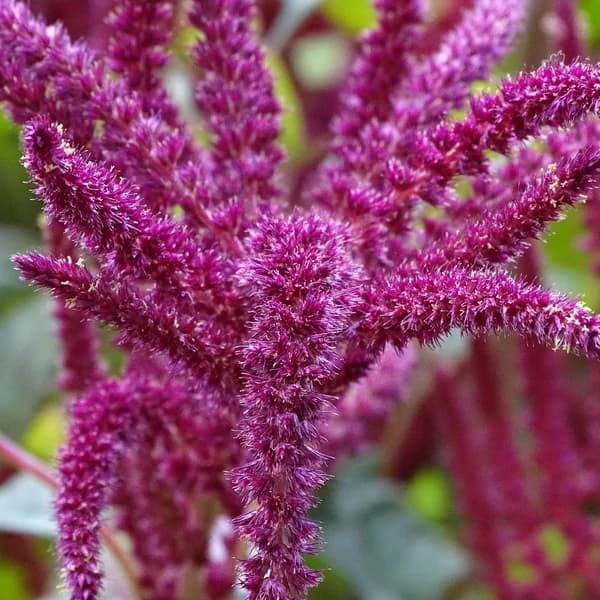
- 5. Amaranth crop photo — Kurt Stüber — Wikimedia Commons; CC BY-SA 3.0. Leaf-amaranth crop-identification photo; not a California production field.
Image credits
- Amaranthus tricolor, shown for crop identification. Photo: Kurt Stüber, CC BY-SA 3.0; not a California field photograph.
Figures are published averages or study assumptions for the places named, not guarantees for your field. Check current local recommendations and product labels before acting.