

How to grow asparagus: a commercial guide
Asparagus is a long-lived perennial: you plant one-year-old crowns, take almost no harvest for two years, and then cut spears for about six weeks every spring for a decade or more. Everything below is about building a crown that lasts. Figures are Midwest US commercial practice.
Scope: Commercial spear production from crowns, Midwest US. Seed-grown transplants are noted. Updated 2026-10-16.

At a glance
- Plant
- One-year-old crowns, April 15 – May 151
- Stand
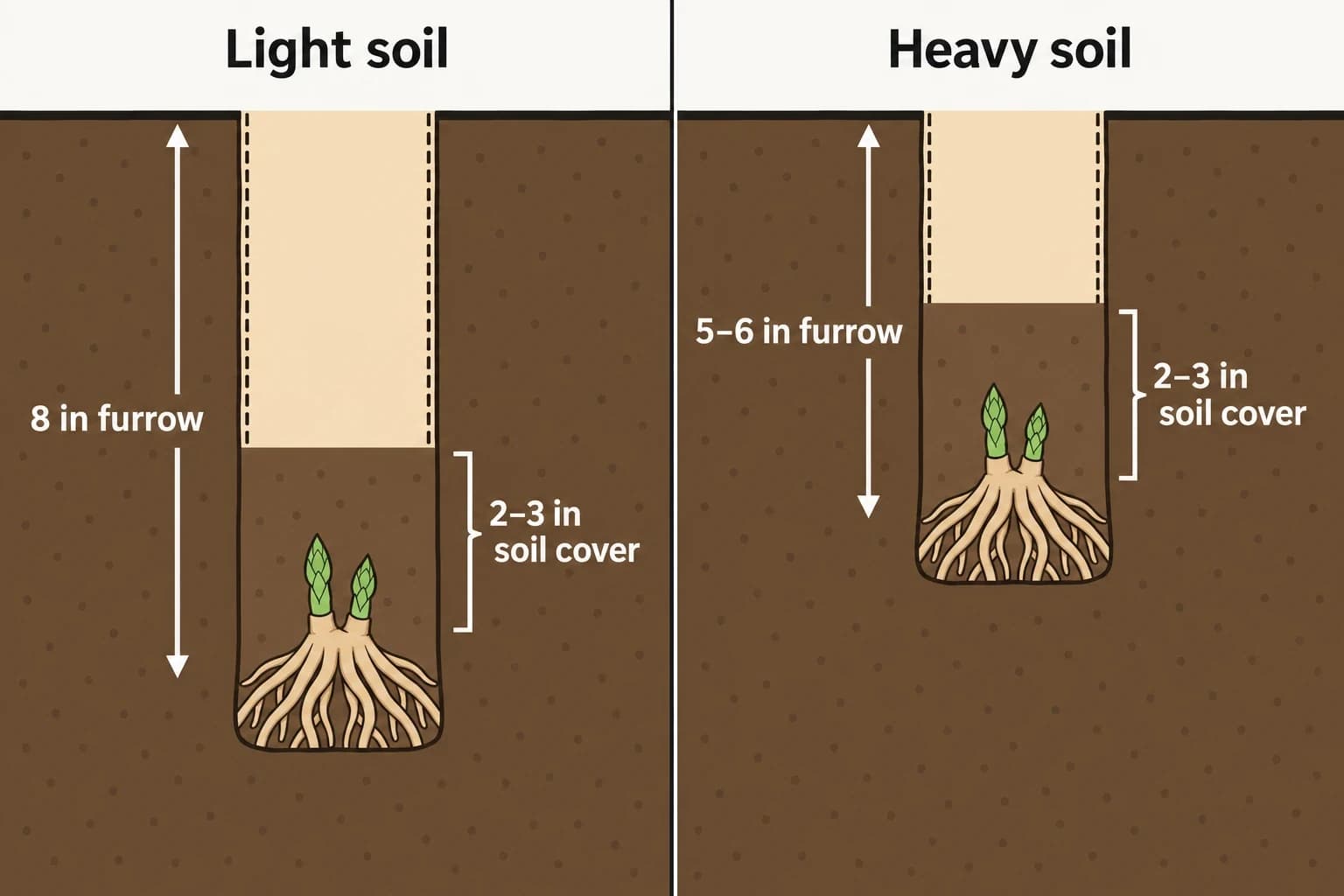
- 1.2–1.5 m (4–5 ft) rows, spaced for 34,600–37,070 crowns per ha (14,000–15,000 crowns/acre); set in 20 cm (8 in) furrows (light soil) or 12.5–15 cm (5–6 in) (heavy soil)1
- Soil
- Deep, well-drained sandy loam; pH 6.7–7.01
- Harvest ramp
- Year 1 none; year 3 two weeks; year 4 four weeks; year 5+ about six weeks1
- Nitrogen
- 56 kg N/ha (50 lb N/acre) before planting; about 90 kg/ha (80 lb/acre)/year once established1
- US production, 2025
- 21,500 t (473,600 cwt) from 4,700 ha harvested (11,700 acres), about 4.5 t/ha (40 cwt/acre)2
Choose hybrids and crowns
- All-male hybrids
- Hybrid asparagus has better vigour, disease tolerance and yield. All-male hybrids do not produce seed, which avoids volunteer seedlings that become a weed problem. Examples named in the guide: Jersey Knight, Guelph Millennium (the industry standard), Guelph Eclipse, Guelph Equinox, Sequoia, Spartacus and Walker Deluxe. Order well in advance.1
- Crowns or seed
- Some varieties are sold as one-year-old crowns; others only as seed, which crown growers turn into crowns. For field production use only one-year-old crowns. Ten- to fourteen-week-old seedling transplants can also be machine planted in spring or fall.1
- Clean material matters
- Fusarium can be seed-borne. Source new plantings from blemish-free crowns produced in virgin soil, ideally from fields fumigated against it.1
Prepare a deep, well-drained site
- Soil and drainage
- Select deep, well-drained sandy loam. Crown and root rot is promoted by acidic and poorly drained soil, and Phytophthora spear rot by excess irrigation and poor air circulation.1
- Lime early
- Maintain pH 6.7–7.0 and, if possible, lime the year before planting.1
- Weeds first
- Reduce perennial weeds with systemic broad-spectrum herbicides before planting; herbicide options are limited in the planting year.1
Plant the crowns
Between rows: 1.2–1.5 m (4–5 ft) · Within the row: ≈18–23 cm (7–9 in)
Rows 1.2–1.5 m (4–5 ft) apart, with the in-row spacing that gives 34,600–37,070 crowns per ha (14,000–15,000 crowns per acre); the 18–23 cm (7–9 in) figure is calculated from those two numbers. Schematic, not to scale.
- Date and spacing
- Transplant one-year crowns from April 15 to May 38 cm (15 in) 1.2–1.5 m (4–5 foot) rows, with in-row spacing that gives 34,600–37,070 crowns per ha (14,000–15,000 crowns per acre).1
- Furrow depth
- Set crowns in 20 cm (8-inch) furrows in light soils and 12.5–15 cm (5–6 inch) furrows in heavy soils, then cover with 5–7.5 cm (2–3 inches) of soil. Cultivate when spears emerge and continue until the furrows are level at the end of the first season.1
- Starter fertility
- Before planting apply 56 kg N/ha (50 lb N/acre), plus phosphorus and potassium by soil test, and plow it under. Add 34 kg P2O5/ha (30 lb P2O5 per acre) in the bottom of the trench.1
Feed the established planting
- 1
Before spears emerge
22–45 kg N/ha (20–40 lb N/acre), lightly incorporated; long-residual pre-emergence herbicide.
- 2
Harvest
About 6 weeks from year 5, picked early in the morning.
- 3
After harvest
45–65 kg N/ha (40–60 lb N/acre) and a clean mowing; pre-emergence herbicide again if needed.
- 4
Fern season
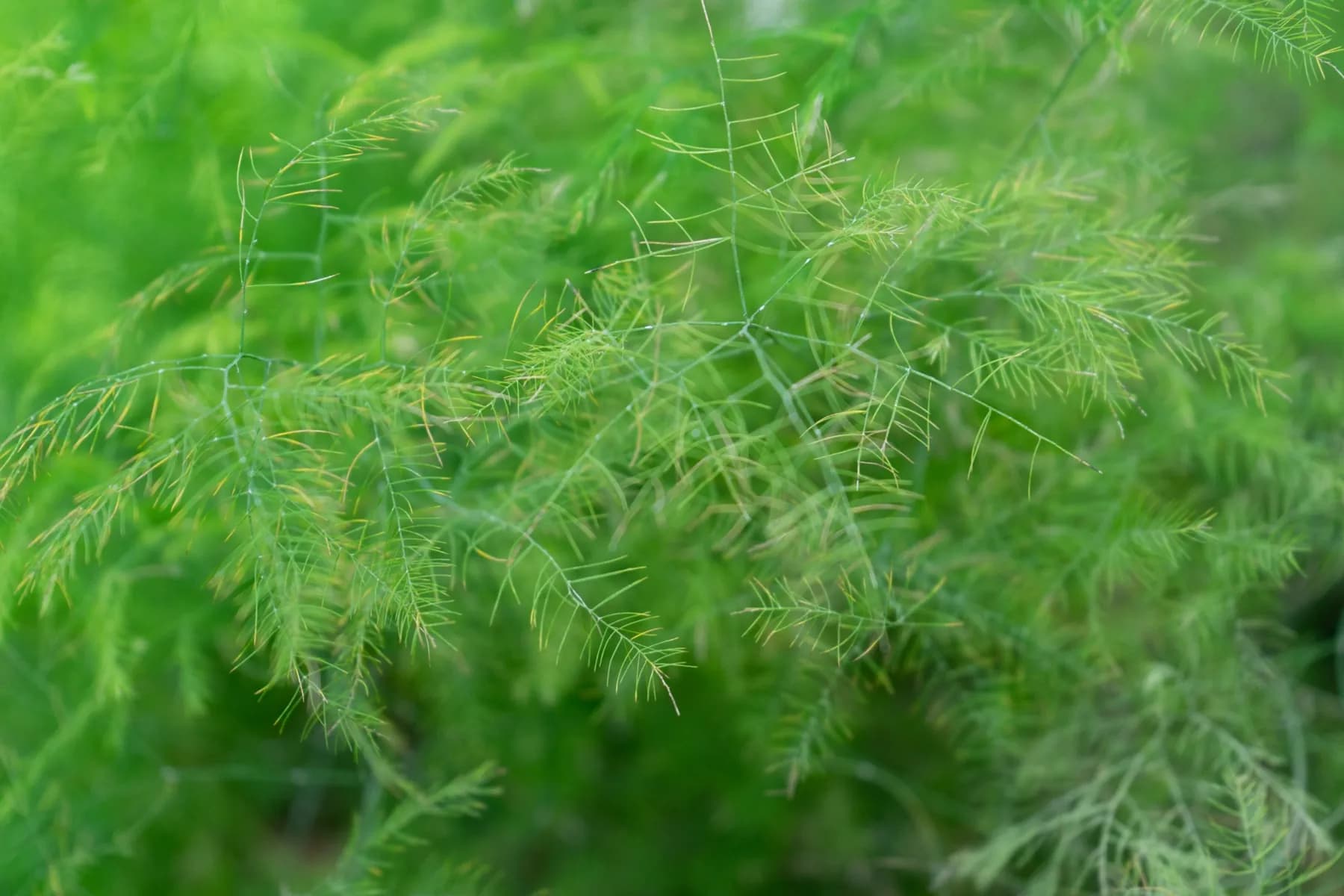
Let ferns grow; scout beetles and leaf spots. They refill the crowns.
- 5
Fall and winter
Mow or remove dead ferns to reduce Cercospora carry-over.
- Annual nitrogen
- Each year before emergence apply 22–45 kg N/ha (20–40 lb N/acre) and incorporate lightly; after harvest ends apply 45–65 kg/ha (40–60 lb/acre). Total from fertilizer should be about 90 kg N/ha (80 lb N/acre). No more phosphorus is needed if pre-plant levels were adequate; apply potassium by soil test.1
- Weed control
- After the first year a typical programme uses a long-residual pre-emergence herbicide before spears emerge and again after harvest and a clean mowing, with post-emergence products directed or shielded.1
Ramp up the harvest slowly
| Year | Harvest |
|---|---|
| 1 (planting year) | None |
| 2 | Harvest 2–3 times to avoid freeze injury to emerging shoots, or not at all |
| 3 | Two weeks |
| 4 | Four weeks |
| 5 and beyond | Full season, about six weeks |
Sources1
- Year 1 (planting)0 weeksNo harvest
- Year 20 weeks2–3 cuttings or none
- Year 32 weeks
- Year 44 weeks
- Year 5 and beyond6 weeks
- Why
- Roots are the “gas tank” of asparagus. Picked spears withdraw stored carbohydrate and do not pay it back through photosynthesis, so harvest ends to let ferns grow, make sugar and refill the crowns in fall.1
- Pick early in the morning, then protect the fern
- Harvest early in the morning for best quality and let ferns grow vigorously afterwards. As much care should go into a healthy fern as into the harvest.1
- Avoid very long harvests
- Long harvest periods weaken plants and favour crown rot over the years.1
Scout for beetles and leaf diseases
- Asparagus beetles
- Adults overwinter in field debris and lay eggs on spears. At harvest treat when 5–10% of plants are infested or 2% of spears have eggs. In the fern stage treat when 10% of plants are defoliated or 50% have larvae. Regular harvest limits the eggs that survive.1
- Leaf diseases
- Cercospora leaf spot is favoured by warm, humid conditions; remove or mow dead ferns in fall or winter. Purple spot (Stemphylium) and rust also occur.1
- Japanese beetle
- It feeds on ferns through the season; control focuses on the adult stage after scouting the ferns.1
What the numbers look like
US asparagus production in 2025 was 21,500 t (473,600 cwt) from 4,700 ha harvested (11,700 acres; 12,100 acres or about 4,900 ha planted), worth $66.5 million, up 41% on 2024. That works out to about 4.5 t/ha (40 cwt per acre) nationally; it is an average over establishing and mature fields, not a yield target.
Frequently asked questions
- How long does asparagus take to grow?
- You plant one-year-old crowns, take no harvest in year 1, a trial in year 2, two weeks in year 3, four weeks in year 4 and a full season of about six weeks from year 5.
- When do you plant asparagus crowns?
- April 15 to May 15 in the Midwest guide, in 12.5–20 cm (5–8 inch) furrows covered with 5–7.5 cm (2–3 inches) of soil.
- How far apart do you plant asparagus?
- Rows 1.2–1.5 m (4–5 feet) apart with in-row spacing that gives 34,600–37,070 crowns per ha (14,000–15,000 crowns per acre).
- What soil does asparagus need?
- Deep, well-drained sandy loam at pH 6.7–7.0. Acidic and poorly drained soil promotes crown and root rot.
- How much nitrogen does asparagus need?
- About 56 kg N/ha (50 lb N/acre) before planting, then 22–45 kg/ha (20–40 lb/acre) before spears emerge and 45–65 kg/ha (40–60 lb/acre) after harvest each year, totalling about 90 kg N/ha (80 lb N/acre).
- How long does an asparagus planting last?
- The Midwest guide does not give a lifespan; the plan assumes full harvests from year 5 for as long as the crowns stay healthy, which depends on fern care, drainage and avoiding long harvests.
Regional guides and field planning
Sources and image credits
- 1. Midwest Vegetable Production Guide 2026 — Asparagus: Horticulture, Diseases, Insects and Weeds — 2026 edition; horticulture reviewed 2022, diseases 2023, weeds 2025. Hybrids, crown planting, spacing, pH, fertility, harvest ramp, diseases, beetle thresholds and weed programme for the Midwest.
- 2. USDA NASS — Vegetables 2025 Summary — Published February 2026. US asparagus area, production and value; the per-acre figure is derived from production ÷ harvested acres.
Image credits
- Spears are cut by hand at ground level. Photo: Vivo Ken / Pexels.
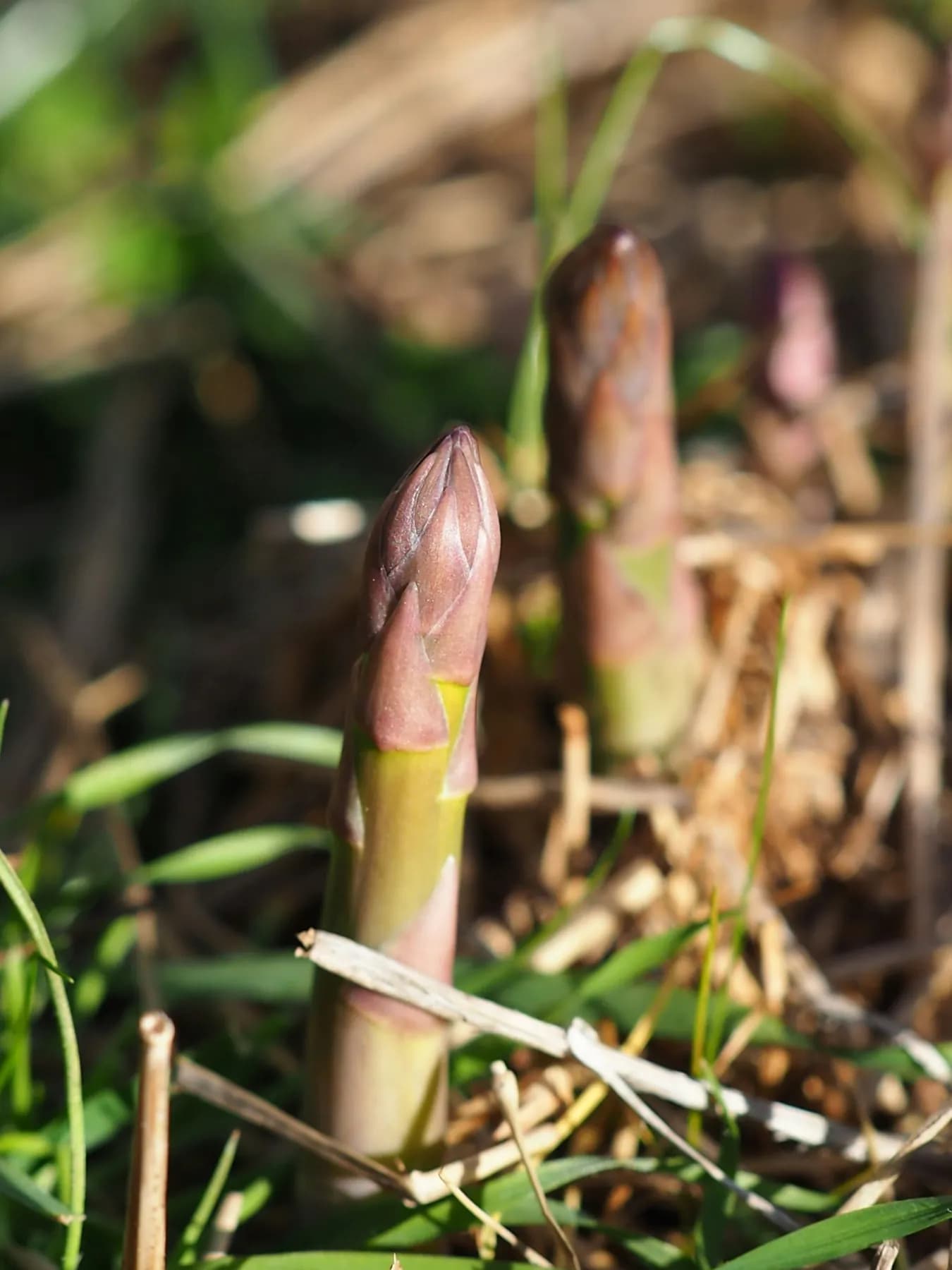
- Spears emerging in spring. Tips are tightly closed when picked. Photo: Rick Whittle / Unsplash.
- Crown planting depth: set the crown at the bottom of the furrow and cover it with 5–7.5 cm (2–3 in) of soil (Midwest Vegetable Production Guide). Schematic illustration; not to scale.
- Fern left to grow after the harvest period refills the crowns for next year. Photo: Eftodii Aurelia / Pexels.
Figures are published averages or study assumptions for the places named, not guarantees for your field. Check current local recommendations and product labels before acting.