

How to grow pumpkins: a commercial guide
Pumpkins are warm-season vines planted after frost. Spacing depends on whether the variety is bush or vining. Yield and shelf life depend on protecting the leaves until the fruit is fully mature, then curing and storing it correctly. Figures are Midwest commercial practice.
Scope: Commercial jack-o-lantern, pie and specialty pumpkins, northern US. Updated 2026-10-16.
At a glance
- Plant when
- After frost; soil above 16°C (60°F); air above 10°C (50°F)1
- Vining spacing
- Rows 1.8–2.4 m (6–8 ft), plants 0.6–1.5 m (2–5 ft) apart; 2.2–3.4 kg seed/ha (2–3 lb seed/acre)1
- Bush spacing
- Rows 1.2–1.8 m (4–6 ft), plants 46–61 cm (18–24 in) apart; 4.5–6.7 kg seed/ha (4–6 lb seed/acre)1
- Full maturity
- About 55 days after fruit set1
- US average yield, 2025
- About 24.2 t/ha (216 cwt/acre); 667,000 t (14.7 million cwt) from 27,600 ha harvested (68,100 acres)4
Choose the pumpkin type for the market
- Jack-o-lantern
- Carving and decorative pumpkins come from two species, Cucurbita pepo and C. maxima, and the market calls for fruit up to 14 kg (30 pounds). Giant pumpkins use C. maxima varieties such as Atlantic Giant.1
- Pie, seed and processing
- Hull-less (“naked”) seed varieties are grown for eating seed. Most “pie” pumpkins sold to consumers are used for decoration, and those processed into pie filling are grown under contract and behave more like winter squash.1
- Bush or vine
- Some varieties have a bush habit rather than long vines, which changes the spacing and seed rate below.1
Plant after frost
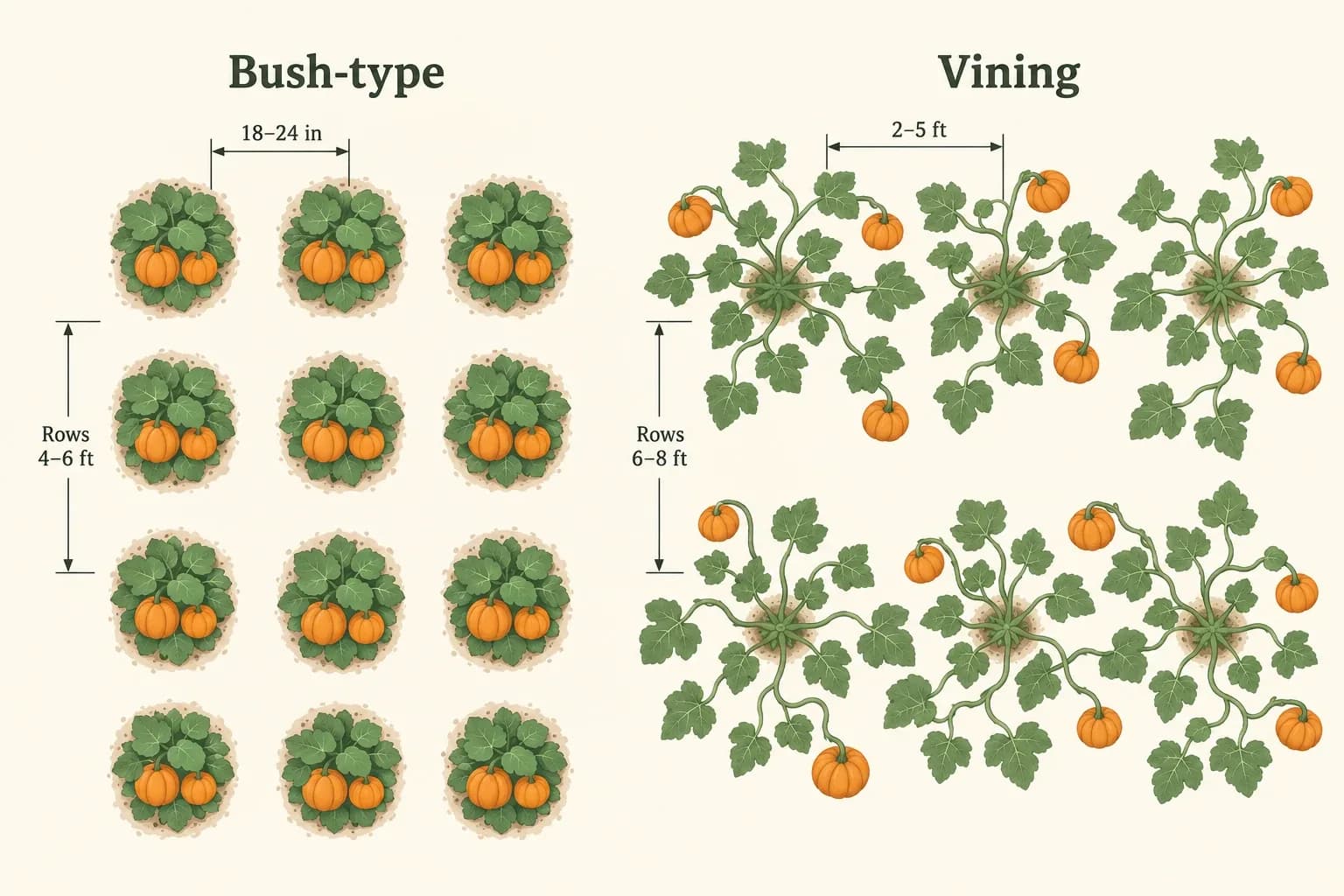
Between rows: 1.8–2.4 m (6–8 ft) · Within the row: 0.6–1.5 m (2–5 ft)
Vining types: rows 1.8–2.4 m (6–8 ft) apart, plants 0.6–1.5 m (2–5 ft) apart, 2.2–3.4 kg seed/ha (2–3 lb seed per acre). Bush types: rows 1.2–1.8 m (4–6 ft), plants 46–61 cm (18–24 in) apart, 4.5–6.7 kg seed/ha (4–6 lb seed per acre). Schematic, not to scale.
- Temperatures
- All cucurbits are frost-tender. Air below 10°C (50°F) causes chilling injury, and soil must be above 16°C (60°F) for good germination of direct-seeded crops. Planting into cold, wet soil gives poor emergence.1
- Water
- Pumpkins are deep-rooted, so rainfall is often adequate and irrigation may not be cost-effective on heavier soils. Adequate early moisture builds vigorous growth, and moisture is critical during blossoming and fruit development.1
Feed for vines and fruit
- pH and magnesium
- Maintain pH 6.0–6.8. Below 5.5 can cause manganese toxicity. If soil magnesium is under 70 ppm and lime is needed, use dolomitic limestone.1
- Nutrient uptake
- Pumpkin, squash, melon and watermelon crops accumulate about 165–180 kg/ha (145–160 lb/acre) N, 34–50 kg/ha (30–45 lb/acre) P2O5 and 180–200 kg K2O/ha (160–180 lb K2O per acre). Adjust N for organic matter and credits and set P and K by soil test.1
- Direct-seeded sandy soils
- Replace preplant N with an early sidedress of 45 kg/ha (40 lb/acre) N when plants show their first true leaves, then 50–65 kg/ha (45–60 lb/acre) N at the onset of rapid vining. On plastic without irrigation, up to 110 kg/ha (100 lb/acre) N preplant and 34–50 kg/ha (30–45 lb/acre) sidedressed later.1
Control beetles, mildew and Phytophthora
- Cucumber beetles
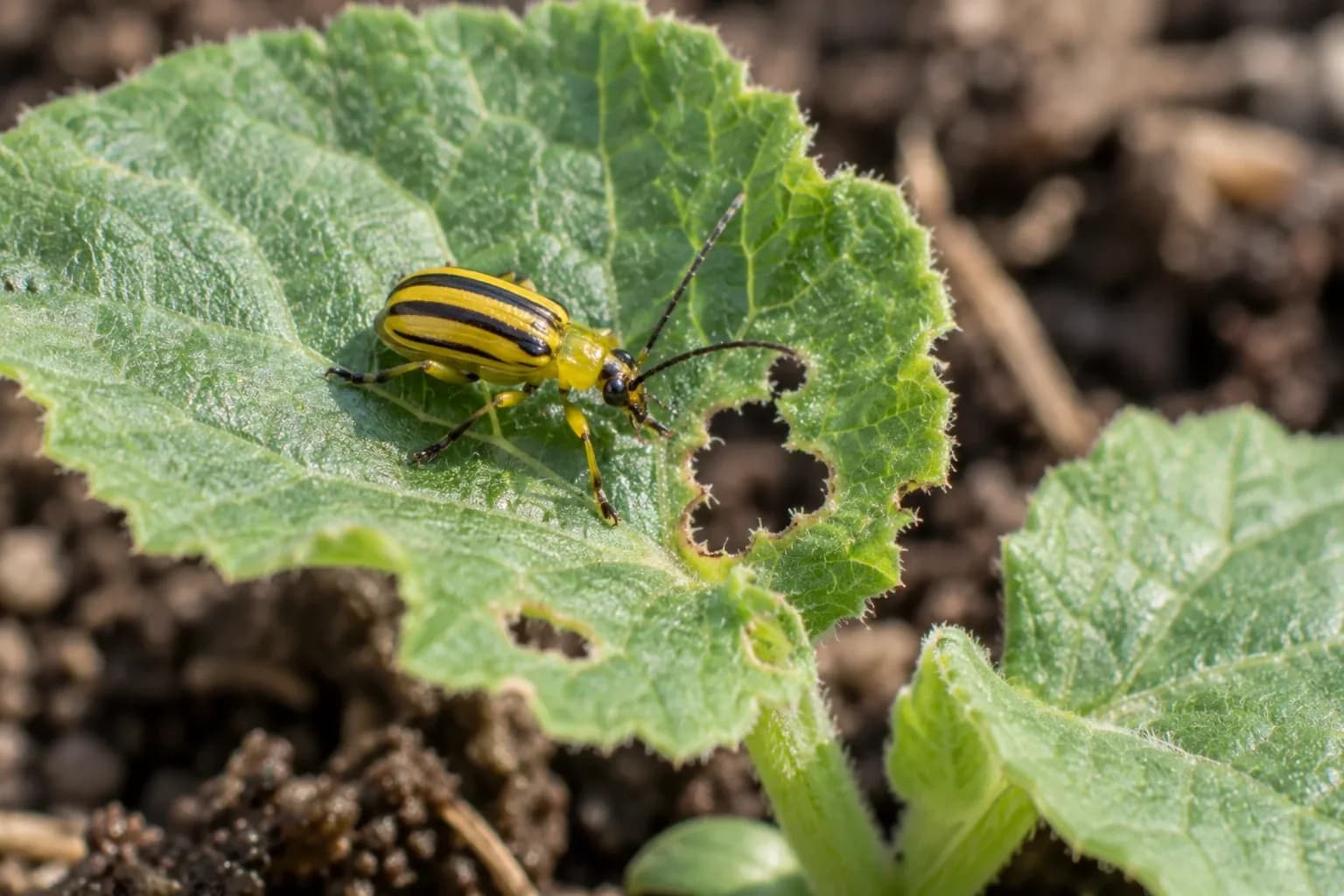
- Beetles feed on plants and spread bacterial wilt, squash mosaic virus and cucurbit yellow vine decline. Treat at 1 beetle per plant from seedling to the 4-leaf stage and at 5 per plant from 4-leaf to harvest. Pumpkins are only hit by bacterial wilt when beetles feed at or before the 5-true-leaf stage.1
- Powdery mildew
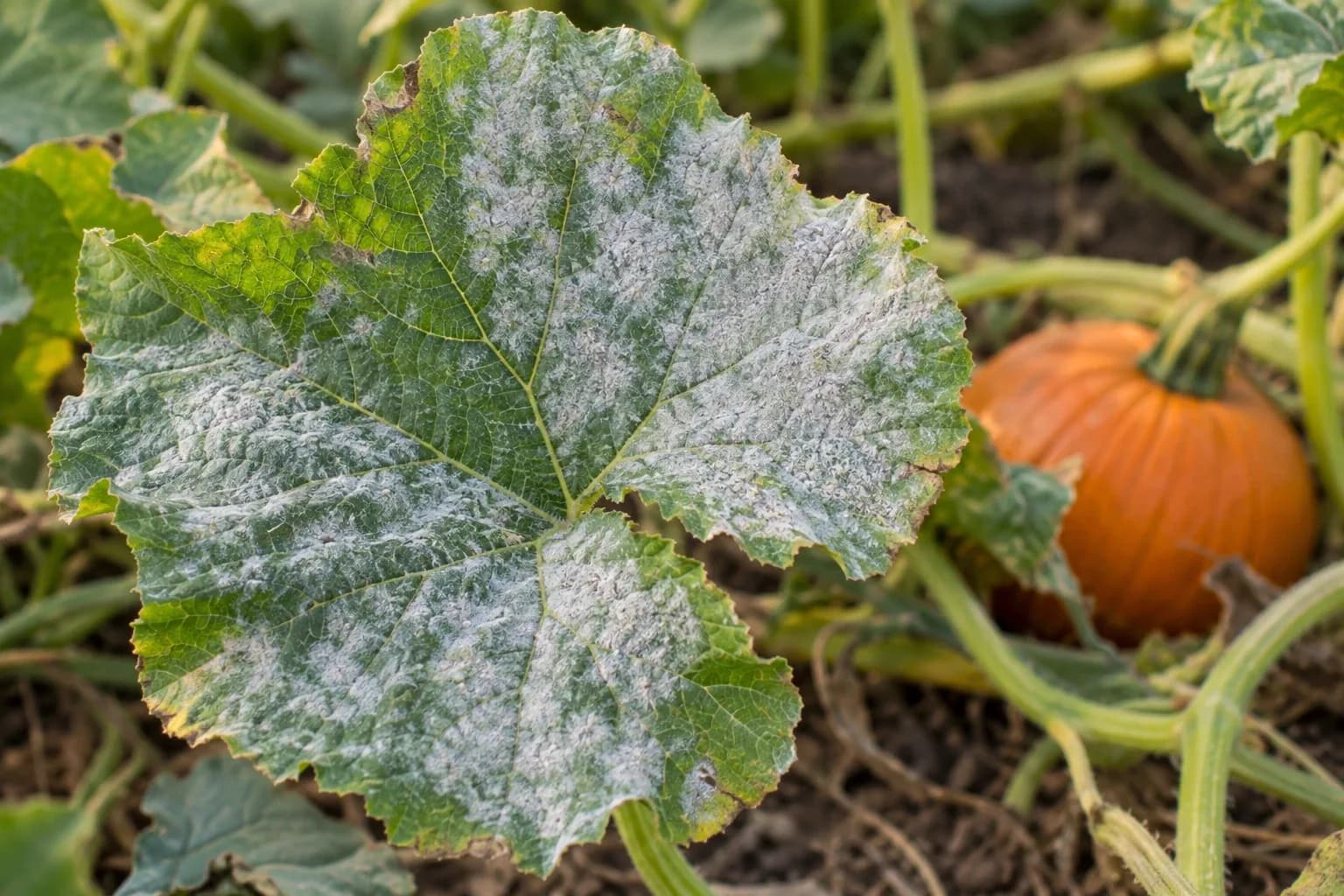
- Pumpkins are a main host. Begin systemic fungicide applications at vine touch (bush stage of pumpkin growth) and protect vines until about 21 days from the last harvest. Some varieties have partial resistance.1
- Phytophthora
- It follows heavy rain and poor drainage and starts in low areas. Avoid wet fields, keep fruit from infested soil and keep harvested fruit dry.1
Harvest, cure and store
- 1
Fruit set
Keep leaves healthy so fruit matures on the vine.
- 2
Full maturity
About 55 days after fruit set, possibly 2+ weeks after the rind colours and hardens.
- 3
Harvest
Hard rind that resists a thumbnail; leave a few inches of stem; hold the fruit like a ball, not by the stem.
- 4
Cure
27–29°C (80–85°F), 75–80% humidity, about 10 days.
- 5
Store
10–13°C (50–55°F), 50–70% humidity, off the ground, ventilated.
- Pumpkins and acorn squash2–3 months
- Butternut squash3–4 months
- Hubbard and buttercup4–6 months
- Let the fruit mature on the vine
- Keep plants green as long as possible. Pumpkins and winter squash harvested before full maturity will not keep as long and have lower eating quality. For ornamental pumpkins, if leaves are dying and the fruit is over 50% coloured, harvest; fruit taken under 50% colour turn but do not harden and rot more easily.1
- Handle carefully
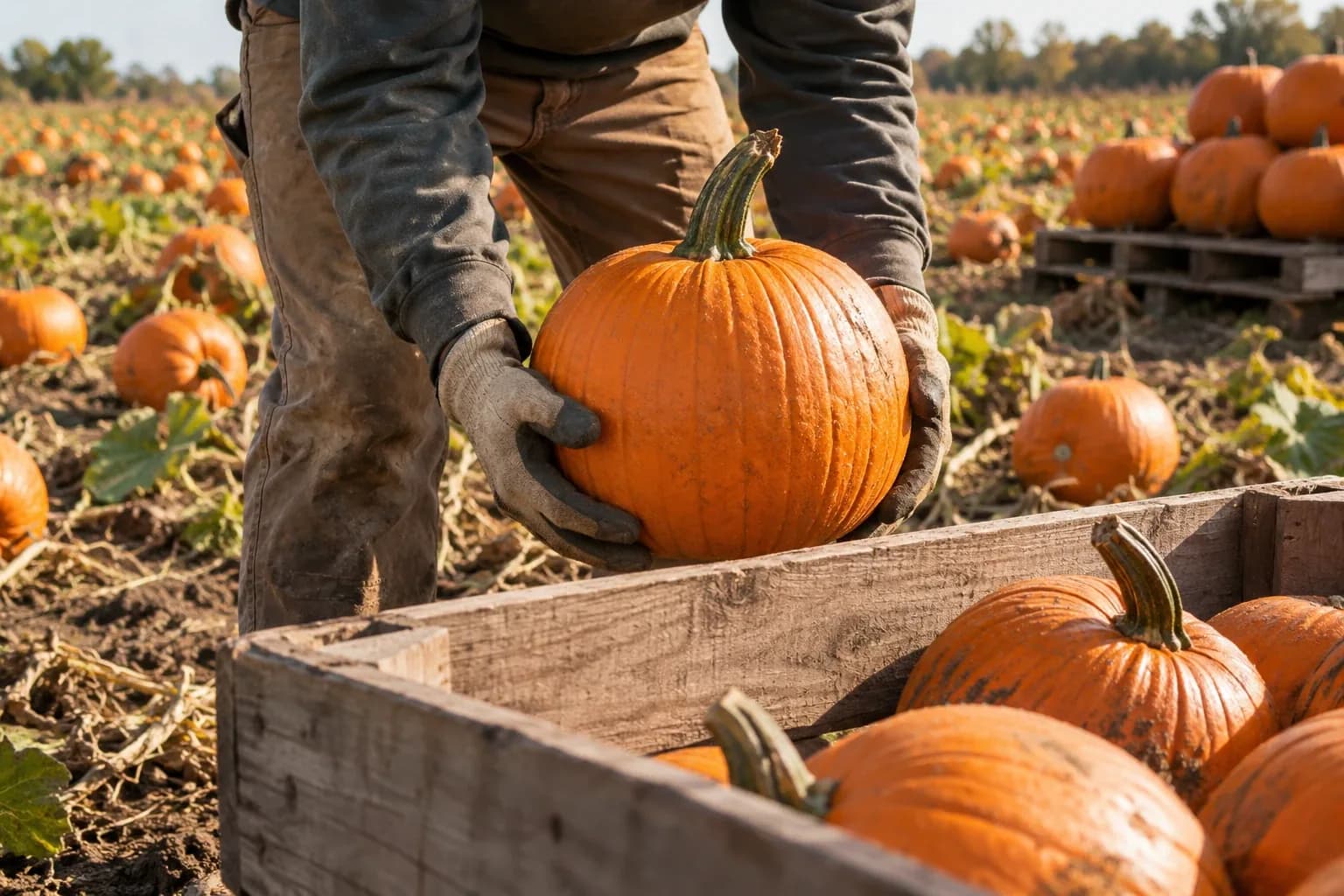
- Cut them from the vine and clean off soil. Stack and package carefully so stems do not break or puncture other fruit. Hold pumpkins like a ball rather than by the stem, though a long stem (handle) is left on for sale.1,2,3
- Cure, except acorn types
- Cure for 5–10 days (ideally 27–29°C (80–85°F)) in a ventilated, shaded place. Curing heals wounds and extends shelf life, but acorn squash is harmed by it and butternut, Hubbard and Quality squash gain nothing.2,3,1
- Keep away from ethylene
- Store pumpkins away from apples and ripening tomatoes.2
Yield and economics
US pumpkin production in 2025 was 667,000 t (14.7 million cwt) from 27,600 ha harvested (68,100 acres; 71,700 acres or about 29,000 ha planted), worth $259 million, 5% less than 2024. That averages about 24.2 t/ha (216 cwt per acre), of which 437,000 t (9.63 million cwt) was for the fresh market.
- Price is seasonal
- Most of the crop is sold in a few weeks around Halloween, so storage and marketing dates matter as much as yield. Use the crop ROI estimator with your own price and picking costs.4
Frequently asked questions
- When do you plant pumpkins?
- After the danger of frost, when soil is above 16°C (60°F) and nights stay above 10°C (50°F).
- How far apart do you plant pumpkins?
- Vining types: rows 1.8–2.4 m (6–8 feet) apart with plants 0.6–1.5 m (2–5 feet) apart. Bush types: rows 1.2–1.8 m (4–6 feet) apart with plants 46–61 cm (18–24 inches) apart.
- How long do pumpkins take to grow?
- Full maturity is about 55 days after fruit set, which can be more than two weeks after the rind has turned colour and hardened.
- How do you cure pumpkins?
- Hold them at 27–29°C (80–85°F) and 75–80% humidity for about 10 days in a ventilated, shaded place, then store.
- How long do pumpkins last in storage?
- About 2–3 months at 10–13°C (50–55°F) and 50–70% humidity.
- How much seed do you need per hectare?
- Vining pumpkins need 2.2–3.4 kg of seed/ha (2–3 lb of seed per acre) and bush types 4.5–6.7 kg/ha (4–6 lb/acre).
Regional guides and field planning
Sources and image credits
- 1. Midwest Vegetable Production Guide 2026 — Cucurbit Crops: Horticulture, Diseases and Insects — 2026 edition; horticulture reviewed 2022, diseases 2023, insects 2025. Midwest commercial melons, watermelon, pumpkins and squash: types, planting dates, spacing, fertility, harvest signs, bacterial wilt, Phytophthora, powdery mildew and cucumber-beetle thresholds.
- 2. University of Vermont Extension — Pumpkin and Squash Harvest and Storage — Accessed 1 October 2026. Harvest signs, curing, storage temperature and humidity and storage life by type. Written for northern New England.
- 3. Alabama Cooperative Extension — Harvesting, Curing, and Post Harvest Care of Pumpkins and Winter Squash — Accessed 1 October 2026. Curing conditions, storage by type, handles and which types should not be cured. Southern conditions.
- 4. USDA NASS — Vegetables 2025 Summary — Published February 2026. US planted and harvested area, production and value; per-acre yields here are derived as production ÷ harvested acres.
Image credits
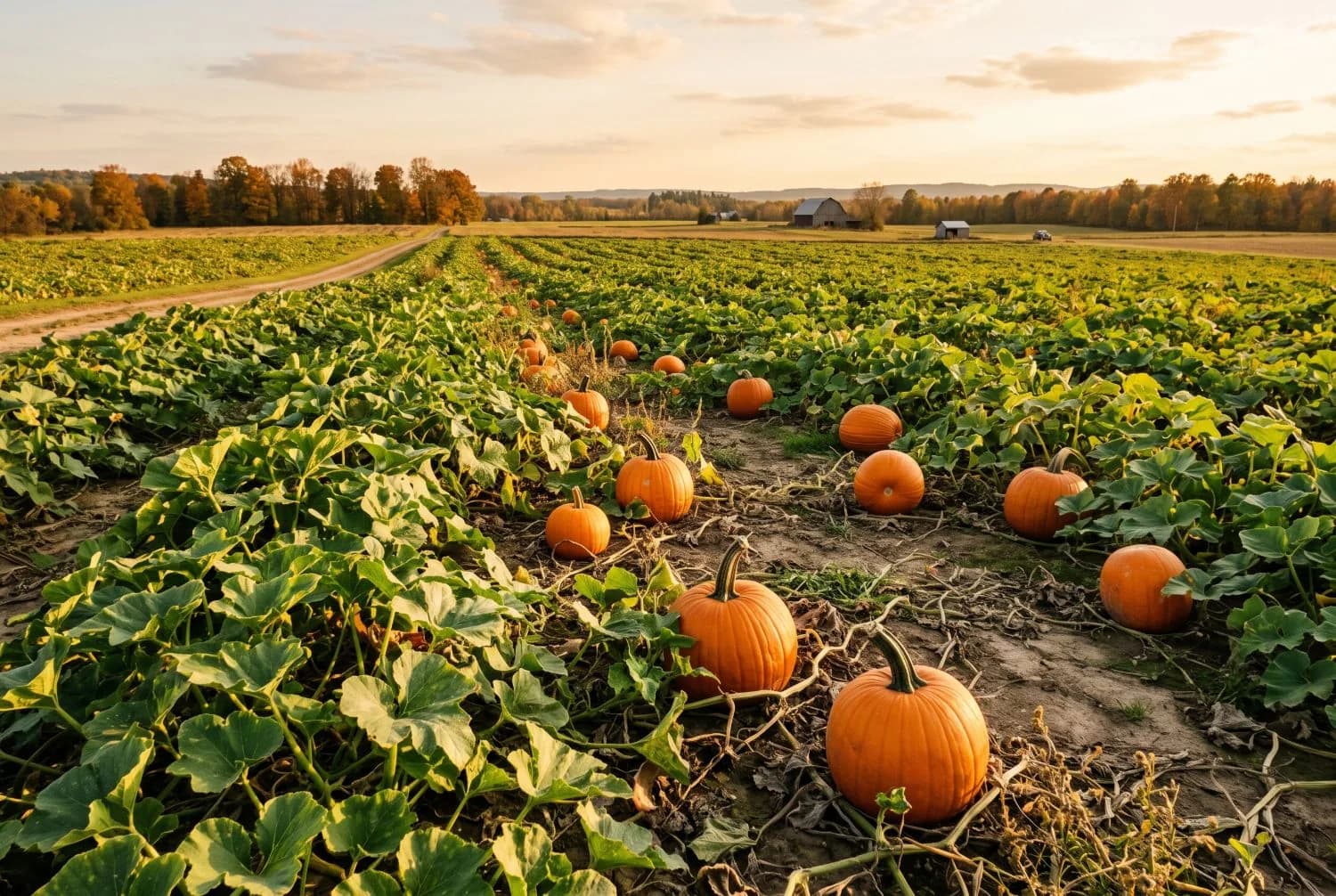
- Vining pumpkins at maturity: the fruit is fully coloured while the vines are still largely green.
- Bush versus vining spacing from the Midwest guide. Schematic illustration; not to scale.
- Striped cucumber beetle feeding on a young leaf. It spreads bacterial wilt as well as chewing leaves.
- Powdery mildew on a pumpkin leaf: white powdery patches that spread without needing leaf wetness.
- Support the pumpkin from underneath like a ball and keep the stem handle intact when moving it.
Figures are published averages or study assumptions for the places named, not guarantees for your field. Check current local recommendations and product labels before acting.
Some visuals in this guide are illustrations rather than photographs of a specific farm. See image credits.