

Growing pineapple in Spain
Spain’s documented pineapple crop is localized to El Hierro in the Canary Islands, especially La Frontera. Local Roja Española production and MD2 trials are part of a commercial recovery effort; clone selection, propagation, pest control and floral induction remain under evaluation, so planting and harvest schedules need to be confirmed for the selected clone and farm.
Scope: Commercial pineapple (Ananas comosus) in El Hierro, Canary Islands. Mainland Spain is not represented, and ongoing recovery research is distinguished from validated recommendations. Updated 2026-10-07.
At a glance
Perennial growth and climate in Spain
A perennial planting remains in the field for multiple years. Establishment is a long-term investment; flowering, fruit development, harvest and plant care recur as the planting matures. Follow the named cultivar and production system.
Establish a long-lived planting1,2,3
Choose establishment timing with a local adviser using your cultivar, planting material and field conditions in Spain. A single month cannot cover every site and production system. The historical climate display describes one regional reference point.
Historical monthly climate
Reference period: 1996-01-01 to 2025-12-31. ERA5-Land monthly mean soil temperature at 0–7 cm, air temperature and frost days at the regional reference point (40.2, -3.7). Select a month to inspect its historical conditions.
Month tiles show mean air temperature.
January historical conditions
- Mean topsoil temperature
- 4.7°C
- Mean air temperature
- 5.4°C
- Mean frost days per month
- 13.6 days
Use this monthly history to assess winter exposure, seasonal heat and water planning. It does not calculate cultivar chill hours, flowering dates, frost damage during bloom or fruit maturity. Topsoil at 0–7 cm describes shallow soil context, not the full root zone. The monthly history does not establish a local flowering, maturity or harvest period.
Climate source: Open-Meteo Historical Weather APIKeep this guide localized to El Hierro
- 1
Confirm island and municipality
Use El Hierro and La Frontera as the local frame.
- 2
Record clone and planting material
Separate Roja Española from MD2 trial blocks.
- 3
Check field history
Review repeat planting and soil-related disease risks.
- 4
Confirm local buyer
Match fruit type and season to the island market.
- Canary Island production is not a mainland system
- The 2023 Canary Islands protocol describes traditional commercial pineapple on El Hierro, with Roja Española dominant and MD2 under test. Do not extend the island’s local practices, climate or market to mainland Spain.1
Use trial results as ongoing research
- 1
Select documented clones
Keep genotype and propagation source traceable.
- 2
Monitor soil and plant health
Record field condition and disease symptoms.
- 3
Evaluate induction treatments
Use only locally authorized methods under trial guidance.
- 4
Measure fruit quality
Record postharvest results before recommending a system.
- The 2026 recovery phase is not a finished protocol
- The Canary Islands update says field clone plantings began in 2025 and describes continued work on propagation, soil, mealybug control, floral induction and postharvest quality. These are active research topics, not settled farm instructions or a fixed harvest calendar.2
Prioritize mealybug and soil-history management
- 1
Inspect planting material
Check for mealybugs before field establishment.
- 2
Scout plants regularly
Look for pest and wilt symptoms.
- 3
Review field history
Note previous pineapple and soil-health issues.
- 4
Use current local advice
Confirm permitted controls and trial status with ICIA.
- Wilt risk is linked to pest and field conditions
- The 2023 protocol identifies pineapple mealybug (Dysmicoccus brevipes) and associated wilt as important threats and notes soil pests and pathogens in repeated plantings. Follow current integrated management guidance; do not copy time-limited pesticide instructions without checking local registration.1
Confirm local water and harvest standards
- 1
Test soil and water
Assess acidity, drainage and supply with local advisers.
- 2
Confirm irrigation design
Do not reuse historical water estimates as current rates.
- 3
Track crop stage
Record planting, induction, flowering and fruit growth.
- 4
Harvest to measured quality
Use clone-specific maturity and postharvest results.
- Older fertilizer guidance needs current validation
- A MAPA reference describes warm-climate pineapple needs, acid soil and sprinkler irrigation, but it is older and not a current El Hierro schedule. The reviewed 2026 update does not yet establish a standard island harvest month; verify current farm and research data before setting water or maturity targets.2,3
Frequently asked questions
- Where is pineapple grown in Spain?
- The documented commercial system is on El Hierro in the Canary Islands, particularly La Frontera. This is not a mainland Spain production guide.
- Which pineapple variety is grown on El Hierro?
- Roja Española is the traditional local material; MD2 is being tested on some farms.
- What is the El Hierro pineapple harvest season?
- The current public recovery update describes ongoing clone and floral-induction trials and does not establish a standard island harvest calendar.
- What are the main risks to El Hierro pineapple?
- The local protocol identifies pineapple mealybug and associated wilt, along with soil-health concerns in repeated plantings.
Put your own numbers in
Sources and image credits
- 1. Canary Islands Government Gazette — Pineapple production protocol — 2023. El Hierro production history, local material, mealybug/wilt risks and technical protocol context.
- 2. Canary Islands Government — El Hierro pineapple recovery research update — 25 March 2026. Active clone, propagation, soil, pest, induction and postharvest research; not a completed production standard.
- 3. Spanish Ministry of Agriculture — Fertilization reference for tropical fruit — Older technical reference. Canary Islands pineapple background on soil, irrigation and water; not current El Hierro rates.
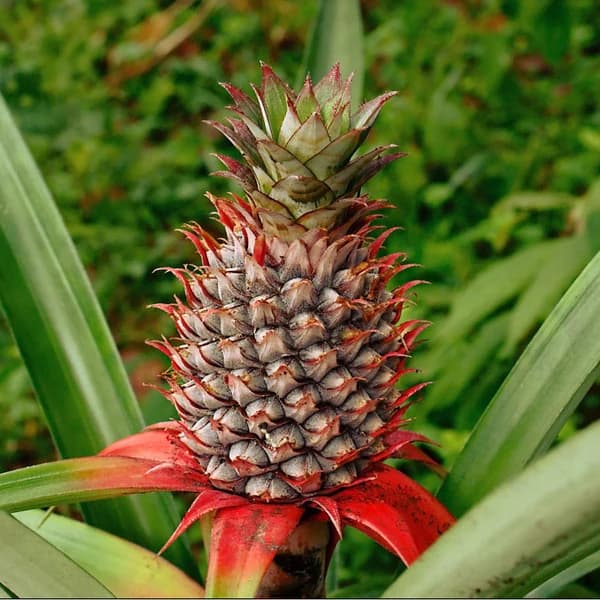
- 4. Pineapple crop-identification photo — Suniltg at Malayalam Wikipedia — Wikimedia Commons; CC BY 3.0. Crop-identification image only; it is not a photograph of the named region or a production recommendation.
Image credits
- Crop-identification photo; not a Spain production field. Photo: Suniltg at Malayalam Wikipedia, CC BY 3.0.
Figures are published averages or study assumptions for the places named, not guarantees for your field. Check current local recommendations and product labels before acting.