

Oca farming in Australia: feasibility and evidence
Before planting oca (Oxalis tuberosa) commercially in Australia, confirm compliant planting stock, a buyer and local trial results. Oca is an Andean tuber also called “New Zealand yam”. Check the import conditions for the exact material you intend to source: a permitted-seed listing does not authorize importing tubers.
Scope: Assess planting-stock access, local field performance and market demand for oca (Oxalis tuberosa), also called New Zealand yam. True yams belong to Dioscorea and are different crops. Updated 2026-10-07.
At a glance
Planting and harvest calendar for Australia
Use the source-backed production windows to coordinate establishment, crop care and harvest. Production districts and cultivars can have different cycles; the historical climate adds context for the field plan.
Historical monthly climate
Reference period: 1996-01-01 to 2025-12-31. ERA5-Land monthly mean soil temperature at 0–7 cm, air temperature and frost days at the regional reference point (-34.5, 147). Select a month to inspect its historical conditions.
Month tiles show mean topsoil temperature.
January historical conditions
- Mean topsoil temperature
- 29.1°C
- Mean air temperature
- 25.7°C
- Mean frost days per month
- 0.0 days
These are monthly means at one reference location. They describe seasonal field conditions, not crop maturity, actual seed-zone conditions, frost forecasts or a planting recommendation. Harvest bands follow the crop-specific production sources above.
Climate source: Open-Meteo Historical Weather APIConfirm the tuber and planting-material identity
- 1
Confirm species
Use Oxalis tuberosa, not a generic Oxalis name.
- 2
Specify material form
Seeds, tubers and live plants have different import conditions.
- 3
Check current BICON case
Verify origin and material requirements with DAFF.
- 4
Keep documentation
Retain permits and source records for planting material.
Recognize the Australian production gap
- 1
Secure compliant planting stock
Resolve DAFF import and plant-health conditions.
- 2
Run regional field trials
Measure emergence, canopy, tuber set and crop duration.
- 3
Document soil and water
Record field conditions and inputs over multiple seasons.
- 4
Test customer demand
Confirm buyer, grading and storage requirements.
Do not borrow an Andean or home-scale calendar
- 1
Select legal stock
Use traceable material that satisfies current biosecurity rules.
- 2
Compare trial sites
Use measured local temperature, soil and water records.
- 3
Track tuber quality
Record marketable grades, storage and losses.
- 4
Calculate unit costs
Include planting stock, labor, harvest and handling.
Validate planting material and a pilot crop
- 1
Verify material legality
Obtain current DAFF clearance before sourcing tubers.
- 2
Confirm a market
Check expected volume, price and quality specification.
- 3
Measure several seasons
Record yield, labor, water and storage performance.
- 4
Scale only on evidence
Use repeat farm results to decide whether to expand.
Frequently asked questions
- Is oca grown commercially in Australia?
- No Australian commercial production system was verified in the reviewed sources. This does not prove that no individual farm has tried it.
- Can oca tubers be imported into Australia?
- DAFF says live-plant conditions depend on species, material form and origin. A permitted-seed list entry is not permission to import tubers; check the current BICON case.
- What is the Australian oca planting season?
- No Australian commercial calendar was verified. Do not infer months from climate normals or foreign production practice.
- What yields can an Australian oca farm expect?
- The sources reviewed do not report Australian commercial yields, harvest grades or farm economics.
Put your own numbers in
Sources and image credits
- 1. Australian Department of Agriculture, Fisheries and Forestry — Permitted Seeds List, Chapter 5 — Effective 5 November 2025. Permitted-seed listing for Oxalis tuberosa; it does not authorize tuber imports or prove local commercial production.
- 2. Australian Department of Agriculture, Fisheries and Forestry — Importing live plants (nursery stock) — Current biosecurity guidance. Live-plant import conditions depend on species, plant-material form and origin; check BICON.
- 3. Manaaki Whenua — Flora of New Zealand: Oxalis tuberosa — Flora of New Zealand Volume IV, 1988; accessed October 7, 2026. Botanical identity and New Zealand yam terminology; not Australian field-production guidance.
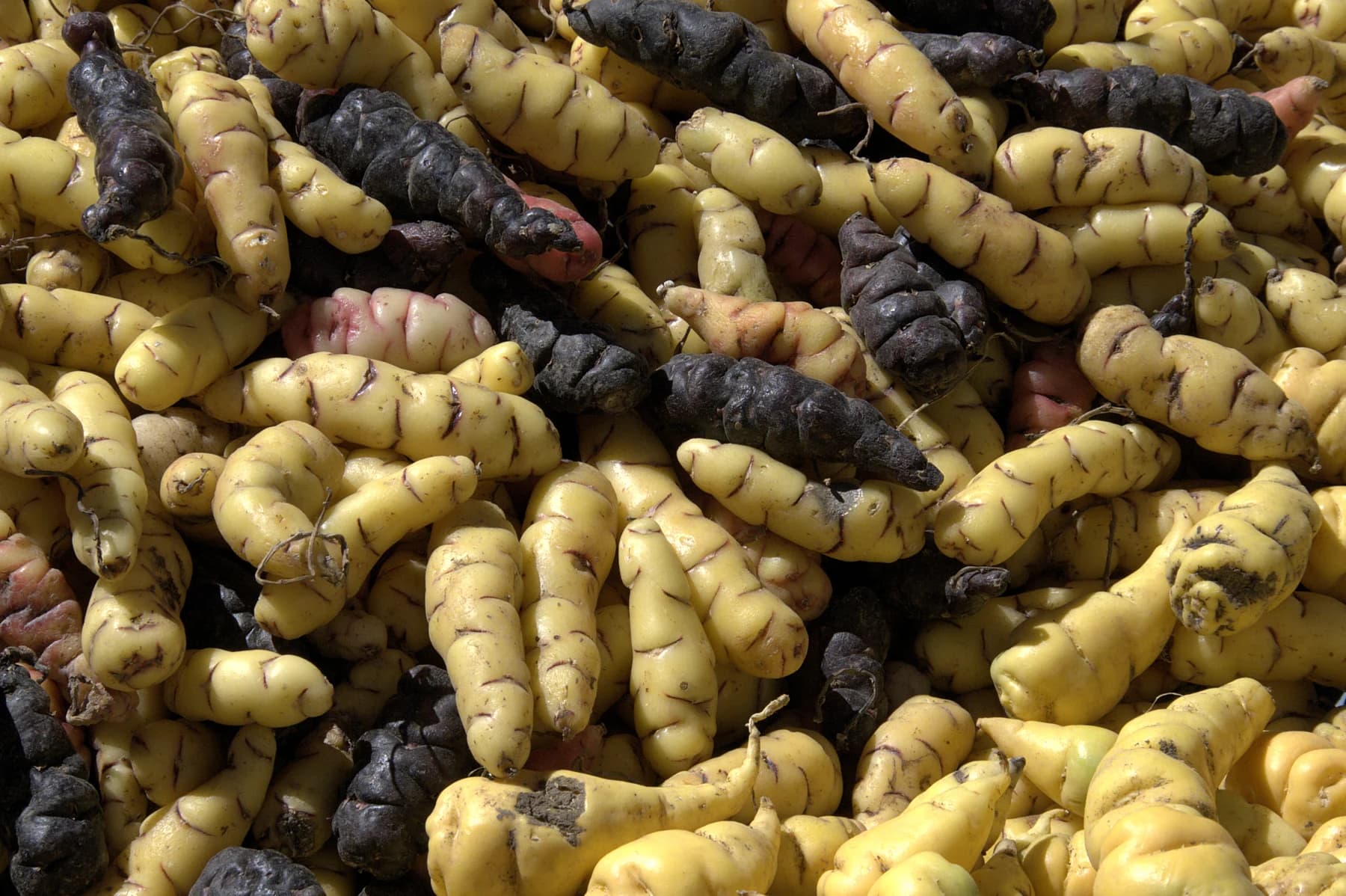
- 4. Oca tuber photograph — Markus Leupold-Löwenthal — May 19, 2008; CC BY-SA 3.0. Oca tuber identification photograph, resized. Capture location and cultivar are not specified; does not document Australian production or a market grade.
- 5. Oca photograph license — CC BY-SA 3.0 — Creative Commons Attribution-ShareAlike 3.0. The resized photograph retains its original share-alike license.
Image credits
- Oca (Oxalis tuberosa) tubers. Photo: Markus Leupold-Löwenthal, CC BY-SA 3.0; resized under the same license.
Figures are published averages or study assumptions for the places named, not guarantees for your field. Check current local recommendations and product labels before acting.