

Grapefruit farming in China: crop identity and evidence
The available Yunnan source names “Cocktail grapefruit” among promoted citrus cultivars, but does not identify its botanical parentage or give grapefruit-specific orchard practice. Before choosing trees or laying out an orchard, confirm whether the cultivar is true grapefruit and obtain local performance records.
Scope: True grapefruit (Citrus × paradisi) in China. Yunnan citrus statistics are included only as broad context; they do not prove true-grapefruit acreage or a local production package. Updated 2026-10-07.
At a glance
Perennial growth and climate in China
A perennial planting remains in the field for multiple years. Establishment is a long-term investment; flowering, fruit development, harvest and plant care recur as the planting matures. Follow the named cultivar and production system.
Establish a long-lived planting1,2
Choose establishment timing with a local adviser using your cultivar, planting material and field conditions in China. A single month cannot cover every site and production system. The historical climate display describes one regional reference point.
Historical monthly climate
Reference period: 1996-01-01 to 2025-12-31. ERA5-Land monthly mean soil temperature at 0–7 cm, air temperature and frost days at the regional reference point (34, 113). Select a month to inspect its historical conditions.
Month tiles show mean air temperature.
January historical conditions
- Mean topsoil temperature
- 2.3°C
- Mean air temperature
- 1.7°C
- Mean frost days per month
- 28.5 days
Use this monthly history to assess winter exposure, seasonal heat and water planning. It does not calculate cultivar chill hours, flowering dates, frost damage during bloom or fruit maturity. Topsoil at 0–7 cm describes shallow soil context, not the full root zone. The monthly history does not establish a local flowering, maturity or harvest period.
Climate source: Open-Meteo Historical Weather APIVerify what “grapefruit” means locally
- 1
Check botanical identity
Confirm species or parentage with the cultivar owner or research institute.
- 2
Identify the fruit market
Record the local commercial name separately from the scientific crop name.
- 3
Keep pomelo distinct
Do not transfer Citrus maxima production details to grapefruit.
- 4
Document the planting
Tie future field observations to cultivar, site and rootstock.
- Keep grapefruit, pomelo and hybrids separate
- A cultivar name containing “grapefruit” is not enough to establish Citrus × paradisi. Confirm the pedigree or an authoritative cultivar identity before transferring true-grapefruit production information to the Yunnan cultivar.1
Read regional citrus numbers at the right scale
- 1
Use it for context
Yunnan has a large citrus sector and promotes cultivar diversification.
- 2
Do not assign totals
The reported area and tonnes are for all citrus.
- 3
Find the cultivar record
Seek local trial data for identity, yield and harvest maturity.
- 4
Check the outlet
Confirm a buyer and pack specification for the intended fruit.
- Provincewide citrus totals are not grapefruit totals
- Yunnan reported 2022 citrus area and production across the whole citrus category. The source does not break out true grapefruit, named hybrids, orchard systems, yields or buyers, so those totals cannot support a grapefruit business case.1
Plan the orchard with local cultivar records
- 1
Confirm species and rootstock
Obtain traceable, locally tested planting material.
- 2
Collect site data
Test soil, irrigation water, drainage and frost exposure.
- 3
Find a local trial
Record cultivar, management and harvest results over more than one season.
- 4
Validate market handling
Use buyer and packhouse standards for the actual fruit type.
- Confirm rootstock, row layout and inputs locally
- No Yunnan-specific grapefruit source was found for spacing, rootstock, soil, water, fertilizer, crop protection or establishment timing. Generic citrus postharvest material can inform handling questions only; it does not supply a field-production protocol.1,2
Treat this as a feasibility question
- 1
Source authenticated stock
Retain cultivar and parentage records.
- 2
Use a measured pilot block
Compare site and rootstock options under local conditions.
- 3
Record fruit and costs
Track marketable packout, labor, water and input use.
- 4
Scale only with a buyer
Confirm repeat demand and postharvest requirements first.
Frequently asked questions
- Is grapefruit grown commercially in China?
- The reviewed sources identify a Yunnan citrus cultivar called “Cocktail grapefruit,” but do not establish its botanical identity or a true-grapefruit production system.
- Is pomelo the same as grapefruit?
- No. Pomelo is Citrus maxima; true grapefruit is Citrus × paradisi. Named hybrids should be identified separately.
- How far apart should grapefruit trees be planted in China?
- No grapefruit-specific local spacing was verified. Do not borrow a pomelo or generic citrus layout without confirming rootstock, cultivar, machinery and local trial evidence.
- What is the harvest season for grapefruit in Yunnan?
- Confirm the picking season with your nursery, local adviser and buyer for the identified cultivar. The Yunnan citrus report does not give a grapefruit-specific harvest period. Use local maturity observations to plan picking and delivery.
Put your own numbers in
Sources and image credits
- 1. Yunnan Department of Agriculture and Rural Affairs — Citrus industry development — 8 January 2024. All-citrus area/output and promoted cultivar names; not grapefruit-specific orchard guidance.
- 2. China Ministry of Agriculture and Rural Affairs — Citrus storage and freshness guidance — 2023. General citrus postharvest categories and storage context, not Yunnan grapefruit production.
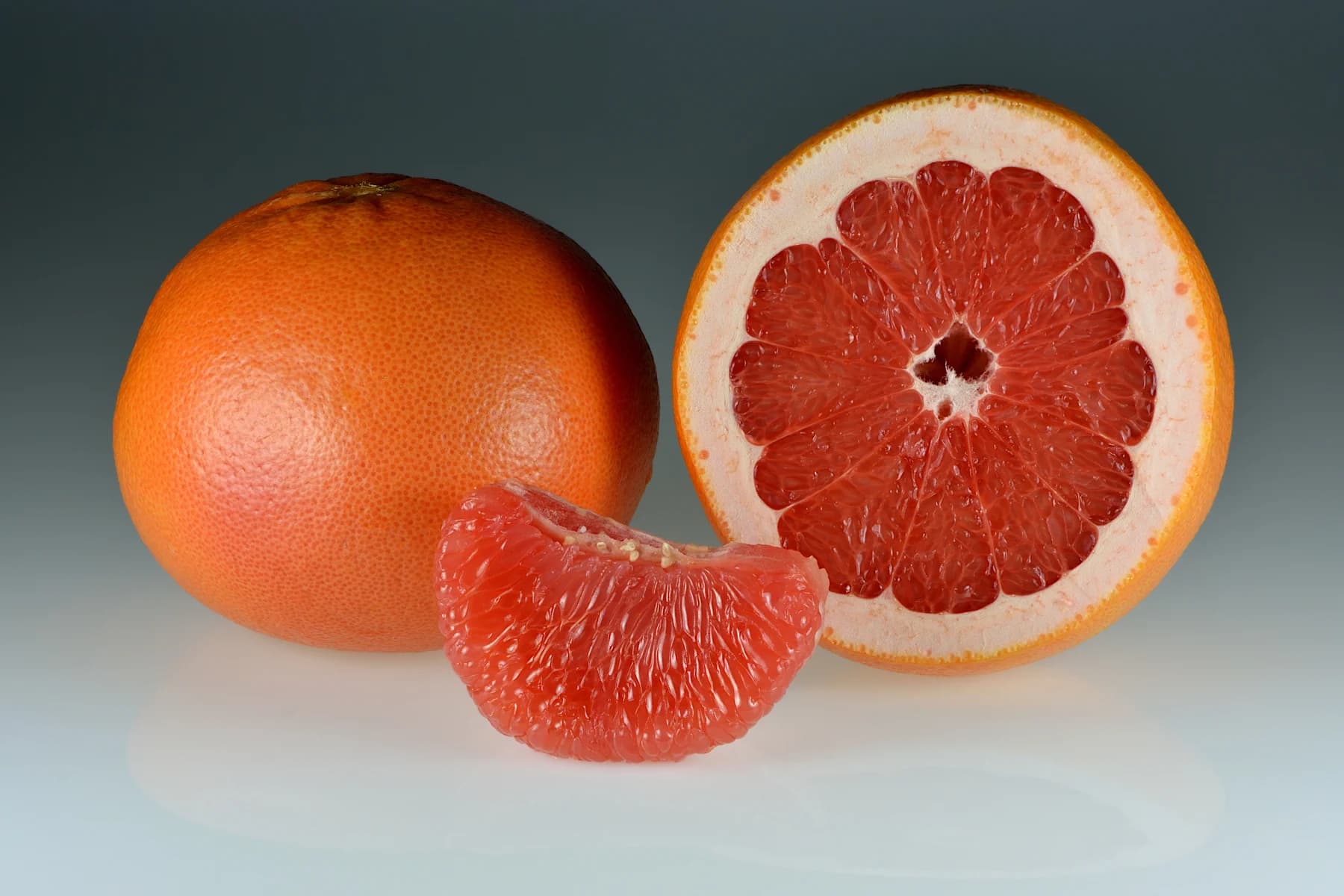
- 3. Grapefruits — whole, halved and segments — Ivar Leidus — December 31, 2020; CC BY-SA 4.0. Red grapefruit fruit identification. The source does not establish Chinese production or the identity of locally named Cocktail citrus.
- 4. Fruit photograph license — CC BY-SA 4.0 — Creative Commons Attribution-ShareAlike 4.0. The resized fruit photograph retains its original share-alike license.
Image credits
- Red grapefruit fruit and cut section. Photo: Ivar Leidus, CC BY-SA 4.0; resized under the same license. Fruit identification, not a Chinese orchard or the locally named Cocktail cultivar.
Figures are published averages or study assumptions for the places named, not guarantees for your field. Check current local recommendations and product labels before acting.