

Cranberry farming in India: site feasibility
There is no single cranberry calendar for India. The American cranberry (Vaccinium macrocarpon) is a perennial crop with a documented cold-winter requirement, cool fruit-maturation conditions and a specialised acidic, moist but aerated root zone. The production sources reviewed describe North American systems, not a validated Indian commercial package. Treat any Indian planting as a monitored site trial until cultivar performance, fruit quality and a buyer are demonstrated locally.
Scope: India-wide feasibility guide. Temperature, soil and bed-system references are from North American cranberry production and are not India-wide prescriptions. The historical climate panel represents one regional reference point, not all Indian production zones. Updated 2026-10-07.
At a glance
- North American growth reference
- UMaine reports optimum growth at 16–27°C (60–80°F); fruit maturation benefits from cool conditions2
- Winter chill evidence
- UMaine reports abnormal bloom in a Massachusetts observation below about 1,500 hours under 7.2°C (45°F); not a universal cultivar threshold2
- Maine bed reference
- Acidic sand, pH 4.0–5.0; moist but not saturated, with drainage and aeration1
- Production system
- Engineered beds with controlled drainage, irrigation and flood capability; not permanent standing water1,3
- India import context
- A 2022 trade snapshot reported 2.9 million kg of cranberry imports; this is not farm-gate demand or a local price4
Perennial growth and climate in India
A perennial planting remains in the field for multiple years. Establishment is a long-term investment; flowering, fruit development, harvest and plant care recur as the planting matures. Follow the named cultivar and production system.
Establish a long-lived planting1,2,3
Do not copy a North American planting date. Before a small trial, identify the cultivar and planting material, measure winter chill and seasonal heat at the intended site, and confirm an acidic root zone with reliable irrigation and drainage.
Management: Record winter dormancy, budbreak and bloom2
Track cultivar-specific winter chill, budbreak, flowering, fruit set and frost exposure each year. The cited chilling observation is from Massachusetts and is not a validated threshold for every cultivar or an Indian site.
Historical monthly climate
Reference period: 1996-01-01 to 2025-12-31. ERA5-Land monthly mean soil temperature at 0–7 cm, air temperature and frost days at the regional reference point (22, 79). Select a month to inspect its historical conditions.
Month tiles show mean air temperature.
January historical conditions
- Mean topsoil temperature
- 19.8°C
- Mean air temperature
- 18.5°C
- Mean frost days per month
- 0.0 days
Use this monthly history to assess winter exposure, seasonal heat and water planning. It does not calculate cultivar chill hours, flowering dates, frost damage during bloom or fruit maturity. Topsoil at 0–7 cm describes shallow soil context, not the full root zone. The monthly history does not establish a local flowering, maturity or harvest period.
Climate source: Open-Meteo Historical Weather APIScreen the site before investing in a cranberry bed
Cranberry production depends on several conditions being met together. A climate score or a suitable-looking wet field does not establish that a cultivar will flower, set fruit or reach a marketable harvest at an Indian site.
- 1
Verify the crop
Specify Vaccinium macrocarpon and the cultivar on the planting-material order.
- 2
Measure the climate
Record winter chill, spring frost exposure, summer heat and conditions during fruit maturation.
- 3
Test the root zone
Measure pH and confirm the proposed bed can both drain and retain managed moisture.
- 4
Confirm operations and market
Check water control, propagation supply, harvest handling and buyer requirements before expanding.
- The answer depends on the actual site and cultivar
- India spans very different climates. The monthly history shown here is one regional reference point and cannot classify the whole country or predict cranberry flowering. Compare the intended field’s weather record with the cultivar’s documented chilling and heat requirements.2
- Keep North American evidence in its place
- The cited extension material documents production in Maine and Massachusetts. It describes useful crop requirements and bed operations, but it does not validate an Indian cultivar, planting date, spacing or expected yield.1,2,3
- Do not infer commercial suitability from imported fruit
- India’s import record shows that cranberry products entered the national market in 2022. It does not identify local fresh-fruit buyers, farm-gate prices, processing specifications or profitability for a new Indian planting.4
Check chilling, heat and fruit-maturation conditions
- Measure winter chill for the named cultivar
- Cranberries need a winter resting period. A University of Maine climate presentation reports abnormal blossom development in a Massachusetts observation when plants received less than about 1,500 hours below 45°F (7.2°C). Treat that as a regional observation, not a universal threshold or India recommendation; use the cultivar’s own requirement and a local hourly record.2
- Compare seasonal temperatures, not one annual average
- The University of Maine presentation gives 60–80°F (about 16–27°C) as an optimum growth range and notes the value of cool temperatures while fruit mature. Compare daily and hourly conditions across winter, bloom and ripening at the proposed site; monthly means alone can hide damaging extremes.2
- Treat the climate panel as context only
- The historical panel reports monthly means at a representative location. It does not calculate cultivar chill accumulation, frost injury at bloom, fruit maturity or commercial suitability.2
Plan an acidic, moist and well-aerated root zone
- Test soil and bed materials before construction
- The University of Maine reference calls for acidic sand at pH 4.0–5.0 over a base that can retain a managed flood. This is a Maine bed specification, not an India soil prescription. Test water and proposed media, and involve local soil and irrigation specialists before attempting to adjust pH.1
- Keep water under control
- Cranberry beds are irrigated and may be flooded for specific operations, but the vines do not remain submerged. New plantings need moist, not saturated, soil; reliable drainage and root aeration remain essential.1,3
- Price the system, not just the plants
- A commercial bed can require reservoirs, dikes, ditches, pumps and flood-and-drain control. The Maine source describes substantial construction and operating needs; its costs are dated and should not be reused as an Indian budget.3
Run a measured trial before scaling up
A small replicated block can show whether a candidate Indian site meets the crop’s requirements. Keep the observations tied to cultivar, bed and weather so a promising season is not mistaken for a reliable commercial system.
- 1
Before planting
Record cultivar identity, plant source, site pH, drainage, water source and hourly climate data.
- 2
During dormancy and bloom
Log chill, budbreak, flowering, frost events and pollinator activity.
- 3
During fruit growth
Track heat, irrigation, disease, fruit set, maturity and harvest date.
- 4
Before expansion
Measure marketable yield and grade, handling losses, input cost and confirmed buyer demand.
- Do not import a US planting calendar
- The Maine bulletin describes its own spring planting and autumn harvest schedule. Those dates follow the local cultivar and climate; this page does not turn them into Indian months. Time an Indian trial from verified planting-material guidance and observed local conditions.3
Frequently asked questions
- Can cranberries be grown commercially in India?
- The sources reviewed do not establish a validated, India-wide commercial production package. Cranberry performance depends on cultivar-specific winter chill, cool fruit maturation and a carefully managed acidic root zone. Treat a proposed Indian location as a trial site until local results and a buyer are documented.
- Which cranberry is covered by this guide?
- This guide covers American cranberry, Vaccinium macrocarpon. Confirm the species and cultivar with the nursery before buying planting material.
- When should cranberries be planted in India?
- No India-wide planting month is supported by the sources reviewed. Cranberries are perennial, and the Maine planting dates should not be copied to India. Follow verified cultivar and nursery guidance and record establishment conditions in a local trial.
- What soil pH do cranberries need?
- The University of Maine bed guide gives pH 4.0–5.0 for its sand layer. That is a North American production reference, not a blanket Indian target. Test the field, bed material and irrigation water before making amendments.
- Do cranberry plants need to grow in standing water?
- No. Commercial beds may be flooded for specific tasks, but vines need a moist, aerated root zone and good drainage. Permanent saturation is not the production system described by the extension sources.
- Does India’s cranberry import market prove a local farming opportunity?
- No. An Agriculture and Agri-Food Canada report recorded 2.9 million kg of imports in 2022, but that national trade figure does not show a local buyer, farm-gate price or profitable production system.
Put your own numbers in
Sources and image credits
- 1. University of Maine Cooperative Extension — How to Grow Cranberries — Accessed 7 October 2026. Cranberry bed soil, acidity, drainage, irrigation and frost management; Maine production reference, not Indian recommendations.
- 2. University of Maine Cooperative Extension — Cranberries and a Changing Climate — 2016. North American crop temperature context, cool fruit maturation and a Massachusetts chilling observation; not a universal cultivar threshold.
- 3. University of Maine Cooperative Extension — Commercial Cranberry Production in Maine: An Introduction — Revised 2003. Maine commercial bed design, water infrastructure, establishment and production operations. Historical costs and dates are not used as India estimates.
- 4. Agriculture and Agri-Food Canada — Customized Report Service: Cranberry Products in India — Published 2023; trade figures for 2018–2022. National import and export context. Trade data does not establish Indian farm-gate demand, local prices or profitability.
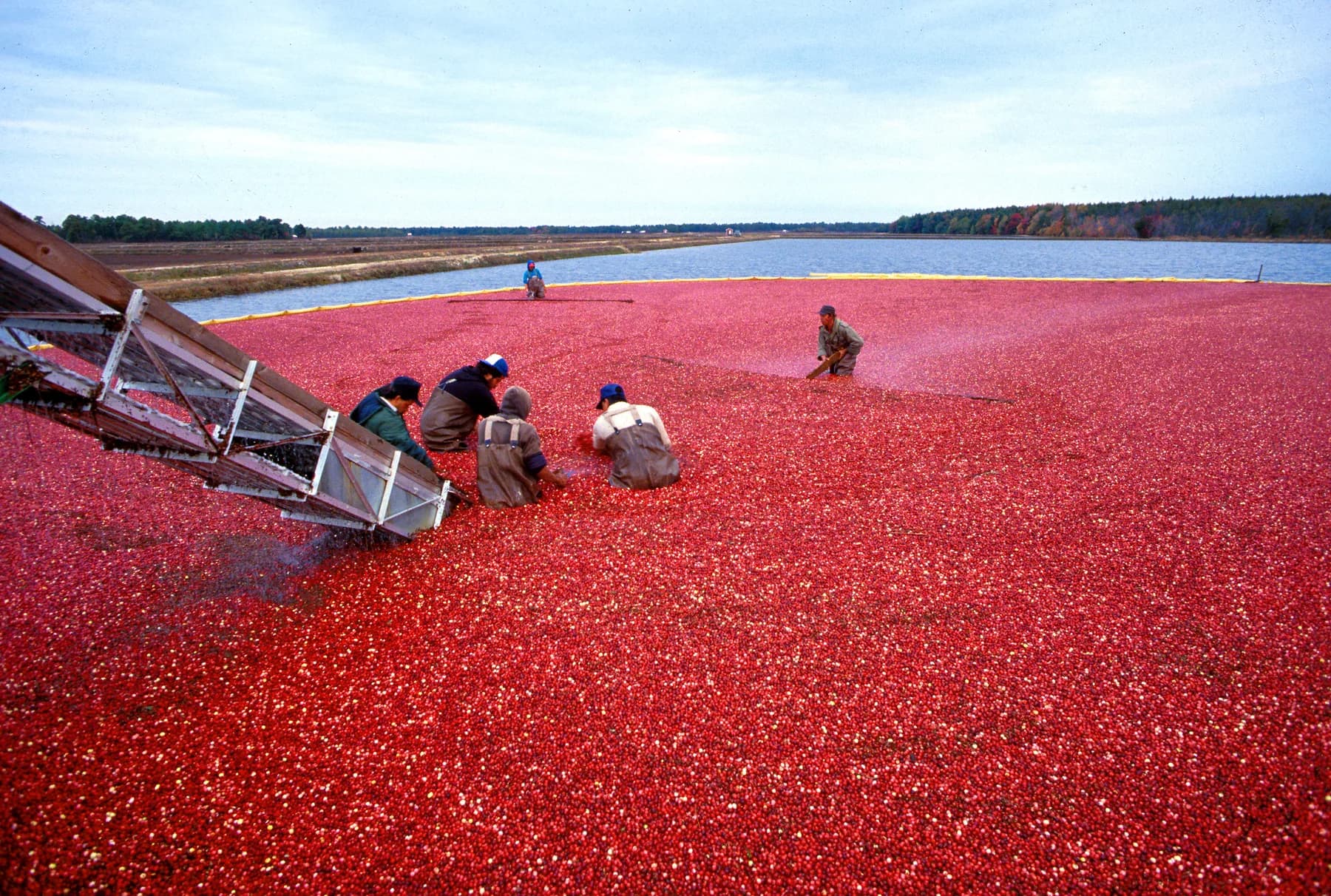
- 5. Cranberry wet harvest — Keith Weller, USDA-ARS — Public domain US federal-government photograph, ARS K4418-6. New Jersey harvest-system example; resized. This photograph does not document an Indian cranberry farm.
Image credits
- Wet cranberry harvest in New Jersey, USA. Photo: Keith Weller, USDA-ARS, public domain; resized. This is a North American production example, not evidence of cranberry farming in India.
Figures are published averages or study assumptions for the places named, not guarantees for your field. Check current local recommendations and product labels before acting.
Some visuals in this guide are illustrations rather than photographs of a specific farm. See image credits.