

Growing celery in Argentina
INTA’s 2020 guidance for irrigated oases in La Rioja and Catamarca provides a useful local stalk-celery reference: nursery establishment, soil conditions, spacing for a blanching system, abundant water and harvest by buyer size. It is a regional example, not a national schedule for Argentina’s other celery regions.
Scope: Commercial stalk celery (Apium graveolens) in Argentina, emphasizing the INTA irrigated-oasis system. Celeriac and leaf celery are not covered. Updated 2026-10-07.
At a glance
- Local system
- INTA guidance covers irrigated oases in La Rioja and Catamarca1
- Spacing example
- 40 cm between plants and 1 m between rows for the described blanching layout1
- Water context
- INTA reports 800–1,000 mm over the crop period; regional reference, not a universal irrigation prescription1
- Harvest reference
- Cultivar and market stage determine maturity; the local sheet gives conflicting durations1
Planting and harvest calendar for Argentina
Use the source-backed production windows to coordinate establishment, crop care and harvest. Production districts and cultivars can have different cycles; the historical climate adds context for the field plan.
Historical monthly climate
Reference period: 1996-01-01 to 2025-12-31. ERA5-Land monthly mean soil temperature at 0–7 cm, air temperature and frost days at the regional reference point (-34, -62). Select a month to inspect its historical conditions.
Month tiles show mean topsoil temperature.
January historical conditions
- Mean topsoil temperature
- 26.5°C
- Mean air temperature
- 24.5°C
- Mean frost days per month
- 0.0 days
These are monthly means at one reference location. They describe seasonal field conditions, not crop maturity, actual seed-zone conditions, frost forecasts or a planting recommendation. Harvest bands follow the crop-specific production sources above.
Climate source: Open-Meteo Historical Weather APIUse oasis guidance within its region
- 1
Identify the production region
Use oasis advice only where its conditions fit.
- 2
Choose green or blanched stalks
The market objective affects the crop layout.
- 3
Plan nursery and transplanting
Celery is slow and delicate at the seedling stage.
- 4
Confirm bunch market
Set size and harvest handling with the buyer.
Set a uniform stand from healthy transplants
- 1
Prepare loose soil
The local sheet describes humus-rich, loose soil at pH 6–7.
- 2
Raise uniform seedlings
Protect the slow, delicate nursery stage.
- 3
Set row geometry
Use 1 m row spacing and 40 cm plants only for the cited blanching arrangement.
- 4
Establish evenly
Monitor transplant survival and replace gaps promptly.
- Spacing is tied to the described blanching method
- INTA reports 40 cm in-row and 1 m between rows for its described arrangement. Treat it as a local layout example, not a universal Argentine density; confirm equipment, cultivar, labor and market type before adopting it.1
Prevent moisture stress and waterlogging
- 1
Check source and quality
Measure available irrigation and soil constraints.
- 2
Keep moisture steady
Avoid deficits during leaf and stalk development.
- 3
Maintain drainage
Prevent saturated soil and root injury.
- 4
Record each irrigation
Compare water use with crop duration and harvest quality.
- Use the water figure as local guidance
- INTA estimates 800–1,000 mm over the growing period for its oasis context and warns that celery is highly affected by water shortage while also requiring drainage. Treat the figure as a regional source value; schedule irrigation using field soil, weather, water quality and current local advice.1
Harvest stalks to the intended market
- 1
Sample the block
Check stalk size and bunch uniformity.
- 2
Harvest to buyer type
Green and blanched product may use different appearance criteria.
- 3
Handle promptly
Protect stalks from water loss and mechanical damage.
- 4
Review wholesale route
Mercado Central receipts provide market context, not national output.
- Use crop stage and buyer size together
- Harvest when stalks reach the size and quality required by the green or blanched market. The local INTA sheet gives conflicting durations: 45–50 days in one passage, but about 120 days for green cultivars and 80–100 for yellow cultivars in another. Confirm cultivar-specific maturity locally rather than planning around one number.1,2
Frequently asked questions
- Where is celery grown in Argentina?
- INTA documents stalk-celery production in irrigated oases of La Rioja and Catamarca, while national market sources describe supply from several horticultural regions.
- How far apart should celery be planted in Argentina?
- INTA’s local blanching layout uses 40 cm between plants and 1 m between rows. Treat it as a regional example tied to that system.
- How much water does Argentine celery need?
- The INTA sheet estimates 800–1,000 mm over the crop period for its irrigated-oasis context. Local field conditions and water scheduling still matter.
- How long does celery take after transplanting?
- The INTA sheet gives conflicting durations, including 45–50 days, around 120 days for green cultivars and 80–100 for yellow cultivars. Use locally verified cultivar timing, stalk size and buyer requirements to plan harvest.
Put your own numbers in
Sources and image credits
- 1. INTA EEA Chilecito — General vegetable recommendations for irrigated oases, celery — October 2020. Local nursery, soil, spacing, water, transplant-to-harvest and stalk-market references for La Rioja and Catamarca.
- 2. Mercado Central de Buenos Aires — Celery in the Argentine market — Market overview. Celery receipts and supply origins at one wholesale market; not national production.
- 3. Argentina Ministry of Agriculture — Horticultural production — National horticulture overview. Commercial region context; celery is not broken out as a current yield benchmark.
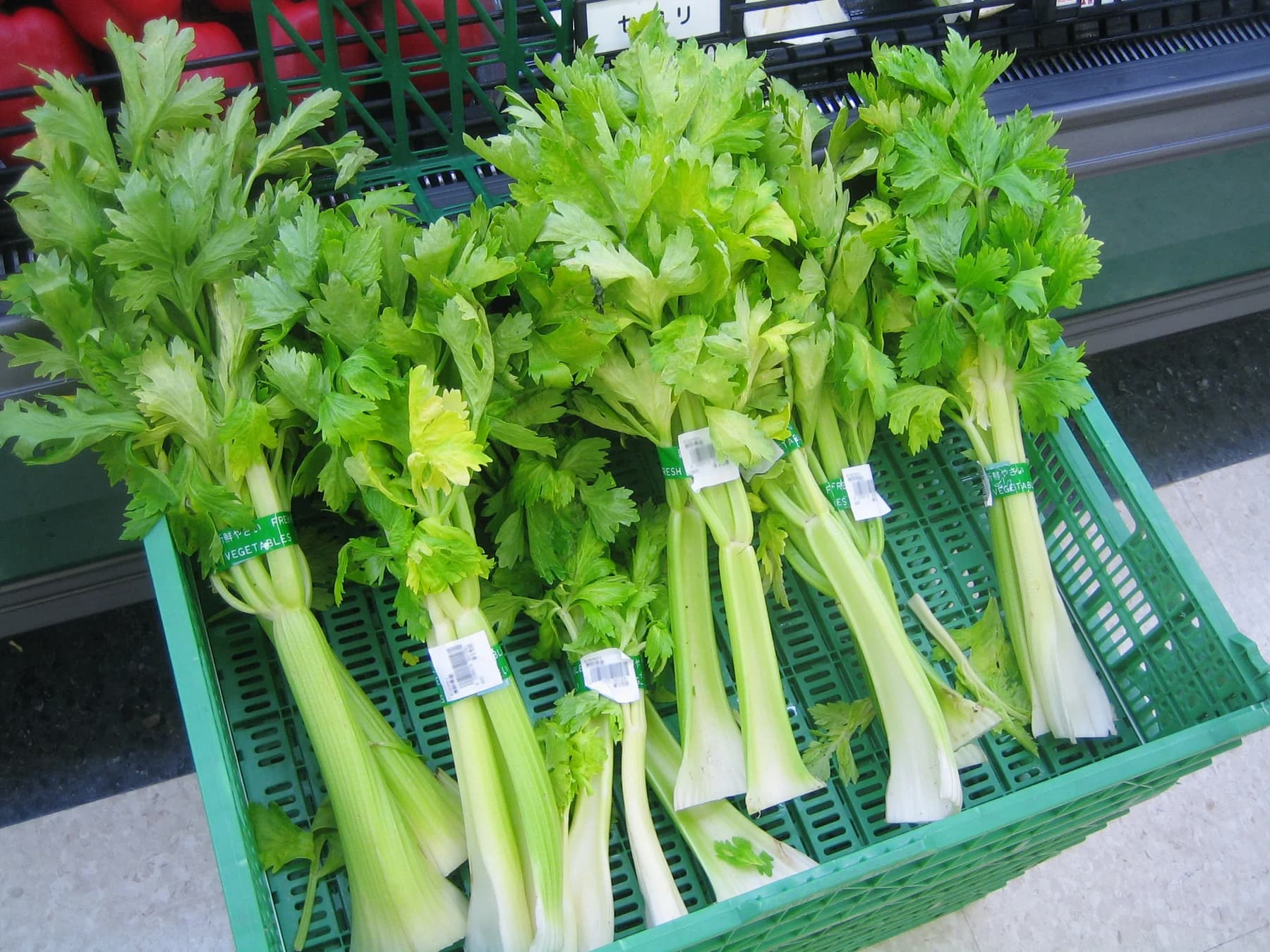
- 4. Celery 1 — Lombroso — July 16, 2007; author public-domain release. Harvested celery in a retail display. Product reference, not Argentine field production, harvest technique or a commercial grading standard.
Image credits
- Celery bunches offered for sale. Photo: Lombroso, public domain; resized and converted to WebP.
Figures are published averages or study assumptions for the places named, not guarantees for your field. Check current local recommendations and product labels before acting.