

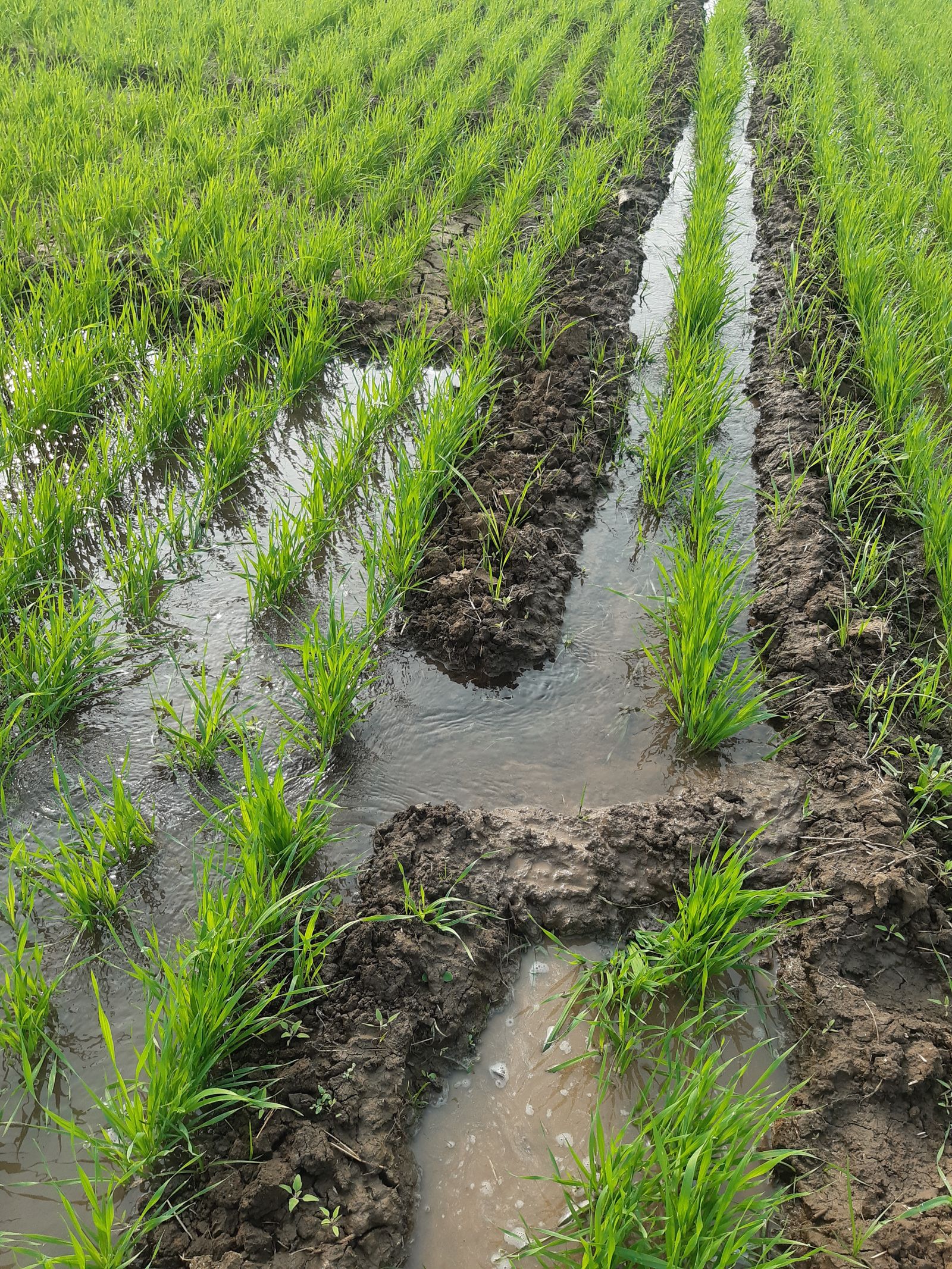
How Rainfall Variability and Irrigation Access Change What You Can Grow
Research and editorial review by AgriAuditor. Sources and limitations are linked in the article. Automated tools may assist a draft, but publication requires editorial review.
Rainfall variability and irrigation access directly determine which crops you can grow profitably. When rain is unpredictable, your water supply becomes your most critical constraint. Irrigation access can turn that constraint into a manageable variable. This article explains how these factors shift your crop shortlist and how platforms like AgriAuditor help you make sense of the data.
Why Rainfall Patterns Matter More Than You Think
Crops have specific water requirements at different growth stages. A steady rainfall pattern lets you plant crops that need consistent moisture during flowering and grain fill. But when rainfall is erratic, those same crops face serious stress. For example, corn pollination may experience reduced pollen shed or silking issues if a dry spell hits during critical growth phases, and pod fill in soybeans drops sharply if water is scarce during pod set. Agronomists generally agree that rainfall variability is a bigger risk today than total annual rainfall because timing is everything.
Historic weather data and climate forecasts available via Copernicus seasonal forecast guidance show that many regions are experiencing more frequent dry spells between rain events. That means a field with average annual rainfall can still fail a drought-sensitive crop if the rain comes at the wrong time. Tracking regional conditions via the USDA Drought Monitor highlights how drought trends develop, though localized field conditions will always vary.
Soils also matter. Sandy soils drain fast and amplify drought risk. Clay soils hold moisture longer but can waterlog in heavy events. Mapped spatial layers from the FAO Soils Portal provide global estimates that help you understand how your general soil type interacts with rainfall patterns. A soil that stores water well can buffer some variability, but nutrients and soil type cannot compensate for every soil, water, or weather constraint.
Irrigation Access: The Game Changer in Crop Selection
If you have irrigation, your crop options expand significantly. Irrigation access lets you supply water when crops need it, smoothing out rainfall variability. You can consider high-value, water-sensitive crops like vegetables, fruits, or specialty grains that would be too risky under rainfed conditions.
But irrigation is not unlimited. Your irrigation capacity, measured as flow rate and total water availability, sets a ceiling. A center pivot that can deliver a fraction of the water needed for full-season corn will limit your choices. You might need to switch to shorter-season varieties or less water-intensive crops like sorghum or cotton.
AgriAuditor's Irrigation Water Estimator helps you calculate your estimated water supply relative to crop demand. You input your irrigation system details, and the tool estimates how much water you can apply over the season. That figure becomes a key input for comparing crop profiles.
Even with irrigation, you need to consider your water source. Groundwater wells can deplete in drought years. Surface water rights may be curtailed. Resources from World Bank Agriculture highlight that water scarcity is a growing challenge in many agricultural regions. Your local water authority or extension service can provide specific allocation rules.
How AgriAuditor Helps You Match Crops to Your Water Reality
AgriAuditor is a crop suitability auditing platform. You enter your location, harvest year, and farm size. The engine cross-references your field against mapped databases and estimates crop suitability on three axes: biological fit, management burden, and economic outlook. It currently supports 216 crop profiles, covering major field crops, vegetables, fruits, and specialty crops.
For rainfall variability and irrigation access, the platform uses several data layers:
- Climate history from ERA5 reanalysis data, showing growing degree days, frost risk, and precipitation patterns.
- Next-season outlook from an ECMWF EC46 + SEAS5 ensemble delivered through Open-Meteo. This is a probabilistic crop-risk overlay, not a field-scale forecast. It provides a probabilistic tendency toward wetter or drier conditions relative to normal, but does not predict specific heat waves or weather events.
- Soil data from mapped FAO HWSD2 estimates, including properties like drainage, water holding capacity, and salinity.
- Pest screening outputs using EPPO and iNaturalist data to screen for regional pest risk rather than predicting field-level outbreaks.
- Editable economic assumptions, including public benchmark commodity prices.
A typical workflow: you run a base suitability scan for a few candidate crops. Then you adjust your irrigation capacity and see how the scenario estimates change. A crop that scores well under full irrigation may drop significantly if you limit water. The platform's AI only summarizes pre-computed data into readable reports. It does not make decisions for you. The real decision requires review by you, your local agronomist, and your buyers.
What the Platform Does Not Model
AgriAuditor cannot measure your actual field moisture or monitor your irrigation system in real time. It uses global modelled data, not live satellite feeds or ground sensors. You need to validate soil and water conditions with local tests. The blog on local soil tests explains how to combine mapped data with field samples.
The platform also does not account for your machinery, labor capacity, irrigation capacity, capital limits, or specific buyer contracts. Those are constraints you must evaluate yourself. The output is a shortlist and scenario estimate, not a planting order.
Other Factors That Influence Your Crop Shortlist
Rainfall and irrigation are critical, but they are not the only variables. You need to consider:
- Soil fertility and pH. Even with available water, nutrients cannot compensate for every soil constraint. Use the NPK Fertilizer Calculator to estimate blend rates. Remember, these are estimated blend rates that need local soil-test and agronomist verification.
- Heat and humidity. High heat and humidity during flowering can alter crop performance. The Heat and Humidity Risk blog explains how this alters crop recommendations.
- Capital and conversion costs. Switching crops may require new equipment, storage, or processing. Use the Farm Conversion Cost Calculator to estimate these expenses.
- Buyer access. You need a market for whatever you grow. Check with local elevators, processors, or direct buyers before committing capital.
An Illustrative Example
Imagine an illustrative scenario of a 500-acre farm in central Kansas. Historical rainfall averages 30 inches per year, but dry spells occur during mid-summer. The farm has a well delivering 400 gallons per minute, and is evaluating corn, grain sorghum, and sunflowers.
Using AgriAuditor, the base suitability scan for rainfed conditions shows lower scores for corn due to potential mid-season moisture stress. Sorghum handles mid-season stress better in this scenario. When irrigation capacity is factored in, the estimated fit for corn improves, but economic margins remain sensitive to input costs and public commodity price benchmarks. Sorghum shows stable scenario estimates with or without full irrigation. The output helps narrow down a shortlist for further discussion with local buyers and agronomists.
This is a hypothetical example. Your actual results depend on your exact location, local field soil tests, machinery, capital limits, and management decisions.
Practical Steps for Your Next Season
- Gather your data. Know your soil type, irrigation capacity, and historical rainfall patterns. Use free resources to start evaluating regional trends.
- Run a crop suitability scan. Use AgriAuditor to compare crop profiles for your location. The platform's Crop Viability Hub lists all 216 supported profiles. Adjust your irrigation assumptions to see the impact.
- Check the seasonal outlook. The next-season ensemble gives a probabilistic tendency. It is not a promise or field-scale prediction, but it helps inform a shortlist.
- Validate with local experts. Show your shortlist to your local agronomist, extension agent, and buyers. They know the market, local soil test requirements, and labor constraints that models miss.
- Plan for downside scenarios. What happens if your well yields fall or rainfall is below normal? Ensure you evaluate capital limits and downside risk before planting.
AgriAuditor's methodology page explains how data layers combine. The pricing plans page shows platform subscription options.
Frequently Asked Questions
How do I know if my soil has enough water holding capacity?
You can start with the modelled FAO HWSD2 data in AgriAuditor, which includes estimated water holding capacity. However, these are spatial estimates. For accurate field-level information, conduct a local laboratory soil test before committing capital.
Can I grow a crop with less irrigation than the platform recommends?
Yes, but you will likely see lower yields and higher risk. AgriAuditor's crop profiles model potential performance under optimal water management. If you apply less water, the estimated economic outlook will shift. You can manually adjust the irrigation input in the platform to model a reduced supply scenario.
Does the seasonal outlook replace the need for crop insurance?
No. Seasonal outlooks are probabilistic ranges and scenarios, not forecasts of specific weather events. They inform your decision shortlist, but do not determine final planting choices or promise outcomes. Crop insurance, water rights, and financial risk planning remain essential.
How does AgriAuditor handle crops that need a specific day length?
The platform uses photoperiod data from historical reanalysis to assess day length suitability as part of the biological fit estimate. Crops like soybeans are sensitive to day length, and the spatial model accounts for latitude.
What if my local climate differs from global data?
Global data sets represent spatial averages, not your specific field. That is why AgriAuditor outputs are decision-support estimates. Farmers should always combine platform outputs with local weather records, field soil tests, and local agronomic expertise.
Can I use the platform for organic farming decisions?
Yes, but with caveats. AgriAuditor supports early-stage screening for organic production. It does not certify organic compliance, nor does it automatically model every organic premium and cost. You need to adjust economic assumptions to reflect local organic market conditions, and verify any fertilizer recommendations with a certified organic agronomist.
Validate Your Farm's Soil & Profitability
Screen soil pH, temperature thresholds, monthly rainfall, and modelled margin assumptions across the available crop profiles.